The phone calls a mistress recorded that shattered a husband's alibi
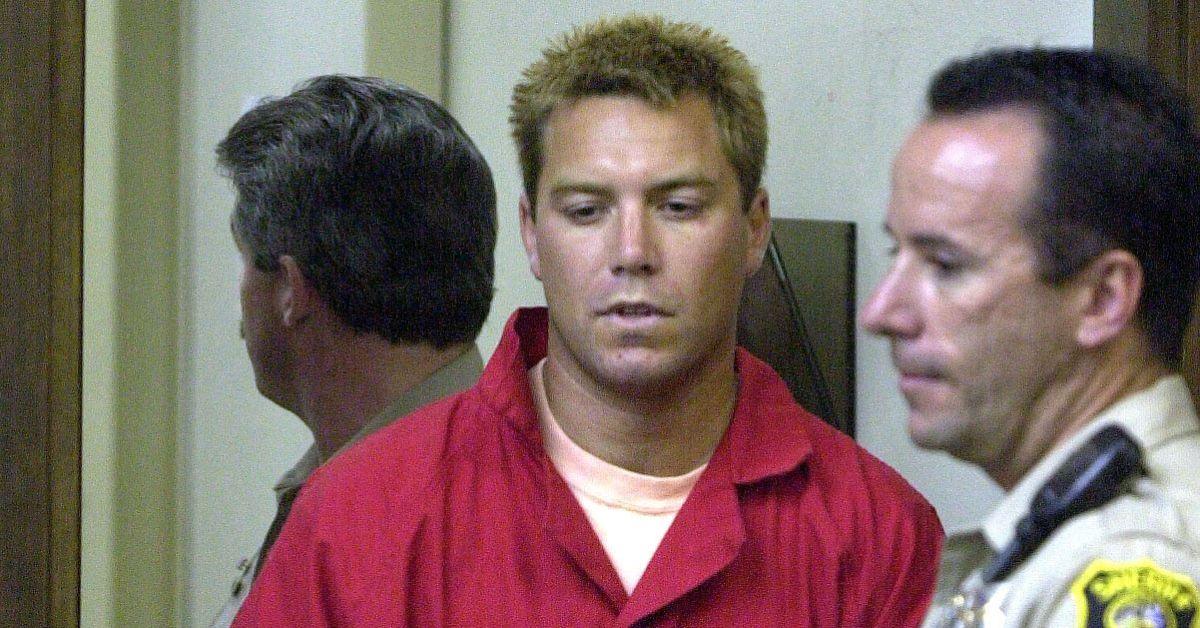
She was eight months pregnant, and she was reported missing from her home in Modesto, California, on December 24, 2002.
Her husband, Scott Peterson, told police he had gone fishing that morning at the Berkeley Marina in the San Francisco Bay.
Before Laci's body was found, he had told his secret girlfriend something else.
Amber Frey, a massage therapist, came forward voluntarily and recorded phone calls with Peterson that became key evidence.
It is not established in the record what exactly Peterson said to Frey in those calls, only that they were incriminating.
That is all the record says, and that is all it needs to say.
The calls were made before the world knew Laci was gone.
They were made before the world knew there was a secret girlfriend at all.
She recorded them, and the jury heard them.
The chill is in the timing: a secret told, a death announced, a body not yet found.
What else was on those tapes?
What did he think he was confessing to?
What did she think she was hearing?
That would require the transcripts, and the transcripts are not in the source.
She was on the ground below the story, and she kept the tape rolling.
THE FISHING TRIP AND THE BOAT
He told police he had gone fishing that morning at the Berkeley Marina.
It was December 24, 2002, the day Laci Peterson was reported missing.
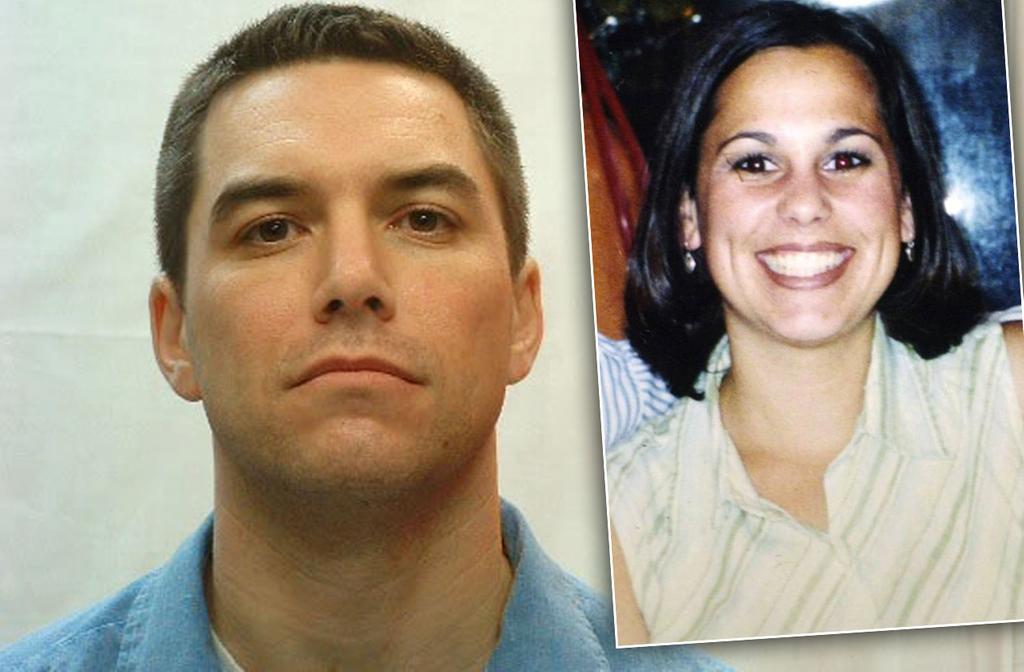
The story was simple: a man, a boat, a few hours on the water.
Detectives found the boat later.
It was a 14-foot aluminum fishing boat, and Scott Peterson had purchased it shortly before the disappearance.
The boat was linked to the place where the bodies came ashore in the San Francisco Bay.
The prosecution argued Peterson had weighted Laci's body and dumped it in the Bay.
On April 13, 2003, the body of a full-term male infant washed ashore near Richmond.
The next day, Laci Peterson's body was found nearby.
Autopsies determined both had died from drowning.
The cause of death was listed as "undetermined" in the coroner's report.
Authorities treated it as a double homicide anyway.
No weapon was ever identified.
A fishing trip. A new boat. Two bodies on the same stretch of shoreline.
How could that line up so precisely?
The boat was the link, and the timing was the accusation.
THE ARREST AND THE TWO STORIES
It happened on a Friday, four months after Laci Peterson disappeared.
Scott Peterson was arrested on April 18, 2003, in San Diego County.
He was found with dyed hair and a large amount of cash.
He was charged with two counts of first-degree murder.
Police initially treated Laci's disappearance as a possible abduction.
Suspicion quickly turned to Peterson.
The defense suggested Laci had been abducted by strangers while walking the dog.
The prosecution undermined that theory with evidence from a neighbor's dog.
The source does not specify what that evidence was, only that it undermined the theory.
That would require evidence.
The case moved to San Mateo County after a change of venue.
Extensive pretrial publicity had made a fair trial in Stanislaus County impossible.
The trial began in June 2004 in Redwood City.
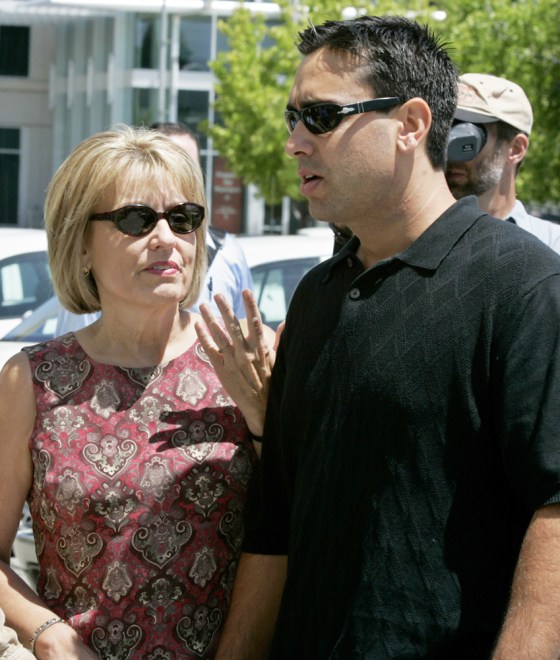
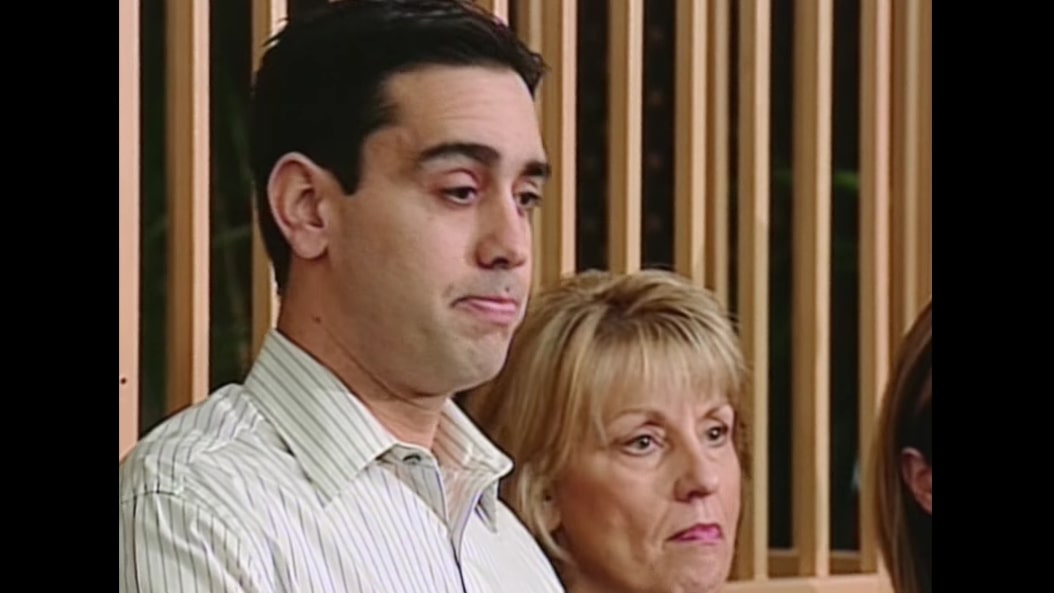
Her mother, Sharon Rocha, had become the family's public voice.
She gave emotional press conferences.
She would later testify at trial.
Two stories stood before the court.
One story was a husband who went fishing.
The other story was a husband with dyed hair and cash.
The dyed hair was not an accusation.
It was a fact found at the arrest.
The cash was not a confession.
It was a fact found at the arrest.
The pivot was complete.
A missing-pregnant-woman story had become a husband in handcuffs.
THE TAPES AND THE VERDICT
The jury heard the tapes before they heard the verdict.
Amber Frey had recorded the calls at the police’s request, and the prosecution played them in court.
She testified that Peterson had told her his wife was dead — before Laci’s body was found.
The prosecution argued Peterson murdered Laci to escape his marriage and his impending fatherhood.
The defense maintained Peterson was innocent and that the prosecution’s case was circumstantial.
Two readings of the same facts stood before the jury.
A man escaping a life he no longer wanted.
A man wrongly accused, caught in a web of suspicion.
The defense pointed to the neighbor’s dog, to the possibility of strangers, to the coroner’s report listing the cause of death as undetermined.
The prosecution pointed to the boat, to the lies, to the tapes.
On November 12, 2004, the jury found Scott Peterson guilty of first-degree murder for Laci’s death and second-degree murder for the death of their unborn son, Connor.
On March 16, 2005, the judge sentenced Peterson to death by lethal injection.
Laci’s mother, Sharon Rocha, testified at trial.

The source does not quote her testimony directly, only that she testified.
She had become the family’s public voice, giving press conferences before the trial and sitting in the courtroom through it.
The verdict was hers to hear.
The sentence was hers to hear.
The jury chose one reading of the facts.
The other reading remains in the record, argued, not accepted.
AND THE STORY STILL ISN'T OVER
The California Supreme Court upheld the convictions in 2012.
Then, in 2020, the same court overturned the death sentence.
The ruling came down to juror misconduct.
The court ruled that a juror had failed to disclose her own experience with a pregnancy-related issue during jury selection.
That failure, the court found, denied the accused a fair penalty phase.
The court ordered a new penalty phase.
It is not established when or if a new sentencing hearing will be held.
As of recent reports, no new sentencing hearing has been held.
Scott Peterson remains on death row at San Quentin State Prison.
His death sentence was overturned, but he has not been resentenced.
The family waits.

Sharon Rocha published a memoir, *For Laci*, in 2005.
She has continued to advocate for victims' families.
She testified at trial, giving the jury a mother's account of the loss.
The case remains one of the most closely followed murder cases in California history.
It is a story of a conviction upheld.
It is a story of a sentence undone.
It is a story that still has no final line.
The verdict was delivered in 2004.
The sentence was pronounced in 2005.
The appeals court spoke in 2012.
The Supreme Court spoke again in 2020.
And still, the family waits for a resolution.
For a sentence.
For closure.
For the story to end.
That would require a new penalty phase.
That would require a date.
That would require the courts to act.
None of that has come.
Advertisement
You may also like
The confession that cracked the case: What Moseley told detectives about the night Kitty Genovese died
He was arrested for burglary. Winston Moseley was a 29-year-old business machine operator when police picked him up on March 19, 1964 — six…

The memoir admission that revived a 27-year-old murder case
It starts with a book. In 2018, Duane "Keffe D" Davis — a self-described gang member — published a memoir and gave interviews describing…
The Ryder truck VIN that led FBI agents to a rental clerk — and a name
The first report came within minutes. Not as an explosion. As a gas leak, a utility accident, something breaking. At 9:02 a.m. on April…
The friend who called police because Shanann Watts missed her OB-GYN appointment
The appointment was a checkup, the kind that fills a Tuesday morning and is forgotten by lunch. Shanann Watts, 34, was fifteen weeks pregnant…
The surgical cut that pointed LAPD to a doctor's skill — but never to a name
The morning of January 15, 1947, began with a child’s walk through a vacant lot in Leimert Park, Los Angeles. The nude body of…
The Grease-Pencil Message on a Victim's Shirt That Baffled Zodiac Investigators
The cab stopped on a dark street in San Francisco, and the driver was shot. October 11, 1969. The case summary places the killing…