The memoir admission that revived a 27-year-old murder case
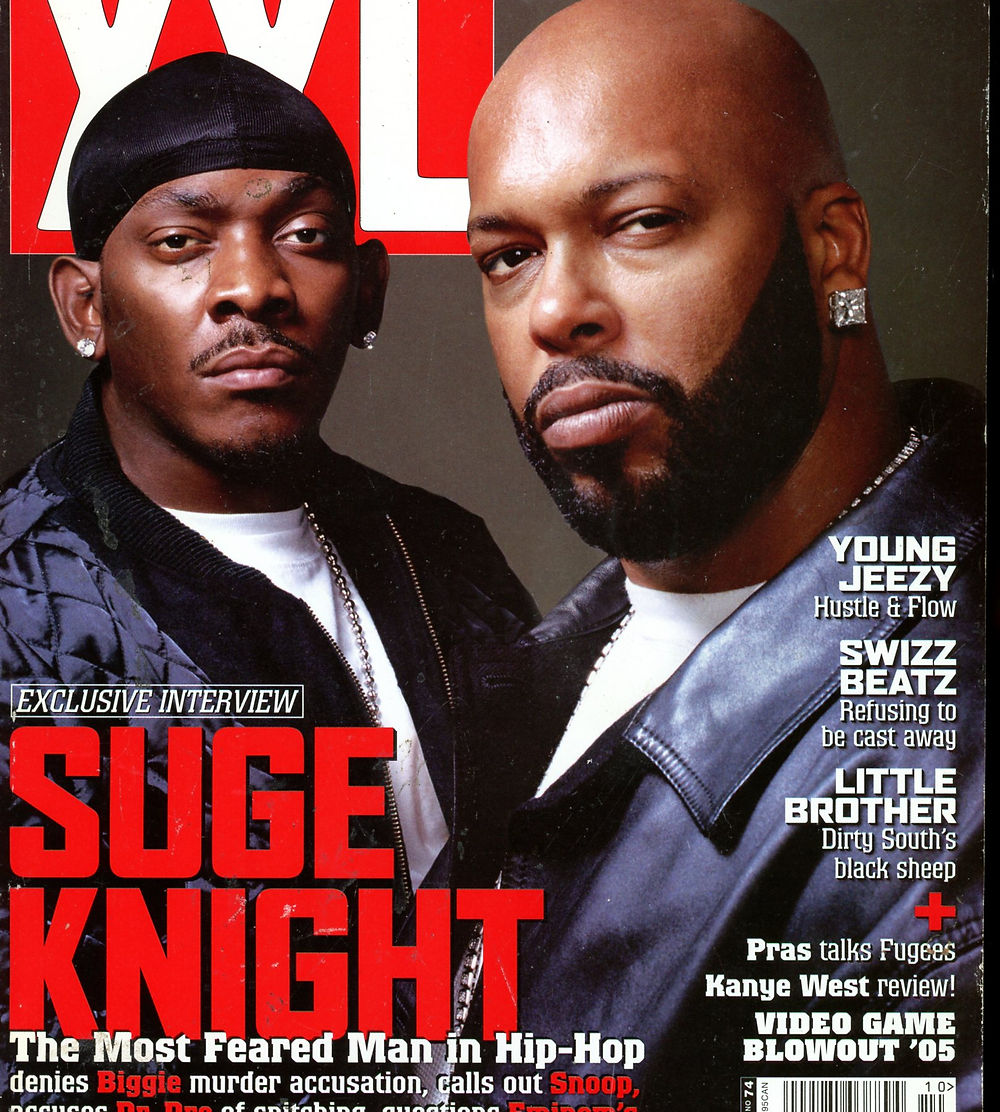
It starts with a book.
In 2018, Duane "Keffe D" Davis — a self-described gang member — published a memoir and gave interviews describing his role in the September 7, 1996 shooting of Tupac Shakur on the Las Vegas Strip.
Davis said he was not in the car that fired the shots.
He claimed he was in the lead car.
He said he had provided the gun.
He said the shooting was coordinated from his vehicle.
These admissions — not physical evidence — became the cornerstone of the renewed investigation.
For nearly three decades, no one had been arrested in Shakur's killing.
Davis became the only person ever charged.
He was arrested in 2023 and charged with murder with use of a deadly weapon.
The specific firearm was never recovered.
Whether Davis's statements alone would hold up in court was not yet established.
The words were his own, published and spoken.
That was the evidence.
That was the case.
Why did it take so long?
Why did a cold case turn on a suspect's own memoir?
Why did nearly thirty years pass before a charge was filed?
That would require evidence the record does not provide.
Davis was not in the car that fired the shots.
He was in the lead car, prosecutors say, with the gun supplied and the plan set.
The pages did what forensic breakthroughs could not.
They gave investigators a name to build around.
SEPTEMBER 7, 1996 — THE DRIVE-BY
September 7, 1996 began with a boxing match and ended with gunfire.
Tupac Shakur rode in a BMW sedan driven by Marion "Suge" Knight, the co-founder of Death Row Records.
They were part of a convoy leaving the MGM Grand hotel after watching Mike Tyson fight.
On the Las Vegas Strip, a white Cadillac pulled alongside the BMW.
Gunfire erupted.
Shakur was hit four times, including twice in the chest.
Knight was wounded too, but he survived.
The white Cadillac kept moving.
The identity of the shooter or shooters inside it was not established in the source.
Shakur was rushed to University Medical Center in Las Vegas.
He died there on September 13, 1996.
He was 25 years old.
His death was ruled a homicide.
A public shooting on one of the most watched streets in America.
Cameras, crowds, a famous face.
And still, no one was arrested for nearly three decades.
Witnesses did not cooperate.
Many were affiliated with gangs or the music industry.
The case went cold.
The Cadillac drove away, and the record stayed silent on who pulled the trigger.
That question — who fired — would remain open for years, until a memoir and a series of interviews gave investigators a different name to chase.
Not the shooter.
The man they say planned it.
THE COLD CASE AND THE REOPENING
The initial Las Vegas police investigation struggled from the start.
Witnesses refused to talk, many of them affiliated with gangs or the music industry.
The case went cold for years, with no arrests.
It sat that way for more than two decades.
Then, in 2018, Duane Davis published a memoir and gave interviews.
In them, he described his role in the planning of the shooting, saying he was in the lead car and had provided the gun.
Those statements, according to investigators, drew renewed attention to a case that had long gone quiet.
The lead detective reopened the investigation.
He built a case around Davis's own admissions, along with corroborating evidence.
What that corroborating evidence was, beyond Davis's statements, the source does not detail.
It is not established in the record.
In 2023, a Clark County grand jury indicted Davis on one count of murder with use of a deadly weapon.
Davis was arrested in September 2023.
He pleaded not guilty.
The charge was not for firing the shots.
Prosecutors said he planned it.
The case had not proceeded to trial as of the most recent reporting.
Davis remained in custody.
The detective had a name, an admission, and a charge.
The rest — the gun, the shooter, the corroboration — remained outside the public record.
That would require evidence.
TWO READINGS OF THE SAME WORDS
Prosecutors, led by District Attorney Steve Wolfson, argued that Davis's own words — his book and his interviews — were key evidence of his involvement in planning the shooting.
Not the recovered gun, because that gun was never recovered.
Not the shooter in the Cadillac, because that man was never named in the public record.
Davis was not in the car that fired the shots, prosecutors said, but he admitted to providing the gun and to being in the vehicle from which the shooting was coordinated.
The defense's lead attorney pressed that those admissions were not an admission of murder.
He argued that Davis's statements were not a confession, and that the case relied on unreliable testimony from witnesses with criminal histories.
Two readings of the same words.
One reading: a man places himself at the center of a killing, handing over the weapon, directing the moment.
The other reading: a man describes a scene he witnessed, without ever saying he pulled the trigger or ordered it pulled.
The book says what it says, and the interviews say what they say.
The question was whether they said enough.
Whether the words were legally sufficient for a murder conviction had not been decided by a jury.
That remained the open question of the case.
Prosecutors called it a confession in substance.
The defense called it a story, and a story is not a crime.
The record held the words, but the record did not hold the verdict.
AND THE STORY STILL ISN'T OVER
As of the most recent reporting, the case had not proceeded to trial.
Davis remained in custody at the Clark County Detention Center.
No verdict or sentence had been reached.
The legal proceedings were ongoing in Clark County, Nevada.
The trial date was not in the record.
Any potential plea agreement was not in the record either.
That would require evidence, and the record holds none.
Shakur's mother, Afeni Shakur, died in 2016.
She did not live to see the arrest.
She did not live to see the charge.
She did not live to see her son's name attached to a courtroom again.
The family that waited never saw justice arrive.
Not because it will not come.
But because it has not come yet.
Shakur's legacy continues through his music.
It continues through his cultural influence.
It continues in the songs that outlived him and the mother who raised him.
The chapter is open.
The book is not finished.
The story still isn't over.
Advertisement
You may also like
The phone calls a mistress recorded that shattered a husband's alibi
She was eight months pregnant, and she was reported missing from her home in Modesto, California, on December 24, 2002. Her husband, Scott Peterson,…
The confession that cracked the case: What Moseley told detectives about the night Kitty Genovese died
He was arrested for burglary. Winston Moseley was a 29-year-old business machine operator when police picked him up on March 19, 1964 — six…
The Ryder truck VIN that led FBI agents to a rental clerk — and a name
The first report came within minutes. Not as an explosion. As a gas leak, a utility accident, something breaking. At 9:02 a.m. on April…
The friend who called police because Shanann Watts missed her OB-GYN appointment
The appointment was a checkup, the kind that fills a Tuesday morning and is forgotten by lunch. Shanann Watts, 34, was fifteen weeks pregnant…
The surgical cut that pointed LAPD to a doctor's skill — but never to a name
The morning of January 15, 1947, began with a child’s walk through a vacant lot in Leimert Park, Los Angeles. The nude body of…
The Grease-Pencil Message on a Victim's Shirt That Baffled Zodiac Investigators
The cab stopped on a dark street in San Francisco, and the driver was shot. October 11, 1969. The case summary places the killing…