The surgical cut that pointed LAPD to a doctor's skill — but never to a name
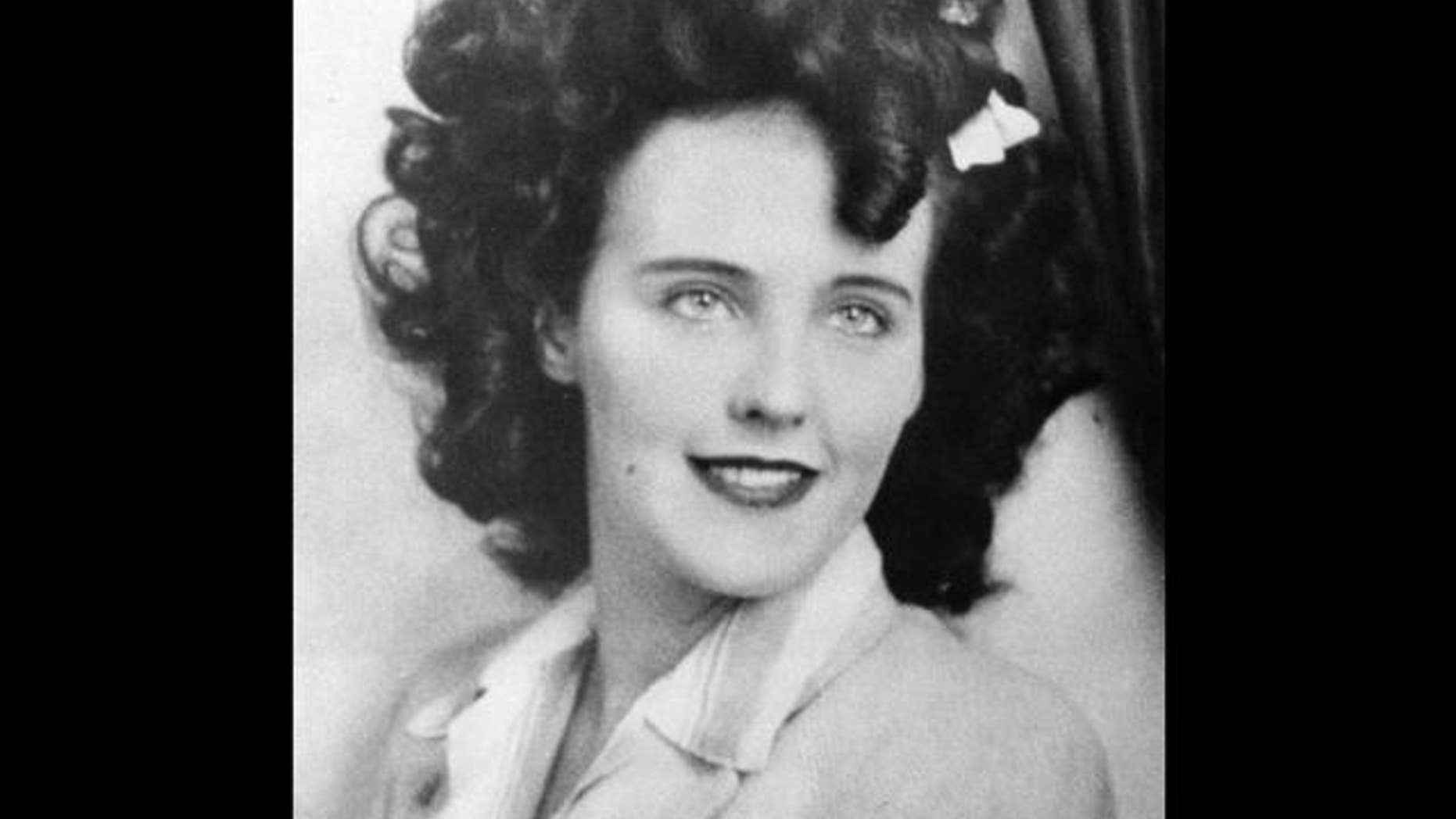
The morning of January 15, 1947, began with a child’s walk through a vacant lot in Leimert Park, Los Angeles.
The nude body of a woman lay there, severed at the waist.
She had been drained of blood.
She had been washed clean.
The face was slashed from the corners of the mouth toward the ears, a cut that would earn a name: the Glasgow smile.
The precision was the first fact investigators noted.
The absence was the second.
No fingerprints on the body.
No trace evidence on the body.
The killer had left nothing behind but the cut itself, and the cut suggested a skill that pointed toward medical training.
The victim was identified through fingerprints as Elizabeth Short, 22, an aspiring actress.
Friends called her the Black Dahlia.
She had last been seen alive on January 9, 1947, at the Biltmore Hotel in downtown Los Angeles.
Six days later, she was found in two pieces, washed and drained, arranged in a vacant lot.
Who could do this and leave nothing behind?
Who could slice a body with that kind of control?
Who could clean it so thoroughly that the lot held no answer?
That would require evidence.
The identity of the killer is not established.
The case remains officially unsolved.
No one was ever charged.
The cut was surgical, but the name attached to it was never found.
THE WASHED CLEAN BODY
She was found washed clean.
No fingerprints on the body. No trace evidence on the body. Nothing to lift, nothing to match, nothing to hold.
The killer had severed her at the waist with surgical precision.
That cut told investigators something. It spoke of training, of instruments, of a steady hand. It led them to believe the perpetrator had medical knowledge.
It gave them a profile. It gave them no name.
The murder weapon was never identified. Investigators believed it was a surgical instrument, but the specific type is not identified in the record.
Not a scalpel in evidence. Not a saw in evidence. Not a blade of any kind ever produced.
The same cleanliness that erased the victim’s identity also erased the killer’s. The body had been drained of blood, washed, and posed. It was a scene scrubbed of its own story.
The forensic technology of 1947 could not reach further. DNA evidence, which might have named the killer decades later, was never collected or preserved.
It was not an oversight. It was a limit of the time.
The body was the only exhibit, and the body had been cleaned. The cut was the only clue, and the cut pointed to a skill, not a person.

Investigators were left with a conclusion and a void. The conclusion: the killer had medical training. The void: everything else.
They could say what the killer was. They could not say who.
The surgical cut was precise. The identity attached to it was not.
THE QUESTIONING OF RED MANLEY
The last known person to see Elizabeth Short alive was a salesman named Robert "Red" Manley.
He had been identified, and so he was questioned.
He was questioned extensively, according to the case record, after being placed at the Biltmore Hotel where Short was last seen on January 9, 1947.
The questioning was thorough. The lead was promising.
Manley passed polygraph tests.
He provided a credible alibi.
The record shows he was cleared.
What the record does not establish are the exact details of that alibi. It is not in the file.
So the lead evaporated under scrutiny, leaving investigators with the same void they started with.
The case generated massive publicity. The Los Angeles Police Department received hundreds of false confessions.
People confessed to a murder they could not have committed. People confessed to a murder they did not commit.
Each confession was checked. Each confession failed.
The false confessions were a product of the publicity. The publicity was a product of the crime.
Manley was a suspect who became a witness. He was a witness who became a cleared man.
The investigators had a conclusion about the killer's skill. They had a void about the killer's name.
They could say what the killer was. They could not say who.
That would require evidence.
THE PACKAGE AND THE THEORY
The package arrived at the Los Angeles Herald-Express, addressed to the journalist Aggie Underwood.
Inside were belongings that had belonged to Elizabeth Short.
Underwood had covered the case from the start. She had become part of it.
The package was a hoax.
It was later determined to have been sent by someone other than the killer.
Who sent it is not established. The record does not say.
The hoax did what the killer's work could not: it produced a name in the news.
But it produced no evidence.
In 2003, Dr. George Hodel's son, Steve Hodel, a former LAPD detective, published a book.
The book claimed his father was the killer.
It was a theory. It remains a theory.
The LAPD did not endorse it. No charges were ever filed.

Not because the department was careless. Because the theory required proof.
The record shows a body drained, washed, severed.
It shows a surgical precision that pointed investigators toward medical training.
It points nowhere else.
The investigators could say what the killer was. They could not say who.
That would require evidence.
The package was a dead end. The book was a theory. The case stayed open.
No one was ever charged.
AND THE STORY STILL ISN'T OVER
The LAPD closed the case in 1949.
It has been reopened and reviewed multiple times since.
Each review looked at the same record: a body drained, washed, severed.
Each review ended the same way.
The case remains officially unsolved.
No one was ever charged with the murder of Elizabeth Short.
The lead detective who worked the case has since died.
The medical examiner who performed the autopsy has since died.
Detectives interviewed hundreds of people, the record shows.
They collected no DNA, because the technology did not exist then.
They preserved no trace, because the body was washed clean.
What remains is the file.
Phoebe Short, Elizabeth's mother, made public appeals for answers.
She died in 1985 without seeing the case solved.
The LAPD has stated the case remains open.
The LAPD has stated any new evidence would be reviewed.
What new evidence might exist is not specified in the record.
No new lead has been named.
No new suspect has been named.
The theories circulate; the evidence does not move.
A book claimed a physician was the killer.
The LAPD did not endorse the theory.
No charges were filed.
The surgical cut pointed to a doctor's skill.
It never pointed to a name.
That would require evidence the record does not have.
She was on the ground below, and the trail went cold there.
Advertisement
You may also like
The phone calls a mistress recorded that shattered a husband's alibi
She was eight months pregnant, and she was reported missing from her home in Modesto, California, on December 24, 2002. Her husband, Scott Peterson,…
The confession that cracked the case: What Moseley told detectives about the night Kitty Genovese died
He was arrested for burglary. Winston Moseley was a 29-year-old business machine operator when police picked him up on March 19, 1964 — six…
The memoir admission that revived a 27-year-old murder case
It starts with a book. In 2018, Duane "Keffe D" Davis — a self-described gang member — published a memoir and gave interviews describing…
The Ryder truck VIN that led FBI agents to a rental clerk — and a name
The first report came within minutes. Not as an explosion. As a gas leak, a utility accident, something breaking. At 9:02 a.m. on April…
The friend who called police because Shanann Watts missed her OB-GYN appointment
The appointment was a checkup, the kind that fills a Tuesday morning and is forgotten by lunch. Shanann Watts, 34, was fifteen weeks pregnant…
The Grease-Pencil Message on a Victim's Shirt That Baffled Zodiac Investigators
The cab stopped on a dark street in San Francisco, and the driver was shot. October 11, 1969. The case summary places the killing…