The nurse who ran toward the blast — and the family who told her story
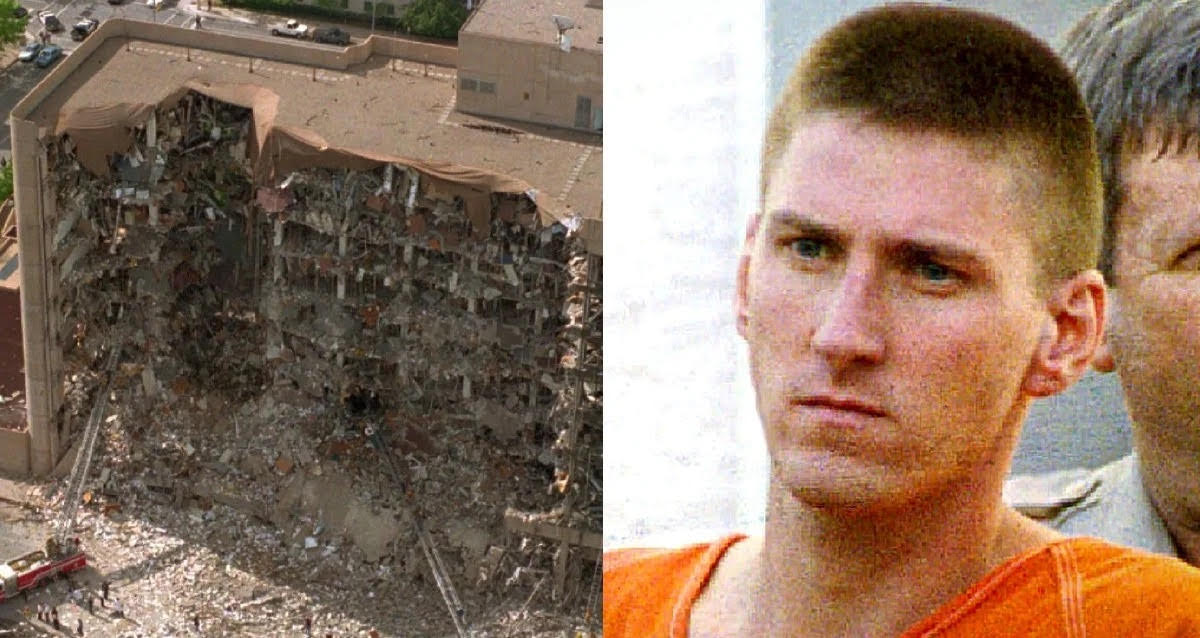
The truck was a Ryder, rented, packed with ammonium nitrate and fuel oil.
It exploded outside the Alfred P. Murrah Federal Building in Oklahoma City on April 19, 1995.
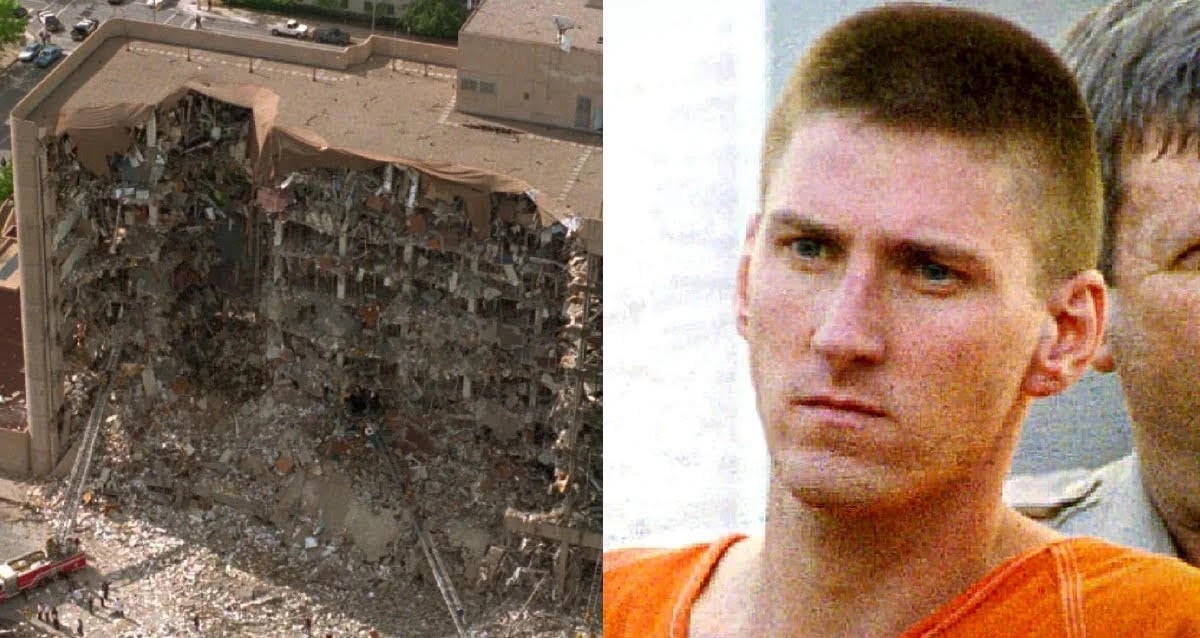
The blast destroyed the north face of the nine-story building.
Floors collapsed.
Hundreds of workers and visitors were trapped.
Among those who ran toward the wounded was Rebecca Needham Anderson, a nurse.
She was one of the 168 people killed.
Nineteen of the dead were children in the building's day-care center.
More than 680 others were injured.
Her family later spoke publicly about her heroism.
They told the story of a nurse who did not run away from the blast, but toward it.
That account is documented.
What is not in the record is her own voice from that moment.
Her exact actions in the minutes before she was killed are not established.
No one has produced her final words.
No transcript exists of what she said as she moved toward the injured.
That would require evidence the record does not contain.
She was a nurse.
She was a victim.
She was among the first responders who were themselves the wounded.
The bombing was the deadliest act of domestic terrorism in U.S. history at the time.
The story of what she did has been told by the people who knew her.
The story of what she said, and precisely how she died, remains unrecorded.
Who was she, before the truck exploded?
What did her family say that made her story stand out?
What does it mean to run toward a blast?
The record tells us she did.
It does not tell us what she saw.
THE BLAST AND THE FIRST 90 MINUTES
The blast hit at 9:02 a.m.
April 19, 1995, outside the Alfred P. Murrah Federal Building in downtown Oklahoma City.
The explosion destroyed the north face of the nine-story building.
Floors collapsed.
Hundreds of workers and visitors were trapped inside.
Rescue and recovery efforts continued for over two weeks.
Within 90 minutes of the explosion, an Oklahoma Highway Patrol trooper stopped a 1977 Mercury Marquis.
The car was driving without a license plate.
The driver was Timothy McVeigh.
He was arrested on a firearms charge.
The bombing was the deadliest act of domestic terrorism in U.S. history at the time.
In the first minutes, people ran toward the building.
Rebecca Needham Anderson was among them.
She was a nurse.
She was killed while helping the wounded.
Her family spoke publicly about her heroism.
The exact time of her death is not in the record.
What remains documented is that she ran toward the blast.
It is documented that she helped.
It is documented that she died.
What is not documented is what she saw inside.
What is not documented is what she said.
The record tells us she was one of 168 victims.

It tells us she was a nurse.
It does not tell us the hour she fell.
That would require evidence the record does not provide.
THE FAMILY'S TESTIMONY
She was a nurse who ran toward the blast.
Her name was Rebecca Needham Anderson, and her family spoke publicly about her heroism.
The source records that they spoke. It does not record the specific words they said.
That would require evidence the record does not provide.
She was one of 168 victims.
They were federal employees, visitors, and children.
Nineteen of them were children in the building's day-care center.
She was a nurse who was killed while helping the wounded. That is what the record establishes.
Her family's public account turned a statistic into a person. It is documented.
The victims' families formed the Oklahoma City Murrah Building Survivors Association.
They also formed the Families and Survivors United organization.
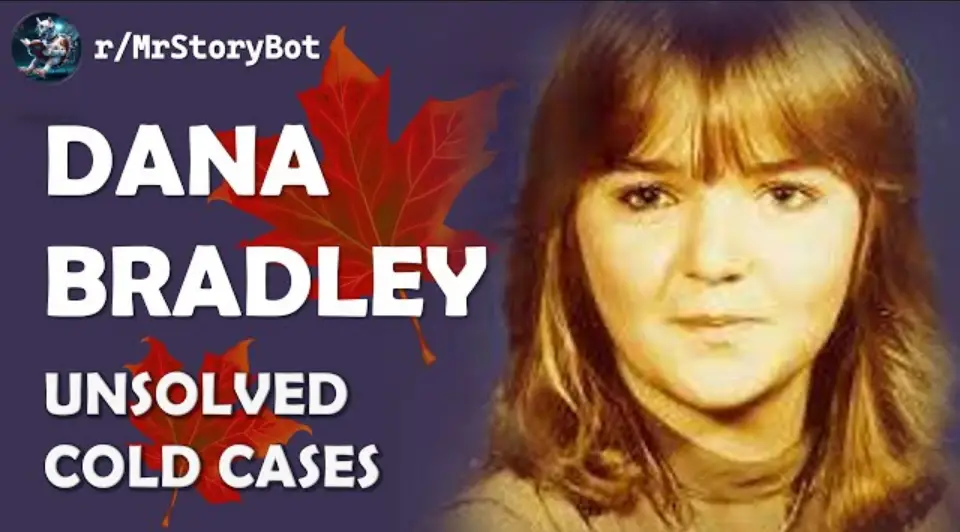
Ed Bradley lost his wife, Dana Bradley, in the blast. She was a U.S. Department of Housing and Urban Development employee.
He became a leading voice for victims' families.
He has continued to advocate for victims' rights and remembrance.
The annual memorial ceremony on April 19 draws survivors, families, and public officials.
The site of the Murrah Building is now the Oklahoma City National Memorial.
It includes a field of 168 empty chairs, one for each victim.
She has a chair there.
Her family spoke publicly about her heroism. That is the documented fact.
What she said in those final moments inside the building is not established.
That would require evidence the record does not provide.
THE INVESTIGATION AND THE TRIAL

The FBI led the investigation.
Special Agent Danny Defenbaugh was the on-scene commander.
The key break came when investigators traced the truck's axle found at the scene to a Ryder rental agency in Junction City, Kansas.
The rental record led to a man using the alias "Robert Kling."
That man matched a description provided by a motel clerk.
The clerk's sketch and the rental record pointed to McVeigh.
He was already in custody on a firearms charge when he was identified.
Evidence included receipts for ammonium nitrate and fuel.
Evidence included a business card from a gun show.
Evidence included testimony from Michael Fortier, who described McVeigh's plans.
Defense attorneys argued that McVeigh was part of a larger conspiracy.
The prosecution's case focused on his direct actions.
McVeigh was tried in Denver, Colorado, after a change of venue.
He was charged with 11 counts of conspiracy, murder, and use of a weapon of mass destruction.
The trial began in April 1997.
Joseph Hartzler led the prosecution.
Stephen Jones led the defense.
The jury convicted McVeigh on all counts on June 2, 1997.
The jury recommended the death penalty.
Judge Richard Matsch sentenced him to death.
Terry Nichols was tried separately.
He was convicted of conspiracy and involuntary manslaughter.
He was sentenced to life in prison without the possibility of parole.
Michael Fortier testified for the prosecution.
He was sentenced to 12 years for failing to warn authorities.
Any direct link between the investigation and Rebecca's specific case is not in the record.
That would require evidence the record does not provide.
The machinery of justice moved slowly.
It moved on the weight of receipts, a sketch, and an axle.
Rebecca's name was not part of that evidence.
It remains part of the memorial.
AND THE STORY STILL ISN'T OVER
McVeigh was executed by lethal injection on June 11, 2001, at the federal penitentiary in Terre Haute, Indiana.
Terry Nichols remains in federal prison, serving a life sentence.
Michael Fortier was released from prison in 2006.
The site of the Murrah Building is now the Oklahoma City National Memorial, dedicated in 2000.
There is a field of 168 empty chairs, one for each life lost.
One of those chairs is for Rebecca.
Ed Bradley and other family members have continued to advocate for victims' rights and remembrance.
That advocacy is documented.
What the family feels today is not in the record.
Only their past public words are.
The annual memorial ceremony on April 19 still draws survivors, families, and public officials.
They gather in the same place where the truck exploded.
They stand among the chairs.
They read the names.
Her name is read with the others.
The story moved on the weight of receipts, a sketch, and an axle.
It now moves on the weight of remembrance.
Not because the legal case is closed.
But because the memorial keeps the date open.
The chairs do not resolve what happened inside the building.
They do not resolve her final words.
That would require evidence.
What remains is the field, the ceremony, and the names.
She was on the ground below.
Advertisement
You may also like
The phone calls a mistress recorded that shattered a husband's alibi
She was eight months pregnant, and she was reported missing from her home in Modesto, California, on December 24, 2002. Her husband, Scott Peterson,…
The confession that cracked the case: What Moseley told detectives about the night Kitty Genovese died
He was arrested for burglary. Winston Moseley was a 29-year-old business machine operator when police picked him up on March 19, 1964 — six…
The memoir admission that revived a 27-year-old murder case
It starts with a book. In 2018, Duane "Keffe D" Davis — a self-described gang member — published a memoir and gave interviews describing…
The Ryder truck VIN that led FBI agents to a rental clerk — and a name
The first report came within minutes. Not as an explosion. As a gas leak, a utility accident, something breaking. At 9:02 a.m. on April…
The friend who called police because Shanann Watts missed her OB-GYN appointment
The appointment was a checkup, the kind that fills a Tuesday morning and is forgotten by lunch. Shanann Watts, 34, was fifteen weeks pregnant…
The surgical cut that pointed LAPD to a doctor's skill — but never to a name
The morning of January 15, 1947, began with a child’s walk through a vacant lot in Leimert Park, Los Angeles. The nude body of…