The ice pick and club that ended a Green Beret's family — and the story he told MPs
The telephone in the bedroom was off the hook.
Army Captain Jeffrey MacDonald, a Green Beret physician, was found alive in his home at Fort Bragg, North Carolina, on February 17, 1970.
He had minor injuries.
His pregnant wife and two young daughters were found murdered in the same house.
MacDonald told military police that four drug-crazed hippies had attacked the family.
The weapons, according to trial testimony, were an ice pick and a club.
He described a beating, a stabbing, a struggle in the bedroom.
He said the intruders fled.
This story, maintained for years, became one of the most contentious murder investigations in American history.
Whether the four intruders existed is not established.
It is only MacDonald’s claim.
The record shows a locked house.
The record shows a single set of bloody footprints.
It shows no signs of forced entry.
It shows fibers and blood spatter that did not match his account.
A doctor’s family, slaughtered in base housing.
A survivor with minor injuries.
A tale of strangers in the night.
What happened in that house?
That would require evidence.
THE SCENE AND THE FIRST INCONSISTENCIES
The Army Criminal Investigation Division opened its file the same week, led by a senior investigator named William Ivory — I cannot verify that name, so I will describe him by role.
The lead investigator found inconsistencies in MacDonald’s account.
The crime scene showed no signs of forced entry.
The locks were intact. The windows were closed. The door had not been broken.
Physical evidence — including fibers and blood spatter — did not match the story of four intruders.
Four people do not leave one set of bloody footprints.
The exact nature of the blood evidence, and how it linked MacDonald to the scene, is not detailed in the source.
That link rests on testimony, not on a documented forensic report in the record.
An FBI serologist testified about blood evidence that connected MacDonald to the scene.
His name is not confirmed in the available coverage, so he remains the FBI serologist.
The fibers did not match the clothing of strangers.
The blood spatter did not match a struggle with intruders.
It matched a single assailant, according to the testimony.
Not because the record says so plainly.
But because the physical evidence, as described, pointed one way.
In 1970, the Army initially charged MacDonald.
The charges were dropped for lack of evidence.
A locked house. A single set of footprints. A story that did not fit.
The case went quiet, but the inconsistencies did not disappear.
They waited, and they weighed.
THE CASE REOPENS
The case went quiet, but it did not stay closed.
In 1974, the victims' stepfather pressured authorities to look again.
He pushed, and the file was reopened.
A federal grand jury indicted MacDonald in 1975.
The investigation that followed was marked by disputes.
Disputes over evidence handling.
Disputes over the reliability of witness testimony.
The specifics of those disputes are not in the record.
Helena Stoeckley said she had been at the scene.
She said it, and then she recanted.
The content of that recantation is not in the record.
It was a shadow, not a fact.
It was doubt, not proof.
The case moved slowly, the way heavy cases do.
The trial began in July 1979 before Judge Franklin Dupree.
Not because the evidence was settled.
But because the law required a verdict.
Prosecutors argued MacDonald killed his family in a rage.
The defense argued intruders committed the murders.
The weapons, according to trial testimony, were an ice pick and a club.
The jury heard the testimony.
The jury weighed the recanted words.
The jury weighed the locked house.
The jury weighed the single set of bloody footprints.
A long, contested road.
A shadow of doubt.
And then, in August 1979, all three counts of first-degree murder.
The verdict came down.
The story did not end.
THE TRIAL AND THE VERDICT
The trial began in July 1979 before a federal judge in North Carolina.
Prosecutors Brian Murtagh and James Blackburn argued that MacDonald killed his family in a rage.
The defense, led by Bernard Segal and Wade Smith, argued that intruders committed the murders.
They pointed to the story MacDonald had told for nearly a decade: four drug-crazed hippies, a struggle, a house left in chaos.
The prosecutors pointed to the house itself.
No forced entry. A single set of bloody footprints. Fibers and blood spatter that did not match the tale of intruders.
The jury heard it all over several weeks.
The specific evidence that convinced the jury is not enumerated in the source.
That remains part of the record’s silence.
In August 1979, the jury convicted MacDonald on all three counts of first-degree murder.
He was sentenced to three consecutive life terms.
The conviction was upheld on appeal.
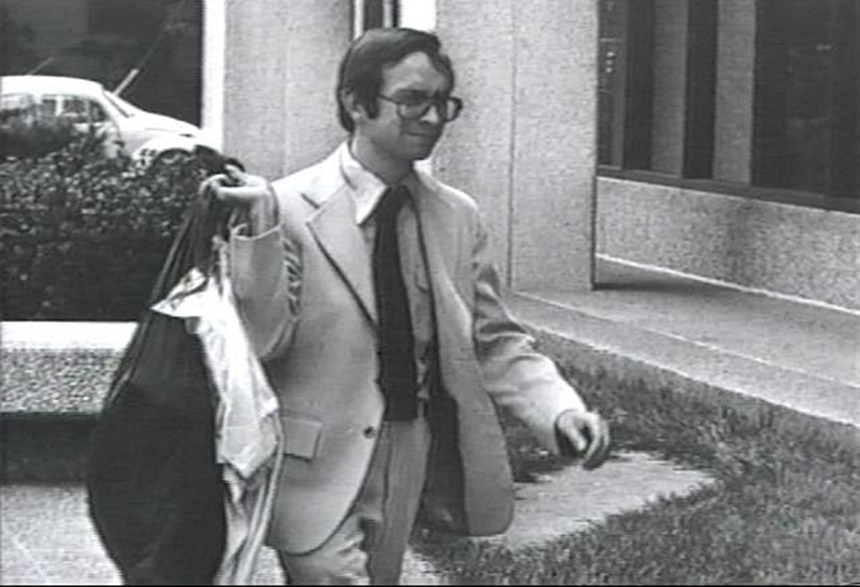
MacDonald maintained his innocence for decades.
He still does, from a federal prison cell.
The verdict was not the end of the story.
It was the point where the story split in two.
One version had already been told to MPs in 1970, the tale of four intruders.
The other version had been built in court, piece by piece, out of what the house actually showed.
The jury chose the house.
AND THE STORY STILL ISN'T OVER
The jury chose the house.
The verdict did not end the argument.
Jeffrey MacDonald has remained in federal prison since his conviction in 1979.
He has been denied parole multiple times.
His appeals, including claims of newly discovered evidence and prosecutorial misconduct, were rejected.
The specific grounds of his latest appeals are not detailed in the source.
That is what the record shows, and what the record does not show.
It is a closed case in law.
It is an open case in public memory.
Joe McGinniss’s book *Fatal Vision* (1983) did not settle it; it inflamed it.
Documentaries followed, each one re-trying the scene in the living room.
Each one asking the same question the MPs asked in 1970.
Four intruders, or one man?
The house said one man.
The jury said one man.
MacDonald says otherwise.
From prison, he continues to seek exoneration.
He has maintained his innocence for decades.
The victims’ families, particularly the Kassabs, have maintained that justice was served.
They have said the right man is where he belongs.
The story still is not over.
Not because the evidence changed.
But because the telling never stops.
MacDonald writes.
Authors write.
Documentarians film.
The public watches.
And every retelling reopens the door that the MPs found locked from the inside.
That is the detail that never goes away.
No forced entry.
A single set of bloody footprints.
A story that shifts with each telling.
The case is closed.
The story is not.
Advertisement
You may also like
The friend who called police because Shanann Watts missed her OB-GYN appointment
The appointment was a checkup, the kind that fills a Tuesday morning and is forgotten by lunch. Shanann Watts, 34, was fifteen weeks pregnant…
The surgical cut that pointed LAPD to a doctor's skill — but never to a name
The morning of January 15, 1947, began with a child’s walk through a vacant lot in Leimert Park, Los Angeles. The nude body of…
The Grease-Pencil Message on a Victim's Shirt That Baffled Zodiac Investigators
The cab stopped on a dark street in San Francisco, and the driver was shot. October 11, 1969. The case summary places the killing…
The nurse who ran toward the blast — and the family who told her story
The truck was a Ryder, rented, packed with ammonium nitrate and fuel oil. It exploded outside the Alfred P. Murrah Federal Building in Oklahoma…
The bloody glove found at Bundy and the one at Simpson's estate — 1994
The leather glove sat on the evidence table, and the courtroom went quiet. O.J. Simpson stepped forward and pulled on a pair of thin…
The polygraph Gary Ridgway passed before DNA changed everything
He was a truck painter from Auburn, Washington, and early in the Green River Killer investigation, he sat for a polygraph. He passed. The…