The love letters scattered beside a choir singer and a pastor's bodies
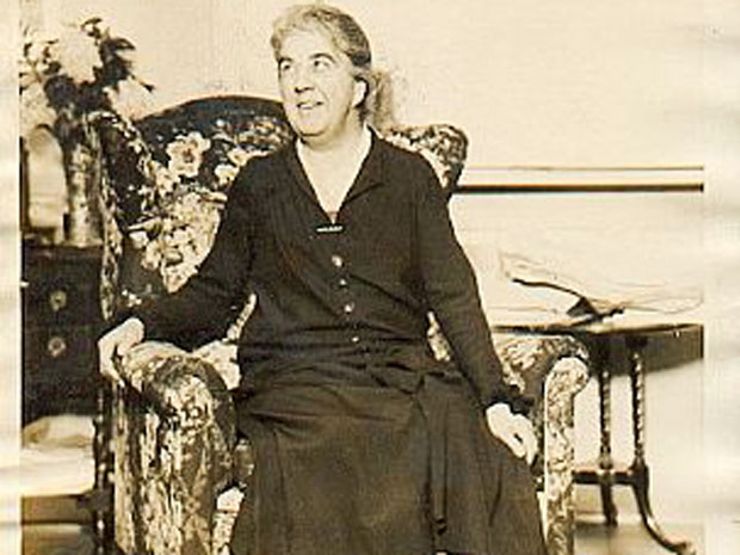
The crabapple tree stood in De Russey's Lane, near Phillipsburg, New Jersey.
Under it, on September 14, 1922, two bodies lay side by side.
Reverend Edward Wheeler Hall. Mrs. Eleanor Reinhardt Mills.
Both had been shot in the head.
Scattered near them were love notes.
The letters are the object of public fascination.
They are documented evidence of what linked the pastor and the choir singer.
What they say, the record holds. Who placed them there, the record does not.
That is not established. Not by the investigation, not by the trial, not by the decades since.
Were they dropped in a struggle? Placed as a message? Left by accident, or by design?
The letters were found. That much is fact.
Everything beyond that is a question the scene left open.
It is a quiet question. It is also the one that has never been answered.
The bodies were arranged, the notes were near, the heads were shot.
That is the whole of the certain picture.
The rest is inference, and inference is not evidence.
THE PASTOR AND THE CHOIR SINGER
Edward Wheeler Hall was the married rector of St. John's Episcopal Church in New Brunswick, New Jersey.
Eleanor Reinhardt Mills sang in his choir.
She was also married.
Their affair was an open secret in the church community.
The exact nature of the relationship is not fully documented beyond that open secret and the letters.
The letters were found near the bodies, and they were widely accepted as genuine.
They were read as proof of a love the congregation had whispered about for years.
Edward Hall's family spoke after the trial.
They continued to maintain his innocence regarding the affair.
Not because the letters were false, they said.
But because the man they knew could not have written them.
The family's denial was a separate grief.
It did not change what the record shows.
It did not change what the letters show.
The letters are documented evidence.
The identity of who left them is not established by the record.
That is the line the case draws, and it holds.
The choir singer was a mother.
The pastor was a husband.
The scandal weighed on both families long after the bodies were carried away.
The affair was an open secret, but the secrets did not end there.
THE INVESTIGATION AND THE PIG WOMAN
The first investigators walked through the scene without gloves, without tape, without care.
They picked up the love letters, read them aloud, passed them around.
By the time the New Jersey State Police arrived, the ground had been walked over and the evidence had been moved.
The record does not say what was lost.
It only says that what was found was no longer where it had been.
For four years, the case sat.
Then, in 1926, a grand jury was convened.
The case was reopened.
A farmer known as the Pig Woman came forward.
She said she had watched the murders from a distance while tending her pigs.
She said she saw the figures, heard the shots, recognized the faces.
She testified from a hospital bed, propped up, ill, dying.
The prosecution called her their key witness.
The defense called her a liar.
Her testimony was controversial.
The record does not establish that it was true.
It does not establish that it was false.
It establishes only that she said it, and that she was sick, and that she was believed by some and dismissed by others.
The love letters were brought into the courtroom.
They were read as evidence of motive.
They were the only thing the prosecution had that tied the dead to the living.
The defense said the letters proved an affair, not a murder.
It said the witness was unreliable.

It said the case was circumstantial.
It was.
The investigation was criticized for its reliance on the Pig Woman.
It was criticized for the lack of physical evidence linking the defendants to the crime.
The scene had been disturbed.
The letters had been handled.
The pistol was never recovered.
What remained was a story told from a hospital bed, and paper.
That would have to be enough.
It was not.
THE TRIAL AND THE ACQUITTAL
The trial began in November 1926 in Somerville, New Jersey.
Attorney General Alexander Simpson led the prosecution.
The defendants were Frances Noel Stevens Hall, the widow, her two brothers, and a cousin.
All four were charged with murder.
The prosecution built its case on the love letters and on the testimony of a farmer known as the Pig Woman.
She testified from a hospital bed.
She claimed she had seen the murders from a distance while tending her pigs.
The defense attacked her credibility.
They argued the evidence was circumstantial.
There was no direct evidence.
No weapon was ever recovered.
The jury deliberated for five hours.
Five hours, after a lengthy trial.
They returned a verdict of not guilty for all four.
The acquittal was widely seen as the result of a weak prosecution and a dismantled key witness.
No one else was ever charged.
The record does not establish the actual guilt or innocence of the defendants.
They were acquitted, not proven innocent.
That distinction matters.
The case remains officially unsolved.
Frances Hall and her family retreated from public life.
Edward Hall's family continued to maintain his innocence regarding the affair.
The love letters were widely accepted as genuine.
The identity of who left them is not established by the record.
The killer, or killers, were never named by a court.
The .32-caliber pistol was never recovered.
The story ends where it began: with two bodies under a crabapple tree, and paper scattered around them.
AND THE STORY STILL ISN'T OVER
The Hall-Mills case remains officially unsolved.
No one else was ever charged.
The .32-caliber pistol used in the murders was never recovered.
After the acquittal, Frances Hall and her family retreated from public life.
They said little, and then nothing at all.
Edward Hall's family continued to maintain his innocence regarding the affair.
They insisted the love letters were not what they seemed.
The letters were widely accepted as genuine, according to the record.
But the identity of who left them — that is not established.
No new evidence has emerged to identify the killer or killers.
The case has been the subject of numerous books, articles, and documentaries.
Each one returns to the same two bodies under the crabapple tree.
Each one returns to the paper scattered around them.
What was examined, what was argued, what was acquitted.
What remains is silence.
The story is told and retold, but the record does not close.
The killer, or killers, were never named by a court.
The pistol was never recovered.
The case is cited as an example of a sensational murder never resolved.
It is a mystery. It is also a grave.
The love letters are documented evidence.
The hand that left them is not.
That would require evidence.
And the evidence, like the pistol, is gone.
Advertisement
You may also like
The 51-day standoff that ended with 76 deaths, including more than 20 children
The search warrant was signed, and the plan was to arrest David Koresh. The raid was meant to be a routine execution of that…
The fishing trip alone at the marina that unraveled Scott Peterson's alibi
He told police he had gone fishing alone at the Berkeley Marina that morning. December 24, 2002. That evening, Laci Peterson, his 27-year-old pregnant…
The 1981 mall abduction that ended with a severed head in a canal — and a confession that kept changing
The drainage canal ran beside the Florida Turnpike in Vero Beach, a hundred miles north of where the boy vanished. On August 10, 1981,…
The ransom gold certificate that led police to a Bronx gas station — and a carpenter's door
A man stopped for gasoline in the Bronx in September 1934. He paid with a gold certificate, a bill the U.S. Treasury Department had…
Three men, one night in Aruba, and a beach sighting that never added up
The beach was near the Kalpoe brothers' home. A witness said they saw Natalee Holloway there with the three men. The record does not…
The ice pick and club that ended a Green Beret's family — and the story he told MPs
The telephone in the bedroom was off the hook. Army Captain Jeffrey MacDonald, a Green Beret physician, was found alive in his home at…