The ransom gold certificate that led police to a Bronx gas station — and a carpenter's door
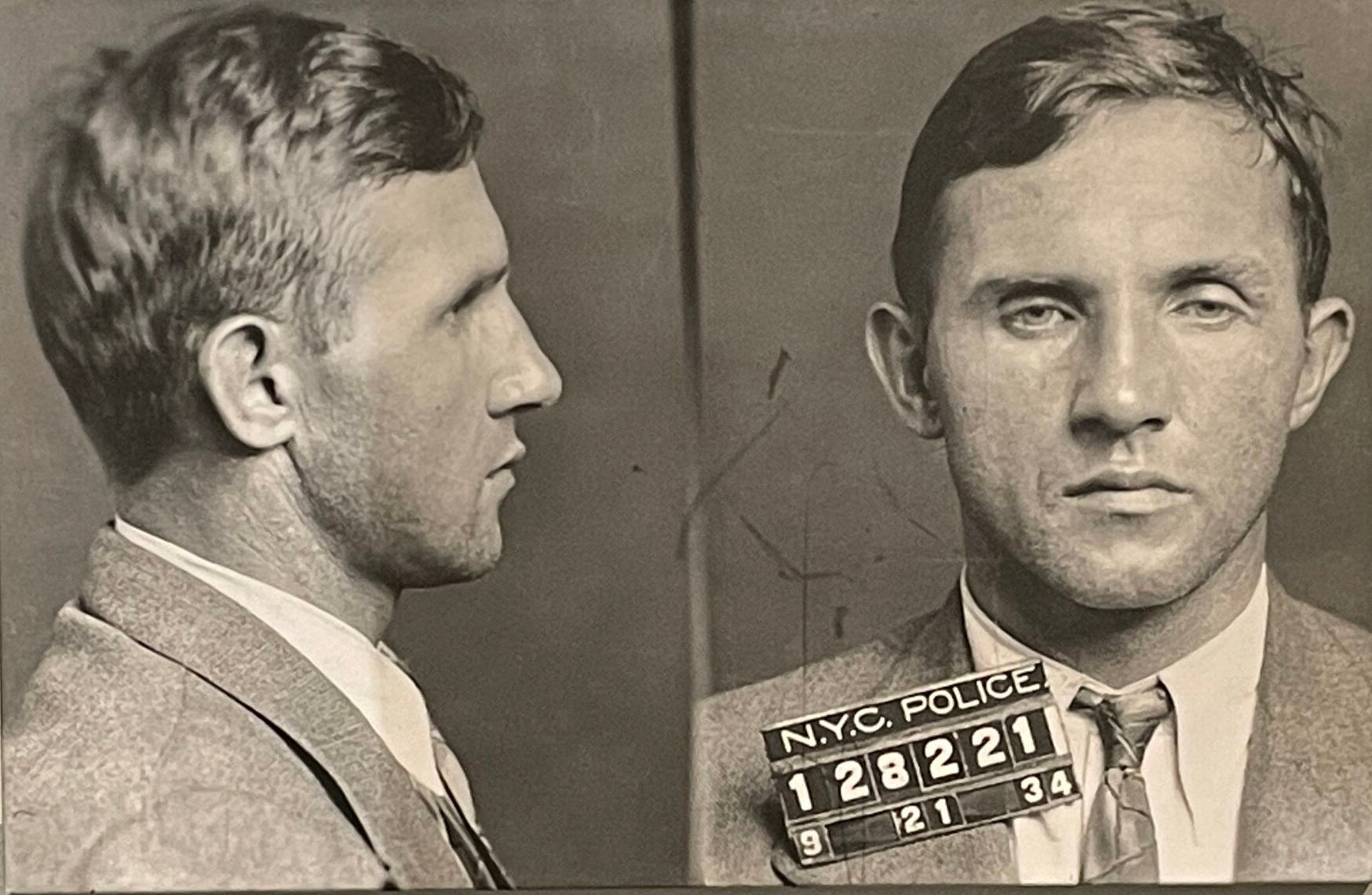
A man stopped for gasoline in the Bronx in September 1934.
He paid with a gold certificate, a bill the U.S. Treasury Department had already pulled from circulation.
That is the hinge.
The attendant at the station recorded the car's license plate.
Police followed the plate to Bruno Richard Hauptmann, a German-born carpenter.
He was arrested in the Bronx.
One bill, spent on a routine purchase, ended a two-year manhunt for the person charged with taking Charles Lindbergh Jr.
The exact date of that September purchase is not specified in the record.
The attendant's name is not in the record either.
What remains is the transaction itself: a gold certificate, a gas pump, a license plate.
The Treasury had withdrawn gold certificates from circulation, which is why the bill could be traced at all.
It was ordinary money that was no longer ordinary.
It was a purchase made by a man who, prosecutors would later say, spent the ransom.
He was charged with extortion and then with first-degree murder.
The defense would argue the evidence was circumstantial.
But the bill had already done its work.
It led to a door in the Bronx.
Behind that door was a carpenter's home.
The ladder, the notes, the wood — those came later.
First came the gas.
THE NURSERY WINDOWSILL
The crib was empty by the time the nurse looked in.
On the evening of March 1, 1932, Charles Lindbergh Jr., the 20-month-old son of aviator Charles Lindbergh and author Anne Morrow Lindbergh, was taken from his crib in the family's home near Hopewell, New Jersey.
A ransom note demanding $50,000 was left on the nursery windowsill.
The exact time of the kidnapping that evening is not in the record.
The content of the note beyond the $50,000 demand is not specified.

The investigation was led by the New Jersey State Police, with Colonel H. Norman Schwarzkopf as superintendent.
The Lindberghs' household staff and family lawyer were among those initially questioned.
The case drew national attention, and numerous people came forward with tips.
Every tip had to be weighed. Every stranger had to be considered.
The family waited. The public watched.
Who climbs to a nursery window? Who leaves a note on a sill?
That would require evidence.
THE RANSOM AND THE WOOD
The Lindbergh family paid the ransom.
They paid with the help of a go-between, a role the record does not name.
The child was not returned.
On May 12, 1932, the child was found dead in a wooded area about four and a half miles from the home.
The cause of death was a blow to the head.
The weapon was a blunt instrument, never recovered.
She was on the ground below, and the record does not say more.
At trial, the prosecution brought the ransom notes.
Handwriting experts linked those notes to Hauptmann, according to the investigation and evidence.
The prosecution also brought wood from his attic.
That wood matched a ladder used in the kidnapping, the investigation and evidence stated.
The exact nature of that match is not detailed in the record.
The defense argued the evidence was circumstantial.
The defense argued Hauptmann was framed.
Not because the notes were clean. Not because the wood was unrelated.
But because the case against him rested on things seen, not things proven.
What did the go-between know?
What did the ladder prove?
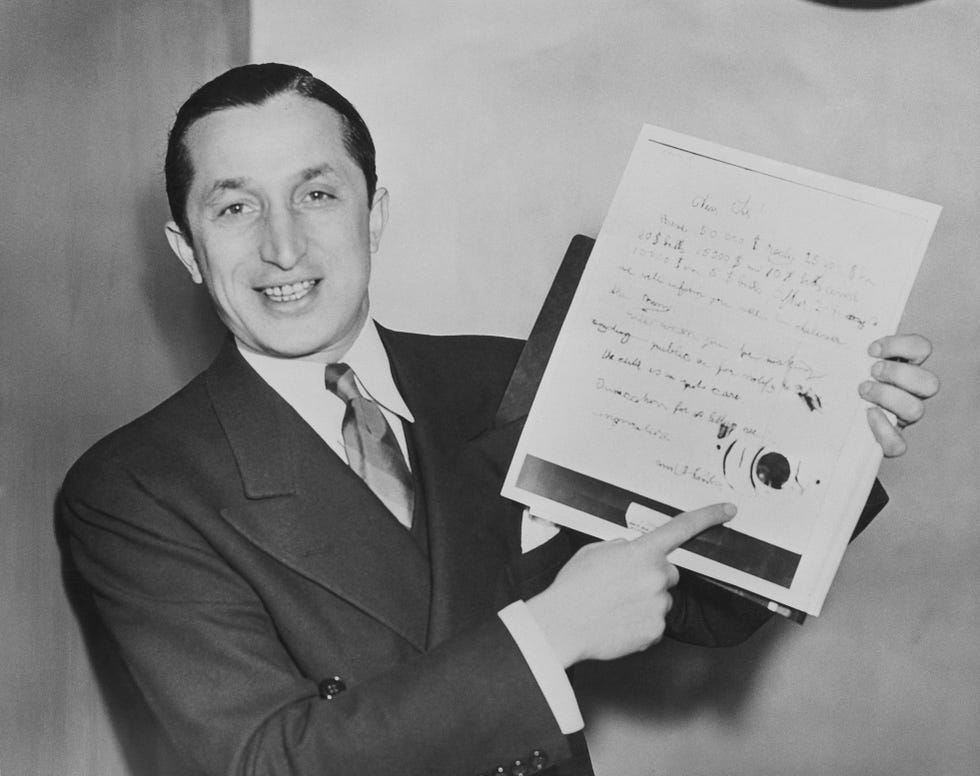
What did the wood in an attic really say?
That would require evidence.
The record traces one gold certificate to a Bronx gas station.
It traces a carpenter's door to a ladder.
Everything else is inference, claim, and unresolved debate.
THE TRIAL AND THE VERDICT
The trial opened in Flemington, New Jersey, in January 1935.
The prosecutor was David T. Wilentz, the New Jersey Attorney General.
Hauptmann's defense was led by Edward J. Reilly.
The Lindberghs' butler, once a suspect, was cleared and testified for the prosecution.
Handwriting experts tied the ransom notes to Hauptmann, the state argued.
Wood from his attic matched the ladder, the state argued.
The defense argued the evidence was circumstantial.
It argued Hauptmann was framed.
On February 13, 1935, the jury convicted him of first-degree murder.
The jury recommended life imprisonment.
The judge imposed the death sentence instead.
The judge's name is not used here; the record does not list the specific appeals denied.
Hauptmann maintained his innocence.
He was executed in the electric chair at the New Jersey State Prison on April 3, 1936.
The verdict rested on wood, paper, and handwriting.
It was a life-and-death verdict built on inference.
The jury said life.
The court said death.
That would require evidence.
The record does not establish why the recommendation was overridden.

It only shows that it was.
AND THE STORY STILL ISN'T OVER
He was executed in the electric chair at the New Jersey State Prison on April 3, 1936.
He maintained his innocence to the end.
Anna Hauptmann spent the rest of her life asserting that innocence.
She sought posthumous pardons until her death in 1994.
They were never granted.
The Lindbergh family withdrew from public life in the aftermath.
Charles and Anne Morrow Lindbergh later had other children.
The kidnapping remained a defining tragedy.
The Lindbergh home was eventually donated.
It was later demolished.
The case remains one of the most famous in American criminal history.
The debate about Hauptmann's guilt continues.
It divides.
No official re-opening of the case has changed the verdict.
That verdict stands.
Was he guilty?
Was he framed?
Was the evidence enough?
The record does not answer those questions.
It only shows the sentence was carried out.
It only shows a widow's decades of appeals.
It only shows a house that no longer exists.
The gold certificate led to the gas station.
The gas station led to the carpenter.
The carpenter led to the electric chair.
The rest is inference, claim, and unresolved debate.
That would require evidence.
Advertisement
You may also like

The phone calls a mistress recorded that shattered a husband's alibi
She was eight months pregnant, and she was reported missing from her home in Modesto, California, on December 24, 2002. Her husband, Scott Peterson,…
The confession that cracked the case: What Moseley told detectives about the night Kitty Genovese died
He was arrested for burglary. Winston Moseley was a 29-year-old business machine operator when police picked him up on March 19, 1964 — six…
The memoir admission that revived a 27-year-old murder case
It starts with a book. In 2018, Duane "Keffe D" Davis — a self-described gang member — published a memoir and gave interviews describing…
The Ryder truck VIN that led FBI agents to a rental clerk — and a name
The first report came within minutes. Not as an explosion. As a gas leak, a utility accident, something breaking. At 9:02 a.m. on April…

The friend who called police because Shanann Watts missed her OB-GYN appointment
The appointment was a checkup, the kind that fills a Tuesday morning and is forgotten by lunch. Shanann Watts, 34, was fifteen weeks pregnant…
The surgical cut that pointed LAPD to a doctor's skill — but never to a name
The morning of January 15, 1947, began with a child’s walk through a vacant lot in Leimert Park, Los Angeles. The nude body of…