The fishing trip alone at the marina that unraveled Scott Peterson's alibi
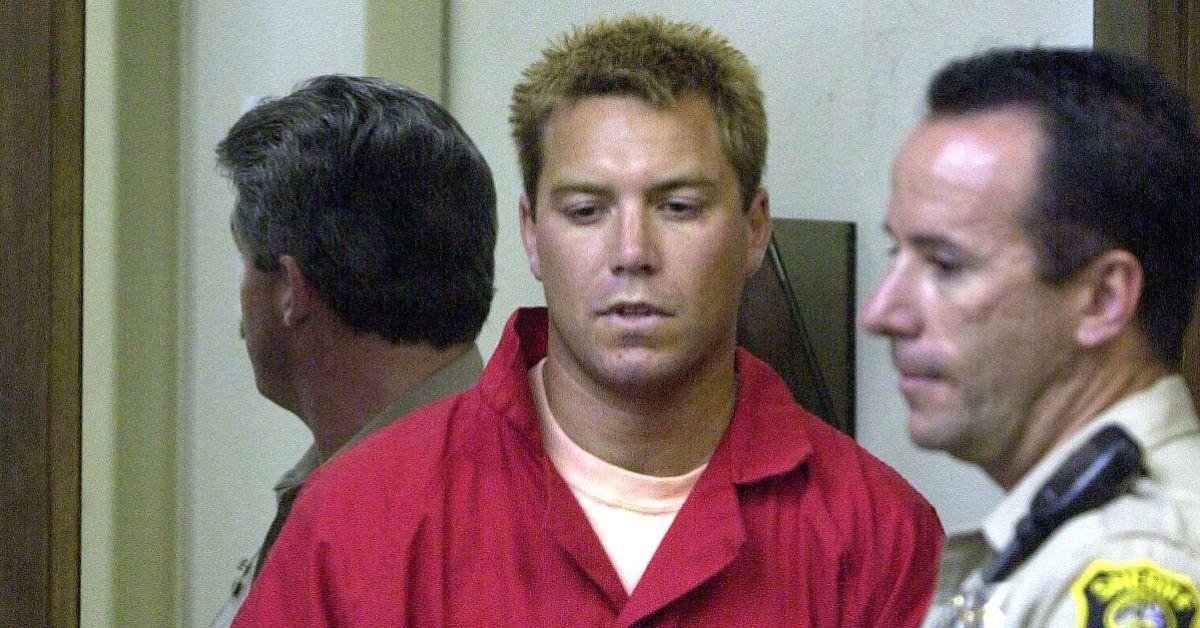
He told police he had gone fishing alone at the Berkeley Marina that morning.
December 24, 2002.
That evening, Laci Peterson, his 27-year-old pregnant wife, was reported missing.
A solo fishing trip on a Christmas Eve morning, offered by the husband.
Investigators found it suspicious immediately.
Not because fishermen don't go out on holidays.
But because of the timing, the place, and the man who was telling it.
Detectives later found that Scott had purchased a fishing boat weeks before the disappearance.
A boat bought in advance.
A boat that placed him on the water near where the bodies would eventually wash ashore.
The vessel became central to the case.
The weapon was never recovered.
What remains in the record is his own statement.
It is not established that Scott actually went fishing.
The record contains only his claim.
Why would a man with a missing wife go fishing alone?
Why would he choose that morning, that marina, that boat?

Why would he say it at all?
That would require evidence.
There is the claim, and there is what followed.
THE DISAPPEARANCE AND THE SEARCH
Laci Peterson disappeared from her home in Modesto, California, on December 24, 2002.
She was 27 years old and eight months pregnant.
Scott Peterson reported her missing that evening.
Police initially treated him as a grieving husband.
That treatment did not last.
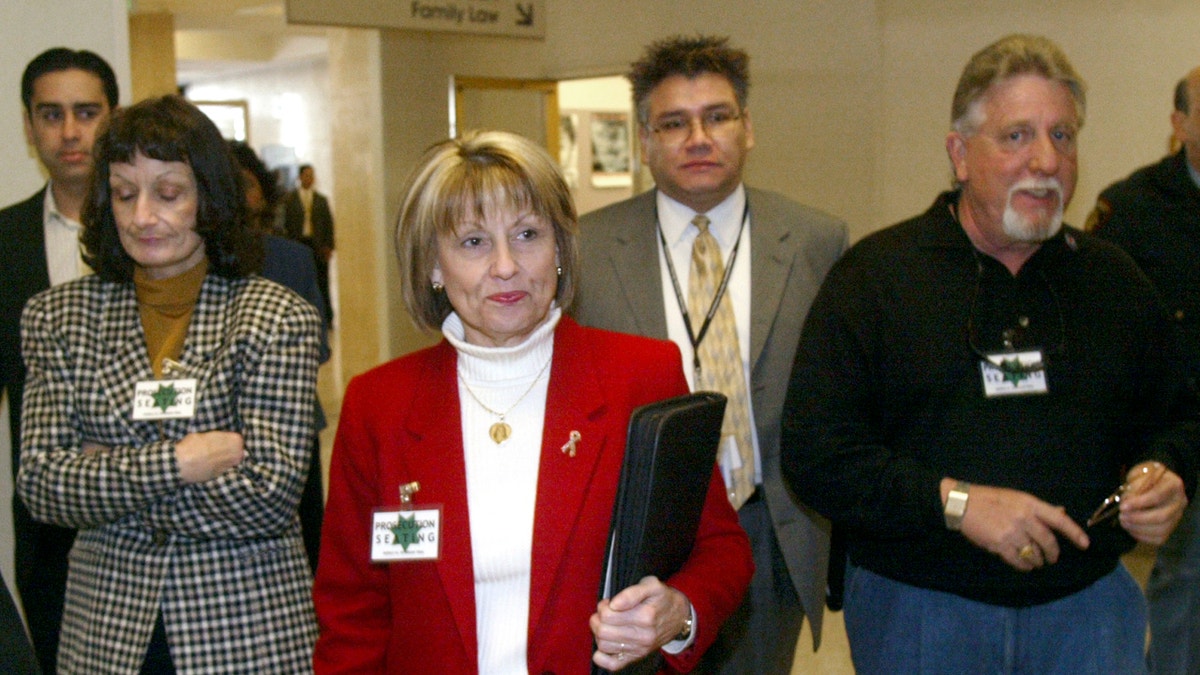
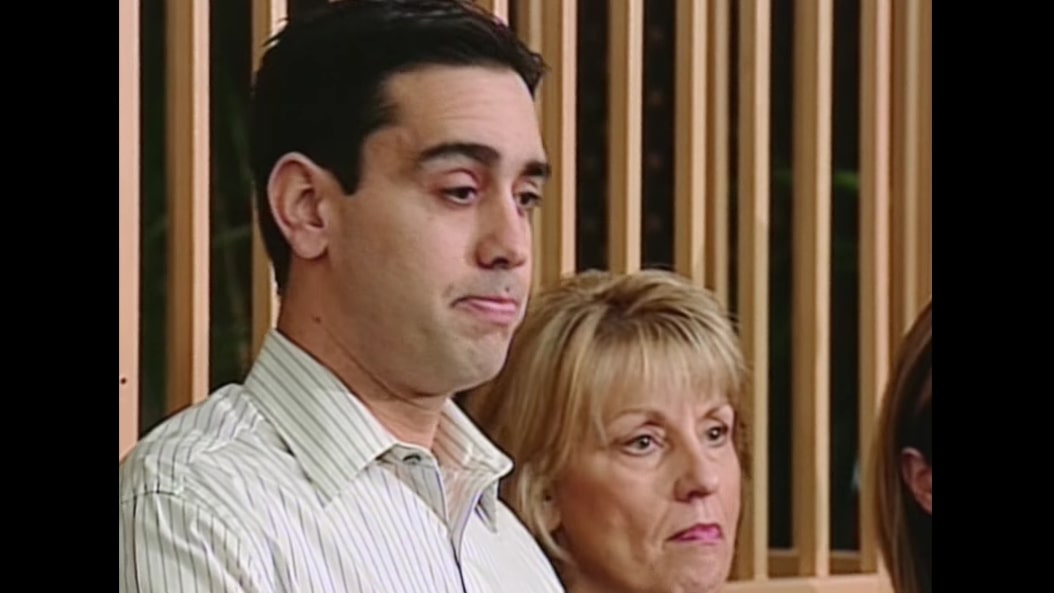
Laci's family — her mother, Sharon Rocha, her stepfather, Ron Grantski, and her brother, Brent Rocha — became public advocates for finding her.
They held press conferences. They made pleas. They searched.
The case drew intense national media attention.
Cameras arrived in Modesto. Reporters filled the streets. The missing pregnant woman became a story the country followed.
Then the story changed.
On April 13, 2003, the bodies of Laci and her unborn son washed ashore in San Francisco Bay near the Richmond-San Rafael Bridge.
The couple had planned to name the boy Conner.
The remains were identified in April 2003.
A missing-person case became a murder investigation.
The exact time of death is not established.
The defense argued the timeline was unreliable — that the bodies could have drifted from elsewhere, that the science could not pin the moment.
The prosecution disagreed.
What remains is the sequence: the disappearance on December 24, the claim of a fishing trip, the discovery in April.
It is a timeline. It is also a question.
How does a solo fishing trip on a holiday morning end with two bodies in the bay four months later?
That would require evidence.
THE MISTRESS AND THE LIES
Detectives found a name in Scott Peterson's life that his wife's family did not know.
Amber Frey was a massage therapist. Scott Peterson had been seeing her.
He had told her he was a widower, that his wife had died.
That was a lie, and it was a lie he told before Laci disappeared.
When Frey learned of Laci's disappearance, she contacted police.
She began recording phone calls with Scott Peterson, at the direction of investigators.
Those recordings became crucial evidence.
The content of the calls is not detailed in the source material, only that they were crucial.
What the record does show is that the calls contradicted his public statements.
They contradicted his alibi.
The prosecution argued that Scott Peterson killed Laci to escape his marriage and his impending fatherhood.
The defense argued that Laci had been abducted by strangers while walking her dog.
Two stories, and only one of them involved a grieving husband.
He had told a mistress he was a widower. He had told police he went fishing alone.
A man who claimed to be a widower could not be trusted about a fishing trip.
That was the question the recordings raised.
That would require evidence.
THE TRIAL AND THE VERDICT
The trial opened in June 2004 in Redwood City, California.
It moved there from Modesto because of extensive pretrial publicity.
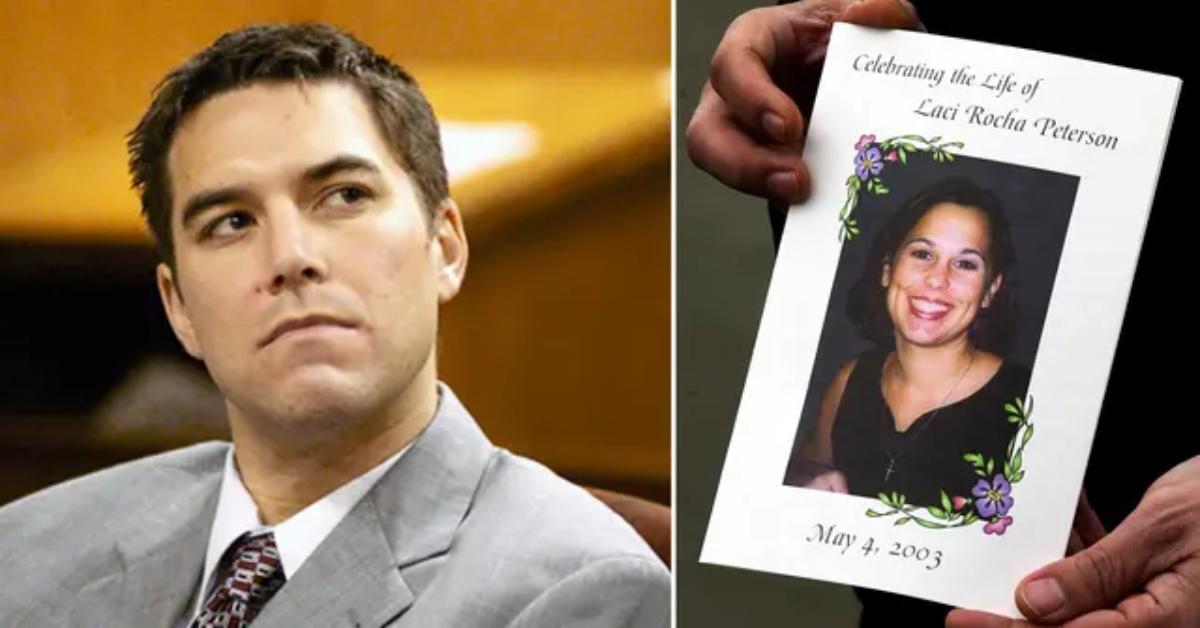
Scott Peterson was charged with two counts of first-degree murder — one for Laci, one for their unborn son, Conner.
The prosecution called Dr. Charles C. C. Lee, a forensic pathologist.
Lee testified about the condition of the bodies and the likely time of death.
The defense argued the bodies could have drifted from elsewhere.
The defense argued the timeline was unreliable.
The weapon was never recovered.
The prosecution argued Scott used an unspecified blunt object or his hands.
That was a claim, not a finding.
The recordings from Amber Frey had already shown one version of Scott Peterson.
The fishing trip was another version.
The jury had to choose which version was true.
On November 12, 2004, the jury found Scott Peterson guilty of first-degree murder for Laci's death.
They found him guilty of second-degree murder for Conner's death.
He was sentenced to death on March 16, 2005.
The circumstantial evidence carried the case.
The affair, the lies, the boat, the bay.
The man who claimed to be a widower could not be trusted about a fishing trip.
The jury agreed.
AND THE STORY STILL ISN'T OVER
He is still at San Quentin.
Scott Peterson remains on death row, a fact that sounds like a verdict but is only a holding pattern.
In 2020, the California Supreme Court overturned his death sentence.
:max_bytes(150000):strip_icc():focal(749x0:751x2)/Laci-and-Scott-Peterson-081224-255c69408379478482d3a927e5d377ee.jpg)
The court ruled the trial judge had erred in jury selection.
The court upheld the murder convictions.
That is the line: the crimes stand, the punishment does not.
A resentencing hearing has been repeatedly delayed.
The specific reason for the repeated delays is not stated in the source material.
It is a legal limbo. It is also a family's waiting room.
Sharon Rocha has continued to speak publicly about the case.
She speaks as the mother of Laci Peterson. She speaks as the grandmother of Conner.
The case remains one of the most heavily covered criminal trials in American history.
That coverage did not end with the verdict. It did not end with the appeal.
What comes next is a resentencing hearing.
When it happens, a judge will decide between life in prison and something less than death.
That decision will not change the conviction. It will not change the fishing trip.
It will only change the sentence.
The jury agreed once. The Supreme Court agreed with them.
The story still is not over.
Not because the evidence faded. But because the law moves slower than the bay.
What will the next step be?
A date. A courtroom. A ruling.
That would require the record to say so. It does not.
Advertisement
You may also like
The phone calls a mistress recorded that shattered a husband's alibi
She was eight months pregnant, and she was reported missing from her home in Modesto, California, on December 24, 2002. Her husband, Scott Peterson,…
The confession that cracked the case: What Moseley told detectives about the night Kitty Genovese died
He was arrested for burglary. Winston Moseley was a 29-year-old business machine operator when police picked him up on March 19, 1964 — six…

The memoir admission that revived a 27-year-old murder case
It starts with a book. In 2018, Duane "Keffe D" Davis — a self-described gang member — published a memoir and gave interviews describing…
The Ryder truck VIN that led FBI agents to a rental clerk — and a name
The first report came within minutes. Not as an explosion. As a gas leak, a utility accident, something breaking. At 9:02 a.m. on April…
The friend who called police because Shanann Watts missed her OB-GYN appointment
The appointment was a checkup, the kind that fills a Tuesday morning and is forgotten by lunch. Shanann Watts, 34, was fifteen weeks pregnant…
The surgical cut that pointed LAPD to a doctor's skill — but never to a name
The morning of January 15, 1947, began with a child’s walk through a vacant lot in Leimert Park, Los Angeles. The nude body of…