The last phone call from a pharmacy that changed a mother's search forever
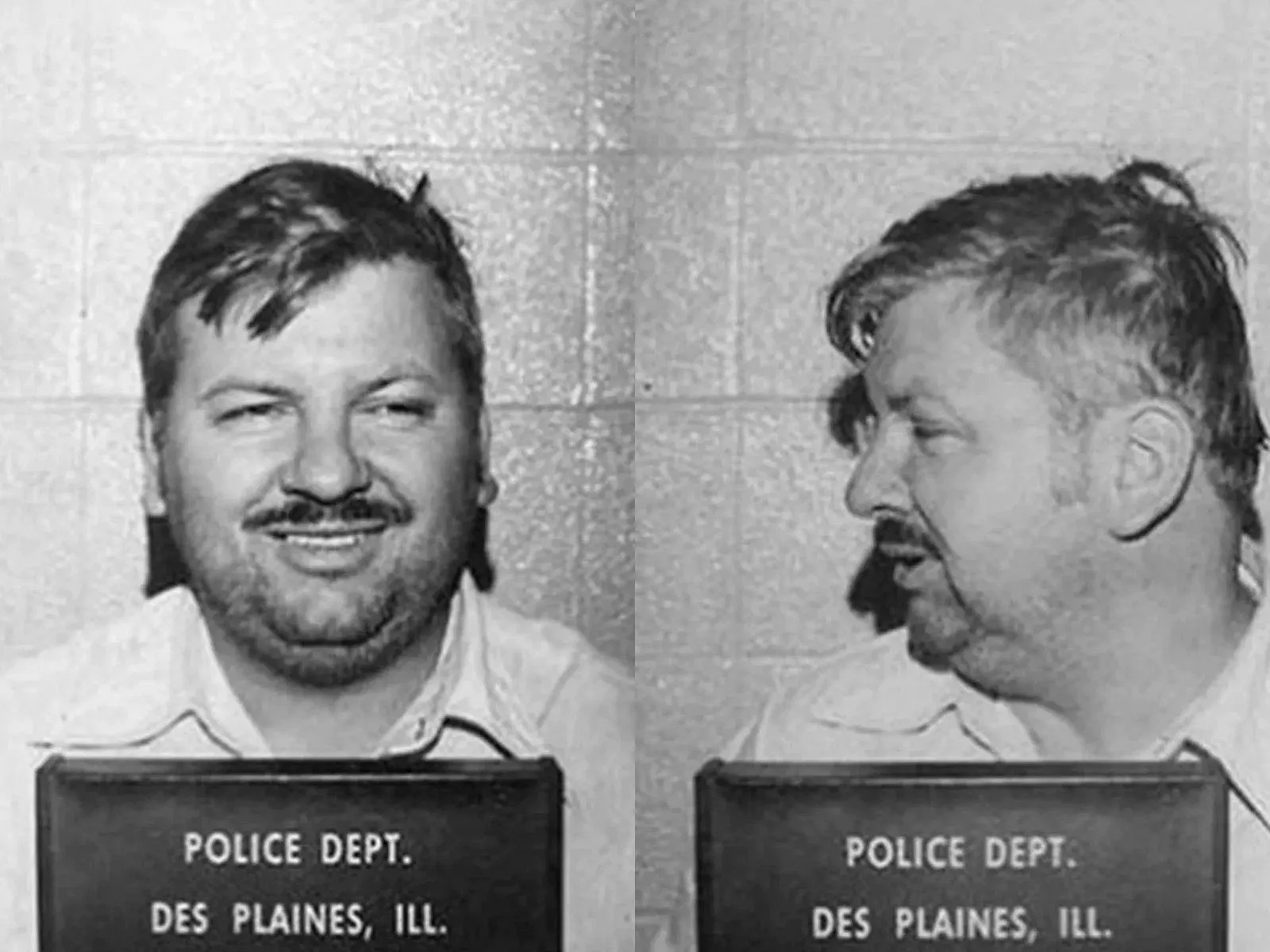
The phone rang, and Elizabeth Piest answered.
Her son Robert, 15, had gone to the pharmacy to pick up a prescription for her.
A man there had offered him a construction job.
That was the last known contact.
The exact time of the pharmacy visit is not in the record.
The precise words of the job offer are not in the record.
What is in the record is the date: December 12, 1978.
That was the day Elizabeth Piest reported her son missing.
The man who offered the job was John Wayne Gacy.
Gacy was a building contractor in the Chicago area.
He was also a part-time clown performer.
The errand was ordinary.
A quick stop, a prescription, a conversation.
It became the hinge of everything.
What did a mother hear in that last phone call?
Did Robert mention the man's name?
Did he say where the job was?
Did he say when he would be home?
The record does not say.
The record begins with the report.
Elizabeth Piest made that report on December 12, 1978.
That is the documented start of the investigation.
Everything else came after.
DECEMBER 12 — THE REPORT
She told police her son had gone to a pharmacy to talk about a construction job.
The man who offered the job was John Wayne Gacy, a building contractor who also performed as a clown at children's parties.
Police began with a missing boy and a mother's account.
They learned Gacy had a prior conviction for sodomy in Iowa.
They learned he had been investigated in connection with the 1975 disappearance of another young man.
That young man had been last seen in Gacy's company.
The inquiry was led by the Des Plaines Police Department's lead detective.
His name is not in reliable coverage of the case.
The exact sequence of calls between the pharmacy and the report is also not in the record.
What is in the record is the report itself, filed on December 12, 1978.
It is a single mother's missing-person report.
It is also the moment a search for one boy began to widen.
Was there a pattern in the older cases?
Did anyone connect them then?
That would require evidence the record does not provide.
What the record shows is the widening: a pharmacy, a contractor, a prior conviction, a vanished young man.
Elizabeth Piest reported her son missing.
Everything else came after.
THE SEARCH WARRANT
On December 13, police obtained a search warrant for Gacy's home.
One day after Elizabeth Piest filed her report.

The officers moved through the house and stopped.
A foul odor rose from somewhere below.
They found suspicious items: handcuffs, drug paraphernalia.
Handcuffs, the source records, were how Gacy subdued his victims.
The search did not end with the smell or the objects.
Gacy was arrested.
He initially denied involvement.
After days of interrogation, he confessed.
He said he killed 33 people.
The exact duration of that interrogation is not in the record.
The specific wording of the confession is not in the record either.
What the record does show is what he did next.
He led investigators to the crawl space beneath his home.
There, they excavated 26 bodies.
He led them to the Des Plaines River.
Four more bodies were recovered there.
Thirty-three victims total.
The number matched his confession.
Robert Piest was among the buried.
His mother had reported him missing on December 12.
That report is what broke the case open.
Not a theory.
Not a rumor.
A mother's missing-person report.
The crawl space held the weight of years.
The river held the rest.
Officers worked to identify the remains.
Several victims would remain unidentified for decades.
The foul odor had meant something after all.
Handcuffs meant something too.
Gacy was in custody.
The confession was on the record.
But the excavation had only begun.
THE TRIAL AND THE MOTHER
The trial began in February 1980.
Gacy was indicted on 33 counts of first-degree murder.
Prosecutor Terry Sullivan laid out the case.
He presented Gacy's confession.
He presented the recovered bodies.
He called witnesses to the stand.
Carole Hoff testified about her husband's behavior.
Elizabeth Piest testified too.
She was the mother who reported her son missing.
She was the witness who faced the man accused of killing him.
The courtroom had no transcript of her exact words.
The content of her testimony is not in the record.
What she said that day is not established.
What she did is documented.
She reported Robert missing on December 12, 1978.
That report is what broke the case open.
Not any viral theory.
Not a rumor.
A mother's missing-person report.
The defense argued Gacy was insane at the time of the murders.
The jury heard the argument.
The jury rejected it.
On March 12, 1980, they convicted him on all 33 counts.
She sat through the verdict.
She heard the man found guilty of killing her son.
The defense attorney's name is not in reliable coverage.
That detail remains unestablished.
The conviction stands.
The mother's testimony stands with it.
AND THE STORY STILL ISN'T OVER
Gacy was sentenced to death.
He was executed by lethal injection on May 10, 1994, at Stateville Correctional Center in Illinois.
The execution did not close the case.
Since then, several victims have been identified through DNA analysis and genealogical research.
Some had been known only by numbers.
Which specific victims have been identified this way is not itemized in the source.
That detail remains unestablished.
The Gacy house was demolished in 1979.
The crawl space is gone.
The river is still there.
Elizabeth Piest has spoken publicly about the case over the years.
Other victims' families have spoken too.
They have named their sons.
They have asked for answers.
The case remains one of the most studied serial murder investigations in American history.
Why?
Because it is a record of what was missed.
Because it is a record of what was found.
Because it is a record of what still waits to be named.
The identification work continues.
The families continue to speak.
The mother's report, filed on December 12, 1978, is the documented thread that pulled it all open.
Not the theories.
Not the speculation.
A mother's missing-person report.
That is what the record shows.
That is what stands.
Advertisement
You may also like

The 51-day standoff that ended with 76 deaths, including more than 20 children
The search warrant was signed, and the plan was to arrest David Koresh. The raid was meant to be a routine execution of that…
The fishing trip alone at the marina that unraveled Scott Peterson's alibi
He told police he had gone fishing alone at the Berkeley Marina that morning. December 24, 2002. That evening, Laci Peterson, his 27-year-old pregnant…
The 1981 mall abduction that ended with a severed head in a canal — and a confession that kept changing
The drainage canal ran beside the Florida Turnpike in Vero Beach, a hundred miles north of where the boy vanished. On August 10, 1981,…
The ransom gold certificate that led police to a Bronx gas station — and a carpenter's door
A man stopped for gasoline in the Bronx in September 1934. He paid with a gold certificate, a bill the U.S. Treasury Department had…

Three men, one night in Aruba, and a beach sighting that never added up
The beach was near the Kalpoe brothers' home. A witness said they saw Natalee Holloway there with the three men. The record does not…
The ice pick and club that ended a Green Beret's family — and the story he told MPs
The telephone in the bedroom was off the hook. Army Captain Jeffrey MacDonald, a Green Beret physician, was found alive in his home at…