From first report to verdict: the timeline of the Simpson trial
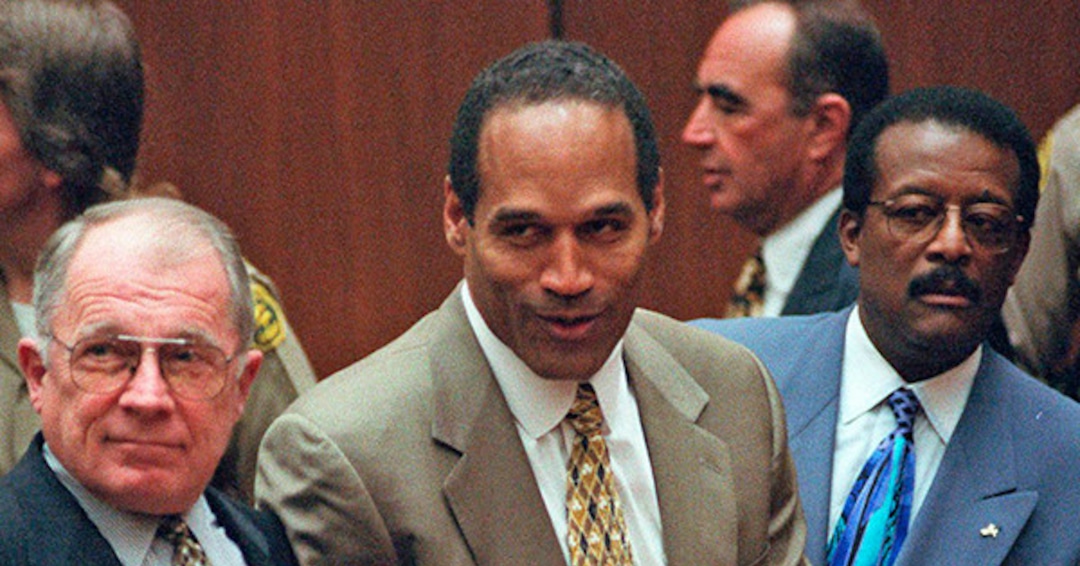
The dog walker found Nicole Brown Simpson's body first.
It was approximately 12:10 a.m. on June 13, 1994, outside her condominium on Bundy Drive in Brentwood, Los Angeles.
The neighbor was walking her dog.
She called police.
Ronald Goldman was found stabbed to death nearby.
He was a waiter at a nearby restaurant.
He had come to return eyeglasses Nicole's mother had left at the restaurant earlier that evening.
An ordinary errand.
Both victims had been killed with a knife.
Nicole's throat was cut.
Goldman had been stabbed multiple times.
Responding Los Angeles Police Department officers found the bodies.
The murder weapon — a knife — was never recovered.
Who the killer was is not established at this point.
The weapon was never found.
That is what the record shows.
Everything else came later.
THE CHARGES AND THE ARREST
The charges came nine days after the bodies were found.
O.J. Simpson, a former football star and actor and Nicole's ex-husband, became the primary suspect.
On June 17, 1994, he was charged with two counts of first-degree murder.
He pleaded not guilty.
The lead detectives, Mark Fuhrman and Philip Vannatter of the Los Angeles Police Department, led the investigation.
Police found a bloody glove at the scene on Bundy Drive.
A matching glove was later discovered behind Simpson's estate on Rockingham Avenue.
A pair of bloody socks was found in Simpson's bedroom.
Blood drops at the scene and on Simpson's Bronco matched Simpson's DNA, according to prosecution experts.
The evidence mounted against one man.
A glove at the scene.
A glove at his home.
Blood on his socks.
Blood on his car.
That is what the prosecution said the record showed.
What is not established is Simpson's timeline on the night of the murders.
The record does not fix where he was, or for how long.
That question would be fought over for eight months in court.
But the charge itself was formal, and it was public.
Two counts of first-degree murder, entered on a June afternoon, with a plea of not guilty to follow.
The weight of the accusation was now official.
THE TRIAL AND THE GLOVES
The trial began on January 24, 1995, before Judge Lance Ito.
It lasted over eight months.
The prosecution was led by Deputy District Attorneys Marcia Clark and Christopher Darden.
The defense argued that evidence was contaminated and mishandled by criminalist Dennis Fung.
The defense also argued that Detective Fuhrman had planted the glove.
Fuhrman's credibility collapsed when tapes surfaced of him using racial slurs and boasting about fabricating evidence.
A key turning point was the glove demonstration in court.
Simpson struggled to put on the gloves.
The defense used the moment to argue they did not fit.
Whether the gloves actually fit Simpson is not established.
The demonstration was a moment in court, not a scientific finding.
It was a physical gesture, timed for the jury.
It was also a pivot in public perception, felt in the room and beyond.
The prosecution's case relied on a timeline showing Simpson had the opportunity to commit the murders.
The defense argued he was at home at the time.
The timeline was documented.
The glove was not proof.
That would require evidence.
THE VERDICT AND THE CIVIL JUDGMENT
On October 3, 1995, the jury acquitted Simpson on both counts of first-degree murder.
The verdict was widely controversial.
Simpson was never convicted of the murders.
The murder case remains officially unsolved in the sense that no one else was ever charged, though Simpson was acquitted.
The identity of the killer is not established by the record.
That would require evidence.
In a separate civil trial in 1997, a jury found Simpson liable for the wrongful deaths of Nicole Brown Simpson and Ronald Goldman and ordered him to pay $33.5 million in damages to the families.
The criminal acquittal did not end the matter.
The civil judgment was a different finding, on a different standard.
The families pursued it.
The glove demonstration was a courtroom moment.
It was not proof of innocence.
The record shows what the jury decided.
The record shows what the civil jury decided.
It shows what was charged and what was not proven.
The murder weapon was never recovered.
The knife was not found.
The timeline was documented.
The verdict was delivered.
The case remains officially unsolved.
AND THE STORY STILL ISN'T OVER
The timeline was documented.
The verdict was delivered.
The case remains officially unsolved.
The story did not end with the acquittal.
Simpson was later convicted of armed robbery and kidnapping in 2008 in Las Vegas, Nevada.
He served nine years in prison before being released on parole in October 2017.
He died on April 10, 2024, of cancer.
The legal saga outlived the main figure.
The Goldman family has continued to pursue the civil judgment.
Fred Goldman has stated he received only a small portion of the awarded damages.
Whether any portion of that judgment will ever be fully paid is not established.
The murder weapon was never recovered.
Its location remains unknown.
That is a fact the record does not resolve.
The case has been the subject of numerous books, documentaries, and dramatizations.
Each retelling returns to the same gaps.
What happened on Bundy Drive that night?
Who held the knife?
Why did the gloves appear not to fit?
Those questions remain open.
The families' pursuit continues without closure.
Fred Goldman kept pressing.
Kim Goldman kept speaking.
The verdict was one moment.
The pursuit is the rest of the story.
Advertisement
You may also like
Three men, one night in Aruba, and a beach sighting that never added up
The beach was near the Kalpoe brothers' home. A witness said they saw Natalee Holloway there with the three men. The record does not…
The ice pick and club that ended a Green Beret's family — and the story he told MPs
The telephone in the bedroom was off the hook. Army Captain Jeffrey MacDonald, a Green Beret physician, was found alive in his home at…
The open letter urging prosecutors to drop a death sentence, and the family behind it
The letter arrived in the spring of 2015. Bill and Denise Richard wrote it. They were the parents of Martin Richard, the 8-year-old boy…
The kennel video that broke a dynasty lawyer's alibi — what did it show?
The video is seven seconds long, and it shows a dog. Paul Murdaugh filmed it on his phone at Moselle, the family's hunting estate…
The love letters scattered beside a choir singer and a pastor's bodies
The crabapple tree stood in De Russey's Lane, near Phillipsburg, New Jersey. Under it, on September 14, 1922, two bodies lay side by side.…
The 31-day gap between Caylee Anthony's last sighting and the 911 call that began it all
Caylee Marie Anthony was two years old. She was last seen by family members on June 16, 2008, in Orlando, Florida. No one reported…