The bullet that tied a pharmacy tech to the Delphi trail — and the tip that came too late
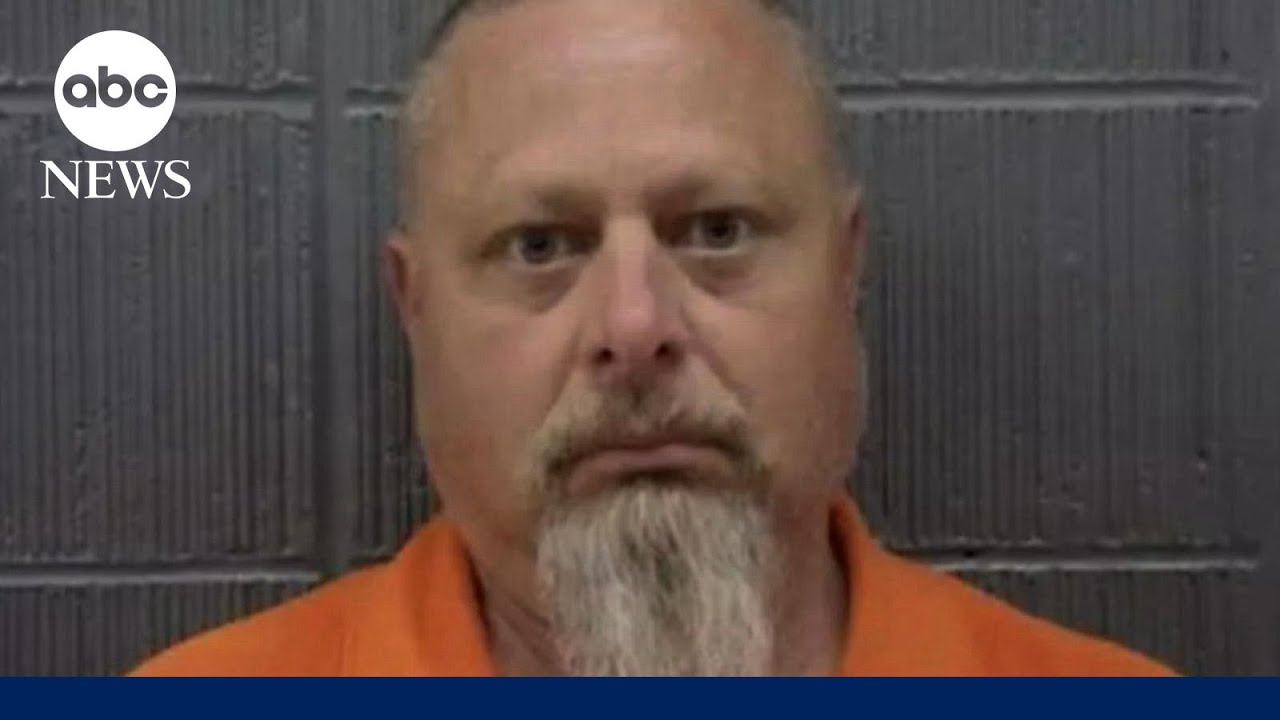
The tip came in 2022.
It pointed to Richard Allen, a local pharmacy technician who had told investigators years earlier that he had been on the trail the day the girls disappeared.
He was not considered a suspect at the time.
The case had stalled by then.
Multiple persons of interest had been publicly named and cleared.
More than five years had passed since Abby Williams, 13, and Libby German, 14, went hiking near the Monon High Bridge and never came home.
The exact nature of the tip is not in the record.
Who provided it is not in the record either.
What is in the record is the delay.
Investigators later faced criticism for a period when Allen was not treated as a suspect despite his own self-reported presence on the trail.
The public had been given an audio clip of a man's voice saying "down the hill."
They had been given a grainy video from Libby German's phone.
Neither broke the case.
The tip that did came from a different source.
When investigators finally looked at Allen, they found a bullet at the crime scene.
It was matched to a gun he owned.
A woman testified she saw him on the trail that day, dressed in clothing matching the description of the man in the video.
What if the tip had come sooner?
What if Allen had been checked in 2017, when his name was already in the file?
What if the bullet had been tested then?
That would require evidence.
The record shows only that the tip came late.
It shows that the girls' families waited five years and more.
It shows a trail, a bridge, and a bullet that tied a pharmacy tech to the scene.
The what-ifs are not in the record.
THE GIRLS AND THE TRAIL
February 13, 2017, was a Monday.
Abby Williams, 13, and Libby German, 14, went hiking near the Monon High Bridge in Delphi, Indiana.
They were dropped off for the afternoon, a plan that should have ended with a pickup.
The pickup never happened.
By that evening, the girls had failed to appear, and they were reported missing.
Their bodies were found the next day, February 14, in a wooded area near the bridge.
The cause of death was later determined: homicide by sharp-force injury to the neck.
The weapon itself was never recovered.
The record does not establish what knife was used, only that it was a knife.
The trail became a crime scene, and the bridge became a name repeated on national news.
Libby's father and grandmother became public advocates, speaking to reporters again and again.
They asked for tips. They asked for patience. They asked for answers.
Abby's mother also spoke publicly, her grief carried into interviews and press conferences.
For five years, they lived with the audio clip and the grainy video.
For five years, they lived with a case that stalled.
When the conviction came in November 2024, the families expressed relief.
They also expressed grief.
Relief that someone was held accountable.
Grief that two girls were still gone.
The verdict did not bring Abby back.
It did not bring Libby back.
It gave the families a word for what happened: guilty.
But the trail, the bridge, and the missing weapon remain part of the record.
The girls were 13 and 14.
They went hiking on a Monday.
They did not come home.
THE BULLET AND THE WITNESS
The bullet was found at the crime scene.
Prosecutors said it was matched to a gun owned by Richard Allen.
A woman testified she saw Allen on the trail that day.
She said he was dressed in clothing matching the description of the man in the video.
The prosecution also presented Allen's own admissions to a prison inmate.
According to that testimony, Allen said he had committed the murders.
The defense argued the evidence was circumstantial.
They said Allen had been wrongly accused.
They argued he was a troubled man who had made false confessions under duress.
They argued the bullet evidence was unreliable.
The reliability of the bullet match was contested at trial.
The reliability of the confessions was contested at trial.
Neither was established as fact beyond the prosecution's claims.
The investigation had been criticized for missteps.
Two different sketches had been released.
A period passed when Allen was not considered a suspect despite his own tip.
The weight of the physical evidence was heavy.
The weight of the witness testimony was heavy.
The defense's challenges were heavy too.
Was the bullet match sound?
Were the confessions real?
Was the witness mistaken?
That would require evidence.
The jury heard both sides.
They deliberated.
They found him guilty.
THE VERDICT AND THE SENTENCE
The charge came in October 2022, more than five years after the girls were found.
Richard Allen, a local pharmacy technician, was charged with two counts of murder.
The trial began in October 2024 in Carroll County.
The prosecution was led by the county prosecutor.
The defense was led by two attorneys.
The jury heard the bullet evidence.
The jury heard the witness who placed Allen on the trail.
The jury heard the admissions Allen made to a prison inmate.
The defense argued the confessions were false and the bullet evidence unreliable.
On November 11, 2024, the jury found Allen guilty on both counts.
The judge sentenced him to 130 years in prison.
The judge ordered the sentences to run consecutively.
The families of Abby Williams and Libby German have spoken publicly since the verdict.
They expressed relief at the conviction.
They also spoke of their grief.
The case drew national attention because of the audio and video captured on Libby's phone.
That recording — a man's voice saying "down the hill" — was played for the jury.
The specific details of the sentencing hearing are not in the record beyond the sentence.
What remains documented is the charge, the trial, the verdict, and the sentence.
What remains is also the loss.
AND THE STORY STILL ISN'T OVER
Richard Allen is serving his sentence at an Indiana state prison.
He has filed an appeal.
His attorneys argue the trial was unfair, citing pretrial publicity and the handling of evidence.
The appeal is the next concrete step in the case.
The outcome of the appeal is pending.
That is not established.
The families continue to speak publicly.
They express relief at the conviction.
They also express grief.
The loss is not resolved by a verdict.
The specific weapon was never recovered.
That too remains open.
A knife was used, the record states.
Where that knife is, the record does not say.
The trial is over.
The sentence is set.
The legal proceedings are not.
The case moves forward through the appeal.
The families move forward with it.
They have said what the conviction means to them.
They have also said what it does not bring back.
It does not bring back the girls.
It does not erase the years the case sat unsolved.
It does not answer every question the record leaves open.
The bullet matched.
The witness testified.
The admissions were heard.
The jury found him guilty on both counts.
That is documented.
What is not documented is the weapon.
What is not documented is the appeal's result.
What is not documented is an end to the grief.
The story continues in a courtroom.
It continues in the words of the families.
It continues in the unanswered questions.
The legal fight goes on after the conviction.
That is the unfinished business.
It is also the only certainty left.
Advertisement
You may also like
The 31-day gap between Caylee Anthony's last sighting and the 911 call that began it all
Caylee Marie Anthony was two years old. She was last seen by family members on June 16, 2008, in Orlando, Florida. No one reported…

The housekeeper who found Sharon Tate's blood-soaked front door
Winifred Chapman arrived for work at 10050 Cielo Drive on the morning of August 9, 1969. She was the housekeeper. The front door was…
Flight attendant who took the note from D.B. Cooper still haunted by his calm
She was the one who took the note. It was November 24, 1971, and the man had just handed her a folded piece of…
The last phone call from a pharmacy that changed a mother's search forever
The phone rang, and Elizabeth Piest answered. Her son Robert, 15, had gone to the pharmacy to pick up a prescription for her. A…
A 22-second video on a dead man's phone that shattered a family's alibi
On June 7, 2021, Paul Murdaugh and his mother, Maggie Murdaugh, were found shot to death at the family's hunting estate in Colleton County,…
From first report to verdict: the timeline of the Simpson trial
The dog walker found Nicole Brown Simpson's body first. It was approximately 12:10 a.m. on June 13, 1994, outside her condominium on Bundy Drive…