The morning Gianni Versace walked to a newsstand and never came back
The morning began as an errand.
On July 15, 1997, at approximately 8:45 a.m., Gianni Versace walked from his Miami Beach mansion, Casa Casuarina, toward a nearby newsstand.
He was returning when the shots came.
The designer was killed on the steps of his own home, two gunshot wounds to the head and neck.
The shooter fled on foot.
Witnesses saw him go — a maintenance worker, a tourist, people whose ordinary morning was suddenly something else.
Versace was 50 years old.
He had built a fashion house from his sister's and brother's work alongside his own, a name known beyond runways.
His family would speak publicly in the days ahead, his brother Santo and sister Donatella both executives in the company he founded.
But on that morning, there was only the errand, the steps, the gun.
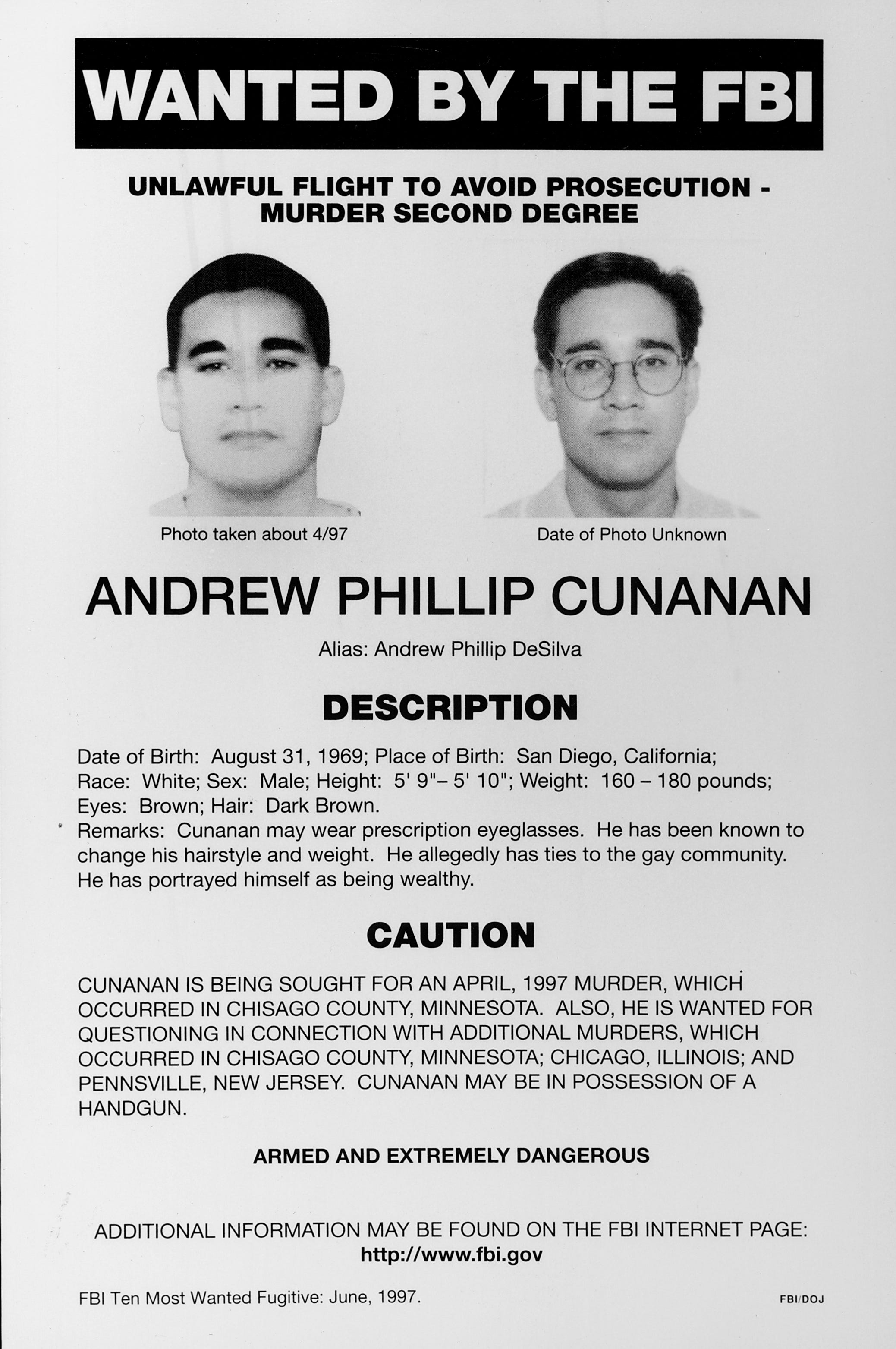
The gunman was later identified as Andrew Cunanan, a 27-year-old fugitive already wanted for multiple murders across the country.
He was found dead eight days later, aboard a houseboat in Miami Beach, from a self-inflicted gunshot wound.
A note was found after his death.
Its contents were never fully disclosed.
That remains unresolved.
What the note said, whom it addressed, what it might have explained — none of that is established in the record.
The shooting itself is documented.
The gunman's identity is documented.
The suicide is documented.
The note is a fact with an empty space where its words should be.
It is a detail the case file carries but does not open.
That would require evidence no one has produced.
THE MANHUNT
By July 15, the manhunt was already national.
Andrew Cunanan was wanted for four murders: Jeffrey Trail, David Madson, Miguel Contreras, and William Reese.
The killings had crossed the country, and the trail had gone cold in Miami Beach.
Then a witness gave a description.
A maintenance worker saw the gunman flee on foot.
A tourist saw it too.
Police matched a fingerprint on a stolen car found abandoned nearby.
The print belonged to Cunanan.
The identification came fast.
The frustration came faster.
Jurisdictional disputes slowed the chase, and critics faulted the FBI's handling of the earlier killings.
Cunanan's mother, Mary Ann Cunanan, made public statements during the manhunt.
What she said is not in the record.
That would require evidence no one has produced.
The weight of the spree was converging on one block of Ocean Drive.
A man wanted for four deaths had just made it five.
And the system that was supposed to catch him was already arguing over who should.
THE AFTERMATH
The brother and the sister flew to Miami.
Santo Versace and Donatella Versace, both executives in the family fashion house, were closely involved in the aftermath.
They spoke publicly about the murder.
The specific content of those statements is not in the record.
What is in the record is the scene they walked into.
Versace's longtime partner was present at the scene shortly after the shooting.
He later testified about the events.
The autopsy was performed by the medical examiner.
It confirmed Versace died from two gunshot wounds to the head and neck.
Two shots.
One designer.
The manhunt went on for eight days.
Then the fugitive was found dead aboard a houseboat in Miami Beach.
It was July 23, 1997.
He died from a self-inflicted gunshot wound to the head.
The gun was the same .40-caliber pistol used in the earlier murders.
Same weapon.
Five deaths.
No trial.
No charges were ever filed.
The perpetrator was deceased.
An inquest was held in Miami-Dade County to review the circumstances.
The partner testified there.

The brother and sister had already buried their own.
Donatella Versace would go on to serve as artistic director for many years.
Santo remained involved in the company's business operations.
The fashion house continued.
So did the questions.
What did the partner see from the steps?
What did the family say in those public statements?
What was in the note found after the suicide?
That would require evidence.
The record holds only the shots, the suicide, and the silence that followed.
NO TRIAL, ONLY AN INQUEST
No trial ever took place.
Andrew Cunanan was found dead on July 23, 1997, eight days after the shooting, from a self-inflicted gunshot wound to the head.
The case was closed without charges being filed, because the perpetrator was deceased.
An inquest was held in Miami-Dade County to review the circumstances of Versace's death.
Versace's longtime partner testified at that inquest.
What did he say?
What did the inquest conclude?
What did the note found after the suicide contain?
That would require evidence.
The contents of the note were never fully disclosed.
The prosecution's case — had there been one — would have rested on witness identifications.
It would have rested on the fingerprint match on the stolen car.
It would have rested on the same .40-caliber pistol used in four prior murders.
The defence's case never materialised.
No one else was ever charged in connection with the murder.
The evidence existed.
The witnesses existed.
The weapon existed.
The courtroom did not.
A case with evidence but no trial is a case with an ending the law never wrote.
It is a closed file.
It is also an open question.
The inquest gave the family a forum, not a verdict.
Santo Versace and Donatella Versace spoke publicly after the murder, but no legal proceeding ever tested the account of what happened on those steps.
The record holds the shots, the suicide, and the silence that followed.
…AND THE STORY STILL ISN'T OVER
Andrew Cunanan is buried in San Diego, California.
The Versace family continues to operate the fashion house.
Donatella Versace served as artistic director for many years after her brother's death.
Santo Versace remained involved in the company's business operations.
The work went on. The name stayed on the label.
Casa Casuarina, the mansion where Versace was killed, has operated as a luxury hotel since 2000.
Guests sleep where the designer once lived. The steps are part of the property now.
The crime scene became a destination. The destination is a hotel.
The case has been the subject of numerous books, documentaries, and a 2018 television series.
It is retold. It is dramatized. It is examined from every angle.
No new legal developments have occurred.
That is what the record shows, and it shows no more.
The note found after Cunanan's death was never fully disclosed. The inquest gave the family a forum, not a verdict.
There is no trial transcript to revisit. There is no appeal to follow.
There is only the permanence of the loss.
Donatella Versace spoke publicly after the murder. Santo Versace spoke publicly after the murder.
They described a brother, not a brand.
The fashion house moved forward. The family moved forward.
The mansion on Ocean Drive did not.
It stands where it stood, opened to paying guests, the iron gates familiar from photographs.
People take pictures there. People check in there. People ask about the steps.
The steps remain. The newsstand remains a short walk away.
The story is told and retold because it was never settled in a courtroom.
The record holds the shots, the suicide, and the silence that followed.
It does not hold a verdict. It does not hold a motive confirmed under oath.
It holds a burial in San Diego and a hotel in Miami Beach.
It holds a family that kept the name alive.
Advertisement
You may also like
The notebook found beside Laundrie's remains that the FBI says holds a confession
The notebook was found beside Brian Laundrie's remains on October 20, 2021, in the Carlton Reserve in Florida, according to the FBI. The FBI…
The bullet that tied a pharmacy tech to the Delphi trail — and the tip that came too late
The tip came in 2022. It pointed to Richard Allen, a local pharmacy technician who had told investigators years earlier that he had been…
A 23-year-old graduate student’s name kept out of one headline for six decades
She was 23, a graduate student, and one of thirteen women killed in their apartments around Boston between June 1962 and January 1964. Many…
The anonymous call that sent police to Adnan Syed — and the cell tower data that wouldn't hold
January 13, 1999, was a school day, and Hae Min Lee left Woodlawn High School at the end of it. She was 18, a…
The 2007 deal that let Epstein plead to two counts — and the 2019 charge that followed
In 2005, a mother in Palm Beach, Florida, walked into a police station with a report about her 14-year-old stepdaughter. She named the man…
The mother who watched her daughter's killer walk free — and still says he did it
She was 18 years old. Hae Min Lee was a senior at Woodlawn High School, a popular student and an athlete. She was the…