The 2007 deal that let Epstein plead to two counts — and the 2019 charge that followed
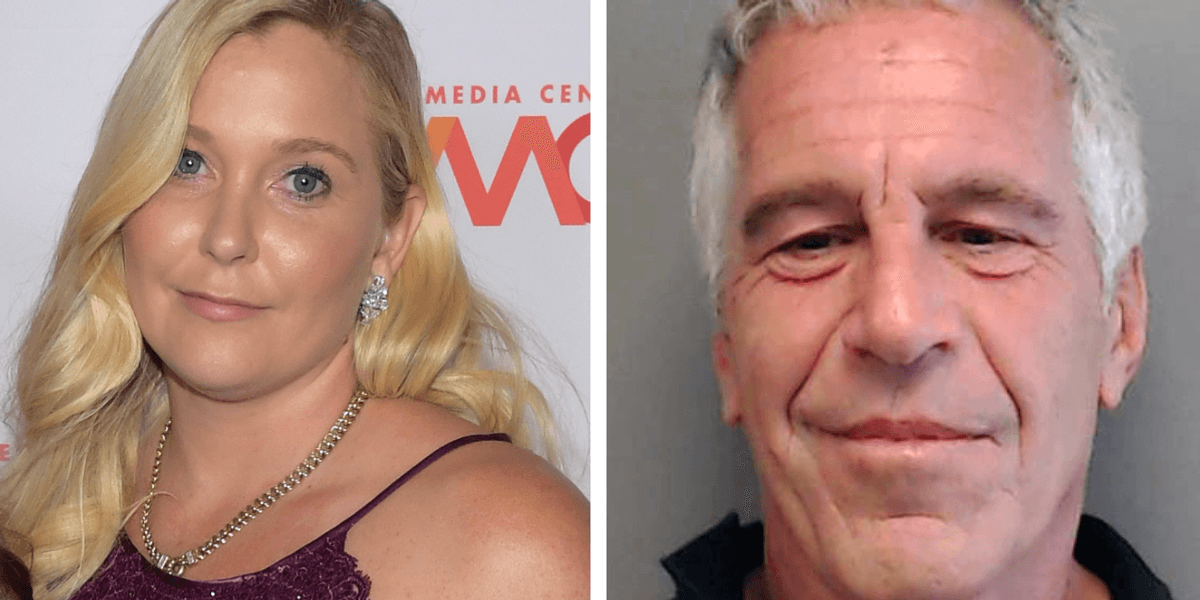
In 2005, a mother in Palm Beach, Florida, walked into a police station with a report about her 14-year-old stepdaughter.
She named the man she said had sexually abused the girl: Jeffrey Epstein.
The Palm Beach Police Department opened an investigation.
That single complaint set a process in motion that would run for more than a decade.
The lead detective interviewed multiple alleged victims.
He gathered phone records.
He collected witness testimony.
The victims described being recruited at schools and malls.
They were teenagers, approached where teenagers gather.
The exact number of victims is not established in the source.
The investigation grew beyond one city.
The FBI became involved.
A federal grand jury was convened.
Sitting in that grand jury room, the case took on a scale no single mother's report could have predicted.
But it began with her.
It began with one woman saying one name.
It began in 2005, in Palm Beach, with a complaint that would not stay local.
THE 2007 DEAL
In 2006, Epstein was arrested on charges of soliciting a minor for prostitution, according to arrest records.
Federal prosecutors, led by then-U.S. Attorney Alexander Acosta, negotiated a non-prosecution agreement in 2007, according to federal court documents.
The agreement allowed Epstein to plead guilty in state court to two counts of soliciting prostitution from a minor, according to court records.
He was sentenced to 18 months in county jail, with work release, according to state court records.
He served about 13 months, according to correctional records.
The full terms of the non-prosecution agreement are not detailed in the source.
What the record shows is a federal case diverted into a state plea.
What the record does not show is everything the federal prosecutors agreed to drop.
The Miami Herald later criticized the agreement for being secretive and lenient, according to its reporting.
It was secretive because the deal was filed under seal.
It was lenient because federal charges of sex trafficking would carry a far longer sentence than 18 months in county jail.
Acosta was the U.S. Attorney who signed it.
He testified about it years later, defending the deal as a legitimate resolution.
The state plea did not name the victims.
The state plea did not require Epstein to register as a sex offender in some jurisdictions.
The state plea did not end the case.
It ended the federal case against Epstein.
It did not end the questions about why the federal case ended at all.
The 2007 agreement was a documented fact.
The criticism of it was also documented.
What the agreement fully contained — that remains outside the record.
THE 2019 CHARGE
In 2019, the Miami Herald published a series by journalist Julie K. Brown detailing the case.
Federal prosecutors in New York reopened the investigation.
They charged Epstein with sex trafficking of minors and conspiracy.
The indictment was a documented fact.
He pleaded not guilty.
The evidence included flight logs.
The evidence included photographs.
The evidence included testimony from victims.
He was held at the Metropolitan Correctional Center in New York.
The federal case had arrived, twelve years after the deal that let him plead to two counts in state court.
Then it was cut short.
On August 10, 2019, Epstein died by suicide in his cell.
The official death report states the cause as suicide.
That is the documented fact.
Any further details about the death — the circumstances, the sequence, the mechanism — are not in the record.
The trial never happened.
The charges were never tried.
A federal case that took over a decade to arrive ended without a verdict.
THE TWO INTERPRETATIONS
Two readings of the same facts.
The prosecution view, as reported by the Miami Herald: the 2007 non-prosecution agreement was secretive and lenient. It let Epstein avoid federal charges.
The defense view, stated in court records: the agreement was a legitimate resolution. It allowed Epstein to plead guilty in state court.
Not because one is true. Because both were argued.
The 2019 federal charge was a new, separate case. The federal indictment says so. It was not a continuation of the 2007 matter.
Epstein pleaded not guilty. He died before trial. The federal case was never tried.
A new charge, a new court, a new decade. The same man.
Ghislaine Maxwell was later tried. In 2021 she was convicted on five counts, including sex trafficking of a minor. She was sentenced to 20 years in prison.
That verdict came down. Epstein's never did.
What did the prosecutors intend in 2007? The record does not establish that. No memo, no testimony, no admission settles whether the deal was leniency or legitimacy.
The agreement is documented. The charge is documented. The death is documented.
The intent sits between them, unproven.
AND THE STORY STILL ISN'T OVER
Epstein is dead.
The death report is dated August 10, 2019, in his Manhattan jail cell.
He died before trial, so the 2019 federal charge was never tested in court.
His estate has paid settlements to victims.
The estate records show payments, but the full scope of claims is not in the record.
Ghislaine Maxwell is serving her sentence.
Court records show she was convicted in 2021 on five counts, including sex trafficking of a minor.
She was sentenced to 20 years in prison.
The non-prosecution agreement remains a subject of legal and political controversy.
News coverage continues to ask whether the 2007 deal was a failure of prosecution or a legitimate resolution.
Several lawsuits against Epstein's estate and associates have continued.
Court filings show the litigation is active.
The outcome of those ongoing lawsuits is not in the record.
That would require a final judgment, and none is documented here.
The case prompted changes in federal law regarding sex trafficking.
Legislative records show new statutes were enacted after the case became public.
The 2005 complaint led to an investigation.
The investigation led to a deal.
The deal led to a charge.
The charge led to a death.
The death did not end the story.
It continues in court filings, in estate records, in legislative records.
It continues in the question the record leaves open: what the 2007 deal was meant to do.
That intent is not established.
The agreement is documented. The charge is documented. The death is documented.
The rest is still being written.
Advertisement
You may also like
The 31-day gap between Caylee Anthony's last sighting and the 911 call that began it all
Caylee Marie Anthony was two years old. She was last seen by family members on June 16, 2008, in Orlando, Florida. No one reported…
The housekeeper who found Sharon Tate's blood-soaked front door
Winifred Chapman arrived for work at 10050 Cielo Drive on the morning of August 9, 1969. She was the housekeeper. The front door was…
Flight attendant who took the note from D.B. Cooper still haunted by his calm
She was the one who took the note. It was November 24, 1971, and the man had just handed her a folded piece of…
The last phone call from a pharmacy that changed a mother's search forever
The phone rang, and Elizabeth Piest answered. Her son Robert, 15, had gone to the pharmacy to pick up a prescription for her. A…
A 22-second video on a dead man's phone that shattered a family's alibi
On June 7, 2021, Paul Murdaugh and his mother, Maggie Murdaugh, were found shot to death at the family's hunting estate in Colleton County,…
From first report to verdict: the timeline of the Simpson trial
The dog walker found Nicole Brown Simpson's body first. It was approximately 12:10 a.m. on June 13, 1994, outside her condominium on Bundy Drive…