The mother who watched her daughter's killer walk free — and still says he did it
She was 18 years old.
Hae Min Lee was a senior at Woodlawn High School, a popular student and an athlete.
She was the beloved daughter of South Korean immigrant parents.
Her mother, Young Lee, has never stopped saying who killed her.
Even after the conviction was vacated, even after the state dropped all charges, Young Lee has publicly maintained that Adnan Syed is guilty.
She has expressed deep distress over the legal proceedings that overturned his conviction.
Justice has not been served, she has said.
Her grief predates the podcast.
It outlasts the media spotlight, too.
Years after *Serial* revived the case and brought it international attention, the mother's position has not moved.
The exact words Young Lee used in any specific public statement are not in the record.
Only her consistent position is documented.
That position is unwavering.
It is the same position she held in 2000, when a jury convicted Syed of first-degree murder.
It is the same position she held in 2022, when a Baltimore judge vacated that conviction.
What does it mean to watch the system undo the only justice you had?
What does it mean to hear the world debate the guilt of the man you believe killed your daughter?
What does it mean to be told the evidence was unreliable, and still know what you know?
That would require evidence.
She was a mother on the ground below.
The case drew national attention decades later through the podcast, but her belief was there first.
It is still here.
THE DISAPPEARANCE AND THE BODY
January 13, 1999, was the day Hae Min Lee did not arrive.
She was an 18-year-old senior at Woodlawn High School, a popular student and an athlete.
She failed to pick up her younger cousin from daycare.
That was when she was reported missing.
Her body was found on February 9, 1999, in Leakin Park, a wooded area in Baltimore.
The cause of death was manual strangulation.
Police focused on Adnan Syed, her ex-boyfriend, after receiving an anonymous tip.
The record does not establish who made that call.
The investigation was criticized for failing to pursue other leads.
One lead was a man who offered to help Lee with car trouble on the day she disappeared.
The record does not establish who that man was, or whether he was ever found.
Not because the police had proof against Syed at that moment.
But because the tip pointed one way, and the investigation followed.
She was in the ground for nearly a month before anyone found her.
Her family waited through the search, through the news, through the identification.
It is a cold finality.

It is also a question that has never closed: what other paths were left untaken.
THE TRIAL AND THE WITNESS
The charges came in 1999: first-degree murder, kidnapping, robbery, and false imprisonment.
At trial in 2000, prosecutors said Syed killed Hae Min Lee out of jealousy after their breakup.
They built the case on a classmate, Jay Wilds.
Wilds testified that Syed showed him the body and asked for help burying it.
Wilds's account shifted multiple times.
The exact content of those different accounts is not detailed in the record — only that they changed.
The defense had a witness of its own.
Asia McClain, a classmate, said she saw Syed at the public library at the time of the murder.
She was never called to testify.
The jury heard the shifting story.
The jury did not hear the alibi.
Syed was convicted of first-degree murder.
He was sentenced to life in prison plus 30 years.
The verdict rested on a witness who changed his story.
It rested on cell tower records that placed Syed near Leakin Park.
No physical evidence linked him to the crime.
Could a different witness have changed the outcome?
Could a different story have changed it?
Could a different timeline have changed it?
That would require evidence.
The trial record holds what it holds: a conviction built on testimony that moved, and an alibi that never made it into the courtroom.
For Young Lee, the mother, the verdict was the truth.
She has said so, publicly, for years.
She watched the conviction fall apart anyway.
THE PODCAST AND THE VACATED CONVICTION
*Serial* did not solve the case.
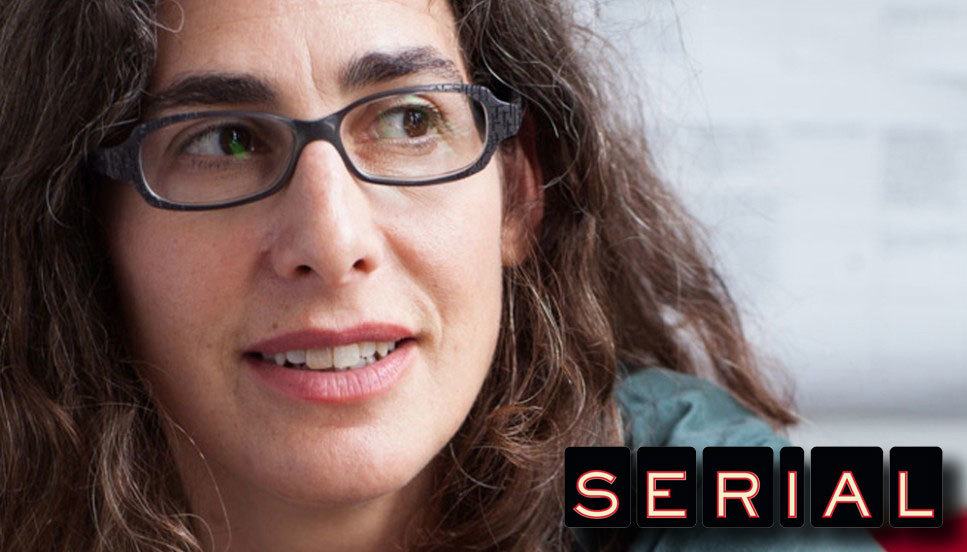
What Sarah Koenig’s podcast did was take it apart, piece by documented piece, for millions of listeners.
It revisited the investigation and the 2000 trial, and it uncovered significant problems with the prosecution’s case.
The case had relied heavily on cell phone tower records.
Those records placed Syed in Leakin Park around the time of the murder.
But the reliability of that data was later called into question.
The technology was young. The interpretation was contested.
No physical evidence linked Syed to the crime.
Not his fingerprints. Not his DNA. Not a confession.
The state’s case rested on the testimony of Jay Wilds, a classmate whose account shifted multiple times.
In 2022, a Baltimore judge vacated Syed’s conviction.
Prosecutors acknowledged problems with the evidence.
They cited unreliable cell tower data.
They also cited the failure to disclose a potential alternative suspect.
The identity of that potential alternative suspect is not named in the source.
The record does not establish Syed’s innocence.
What the record shows is that the evidence used to convict him was not reliable enough to stand.
The state later dropped all charges.
A vacated conviction is not a verdict of not guilty.
It is a statement that the conviction could not hold.
For Young Lee, the mother, the distinction may not matter.
She has said, publicly, for years, that Syed is guilty.
She watched the conviction fall apart anyway.
The podcast revived the case.
It did not revive the certainty.
AND THE STORY STILL ISN'T OVER
She was released in September 2022, after the conviction was vacated.
The family watched him walk out.
In 2023, a Maryland appeals court reinstated the conviction.
The state's highest court declined to hear the case, and it was vacated again in 2024.
As of the latest reports, Syed remains free.
The case against him has been dismissed.
Young Lee has not changed her position.
She has consistently maintained that Syed is guilty.
She has spoken publicly about her grief.
She has said justice has not been served.
Not because the record proves it. But because she watched the trial, and she watched the conviction fall apart anyway.
The legal back-and-forth leaves the family in limbo.
There is no final resolution in sight.
What comes next for the state?
What comes next for Syed?
What comes next for a mother still waiting?
The source does not say.
Any future legal steps are not specified.
The record ends with the case dismissed and Syed free.
Young Lee remains.
She is the one who will not let go.
Her daughter was 18 years old.
She was a popular student, an athlete, a beloved daughter.
She was strangled in Leakin Park.
The conviction is gone.
The grief is not.
Advertisement
You may also like
A 22-second video on a dead man's phone that shattered a family's alibi
On June 7, 2021, Paul Murdaugh and his mother, Maggie Murdaugh, were found shot to death at the family's hunting estate in Colleton County,…
From first report to verdict: the timeline of the Simpson trial
The dog walker found Nicole Brown Simpson's body first. It was approximately 12:10 a.m. on June 13, 1994, outside her condominium on Bundy Drive…
He told police he found his family's bodies. Then he confessed to the rifle in his home.
The call came in on November 13, 1974. Police were sent to 112 Ocean Avenue in Amityville, New York, a suburban community on Long…
The floppy disk that led police to BTK — and the family left to remember
The package arrived at the television station in 2004, decades after the killings had stopped. It sat among the mail like any other parcel,…
The notebook found beside Laundrie's remains that the FBI says holds a confession
The notebook was found beside Brian Laundrie's remains on October 20, 2021, in the Carlton Reserve in Florida, according to the FBI. The FBI…
The bullet that tied a pharmacy tech to the Delphi trail — and the tip that came too late
The tip came in 2022. It pointed to Richard Allen, a local pharmacy technician who had told investigators years earlier that he had been…