The anonymous call that sent police to Adnan Syed — and the cell tower data that wouldn't hold
January 13, 1999, was a school day, and Hae Min Lee left Woodlawn High School at the end of it.
She was 18, a senior, and she did not come home.
Her body was found on February 9, 1999, in Leakin Park in Baltimore.
The cause of death was manual strangulation.
For weeks, the case went unsolved.
Then the police received an anonymous phone call.
That call steered the investigation toward Lee's ex-boyfriend, Adnan Syed.
The tip is documented in the record.
The caller's identity is not.
The exact content of the call is not established either.
Who was on the other end of that line?
What did they say, and why did they wait?
Why did it take weeks for the police to act on it?
That would require evidence.
At the time, the anonymous call was enough to shift the focus.
It was a fact, but a thin one.
It is a fact that the call was made.
It is not a fact who made it.
The record leaves that open, and it has stayed open.
THE CELL TOWER RECORDS
The case leaned on the cell phone records.
Those records placed Syed in the Leakin Park area around the time of the murder, the prosecution said.
The defense argued the technology could not be trusted.
Incoming calls, the defense said, could have been routed to a tower far from the phone's actual location.
A tower ping is not a pinpoint.
It is a region, a radius, a guess dressed in a timestamp.
The lead detective presented the records at trial as if they were a map with an X.
The phone was near the park, he testified.
The phone was near the park, the prosecution repeated.
But the phone was in Syed's car, and the car was not the body, and the body was not the phone.
No physical evidence linked Syed to the crime scene.
No fingerprints.
No DNA.
No witness who saw him near Leakin Park that afternoon.
The record shows the tower data was central to the case.
The record also shows the defense attacked it, and the attack was not answered with science.
Whether the cell tower data actually placed Syed at the murder scene at the exact time is contested and not definitively established.
That is what the record says.
It is what the record does not say that built the doubt.
The tower could have been wrong.
The call could have come from anywhere.
The case could have been built on a signal that meant less than it appeared.
The lead detective did not explain the gaps.
The prosecution did not explain the gaps.
The jury heard the pings and the pings sounded like proof.
They were not proof.
They were records of a phone, not a person, and the phone could lie without meaning to.
The technology was the foundation.
The foundation was sand.
And the rest of the case was stacked on top.
THE WITNESS AND THE TRIAL
The witness was Jay Wilds, a friend of Syed's.
He testified that Syed showed him the body and asked for help burying it.
His account changed multiple times.
The exact number of times Wilds changed his story is not enumerated in the record.
Neither is the full extent of his inconsistencies.
What is documented is the pattern: a story that shifted, and a prosecution that stood on it.
The prosecution argued Syed killed Lee in a jealous rage after she ended their relationship.
The defense argued the evidence was circumstantial.
No physical evidence linked Syed to the crime scene.
The cell towers had failed.
The witness had not.
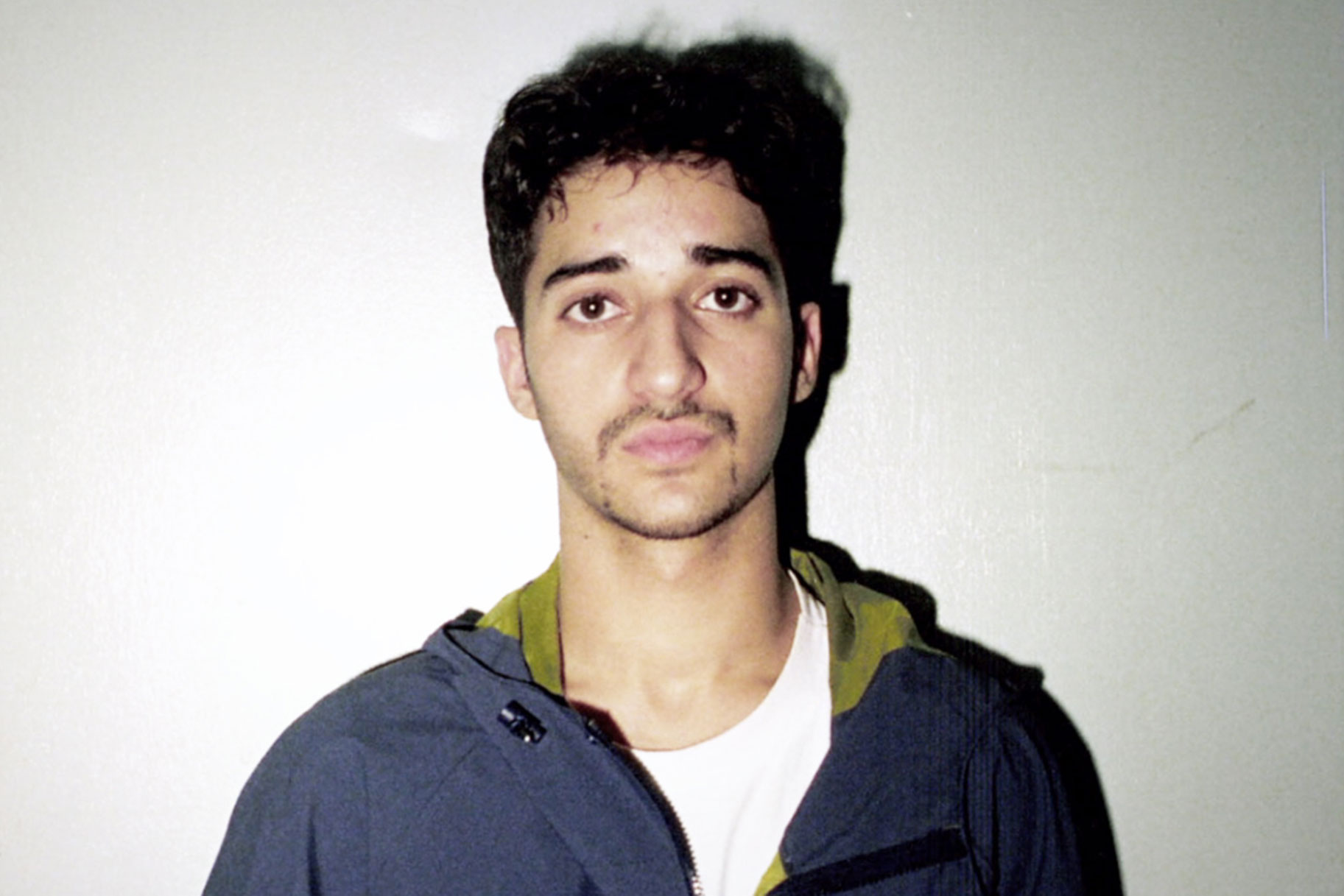
In February 2000, Syed was convicted of first-degree murder.
He was sentenced to life in prison plus 30 years.
The trial judge presided over it all.
A friend's testimony, repeated and revised, outweighed the sand beneath the technology.
Unease settles here: how much weight was given to a story that kept moving?
That question would require evidence.
The record shows a conviction.
It does not show a steady witness.
THE PODCAST AND THE PUBLIC
In 2014, a podcast called "Serial" turned the case into a national story.
Sarah Koenig hosted it. She raised questions about the reliability of the evidence and the quality of Syed's defense.
The podcast did not claim to know what happened. It asked what the record actually showed.
Millions listened. The case went from a Baltimore County courtroom to a public reckoning.
The public heard about the anonymous call. They heard about the cell tower records. They heard about a witness whose story kept changing.
What the public believed did not always match the record. The record showed a conviction. The podcast asked how that conviction was built.
That question prompted legal review.
In 2018, a Maryland appeals court ordered a new trial. The court ruled that Syed's original attorney, Cristina Gutierrez, had provided ineffective assistance. She had failed to cross-examine a witness about a potential alibi.
In 2022, a judge vacated Syed's conviction. The Baltimore State's Attorney's Office moved to dismiss the charges.
The office cited new DNA evidence. It also cited the unreliability of the cell phone records that once seemed damning.
The specific DNA evidence was referenced but not detailed. The record does not establish what it was.
The same office that prosecuted Syed now said the cell tower data would not hold.
That is not a theory. That is the documented position of the office that put him in prison.
The public had built a case on the towers. The record now says the towers could not carry it.
It is a reckoning. It is also a reminder that a viral story is not a verified one.
AND THE STORY STILL ISN'T OVER
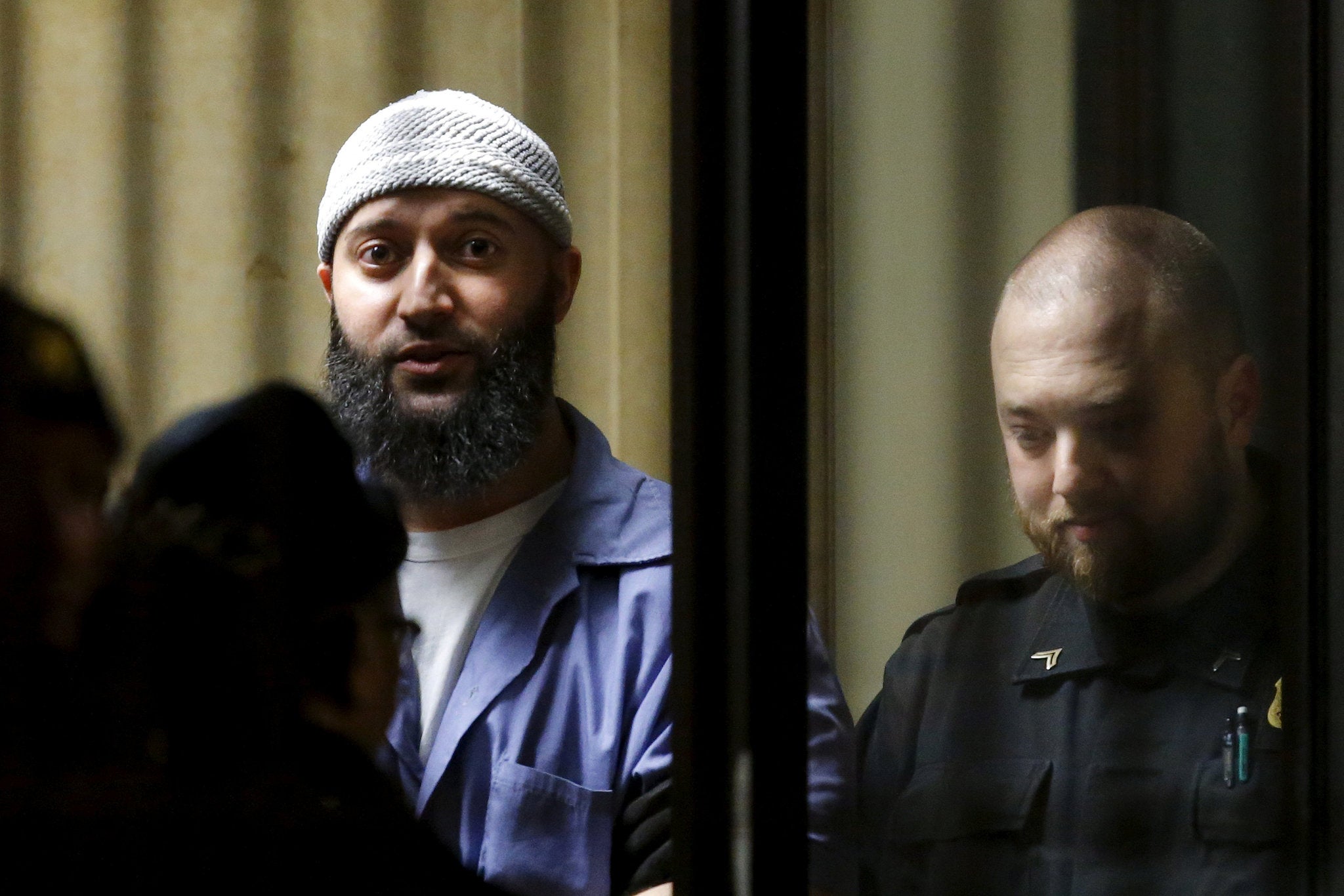
In September 2022, Syed walked out of prison.
He is free, as of 2023.
The charges against him were dropped.
The victim’s family expressed distress over the decision.
Not because the record proved him innocent.
Because the record proved the case against him could not hold.
The murder weapon was never identified.
The cause of death was manual strangulation.
That is a fact.
Who did it is not.
Whether Syed is innocent or guilty is not established.
The charges were dropped, but the record does not declare his innocence.
It does not declare his guilt either.
The case remains a subject of intense public debate.
Many believe Syed was wrongly convicted.
Others maintain his guilt.
Both sides speak with certainty.
The record does not.
The towers failed.
The witness shifted.
The weapon never appeared.
The anonymous call started it.
The podcast amplified it.
The courts unraveled it.
And the story still isn’t over.
The family carries a loss that no reversal can repair.
The public carries a case that no verdict can close.
Was he wrongly convicted?
Was he rightly charged?
Was the truth buried in Leakin Park or in the paperwork?
That would require evidence the record does not provide.
The case is closed in law.
It remains open in every other way.
Advertisement
You may also like
The 31-day gap between Caylee Anthony's last sighting and the 911 call that began it all
Caylee Marie Anthony was two years old. She was last seen by family members on June 16, 2008, in Orlando, Florida. No one reported…
The housekeeper who found Sharon Tate's blood-soaked front door
Winifred Chapman arrived for work at 10050 Cielo Drive on the morning of August 9, 1969. She was the housekeeper. The front door was…
Flight attendant who took the note from D.B. Cooper still haunted by his calm
She was the one who took the note. It was November 24, 1971, and the man had just handed her a folded piece of…
The last phone call from a pharmacy that changed a mother's search forever
The phone rang, and Elizabeth Piest answered. Her son Robert, 15, had gone to the pharmacy to pick up a prescription for her. A…
A 22-second video on a dead man's phone that shattered a family's alibi
On June 7, 2021, Paul Murdaugh and his mother, Maggie Murdaugh, were found shot to death at the family's hunting estate in Colleton County,…
From first report to verdict: the timeline of the Simpson trial
The dog walker found Nicole Brown Simpson's body first. It was approximately 12:10 a.m. on June 13, 1994, outside her condominium on Bundy Drive…