He said four intruders chanted 'acid is groovy' — then the blood evidence shifted
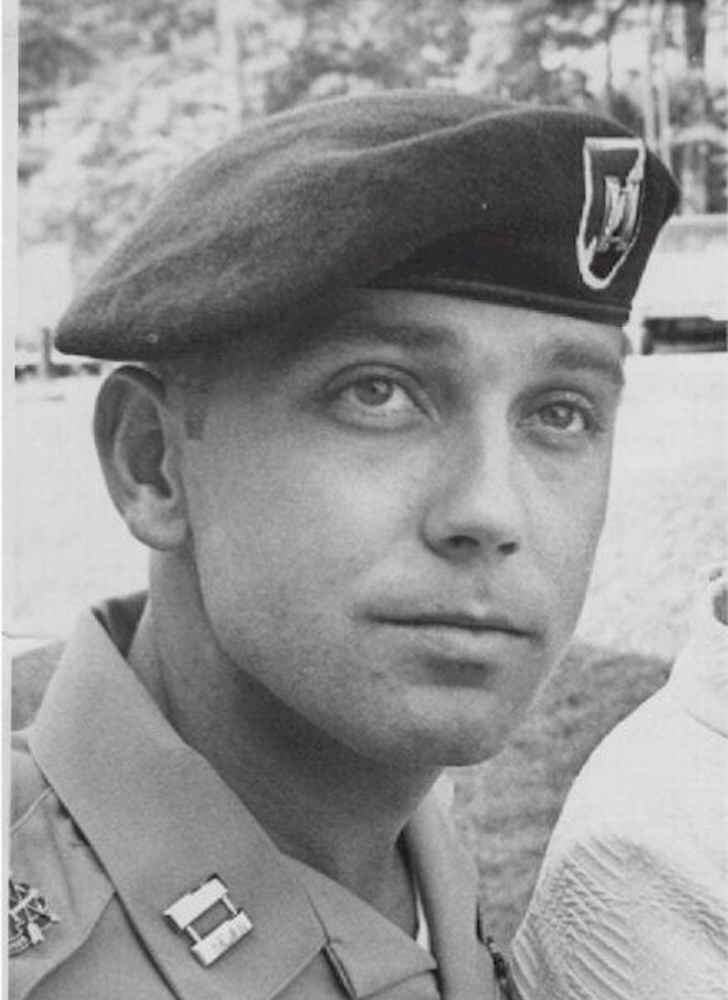
The military police arrived at 544 Castle Drive after a call on February 17, 1970.
Fort Bragg, North Carolina. The off-base apartment of Captain Jeffrey MacDonald, a Green Beret physician.
Inside, they found Colette MacDonald. She had been beaten and stabbed.
Her daughters were there too. Kimberly, 5 years old. Kristen, 2 years old. Both stabbed repeatedly.
MacDonald was alive. Minor injuries. He told the MPs a story.
Four intruders, he said. Three men and a woman. They chanted "acid is groovy" and "kill the pigs" as they attacked.
He said they knocked him unconscious. He woke to the aftermath.
The chant is theatrical. Bizarre. Almost staged.
The scene was grotesque. The words were something else entirely.
Whether any intruders actually existed is not established by the record at this point. It is MacDonald's claim.
The apartment showed no signs of forced entry, according to the initial investigation.
A doctor trained to save lives. A family destroyed. A story that strains belief.
Who chants a slogan while committing murder?
Who survives a massacre with only minor injuries?
Who hears "acid is groovy" and lives to repeat it?
That would require evidence. The bloodstains would come later. The fibers would come later. The conviction would come a decade later.
For now, there is only the claim. And the bodies.
THE FIRST INVESTIGATION
The Army’s first investigation accepted the captain’s story.
Four intruders, a chant, a struggle — it held, for a while.
Then the physical evidence began to shift.
Bloodstain patterns did not match the account of an attack by strangers.
The apartment showed no signs of forced entry.
No locks were broken. No windows were shattered.
The claim began to strain against the record.
In 1970, the Army charged MacDonald with murder.
After a hearing, the charges were dropped.
The record says the reason was lack of evidence.
The specific details of why the charges failed are not established.
The case went quiet.
Then Colette’s father began pressing authorities.
He pushed. He persisted. He would not let the case rest.
In 1974, the case was reopened.
In 1975, a federal grand jury indicted MacDonald.
The accusation had slipped away once.
Now it snapped back, harder.
The first investigation had accepted the story.
The second would test it.
THE BLOOD AND THE FIBERS
The pajama top told a story of its own.
Fibers from a pajama top found at the scene matched a piece of the pajama top found in MacDonald's possession.
Blood evidence suggested the victims' blood was on his clothing.
Forensic testimony from experts, including bloodstain analyst Paul Kish, helped establish that the attack could not have been committed by intruders without leaving more trace evidence.
More fibers, more blood, more pattern.
The intruder story required four people entering an apartment without forcing entry, attacking a family, and leaving almost nothing behind.
The physical evidence said otherwise.
Then came Helena Stoeckley.
She testified at trial that she had been at the scene.
She claimed involvement, but she was never charged.
She recanted her earlier statements on the stand.
Her testimony was largely discredited.
The exact nature of her recantation and why her testimony was discredited is not detailed in the source.
What remains is the record: fibers matched, blood matched, and the one witness who could support the intruder story collapsed.
The second investigation had tested the story.
It did not hold.
THE VERDICT
The trial opened in federal court in Raleigh, North Carolina, in 1979.
The prosecution argued that MacDonald killed his family in a rage after Colette confronted him about his infidelity.
The defense maintained that intruders committed the murders.
The courtroom heard from Helena Stoeckley, the witness who claimed she had been at the scene.
She testified that she had been present.
Then she recanted.
Her testimony was largely discredited.
The prosecution built its case on the physical record: the fibers, the blood, the absence of forced entry.

The defense pointed to the chant and the four intruders.
That would require evidence.
On August 29, 1979, the jury convicted MacDonald of three counts of first-degree murder.
He was sentenced to three consecutive life terms.
The conviction was upheld on appeal.
A 1982 Supreme Court decision allowed the case to proceed despite claims of prosecutorial misconduct.
The specific details of that alleged misconduct are not in the source.
What is in the record is the verdict.
MacDonald was convicted.
He was sentenced.
He remains incarcerated.
The story did not end with the verdict.
It continued through appeals, motions, and a 2012 request for DNA testing, all denied.
But the verdict stood.
AND THE STORY STILL ISN'T OVER
The decades have not moved him.
Jeffrey MacDonald remains incarcerated, serving his three consecutive life sentences.
He has filed numerous appeals and motions for a new trial. All denied.
In 2012, a federal court rejected his latest request for DNA testing of evidence.
The specific next legal step, or any hearing date, is not in the record.
The case became a story told and retold.
Joe McGinniss’s book “Fatal Vision” concluded he was guilty. Documentaries followed, each revisiting the same bloodstains, the same fibers, the same chant.
Colette MacDonald’s family continued to advocate for justice. Her father pushed for prosecution until his death in 1997.
MacDonald, now in his 80s, remains in federal prison.
He still claims innocence.
Not because new evidence emerged. Because the old evidence, he argues, was never properly tested.
The record does not establish that any of it was.
The verdict stood. The appeals failed. The DNA request was denied.
He is still there.
The story is not over, but it is also not moving. It is a man in his 80s, a prison cell, and a case that keeps refusing to close.
That would require evidence. That would require a court to hear it. That would require something the record does not contain.
She was on the ground below, and the case remains where the jury left it in 1979.
Advertisement
You may also like
A 22-second video on a dead man's phone that shattered a family's alibi
On June 7, 2021, Paul Murdaugh and his mother, Maggie Murdaugh, were found shot to death at the family's hunting estate in Colleton County,…
From first report to verdict: the timeline of the Simpson trial
The dog walker found Nicole Brown Simpson's body first. It was approximately 12:10 a.m. on June 13, 1994, outside her condominium on Bundy Drive…
He told police he found his family's bodies. Then he confessed to the rifle in his home.
The call came in on November 13, 1974. Police were sent to 112 Ocean Avenue in Amityville, New York, a suburban community on Long…
The floppy disk that led police to BTK — and the family left to remember
The package arrived at the television station in 2004, decades after the killings had stopped. It sat among the mail like any other parcel,…
The notebook found beside Laundrie's remains that the FBI says holds a confession
The notebook was found beside Brian Laundrie's remains on October 20, 2021, in the Carlton Reserve in Florida, according to the FBI. The FBI…
The bullet that tied a pharmacy tech to the Delphi trail — and the tip that came too late
The tip came in 2022. It pointed to Richard Allen, a local pharmacy technician who had told investigators years earlier that he had been…