How a sister and brother-in-law torn apart by Menendez killings still disagree
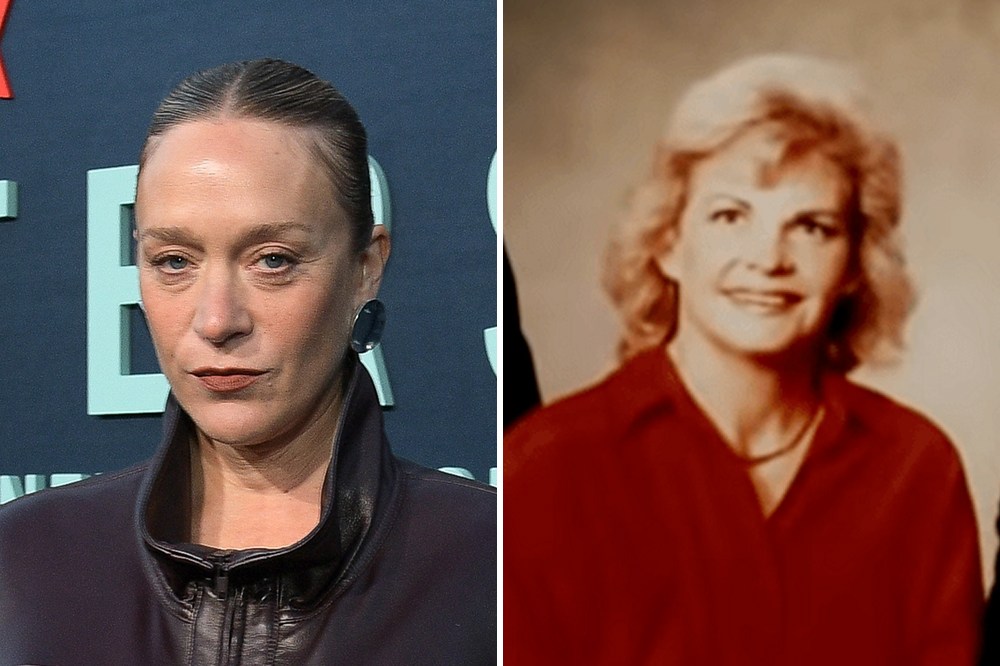
The den was a room in a Beverly Hills home, and on August 20, 1989, it held two bodies.
José and Kitty Menendez were shot there, repeatedly, with shotguns.
Their sons, Lyle and Erik, called 911 that evening.
They said they had been at a movie and came home to find their parents dead.
The brothers told police they thought it was a mob hit, something tied to their father's business.
That was the first story.
The exact sequence of events inside the den is not established by the source.
Not the order of the shots.
Not who moved where.
Not what was said before the last sound.
What is documented is the aftermath: two people dead on the floor of their own house, and two sons on the phone.
She was on the ground below.
The room was the family's.
It is a room that no longer holds the family.
It is a room that holds a question instead.
THE MOB HIT THEORY
The brothers told police their parents were killed by mob hitmen.
José Menendez had the connections for such a story.
He was a wealthy Cuban-American entertainment executive with business dealings that could, in theory, draw enemies.
The exact nature of those connections is not established.
Whether they actually posed a threat is not established either.
So the case sat.
For months, the investigation treated the killings as a possible mob hit, and the case went unsolved.
The brothers, meanwhile, were spending.
Expensive watches.
Cars.
A restaurant purchase.
The spending spree raised suspicion, according to the investigation.
But suspicion is not evidence.
The turning point came from a confession.
Erik Menendez confessed to his psychologist, Dr. Jerome Oziel.
Oziel told his mistress, Judalon Smyth.
Smyth went to police.
In March 1990, the brothers were arrested.
The mob theory collapsed.
What remained was a different question entirely.
Not who pulled the trigger.
But why.
That question would split the family in ways the record still shows.
And it would take years, and two trials, to even begin answering.
:max_bytes(150000):strip_icc():focal(749x0:751x2)/pamela-bozanich-menendez-trial-100724-3-4020c329cace46f0917d36d6ad7e7962.jpg)
THE FAMILY DIVIDED
Kitty Menendez's sister took the stand for the defense.
José's brother took the stand for the prosecution.
The sister spoke for the boys.
The brother spoke for the dead.
That is the split the record shows: two siblings of the victims, standing on opposite sides of the courtroom.
The sister testified that the brothers had acted in fear for their lives.
She said they had endured years of sexual abuse by their father, with their mother complicit.
The brother testified for the prosecution.
He said the motive was greed.
He said the abuse claims were fabricated.
The trial was broadcast on television.
Graphic testimony about the alleged abuse played out on screens across the country.
The family's pain became public property.
The sister believed the sons.
The brother believed the parents were murdered for money.
Neither could be in the same room with the other's version of the truth.
The specific content of the sister's testimony is not detailed in the source.
The specific content of the brother's testimony is not detailed in the source.
What is documented is the division itself.
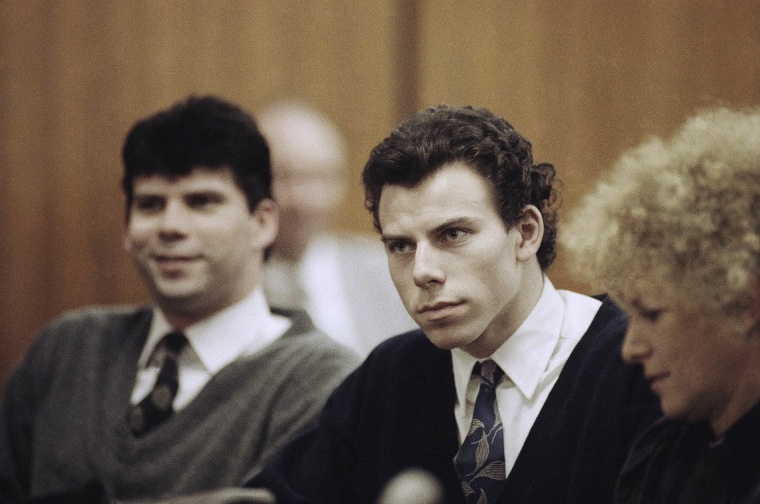
A family torn apart not by the killings alone, but by what the killings meant.
One side heard a confession of years of horror.
The other side heard a lie told to escape a life sentence.
The brothers sat in court and listened to their aunt defend them.
They sat and listened to their uncle condemn them.
The record shows the split.
It does not show who was right.
THE VERDICTS
The first trial began in July 1993.
It ended in a hung jury in January 1994.
The jury was deadlocked on one question: murder or manslaughter.
The record does not say which way each juror leaned, only that they could not agree.
It is a deadlock. It is not a verdict.
The brothers were tried again.
The second trial began in 1995.
Judge Weisberg ruled that much of the abuse evidence was inadmissible.
The defense had built its case on years of alleged sexual abuse by their father.
In the second trial, that case was largely kept from the jury.
The brothers were tried separately this time.
Lyle Menendez sat in one courtroom. Erik Menendez sat in another.

In March 1996, both were convicted.
First-degree murder. Conspiracy to commit murder.
The verdicts landed on both brothers, in separate rooms, at the same time.
They were sentenced to life in prison without the possibility of parole.
Not death. Not release. Life.
The family had split before the verdicts. It did not reunite after them.
The victim’s sister had testified for the defense. The victim’s brother had testified for the prosecution.
They heard the same evidence. They reached opposite conclusions.
The convictions settled the legal question. They did not settle the family one.
AND THE STORY STILL ISN'T OVER
They are serving life without parole, in separate prisons, in separate states of the same sentence.
In 2023, something new surfaced: a letter allegedly written by Erik Menendez, referencing the abuse the brothers had long described. The attorneys filed a habeas corpus petition. The authenticity of that letter is not established. What it proves, if anything, is not established either.
As of 2024, the Los Angeles County District Attorney’s office was reviewing the case for possible resentencing. No decision had been finalized. The review is a process, not a verdict.
The family is still split. The victim’s sister has advocated for the brothers’ release. The victim’s brother has maintained they are guilty. They heard the same evidence decades ago. They still disagree now.
Some relatives want the brothers home. Others want them to stay where they are.
The shotguns remain part of the record. Two Mossberg 12-gauge shotguns, purchased by the brothers days before the murders. The guns were bought. The guns were used. The guns are evidence of what happened that night, whatever the brothers say it was.
What is viral is not what is documented. Social media campaigns question the fairness of the trials. Documentaries re-examine the abuse evidence. The record does not resolve the abuse claims. The convictions do not erase the questions.
The legal case was settled in 1996. The family case was never settled at all.
The sister believes one thing. The brother believes another. The district attorney’s office is still looking at the file. The brothers are still in prison.
The story is not over because the disagreement is not over. That is the only part that is fully established.
Advertisement
You may also like
From first report to verdict: the timeline of the Simpson trial
The dog walker found Nicole Brown Simpson's body first. It was approximately 12:10 a.m. on June 13, 1994, outside her condominium on Bundy Drive…
He told police he found his family's bodies. Then he confessed to the rifle in his home.
The call came in on November 13, 1974. Police were sent to 112 Ocean Avenue in Amityville, New York, a suburban community on Long…
The floppy disk that led police to BTK — and the family left to remember
The package arrived at the television station in 2004, decades after the killings had stopped. It sat among the mail like any other parcel,…
The notebook found beside Laundrie's remains that the FBI says holds a confession
The notebook was found beside Brian Laundrie's remains on October 20, 2021, in the Carlton Reserve in Florida, according to the FBI. The FBI…
The bullet that tied a pharmacy tech to the Delphi trail — and the tip that came too late
The tip came in 2022. It pointed to Richard Allen, a local pharmacy technician who had told investigators years earlier that he had been…
A 23-year-old graduate student’s name kept out of one headline for six decades
She was 23, a graduate student, and one of thirteen women killed in their apartments around Boston between June 1962 and January 1964. Many…