A Sledgehammer Borrowed and Never Returned: The McStay Case Timeline
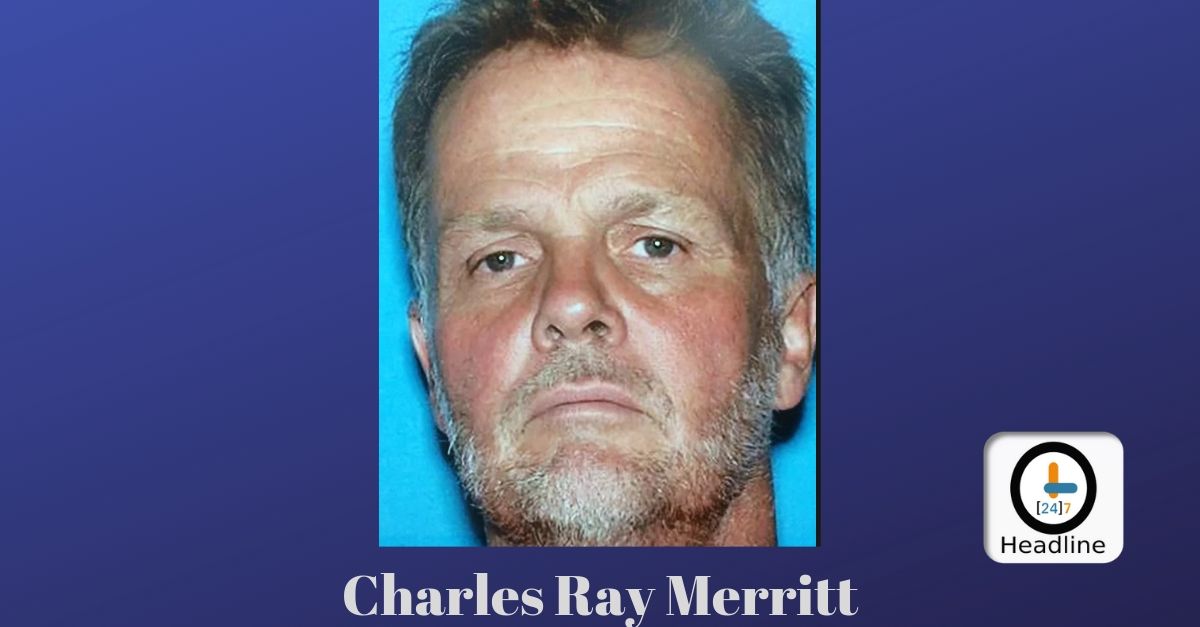
He told the jury about the sledgehammer.
A witness testified at trial that Charles "Chase" Merritt borrowed a sledgehammer from him.
The witness said it was never returned.
The sledgehammer itself was never recovered.
No forensic link between that borrowed tool and the crime scene was established in the record.
The coroner determined the cause of death from the remains.
The victims — Joseph, Summer, and their two young sons — had been beaten with a sledgehammer.
That is the thread the case hangs on: a tool borrowed, a tool never returned, a tool never found.
It is a thread, not a chain.
The family was reported missing on February 4, 2010, from their home in Fallbrook, California.
Their dogs were in the backyard.
Their vehicles were still at the house.
No signs of a struggle.
The borrowed tool is what connects a man to a crime, and the tool is gone.
Was it the same sledgehammer?
Did it end up in the desert?
Was it thrown in a river, buried, sold, destroyed?
That would require evidence.
The record holds only the witness's word that the sledgehammer was borrowed, and the coroner's word that a sledgehammer was used.
Between those two statements sits an absence.
The weapon is missing.
The link is only a thread.
THE EMPTY HOUSE
On February 4, 2010, Joseph McStay, his wife Summer, and their two young sons were reported missing from their Fallbrook home.
The family had last been seen the previous day.
Their dogs were found in the backyard.
Their vehicles remained at the home.
There were no signs of a struggle, according to the San Diego County Sheriff's Department's initial investigation.
The house was ordinary.
The cars were in the driveway.
The dogs were waiting.
The people were gone.
What happened inside the house on the night of February 3–4, 2010, is not in the record.
No forced entry was reported.
No disturbance was documented.
No explanation was offered.
The scene offered silence instead of answers.
For more than three years, the case remained a missing-person investigation.
The family had simply vanished from an intact home.
The dogs could not say what they had seen.
The vehicles could not drive themselves to a conclusion.
Detectives found a home that looked lived-in and abandoned at once.
It is a scene that asks a question.
It is a scene that does not answer it.
The ordinary details became the only details.
The backyard held the dogs.
The driveway held the cars.
The house held nothing but absence.
THE DESERT GRAVES
The motorcyclist stopped in the Mojave Desert near Victorville in November 2013.
He found human remains in two shallow graves.
The graves were roughly 100 miles from the McStay home in Fallbrook.
The San Bernardino County Sheriff's Department took over the case from the initial investigators.
The remains were identified through dental records as the four McStay family members.
Joseph, Summer, and their two young sons.
The missing became the murdered.
The coroner determined the cause of death: blunt-force trauma.
The victims had been beaten with a sledgehammer.
That weapon was never recovered.
The exact date of death is not specified in the record.
The exact manner of death, beyond the cause, is not specified either.
What the record establishes is the cause, not the calendar.
The desert gave back what the house never held.
The dogs stayed in the backyard.
The cars stayed in the driveway.
The family stayed in the ground for three years and nine months.
A missing-person case became a homicide investigation on the strength of bones and dental records.
The shallow graves held four bodies.
The investigation held one question: who swung the hammer.
THE ALTERED RECORD
The QuickBooks record came from Joseph McStay’s own computer.
It showed a transaction dated February 4, 2010 — the day the family disappeared.
Prosecutors said the entry appeared to have been altered.
They argued Merritt changed the record to hide a theft of roughly $80,000 from McStay’s business.
One altered date. One missing sum. One accused man.
Each fact alone is thin.
Cellphone tower data placed Merritt’s phone near the burial site around the time of the disappearance.
The precise location data from those towers is not detailed in the record.
Neither is the exact nature of the alteration.
Merritt first told investigators he had not seen the McStay family in weeks.
Phone records showed otherwise: he had been in contact with Joseph McStay around the time they vanished.
The detective who led the case built the net from these strands.
A borrowed sledgehammer, never returned.
A transaction, changed.
A phone, pinging near shallow graves.
In November 2014, Merritt was arrested.
He was charged with four counts of murder.
The circumstantial case tightened slowly, fact by fact, until it held.
What the record does not establish is the hammer itself — never recovered, never linked by direct evidence.
What it does establish is a pattern of small contradictions, each one pulling the accused closer to the desert.
AND THE STORY STILL ISN'T OVER
The trial began in January 2019 in San Bernardino County Superior Court.
The prosecution argued that Merritt killed the family to cover up a theft of approximately $80,000 from the business.
The defense argued the evidence was circumstantial, with no direct proof.
In June 2019, the jury found Merritt guilty of four counts of first-degree murder.
In August 2019, the judge sentenced him to life in prison without the possibility of parole.
Merritt has maintained his innocence.
He has filed appeals.
His appeals have been unsuccessful as of the latest reports.
The status of any pending appeal is not specified beyond that.
No other suspects have been named or charged.
The victims' remains were returned to their relatives for burial.
The families spoke publicly after the verdict, expressing relief.
The case has been the subject of documentaries and news coverage.
It is a conviction.
It is also a story with a hole in it.
The sledgehammer was borrowed and never returned.
It was never recovered.
No direct evidence links it to the crime.
The record establishes a guilty verdict.
The record does not establish the weapon.
The record does not establish why it vanished.
That would require evidence.
The closure is not quite closed.
Advertisement
You may also like

The slumber party that turned into a nightmare: What one mother found when she came home
The pillowcases were on the floor when Eve Nichol walked in. One was on the bed. One was on the carpet. The girls were…

How a sister and brother-in-law torn apart by Menendez killings still disagree
The den was a room in a Beverly Hills home, and on August 20, 1989, it held two bodies. José and Kitty Menendez were…
The pizza crust that cracked a decade-long Gilgo Beach murder case
A pizza crust, discarded in a Manhattan trash can, ended a decade of silence. In July 2023, DNA from that crust was matched to…
He said four intruders chanted 'acid is groovy' — then the blood evidence shifted
The military police arrived at 544 Castle Drive after a call on February 17, 1970. Fort Bragg, North Carolina. The off-base apartment of Captain…
The morning Gianni Versace walked to a newsstand and never came back
The morning began as an errand. On July 15, 1997, at approximately 8:45 a.m., Gianni Versace walked from his Miami Beach mansion, Casa Casuarina,…
The ex-convict's tip about a safe that sent detectives to a Kansas farmhouse
He told prison authorities that Richard Hickock had spoken of robbing the Clutter farm. Floyd Wells was a former cellmate. He had worked for…