The phone card call that cracked the DC Sniper case — and the white van that led police astray
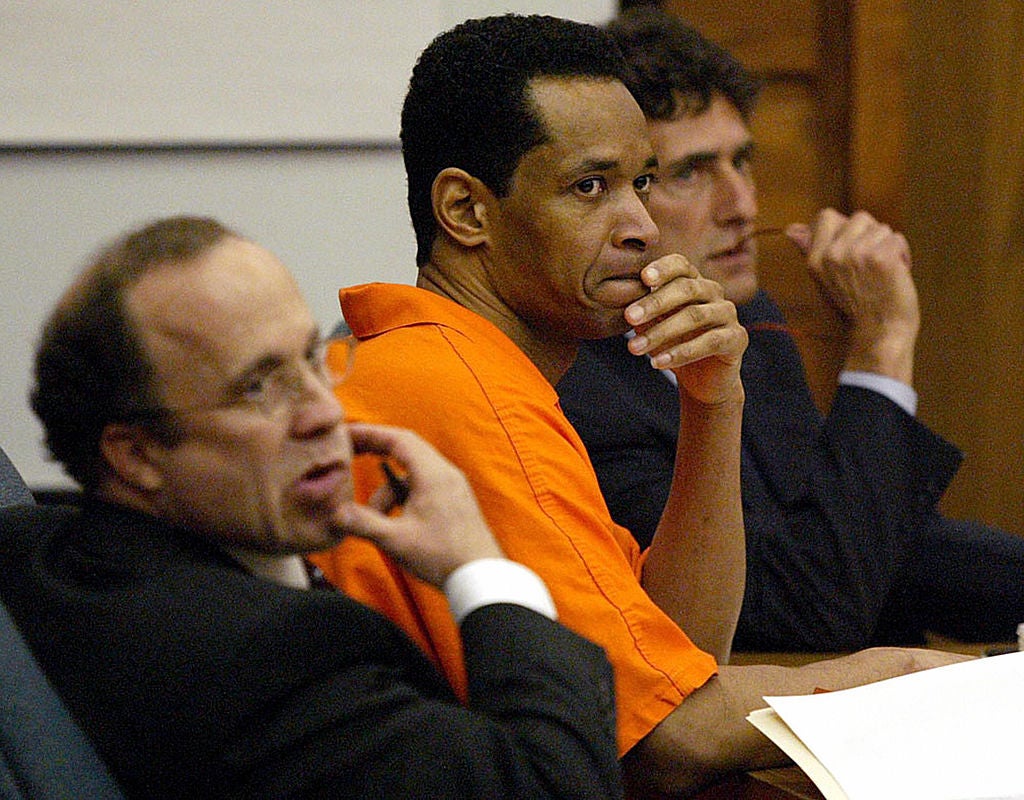
A tip came from a phone card.
A caller used it, and the call led police to a witness who had seen the Chevrolet Caprice at a shooting in Montgomery, Alabama.
The specific content of that call is not in the record.
Neither is the identity of the caller.
What the record does show is a chain: the phone card, the witness, the car.
For weeks, police had been looking at a white van.
It had been reported at several scenes, a shape that seemed to fit each shooting.
The white van was a diversion.
The actual vehicle was a blue Chevrolet Caprice.
Not because the van was irrelevant.
But because the Caprice was the car that carried the suspects.
On October 24, 2002, police found them sleeping in that Caprice at a rest stop near Myersville, Maryland.
Two men.
John Allen Muhammad and Lee Boyd Malvo.
They were arrested there, without a shot fired.
The phone card had done what twenty-two days of shootings had not: it gave the investigation a place to go.
It is a simple object, a piece of plastic with a number.
It is also the reason the case cracked.
THE WHITE VAN DIVERSION
It is a simple object, a piece of plastic with a number.
It is also the reason the case cracked.
Between October 2 and October 24, 2002, a series of shootings killed ten people and wounded three others in the Washington, D.C., metropolitan area.
The attacks appeared random.
Victims were shot while pumping gas, mowing a lawn, or sitting on a bench.
The first killing occurred on October 2 outside a grocery store in Wheaton, Maryland.
The final shooting took place on October 22 on a bus in Aspen Hill, Maryland.
Twenty-two days between the first and the last.
In that time, the region shut down.
Schools closed.
People pumped gas in zigzag patterns, if they pumped gas at all.
Police had a description to chase: a white van.
The white van was reported at several scenes.
Which specific scenes it was reported at is not detailed in the record.
It was a lead.
It was also wrong.
The actual vehicle was a blue Chevrolet Caprice.
The white van led nowhere.
The phone card led somewhere.
The phone card led to a witness who had seen the Caprice at a shooting in Montgomery, Alabama.
That witness gave the investigation a place to go.
The white van gave it a place to stay.
It stalled the search.
It tested the public's patience.
It tested the task force's nerve.
Chief Charles Moose became the public face of the investigation, but the public face did not know the vehicle.
The vehicle was blue.
The vehicle was parked.
The vehicle was sleeping.
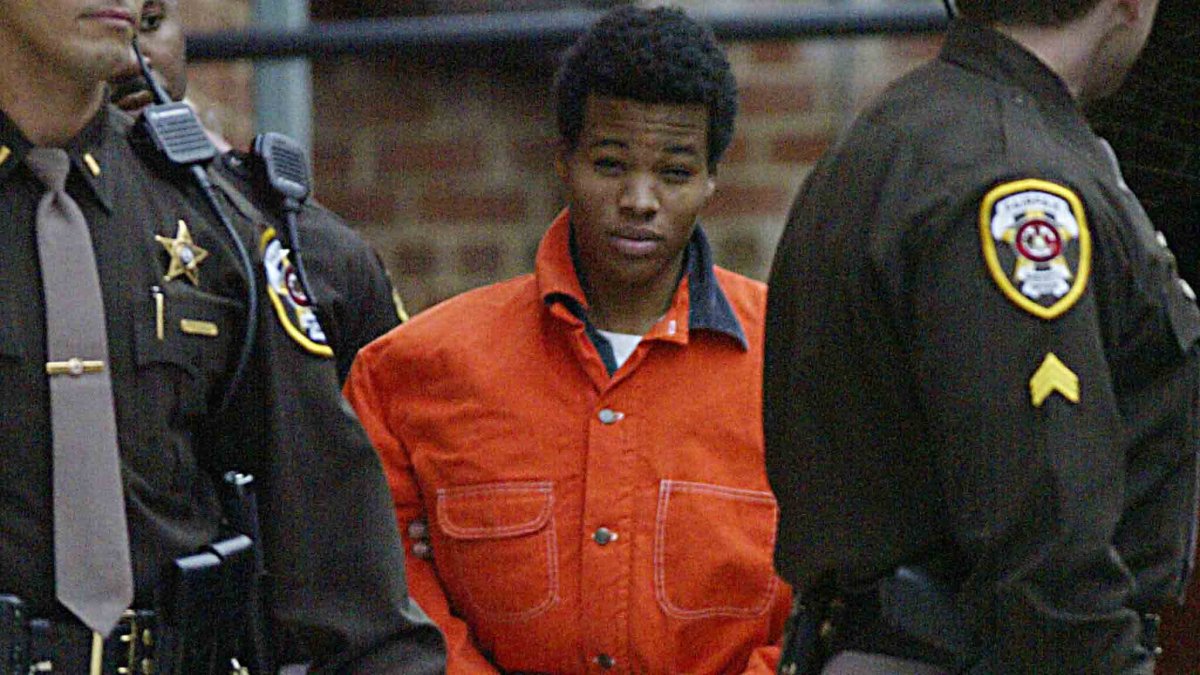
That would come later.
For now, the white van was the story, and the story was wrong.
THE CAPRICE AND THE TIP
The break came through a phone card.
A caller used a phone card linked to the suspects, and that call led police to a tip from a witness who had seen the Caprice at a shooting in Montgomery, Alabama.
The exact timeline of how the phone card call led to the witness tip is not specified in the record.
That would require evidence.
The tip did not point to a white van.
It pointed to a blue Chevrolet Caprice.
Ballistics evidence connected a Bushmaster .223-caliber rifle to multiple shootings.
The rifle was found in the car at the arrest.
Police also recovered a laptop computer from the vehicle.
They recovered a tree stump used as a shooting platform.
The Caprice held the rifle.
It held the computer.
It held the stump.
It held the suspects, asleep, at a rest stop near Myersville, Maryland, on October 24.
The investigation summary records the link to an earlier shooting in Alabama.
It records a murder in Tacoma, Washington, for which Muhammad was later convicted.
The white van was not in the car.
The white van was not at the rest stop.
The white van was the story, and the story was wrong.
The Caprice was the vehicle.
The tip was the pivot.
Relief came with the ballistics match.
The rifle tied the shootings together.
The car tied the suspects to the rifle.
The record does not say which came first — the ballistics or the tip.
It says both led to the arrests.
The investigation pivoted from the wrong lead to the right one.
That is what the record shows.
THE TRIAL AND THE DEFENCE
Muhammad was tried first.
The venue was Fairfax County, Virginia. The charge was capital murder in the death of a man shot at a gas station in Manassas. Prosecutors sought the death penalty.
The jury convicted Muhammad of capital murder. It recommended execution. Judge Jane Marum Roush imposed the death sentence.
Malvo was tried separately. The venue was Chesapeake, Virginia. The charge was capital murder in the death of a woman shot outside a Home Depot in Falls Church. The jury convicted him.
The jury declined to recommend the death penalty for Malvo. He was sentenced to life without parole.
The defence argued that Malvo was under Muhammad's influence. Muhammad, a U.S. Army veteran, was the older figure. Malvo was a teenager at the time of the attacks. The influence argument carried weight with the jury.
It did not carry enough.
Prosecutors presented evidence that both men acted deliberately. The record shows the rifle, the car, the phone card. It shows a laptop and a tree stump used as a shooting platform. The prosecution's case was one of planning, not coercion.
Several victims' relatives testified at trial. The wife of one victim testified. The mother of another testified.
What they said is not detailed in the record.
That is a gap. The trial produced verdicts, not transcripts of every word. The record establishes the convictions. It establishes the sentences. It does not establish the texture of that testimony.
Was it grief? Was it anger? Was it a plea?
That would require evidence.
The trial judge imposed the sentences. The prosecutor was Robert F. Horan Jr., the Commonwealth's Attorney for Fairfax County. The defence attorneys were Peter Greenspun and Jonathan Shapiro.
The verdicts were separate. The cases were separate. The influence argument belonged to Malvo's case; the deliberation evidence belonged to both.
Muhammad was executed on November 10, 2009. Malvo remains in prison.
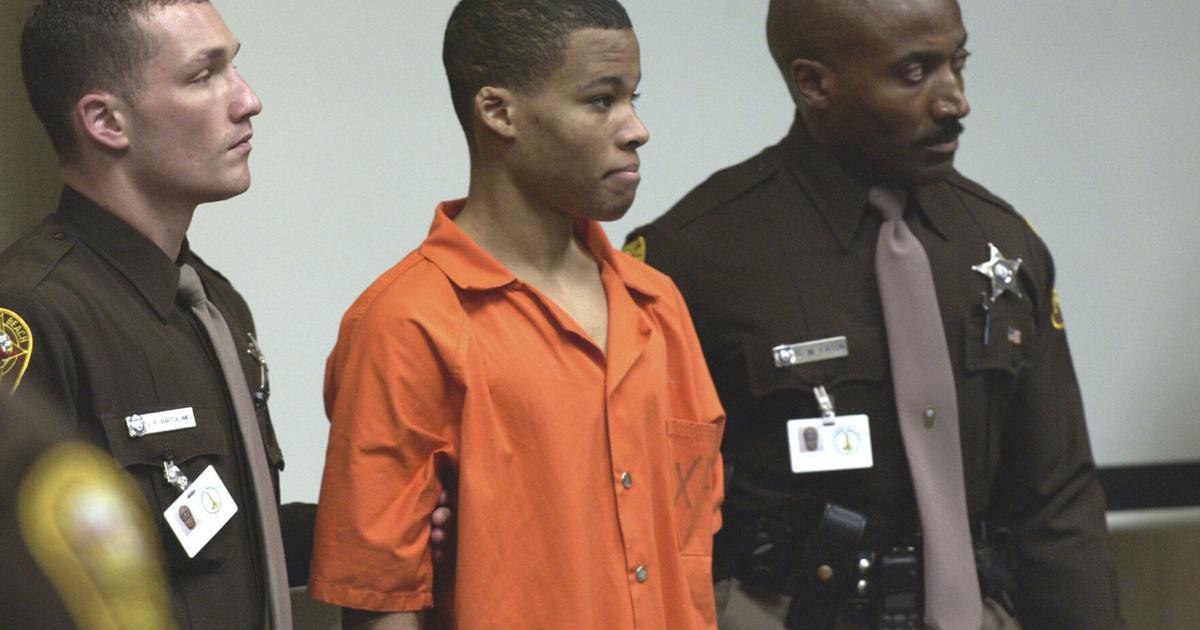
One jury found deliberation. Another found enough to convict a teenager. The defence argued influence; the prosecution argued choice. The record does not resolve which was true.
It resolves what the juries decided.Muhammad was tried first.
The venue was Fairfax County, Virginia. The charge was capital murder in the death of a man shot at a gas station in Manassas. Prosecutors sought the death penalty.
The jury convicted Muhammad of capital murder. It recommended execution. Judge Jane Marum Roush imposed the death sentence.
Malvo was tried separately. The venue was Chesapeake, Virginia. The charge was capital murder in the death of a woman shot outside a Home Depot in Falls Church. The jury convicted him.
The jury declined to recommend the death penalty for Malvo. He was sentenced to life without parole.
The defence argued that Malvo was under Muhammad's influence. Muhammad, a U.S. Army veteran, was the older figure. Malvo was a teenager at the time of the attacks. The influence argument carried weight with the jury.
It did not carry enough.
Prosecutors presented evidence that both men acted deliberately. The record shows the rifle, the car, the phone card. It shows a laptop and a tree stump used as a shooting platform. The prosecution's case was one of planning, not coercion.
Several victims' relatives testified at trial. The wife of one victim testified. The mother of another testified.
What they said is not detailed in the record.
That is a gap. The trial produced verdicts, not transcripts of every word. The record establishes the convictions. It establishes the sentences. It does not establish the texture of that testimony.
Was it grief? Was it anger? Was it a plea?
That would require evidence.
The trial judge imposed the sentences. The prosecutor was Robert F. Horan Jr., the Commonwealth's Attorney for Fairfax County. The defence attorneys were Peter Greenspun and Jonathan Shapiro.
The verdicts were separate. The cases were separate. The influence argument belonged to Malvo's case; the deliberation evidence belonged to both.
Muhammad was executed on November 10, 2009. Malvo remains in prison.
One jury found deliberation. Another found enough to convict a teenager. The defence argued influence; the prosecution argued choice. The record does not resolve which was true.
It resolves what the juries decided.
AND THE STORY STILL ISN'T OVER
Muhammad was executed by lethal injection on November 10, 2009.
Malvo remains in prison.
In 2017, a federal court ruled that Malvo’s life sentence was unconstitutional under a Supreme Court decision on juvenile sentencing.
He remains in prison.
The outcome of Malvo’s post-2017 appeals is not specified in the record.
That question stays open.
The Chevrolet Caprice used in the attacks was destroyed by authorities after the trials.
It is gone. The rifle is gone. The stump is gone.
Several victims’ families have spoken publicly about the case.
Some have advocated for changes in gun laws.
They testified at trial, the wife of one victim, the mother of another.
They watched two juries decide.
They watched one man put to death.
They watched a teenager sentenced to life without parole.
One jury found deliberation.
Another found enough to convict a teenager.
The defence argued influence; the prosecution argued choice.
The record does not resolve which was true.
It resolves what the juries decided.
It does not resolve what the families carry.
They have spoken. Some have pushed for laws. The case has become books and documentaries.
No journalist or author became part of the case itself.
The record does not establish anything else.
Not motive. Not a single narrative. Not closure.
The phone card call led to the tip. The tip led to the Caprice. The Caprice led to the arrests.
The white van was a diversion.
The story is over in one sense. It is not over in another.
Malvo’s legal status remains unsettled. The families remain. The legacy remains.
Muhammad is gone. Malvo remains in prison.
That is where the record ends.
Advertisement
You may also like
The MGM Grand altercation that preceded Tupac's shooting — what police believed
The black BMW sedan turned onto the Las Vegas Strip, and Tupac Shakur was in the passenger seat. Marion "Suge" Knight, the CEO of…
The neighbor's camera that caught Shanann Watts' truck — and the timeline that broke the case
The neighbor's camera was pointed at the driveway, not the street. It caught a blue Ford truck pulling into the Watts home in the…
A 1969 blood-scrawled word linked to Manson — but what did it really mean?
Inside the LaBianca home, the refrigerator door carried a word written in blood: "HEALTER SKELTER." It was a misspelling of "Helter Skelter." The words…
The 1959 plane crash that ended three rock legends' lives, and the pilot's decision that still haunts
The Beechcraft Bonanza lifted off from Mason City Municipal Airport at approximately 12:55 AM on February 3, 1959. Snow fell. The sky was overcast.…
The mother who traveled to identify her daughter's severed body — and the words she said
She took the train from Massachusetts. Phoebe Short had raised her daughter in Hyde Park, a town outside Boston, after her husband left the…
The tarot card with 'Call me God' — and what it did to the hunt
The card was found at one of the crime scenes, somewhere in the region that stretched across Washington, D.C., Maryland, and Virginia. The exact…