The 12:10 a.m. dog-walk discovery that turned a Brentwood street into a media siege
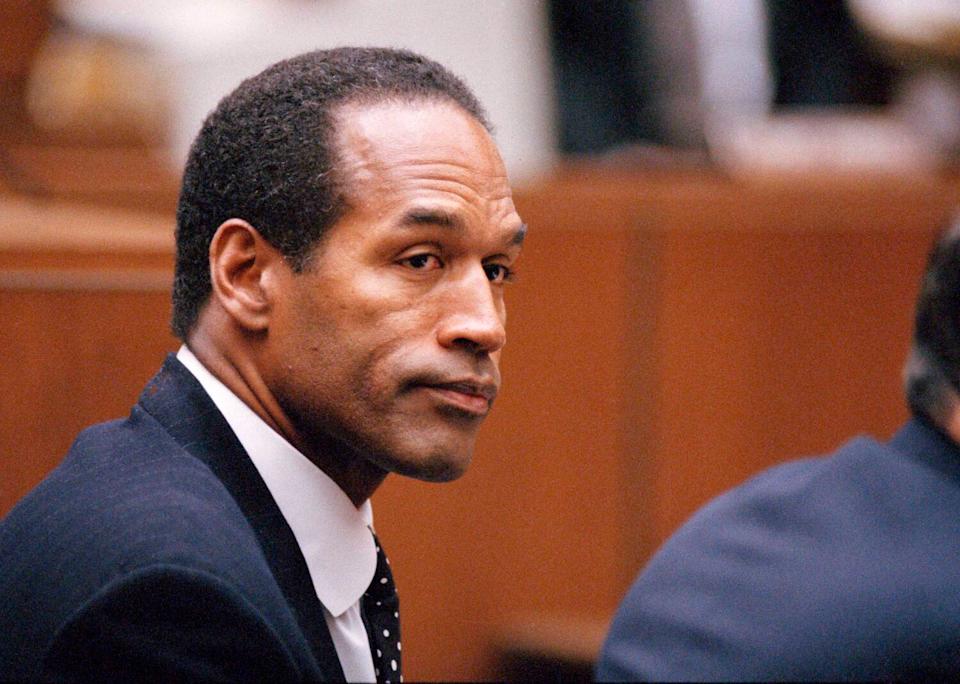
She was just walking her dog.
It was approximately 12:10 a.m. on June 12, 1994, and the neighbor was out on Bundy Drive in Brentwood.
Her dog pulled her toward something on the ground outside Nicole Brown Simpson's condominium.
What the neighbor saw before she called police is not detailed in the record.
The exact sequence of the discovery is not established.
She called police.
That call is the documented fact — a late-night dog walk interrupted by a body on the pavement.
Ronald Goldman was found there too, stabbed to death at the same location.
Both victims had been killed with a knife.
Goldman had sustained defensive wounds.
A defensive wound means he fought.
It means his hands were up, or his arms were raised, or he tried to turn away.
The record does not say how long he fought, or where the neighbor stood when she first saw Nicole Brown Simpson.
It does not say whether the dog barked first, or pulled first, or stopped.
The neighbor's discovery is the first documented moment of what would become a media siege.
The case quickly centered on Nicole's ex-wife's ex-husband, O.J. Simpson, a former football star and actor.
Not because the neighbor named him.
Because the case would soon point that way — but that comes later.
For now, there is a street at 12:10 a.m.
There is a dog walker.
There is a body.

And there is a question the record leaves open: what did she see first?
THE SCENE ON BUNDY
The bodies were found outside Nicole's condominium on Bundy Drive in the Brentwood neighborhood of Los Angeles.
The address itself would become a landmark.
Officer Robert Riske was among the first Los Angeles Police Department responders to the scene.
Detective Ron Phillips also responded.
The discovery at 12:10 a.m. triggered an immediate police response.
It was the beginning of a high-profile investigation.
Both victims had been killed with a knife.
Goldman had sustained defensive wounds.
The wounds suggested a struggle.
They suggested resistance.
They suggested that someone fought back.
What time the killings happened is not established.
Only the time of discovery is documented.
That distinction would matter.
It would matter in courtrooms.
It would matter in living rooms across the country.
The scene was cordoned off.
The cameras arrived.
The media siege had begun.
Not because of what was known.
But because of what was not.
Who did this?
When did this happen?
Why here, outside her home?
Those questions would not be answered that night.
They would be argued for years.
THE MEDIA SIEGE
The cameras arrived before the questions did.
Bundy Drive, a quiet Brentwood street, became a backdrop for satellite trucks and live stand-ups.
The case drew intense media attention from the first hours.
The public divided along racial lines.
The trial was televised live and watched by millions.
Judge Lance Ito presided over the proceedings.
The prosecution was led by the Los Angeles County District Attorney's office.
Simpson's defense team, dubbed the "Dream Team," included prominent attorneys.
The lawyers argued.
The cameras rolled.
The street itself turned into a set.
Neighbors walked past reporters to reach their own front doors.
The specific moment the media arrived on Bundy Drive is not in the record.

Only the intense attention is documented.
Not because the arrival was unimportant.
But because the record does not fix that hour.
What is documented is the siege itself.
What is documented is the scale.
What is documented is a murder case turned into a national spectacle.
How does a street become that?
It takes a famous name.
It takes two bodies on the ground.
It takes a trial with no end in sight.
The public watched.
The public argued.
The public chose sides.
The trial ran for months.
The cameras never left.
The street never returned to quiet.
That would require the story to end, and it had not.
THE CHARGES AND THE TRIAL
The cameras never left.
But the story moved indoors, to a courtroom.
O.J. Simpson was charged with two counts of first-degree murder.

Nicole Brown Simpson was his ex-wife.
Ronald Goldman was a waiter at a nearby restaurant who had returned Nicole's glasses to her home.
Marcia Clark was the lead prosecutor.
Christopher Darden was also a prosecutor.
The defense team included F. Lee Bailey, Alan Dershowitz, Robert Kardashian, Barry Scheck, Peter Neufeld, Robert Blasier, and Carl Douglas.
Detectives Mark Fuhrman, Philip Vannatter, and Tom Lange were lead detectives on the case.
The trial was televised live.
Millions watched.
The public was divided along racial lines.
What was said in that courtroom?
What evidence was shown?
What arguments were made?
That would require the trial record, and the specifics of the evidence presented at trial are not detailed in the source.
Only the charges, the key players, and the verdict are documented.
Simpson was acquitted.
The cameras kept rolling.
The street had not returned to quiet.
It would not.
AND THE STORY STILL ISN'T OVER
Simpson was acquitted of the criminal charges.
The acquittal did not end the story.

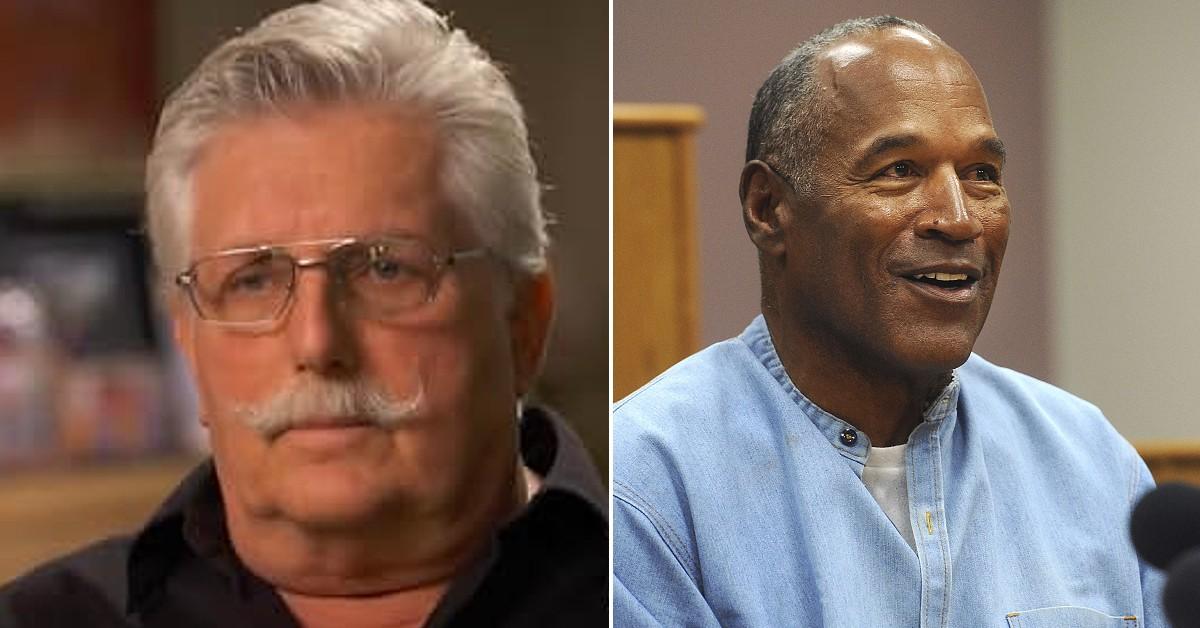
Fred Goldman, Ronald Goldman's father, spoke publicly after the verdict.
He filed a civil suit against Simpson.
Kim Goldman, Ronald Goldman's sister, also spoke publicly.
The civil suit followed the criminal acquittal.
Judge Hiroshi Fujisaki presided over the civil trial.
Daniel Petrocelli was the attorney for the Goldman family in the civil suit.
The cameras had followed the criminal trial into every living room.
The cameras kept watching the family after it ended.
What the civil suit produced is another matter.
The source records that the suit was filed and who was involved.
It does not record the outcome.
Not the verdict.
Not the damages.
Not whether the family found what they were looking for.
That would require evidence.
What is documented is the filing.
What is documented is the public grief of a father and a sister.
What is documented is that the story outlived the verdict.
The street on Bundy had its discovery at 12:10 a.m.
The trial had its verdict.
The family had its lawsuit.
The record holds each of those facts.
It holds nothing more about what came after.
Advertisement
You may also like
The fishing trip that put Scott Peterson at the center of a missing-pregnant-wife mystery
He said he went fishing alone that morning, off the Berkeley Marina. December 24, 2002. The same day his wife, Laci Peterson, eight months…
The red-light drive-by that ended Notorious B.I.G., and the car that vanished
12:45 a.m., March 9, 1997. A dark sedan pulls alongside a black SUV at a red light on Wilshire Boulevard in Los Angeles. The…
A notebook found beside Brian Laundrie's remains — what it said about Gabby Petito
The notebook was found beside Brian Laundrie’s remains in the Carlton Reserve in Florida, on October 20, 2021. A backpack lay nearby. The FBI…
Kitty Genovese's family says the '38 witnesses' claim stole her memory
A single number has been attached to Kitty Genovese's name for decades. Thirty-eight. The number appears in textbooks. It appears in documentaries. It is…
The MGM Grand altercation that preceded Tupac's shooting — what police believed
The black BMW sedan turned onto the Las Vegas Strip, and Tupac Shakur was in the passenger seat. Marion "Suge" Knight, the CEO of…
The neighbor's camera that caught Shanann Watts' truck — and the timeline that broke the case
The neighbor's camera was pointed at the driveway, not the street. It caught a blue Ford truck pulling into the Watts home in the…