The 51 days between the ATF raid and the fire that ended the Waco siege
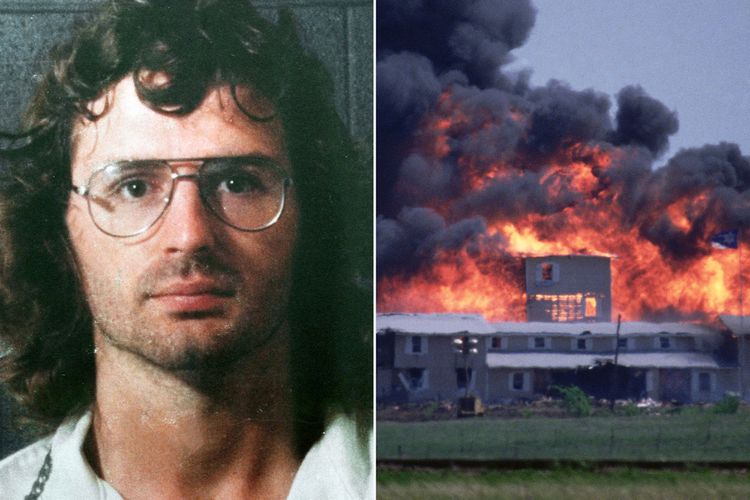
The warrant was for the Mount Carmel Center ranch near Waco, Texas.
February 28, 1993.
Agents of the Bureau of Alcohol, Tobacco, and Firearms attempted to serve a search and arrest warrant at the compound.
The raid was prompted by reports of illegal weapons and explosives stockpiled there.
The ATF had been monitoring the Branch Davidians for months, gathering evidence of illegal weapons purchases and manufacturing.
The warrant was based on that evidence.
A gun battle erupted.
Four ATF agents died.
Six Branch Davidians died.
Who fired first?
The record does not establish the exact sequence.
It is a raid that went violently wrong.
The home of the religious sect led by David Koresh became the site of a standoff.
The survivors on the ground waited.
Fifty-one days would pass before the siege ended.
What happened next would depend on the FBI.
THE SIEGE BEGINS
The raid was over in hours.
The standoff lasted fifty-one days.
The FBI took charge of the compound, and the siege became a waiting game.
Byron Sage, the FBI negotiator, was the voice on the line.
He called into the compound, and sometimes the Branch Davidians answered.
David Koresh talked. Steve Schneider talked.
The FBI's on-scene commander ran the operation from outside.
The agency used psychological pressure and negotiation tactics.
They cut the power.
They played loud sounds at night.
They flooded the compound with light.
They wore down the people inside, day by day.
Not because the siege was static.
But because pressure was the plan.
The negotiators asked for releases, and some people came out.
Children came out.

Adults came out.
Then the flow stopped.
The specific details of what was said on those calls are not in the record.
What remains is the shape of it: a slow tightening, a long wait.
The survivors on the ground waited.
Inside, the Davidians waited too.
Fifty-one days is a long time to hold a line.
The FBI held theirs.
The compound held its walls.
Something had to give.
That would come on April 19.
THE FINAL ASSAULT
April 19, 1993, began with armored vehicles.
The FBI launched its final assault on the compound, using those vehicles to insert tear gas.
The FBI said the tear gas was intended to force the occupants out.
It was not an assault with gunfire.
It was an assault with gas, metal, and time.
Then a fire broke out.
Seventy-six people inside the compound died.
David Koresh died in that fire.
Many children died in that fire.
The compound burned, and the siege ended in ash.
The Treasury Department investigated the fire.
The Justice Department investigated the fire.
Two federal agencies looked at what burned and who lit it.
The exact cause of the fire is not established in the source at this point.
Not because no one looked.
But because the looking produced arguments, not a single answer.
The FBI said the gas was meant to push people out into the open.
The record says the fire killed the people who stayed inside.
It does not say, at this point, who set the first flame.
That would require evidence.
The armored vehicles pulled back.
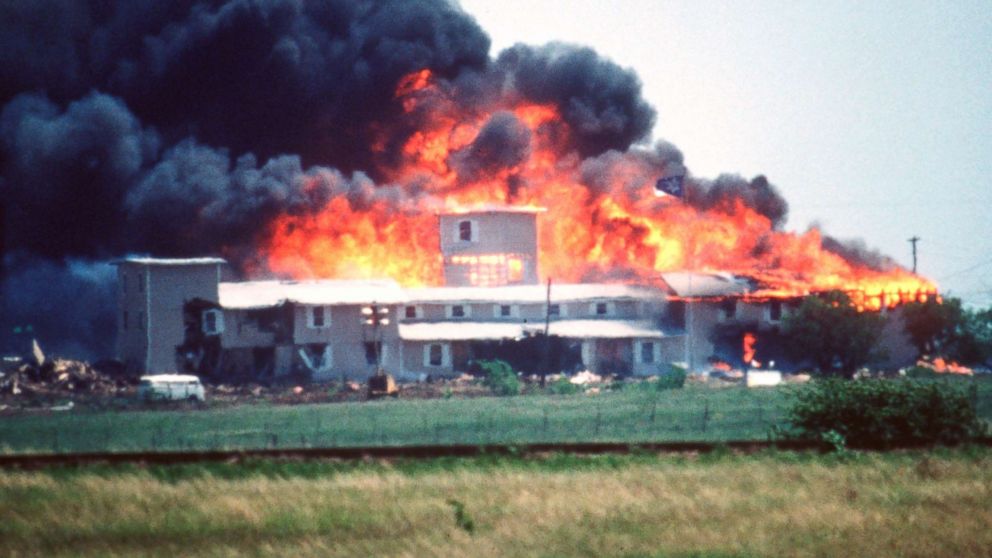
The sky over Mount Carmel turned black.
Seventy-six bodies were recovered from the rubble.
The survivors who walked out were taken into federal custody.
The dead were counted, named in lists, and mourned in public.
The investigation would outlast the smoke.
THE INVESTIGATION AND THE VERDICT
John Danforth, a former United States senator, was appointed as special counsel to investigate the fire.
His 2000 report concluded that the fire was deliberately set by the Branch Davidians.
That finding is contested by some survivors and families. It is a conclusion, not a settled fact.
The investigation also examined the FBI's use of pyrotechnic tear gas rounds.
Danforth concluded those rounds were not the cause of the fire. The record says the fire was set from within. The record does not establish that the FBI started it.
Eleven surviving Branch Davidians were tried in federal court in San Antonio in 1994.
The charges included voluntary manslaughter, conspiracy to murder federal officers, and weapons charges.
The defendants were acquitted of the most serious charges, including murder and conspiracy to murder.
They were convicted on lesser weapons charges.
Sentences ranged from probation to 40 years in prison.
The trial was a legal aftermath, not an accounting. It assigned some guilt. It assigned no guilt for the dead.
No one was ever charged with the deaths of the four ATF agents.
No one was ever charged with the deaths of the 76 people who died in the fire.
The investigation produced a verdict on the fire's origin. The courts produced verdicts on the survivors. The dead remained uncharged, unavenged in law.
The weight of the case settled into those two gaps.
The report answered how the fire started. It did not answer why the raid happened, or why the siege lasted 51 days.
The record is heavy with findings. It is also heavy with what it cannot say.
AND THE STORY STILL ISN'T OVER
The survivors who were convicted have since been released from prison.
The case remains a subject of deep public controversy.
The disputes are over the cause of the fire. They are over the FBI's tactics. They are over what happened in the 51 days between.
The exact cause of the fire remains disputed.
The ATF agents who died are memorialized.
The site of the Mount Carmel Center has been the site of memorials and occasional gatherings.
The federal government paid out millions of dollars in settlements to survivors and families of the dead.
The case has been the subject of numerous books. It has been the subject of documentaries. It has been the subject of a 2018 miniseries.
The dramatized versions are not reliable sources for factual details.
The record says the fire was deliberately set by the Branch Davidians. The theories online dispute it.
That would require evidence.
Advertisement
You may also like
A 1969 blood-scrawled word linked to Manson — but what did it really mean?
Inside the LaBianca home, the refrigerator door carried a word written in blood: "HEALTER SKELTER." It was a misspelling of "Helter Skelter." The words…

The 1959 plane crash that ended three rock legends' lives, and the pilot's decision that still haunts
The Beechcraft Bonanza lifted off from Mason City Municipal Airport at approximately 12:55 AM on February 3, 1959. Snow fell. The sky was overcast.…
The mother who traveled to identify her daughter's severed body — and the words she said
She took the train from Massachusetts. Phoebe Short had raised her daughter in Hyde Park, a town outside Boston, after her husband left the…
The tarot card with 'Call me God' — and what it did to the hunt
The card was found at one of the crime scenes, somewhere in the region that stretched across Washington, D.C., Maryland, and Virginia. The exact…
A traffic stop for a missing license plate, and the Oklahoma City bombing timeline takes a turn
9:02 a.m., April 19, 1995. A rented Ryder truck packed with ammonium nitrate and fuel oil exploded in front of the Alfred P. Murrah…
The Zodiac letter that carried a piece of Paul Stine's bloody shirt
The cab driver was 29 years old. He picked up a fare in the heart of San Francisco's Presidio Heights on October 11, 1969.…