A traffic stop for a missing license plate, and the Oklahoma City bombing timeline takes a turn
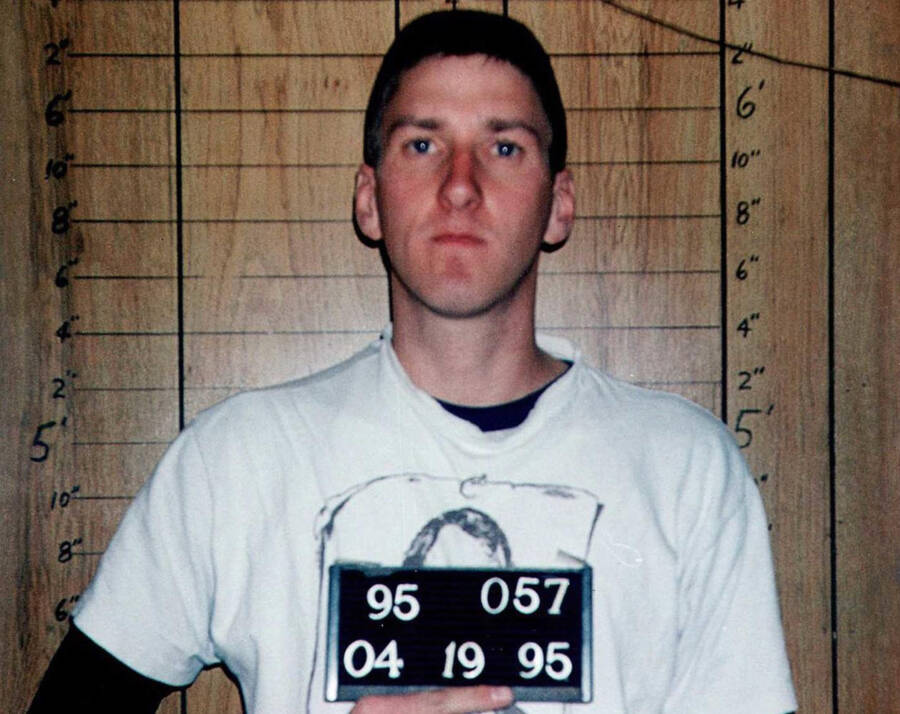
9:02 a.m., April 19, 1995.
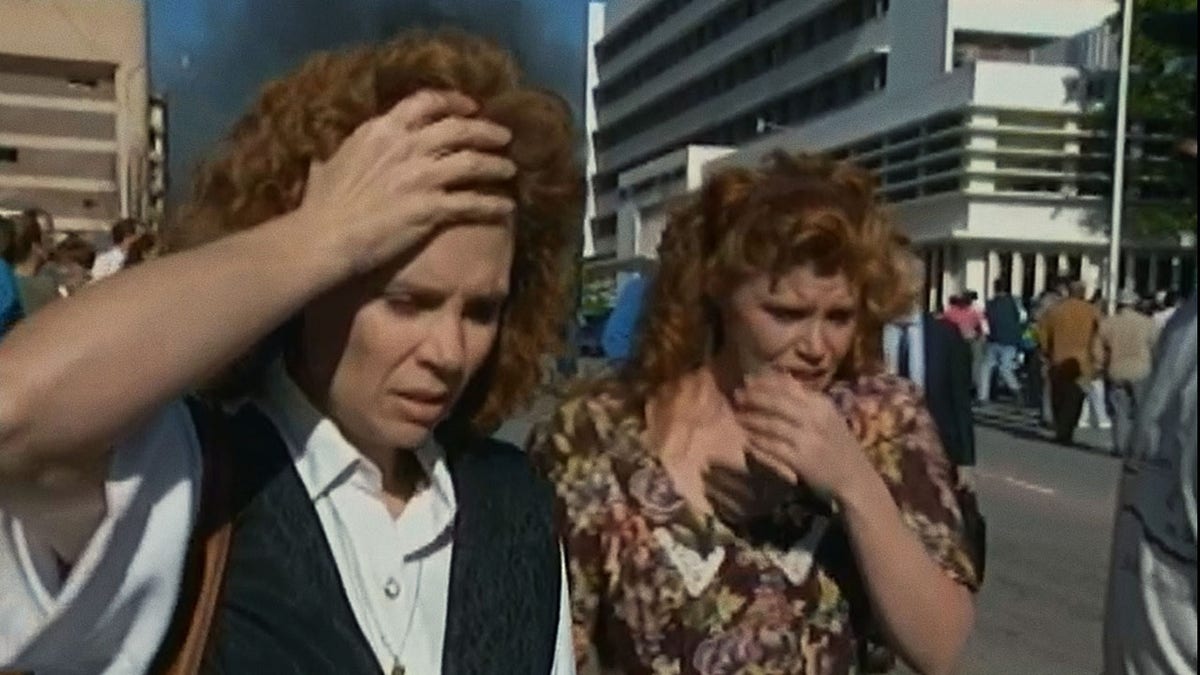
A rented Ryder truck packed with ammonium nitrate and fuel oil exploded in front of the Alfred P. Murrah Federal Building in Oklahoma City, Oklahoma.
The blast destroyed the north face of the nine-story building.
It killed 168 people, including 19 children in the day care center, and injured more than 680 others.
The explosion was felt for miles.
Within 90 minutes, an Oklahoma Highway Patrol trooper stopped a 1977 Mercury Marquis.
The reason was a missing license plate.
The driver, Timothy McVeigh, was arrested on a firearms charge.
A routine traffic stop becomes the hinge of a national tragedy.
How did a missing plate lead here?
What did the trooper see?
What did he know?
The bombing was the deadliest domestic terrorist attack in U.S. history at the time.
The trooper's name is not in the record.
The stop itself is documented, but its connection to the bombing is not yet established.
Not because the record is silent on the arrest.
But because the arrest was for a gun charge, not for the explosion.
That connection would take time.
That connection would take evidence.
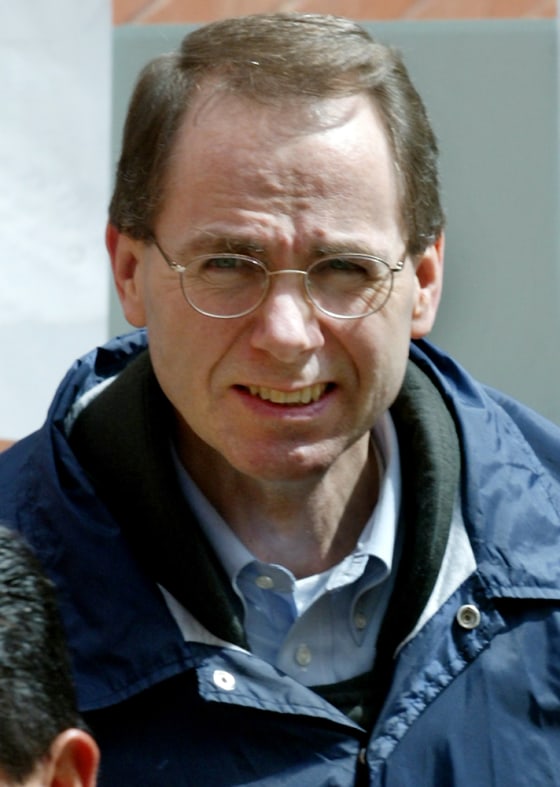
For now, there is only the stop, the missing plate, and a man in custody.
She was on the ground below, and he was in the car above — the timeline has not yet joined them.
THE AXLE AND THE RECEIPT
The FBI ran the VIN from the Ryder truck’s rear axle while McVeigh sat in custody.
That number led to a rental agency in Junction City, Kansas.
Witnesses there described a man matching McVeigh’s description.
The exact timeline of when the FBI made that identification is not specified in the record.
The stop came first. The identification came while he was held. The sequence between them is not established.
A search of McVeigh’s belongings at arrest turned up earplugs and a business card for a gun show.
Earplugs for the blast he allegedly set. A card for the weapons trade he knew.
Investigators later found a receipt for ammonium nitrate fertilizer at a farm supply store.
The receipt was in McVeigh’s handwriting.
The axle fragment bore the VIN. The receipt bore his hand. The physical trail tightened around one man.
Michael Fortier had visited the bomb site with McVeigh and Terry Nichols.
Fortier agreed to testify in exchange for a reduced sentence.
He knew of the plot, prosecutors said. He did not participate in the bombing itself.
No forensic evidence placed Nichols at the scene.
But his fingerprints were found on a receipt for the fertilizer and on a blasting cap box.
Not at the scene. On the materials.
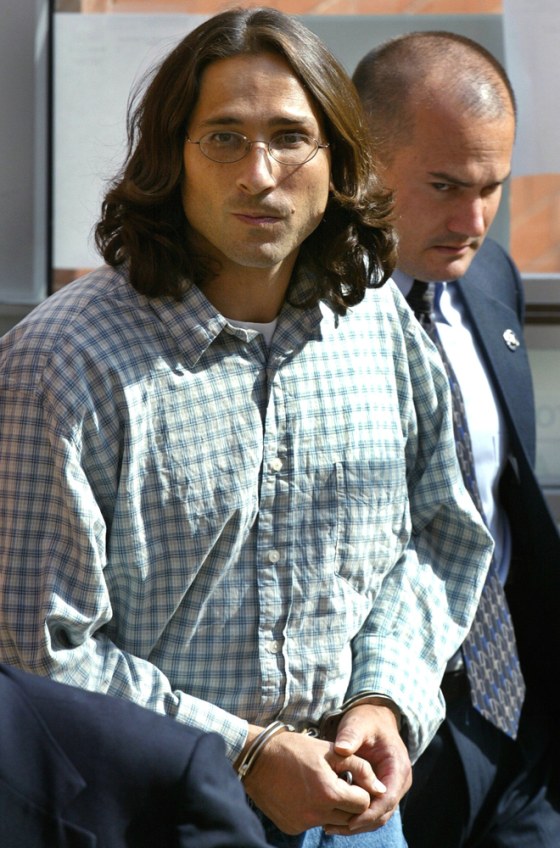
Each item pulled the net closer. The receipt, the fingerprints, the axle, the handwriting.
The record does not say when the FBI first matched the VIN to McVeigh.
It says only that the identification happened while he was in custody.
That would require evidence. The evidence was already there.
THE TWO STORIES
The prosecution, led by Joseph Hartzler, presented 137 witnesses over three weeks.
The physical evidence was the axle.
The axle bore the VIN that linked the truck to McVeigh.
A receipt for ammonium nitrate fertilizer sat in McVeigh's handwriting.
A blasting cap box carried Nichols's fingerprints.
Michael Fortier testified against both men.
He had known of the plot.
He had not participated in the bombing itself.
He testified in exchange for a reduced sentence.
The defense, led by Stephen Jones, argued that McVeigh was a scapegoat.
The real conspirators remained unknown, Jones argued.
The defense also argued that the FBI had not ruled out other suspects.
Who else could have been there?
Who else knew the truck's route?
Who else handled the fertilizer?
The record does not establish the identity of any other potential conspirators.
The defense's claim is not supported by the record.
The prosecution's case rested on the physical evidence and Fortier's testimony.
It was the axle and the receipt and the fingerprints.
It was a man who testified about what he knew.
The jury heard that testimony.
The jury saw that evidence.
The defense presented its story in return.
Two stories, one record.
The record held the axle, the receipt, the box, the witness.
The record did not hold the unknown conspirators.
That would require evidence.
The evidence was already there.
THE VERDICT
The trial began in Denver, Colorado, on April 24, 1997.
Timothy McVeigh faced 11 counts of conspiracy and murder.
The prosecution presented 137 witnesses over three weeks.
The defense argued he was a scapegoat.
The defense argued the real conspirators remained unknown.
On June 2, 1997, the jury found McVeigh guilty on all 11 counts.
The verdict was a relief.
It was also a weight.
The specific evidence that convinced the jury is not detailed in the record.
That would require the jury's internal reasoning.
That is not established.
The penalty phase followed.
The jury recommended the death penalty.
Judge Richard Matsch sentenced McVeigh to death by lethal injection.
Terry Nichols was tried separately in 1997.
He was convicted of conspiracy and involuntary manslaughter.
He was sentenced to life in prison without the possibility of parole.
Michael Fortier was sentenced to 12 years for his role.
He had known of the plot.
He did not participate in the bombing itself.
Three men.
Three different outcomes.
The gavel had fallen.

The story did not end there.
AND THE STORY STILL ISN'T OVER
McVeigh’s appeals were unsuccessful.
He was executed on June 11, 2001, at the federal penitentiary in Terre Haute, Indiana.
Terry Nichols remains in federal prison.
He is serving a life sentence without parole, and his appeals have been denied.
Michael Fortier was released from prison in 2006.
He had served his sentence for failing to report the plot.
The Oklahoma City National Memorial & Museum now stands on the site of the Murrah Building.
168 empty chairs sit there, one for each person who died.
Bud Welch, whose daughter Julie died in the blast, has become a public speaker.
He advocates against the death penalty.
The case remains a landmark in U.S. domestic terrorism law.
It shaped federal investigation procedures for what came after.
What happens to an appeals process once the sentence is carried out?
What happens to a co-conspirator when the state moves on?
What happens to a witness when he walks free?
Those questions are not answered in the record.
The current legal status of any appeals or motions is not in the record beyond what is stated.
The gavel had fallen.
The chairs remain empty.
The story did not end there.
Advertisement
You may also like
The fishing trip that put Scott Peterson at the center of a missing-pregnant-wife mystery
He said he went fishing alone that morning, off the Berkeley Marina. December 24, 2002. The same day his wife, Laci Peterson, eight months…
The red-light drive-by that ended Notorious B.I.G., and the car that vanished
12:45 a.m., March 9, 1997. A dark sedan pulls alongside a black SUV at a red light on Wilshire Boulevard in Los Angeles. The…
A notebook found beside Brian Laundrie's remains — what it said about Gabby Petito
The notebook was found beside Brian Laundrie’s remains in the Carlton Reserve in Florida, on October 20, 2021. A backpack lay nearby. The FBI…
Kitty Genovese's family says the '38 witnesses' claim stole her memory
A single number has been attached to Kitty Genovese's name for decades. Thirty-eight. The number appears in textbooks. It appears in documentaries. It is…
The MGM Grand altercation that preceded Tupac's shooting — what police believed
The black BMW sedan turned onto the Las Vegas Strip, and Tupac Shakur was in the passenger seat. Marion "Suge" Knight, the CEO of…
The neighbor's camera that caught Shanann Watts' truck — and the timeline that broke the case
The neighbor's camera was pointed at the driveway, not the street. It caught a blue Ford truck pulling into the Watts home in the…