The cellphone video that placed Alex Murdaugh at the kennels — and shattered his alibi
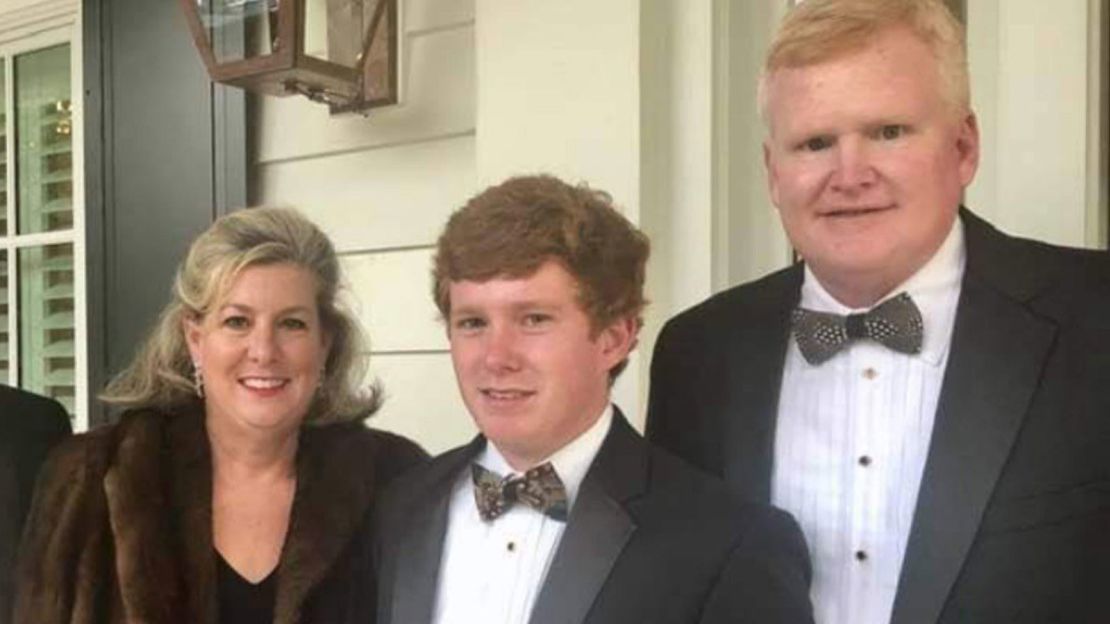
The video ran for about a minute.
Paul Murdaugh recorded it at the dog kennels on the family property, on the evening the killings are believed to have happened.
The camera moved across the pens, catching the dogs, catching the light.
Then it caught something else.
A voice, familiar to anyone who knew the family.
The voice belonged to Alex Murdaugh.
Prosecutors presented the video at trial, and the courtroom went quiet.
He had told investigators he was not at the kennels that night.
He had told them he had left the property before the shootings, that he had driven to visit his mother.
The video placed him there.
Not in the house. Not on the road.
At the kennels, with his son, at the time in question.
The state called it circumstantial evidence.
Circumstantial, they argued, because it did not show a shooting.
Circumstantial, they argued, because it did not show a motive.
But it did something else.
It put Alex Murdaugh where he said he was not.
It gave the jury a reason to ask what else he had hidden.
What exactly does the video show?
That is where the record stops.
The source does not detail the full content of the footage beyond placing Alex at the kennels.
The defense argued the video proved nothing on its own.
No gun. No struggle. No confession.
Just a father’s voice, recorded by a son who would be dead within hours.
The exact content of the video beyond placing Alex at the kennels is not detailed in the source.
That would require evidence.
THE 911 CALL AND THE ALIBI
On June 7, 2021, Paul Murdaugh and his mother, Maggie Murdaugh, were found shot to death at the family’s hunting estate in Colleton County, South Carolina.
Alex Murdaugh discovered the bodies and called 911 that evening.
He claimed he had been at the property but left before the shootings, visiting his mother and then returning to find the bodies.
That was his story: a father who drove away, came back, and found his wife and son dead.
The exact timeline of Alex’s movements that evening is not fully established in the source.
Investigators found no signs of a struggle or robbery.
No forced entry. No ransacked rooms. No clear motive for a stranger.
The murders were initially treated as an unsolved double homicide.
A shotgun and a rifle, both owned by the Murdaugh family, were used in the killings.
Paul was 22. Maggie was 52.
The case drew national attention because of the Murdaugh family’s legal and political prominence in the region.
Alex Murdaugh was a former attorney, the husband and father of the victims.
He was charged with two counts of murder and two counts of possession of a weapon during the commission of a violent crime.
But at that moment, in June 2021, there was only a grieving man on the phone with a dispatcher.
His alibi depended on a simple sequence: leave, visit his mother, return, find the bodies.
That sequence would hold for months.

Not because it was verified.
But because there was no evidence to break it.
THE TURNING POINT
That sequence would hold for months.
Not because it was verified.
But because there was no evidence to break it.
Then, in September 2021, Alex Murdaugh was shot in the head in an alleged roadside incident, according to the investigation.
He survived, and the story he told began to unravel.
He later admitted to arranging the shooting with a former client, Curtis Edward Smith, in an apparent scheme to collect life insurance for his surviving son, investigators said.
That admission, along with financial crimes charges for alleged embezzlement from his law firm and clients, shifted scrutiny toward Murdaugh, the investigation found.
The grieving father was now a suspect.
At trial, the prosecution argued Murdaugh killed his wife and son to distract from his financial fraud, according to trial testimony.
Lead prosecutor Creighton Waters presented that theory to the jury.
The defence countered that the state had no direct evidence, that Murdaugh was a grieving husband and father.
The exact motive for the murders is not definitively established.
The prosecution's theory is one interpretation.
The financial crimes were documented.
The roadside shooting was admitted.
But the reason two people died on that property in June 2021?
That would require evidence.
The prosecution said the evidence pointed to distraction.
The defence said it pointed nowhere.
The judge, Clifton Newman, presided over the arguments.
The jury would decide which story held.
THE TRIAL AND THE VERDICT
The trial opened in January 2023 in Colleton County.
Judge Clifton Newman presided.
The lead prosecutor, Creighton Waters, laid out the state’s case for the jury.
It was circumstantial, he said.
The cellphone video recorded by Paul at the kennels placed Alex Murdaugh at the scene.
Gunshot residue was found on his clothing, prosecutors said.
There was testimony about his financial crimes.
The prosecution argued that Murdaugh killed his wife and son to distract from his fraud.
The defence answered that the evidence was insufficient.
Financial misconduct, the defence argued, did not prove murder.
The defence’s specific arguments beyond that are not detailed in the record.
The state offered no direct evidence, the defence contended.
Murdaugh was a grieving husband and father, they said.
The medical examiner testified that Maggie died from multiple shotgun wounds.
Paul died from a rifle wound.
The jury heard the testimony.
They watched the video.
They weighed the gunshot residue and the financial crimes.
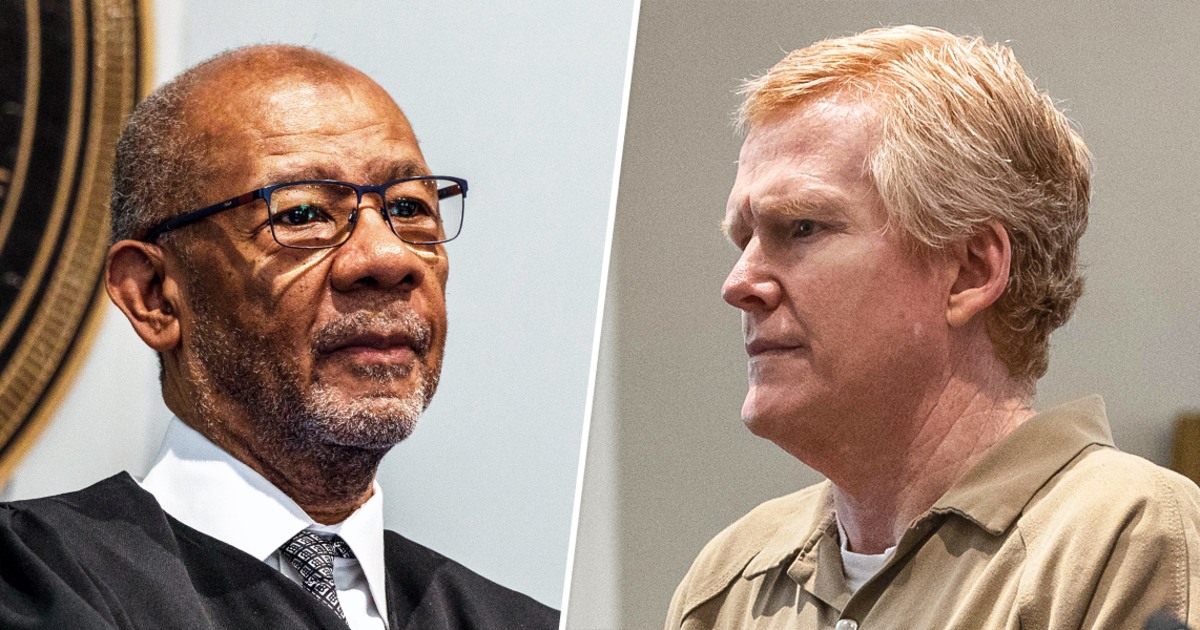
In March 2023, the jury returned.
They found Alex Murdaugh guilty of all four counts.
Two counts of murder.
Two counts of possession of a weapon during a violent crime.
Judge Newman sentenced him to two consecutive life sentences without parole.
The verdict was final.
The weight of the evidence had settled the story.
AND THE STORY STILL ISN'T OVER
The motion for a new trial was denied in January 2024.
Judge Newman rejected the claims of jury tampering.
Murdaugh has maintained his innocence.
He has appealed.
The appeals are ongoing.
The outcome of those appeals is not known.
That would require a ruling.
He is serving two consecutive life sentences in a South Carolina prison.
The murder convictions stand for now.
Separately, he pleaded guilty to numerous federal and state financial crimes.
Fraud and money laundering were among them.
Those pleas brought additional sentences.
The financial cases are resolved.
The murder case is not.
It is a legal battle in motion.
It is also a story that refuses to close.
The cellphone video was an exhibit.
The alibi was a claim.
The jury heard both.
The jury decided.
Now the appellate courts hear the arguments.
The questions linger.
What the video showed.
What the alibi meant.
What the jury believed.
None of that is settled by an appeal.
An appeal is a review, not a retrial.
Murdaugh remains in prison.
His lawyers press on.
The state defends the verdict.
Judge Newman’s ruling was one step.
The next step is unknown.
The record does not say when it will come.
The case continues.
The story still is not over.
Advertisement
You may also like
A traffic stop for a missing license plate, and the Oklahoma City bombing timeline takes a turn
9:02 a.m., April 19, 1995. A rented Ryder truck packed with ammonium nitrate and fuel oil exploded in front of the Alfred P. Murrah…
The Zodiac letter that carried a piece of Paul Stine's bloody shirt
The cab driver was 29 years old. He picked up a fare in the heart of San Francisco's Presidio Heights on October 11, 1969.…
The 12:10 a.m. dog-walk discovery that turned a Brentwood street into a media siege
She was just walking her dog. It was approximately 12:10 a.m. on June 12, 1994, and the neighbor was out on Bundy Drive in…

The Green River Killer's truck painter confession that left detectives with 49 names
He painted trucks for a living, a trade that kept his hands steady and his cover plain. Gary Leon Ridgway was a truck painter…
The phone card call that cracked the DC Sniper case — and the white van that led police astray
A tip came from a phone card. A caller used it, and the call led police to a witness who had seen the Chevrolet…
The Missing Christmas Eve Walk That Split a Family
She was twenty-seven years old and eight months pregnant. Laci Peterson went for a walk with her dog on Christmas Eve, 2002, from her…