The floppy disk trace that unmasked a church leader as BTK after 30 years
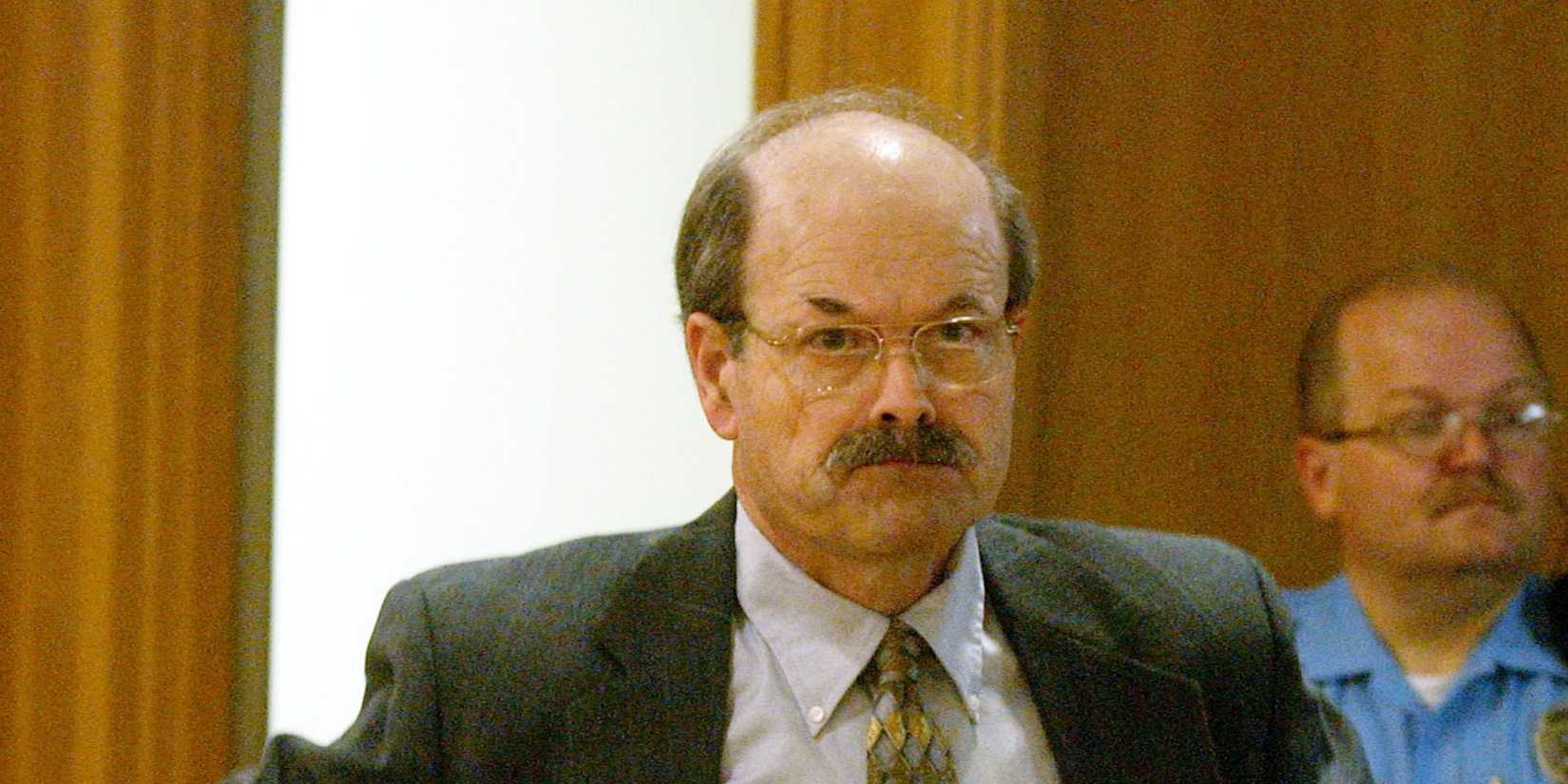
A floppy disk arrived at a Wichita newspaper in 2004, sent by someone claiming to be the BTK killer.
It was a taunt, a piece of plastic from a decade that had already passed.
Police found hidden metadata on the disk—data about the document's creation.
The metadata pointed to a specific computer.
That computer led detectives to a church.
Then it led to a man who served as church council president.
He was also a Cub Scout leader.
He was a compliance officer for animal control, married with children.
His name was Dennis Rader.
The disk was deliberate, a provocation from a killer who had gone silent for years.
It became the key to a case that had gone cold for decades.
The exact contents of the disk's metadata are not specified in the source.
Only that it was traced to a church, and then to Rader.
What else was on that disk?
What did the file say?
What made the killer think it was safe?
That would require evidence the record does not provide.
The disk was mundane.
It was also the hinge on which thirty years turned.
THE FIRST CRIME
January 15, 1974, is the date the police report records.
Four members of the Otero family were found murdered in their Wichita home that day.
The father was Joseph Otero.
His wife was Julie.
Two of their children were also killed.
A third child survived by hiding, according to the case file.
The investigation initially focused on these murders.
Police interviewed neighbors, the police investigation recorded.
Leads went nowhere.
In October 1974, a letter arrived at a Wichita television station.
Police records state the killer claimed responsibility in that letter.
That letter introduced the moniker "BTK."
Over the next 17 years, the killer claimed at least seven more victims.
The case file records taunting letters sent to media and police.
The letters offered clues.
The letters offered photographs.
The letters offered a poem.
The case went cold.
No arrests were made for decades.
Not because the police stopped looking.
But because the leads died out.
What was the killer's name?
What did his face look like?
What connected one murder to the next?
That would require evidence the record did not provide.
The record establishes the Otero murders.
It establishes a letter and a name.
The total number of victims is not specified in the record.

Only that there were at least seven more after the family of four.
The frustration is in the file itself.
A city waited.
A family buried its dead.
And the case sat, unresolved, for thirty years.
THE LETTERS
He sent letters.
He sent packages.
Police records show BTK mailed numerous letters and packages over the years, containing clues, victim photographs, and a poem.
Each one taunted the city.
Each one promised more.
And for decades, each one produced nothing.
The case went cold.
The case file shows no arrests for years, just a stack of paper and a name that would not die.
Then, in 2004, the killer resumed communication.
According to the police investigation, a letter arrived at a Wichita newspaper.
The specific contents of that 2004 letter are not detailed in the source.
What is detailed is what the letter carried: a floppy disk.
Detective Ken Landwehr led the task force.
Police examined the disk and found hidden metadata—data about the document's creation.
That metadata pointed to a church.
That church pointed to a man who served on its council.
That man lived in a house the police could now name.
The trail led to Dennis Rader's home.
It was methodical.
It was slow.
It was the first traction in thirty years.
DNA evidence from crime scenes also linked Rader, according to investigation records.
Two threads, one digital and one biological, converged on the same man.
A city waited.
This time, the waiting would end.
THE ARREST
The traffic stop happened on February 25, 2005.
The exact details of that stop are not specified in the source.
Police reports record only that Dennis Rader was arrested that day.
He confessed in detail during interrogation, according to the police investigation.
He was then charged with 10 counts of first-degree murder, per court records.
The charge sheet named ten victims.
The murders spanned seventeen years.
Rader pleaded guilty on June 27, 2005, in a Sedgwick County district court.
Court records confirm the plea.
Then he gave a confession in open court.
It was chilling, according to trial testimony.
He described each murder without emotion.
He spoke of the bindings.
He spoke of the torture.
He spoke of the killings.
The courtroom heard how he had chosen them, followed them, entered their homes.
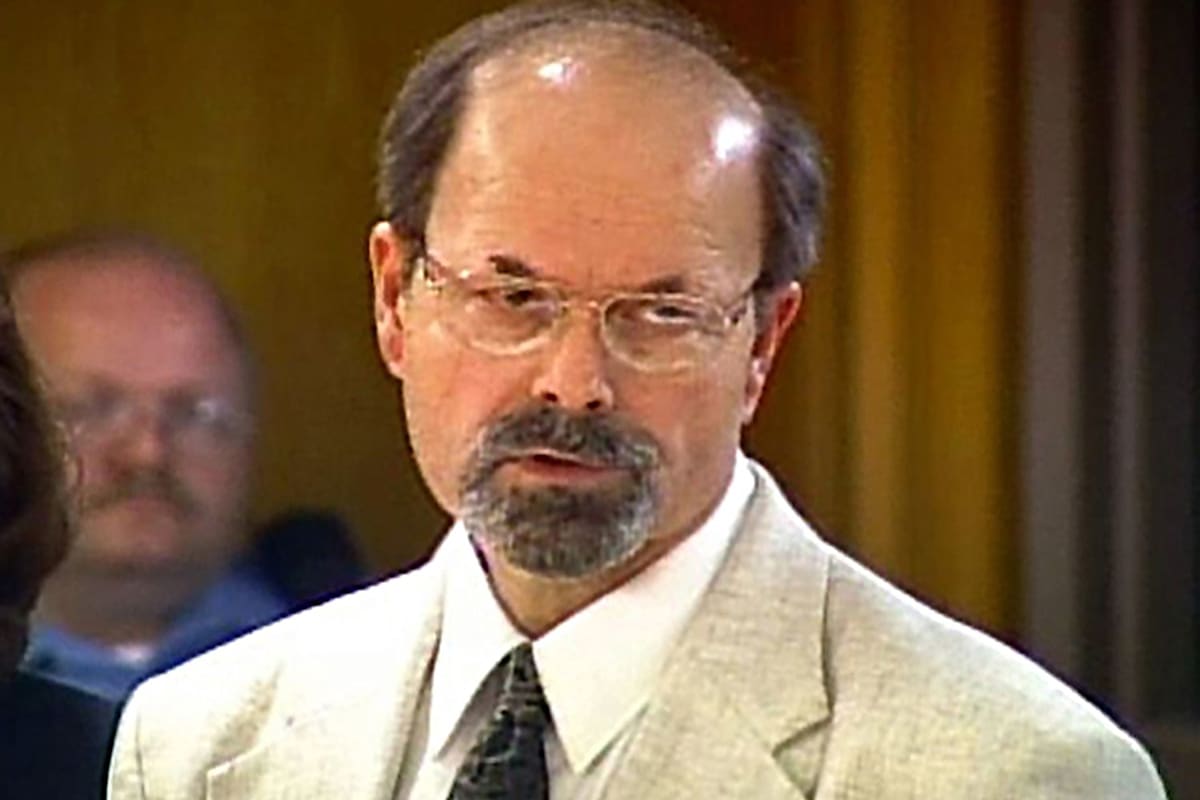
The courtroom heard how he had left them.
He was sentenced to 10 consecutive life terms.
The minimum was 175 years.
Parole was impossible, the court records state.
He did not appeal.
The man who had served as a church council president and Cub Scout leader was led away.
He had been a compliance officer for animal control.
He had been a husband and a father.
His family, according to the case file, were unaware.
The confession did not explain why.
The confession did not offer remorse.
It offered chronology.
It offered method.
It offered the names of the dead.
Then it ended.
The city had waited thirty years for an answer.
This was the answer, delivered in a flat voice from a defendant's chair.
It was complete.
It was also not the end.
AND THE STORY STILL ISN'T OVER
He is serving his sentence at El Dorado Correctional Facility in Kansas.
No possibility of parole.
His wife, Paula Rader, divorced him after his arrest.
That is in the case file.
The surviving family members have spoken publicly.
Charlie Otero, who found his family's bodies as a young man, has become an advocate for victims' families.
He has said what he says in public statements.
In 2023, Rader was questioned in connection with other unsolved murders.
No additional charges were filed.
The outcome of that questioning is not detailed.
The investigation status is not specified.
Not because the record is silent on purpose.
But because the record is silent.
What else might be answered?
What other cases were part of that questioning?
What did Rader say?
That would require evidence.
What remains is the case itself.
It is a landmark in criminal investigation.
It is cited for the use of digital forensics.
A floppy disk's metadata did what decades of witness interviews could not.
The line between viral and documented holds here.
The disk is documented.
The confession is documented.
The sentence is documented.
What is not documented stays open.
The story is complete.
It is also not the end.
Advertisement
You may also like
The Army captain's intruder story that blood spatter contradicted — and the media believed it
On the night of February 17, 1970, at Fort Bragg, North Carolina, Army Captain Jeffrey MacDonald, a Green Beret physician, reported that four intruders—three…
31 days passed before Casey Anthony reported her daughter Caylee missing in July 2008
The 911 call came on July 15, 2008. Cindy Anthony, the grandmother, reported her 2-year-old granddaughter missing that day. Caylee Anthony had last been…
The cellphone video that placed Alex Murdaugh at the kennels — and shattered his alibi
The video ran for about a minute. Paul Murdaugh recorded it at the dog kennels on the family property, on the evening the killings…
The parachute jump that left an FBI agent chasing a name that never existed
The note was passed on the evening of November 24, 1971. A man bought a one-way ticket on Northwest Orient Airlines Flight 305, from…
The cell tower data that sent Adnan Syed to prison — and the call that didn't add up
The call came at 4:12 p.m. The record shows that much. After that, the record shows something argued, not something proven. On January 13,…
The jailhouse confession that cracked the Manson case open — but only after the bodies were found
On the night of August 9, 1969, five people were murdered at 10050 Cielo Drive in Benedict Canyon, Los Angeles. Among them was actress…