A parolee's palm print on a bedpost — and the 64-day search that followed
The bedpost stood in a twelve-year-old's room.
On the night of October 1, 1993, Polly Klaas was having a slumber party with two friends at her mother's home in Petaluma, California.
An intruder entered the house.
He tied up the three girls.
He placed pillowcases over their heads.
He abducted Polly.
What he left behind was rope and duct tape.
And a palm print.
The palm print was on a bedpost in Polly's room.
It is a documented fact from the investigation.
The palm print is a physical thing, silent and fixed, outlasting the chaos of that night.
It became a key to the case.
Who placed it there?
That is where the record draws its line.
The palm print is a fact.
A jailhouse informant's claim that Davis confessed is testimony, not a fact established by the record.
The informant testified.
The defense argued the informant was unreliable.
The record does not resolve that argument; it presents it.
The identity of the intruder at the moment of entry is not established by the source beyond the eventual conviction.
The palm print's exact location in the room is not specified beyond a bedpost in Polly's room.
The bedpost remains.
A single, silent object.
It held the weight of a hand.
It held the weight of a case.
THE SEARCH
Eve Nichol returned home later that evening.
She discovered her daughter missing and two friends bound with pillowcases over their heads.
The scene was reported immediately.
A massive search involving local police, the FBI, and thousands of volunteers ensued.
The investigation became one of the largest in California history.
Over 1,000 volunteers and law enforcement personnel were involved.
Police initially focused on registered sex offenders in the area.
The process was one of elimination.
A key witness was a woman who reported seeing Davis's car near the abduction site.
She described a 1978 Ford Pinto.
The exact date of her sighting is not in the record.
The specific location where she saw the car is not in the record either.
That would require evidence.
The search continued through October.
It stretched into November.
The case was not yet a case.
It was a disappearance.
It was a family's nightmare.
It was a community's mobilization.
And then, on November 30, a break came.
Richard Allen Davis was arrested on an unrelated parole violation.
The search changed course.
The slow work of elimination gave way to something else.
A confession.
A body.
A trial.
But all of that came later.
For now, the search was the story.
A girl was missing.
A town was looking.
A nation was watching.
THE ARREST AND CONFESSION
The break came on November 30, 1993.
Richard Allen Davis was arrested on an unrelated parole violation.
During questioning, he gave conflicting statements.
The specific content of those conflicting statements is not detailed in the source.
Neither are the exact circumstances of the confession.
He eventually confessed to the kidnapping and murder.
On December 4, 1993, he led investigators to a remote site in Sonoma County.
Polly's body was found there.
She had been strangled.
A girl was found.
A town had its answer.
A nation had its horror.
The relief was real. The horror was real. Both arrived at the same remote site in Sonoma County.
Then came the legal fight.
The defense argued that Davis's confession was coerced.
The defense argued that the jailhouse informant was unreliable.
The informant had testified that Davis made incriminating statements while in custody.
That claim was contested testimony.
The prosecution's case did not rest on words alone.
There was rope. There was duct tape.
There was a palm print on a bedpost in Polly's room.
It belonged to Davis.
Physical evidence and Davis's own statements bolstered the case.
The confession was on the record. The body was found. The print was on the wood.
What the record does not establish is the exact nature of the conflicting statements, or the precise circumstances under which the confession came.
That would require evidence the source does not provide.
The case would go to trial in June 1996.
Davis would be charged with first-degree murder with special circumstances, kidnapping, and burglary.
The prosecution would seek the death penalty.
The confession brought an end to the search.
The trial would begin another kind of search — for a verdict.
THE TRIAL
The trial began in June 1996 in Sonoma County Superior Court.
Davis was charged with first-degree murder with special circumstances, kidnapping, and burglary.
The prosecution sought the death penalty.
The defense did not dispute that Davis committed the crimes.
They argued instead for life without parole, citing his troubled childhood and substance abuse.
On August 5, 1996, the jury convicted Davis on all counts.
Then came the penalty phase.
During the penalty phase, Davis made an outburst in court, taunting Polly's family.
The exact nature of that outburst is not described in the source beyond the taunting.
The jury heard it.
The jury saw it.
The jury recommended the death penalty.
On September 26, 1996, the judge sentenced Davis to death.
The admission was over.
The plea for mercy was over.
The defiance was over.
What remained was the sentence, and what the sentence would become.
AND THE STORY STILL ISN'T OVER
The California Supreme Court upheld the conviction and the sentence on appeal in 2004.
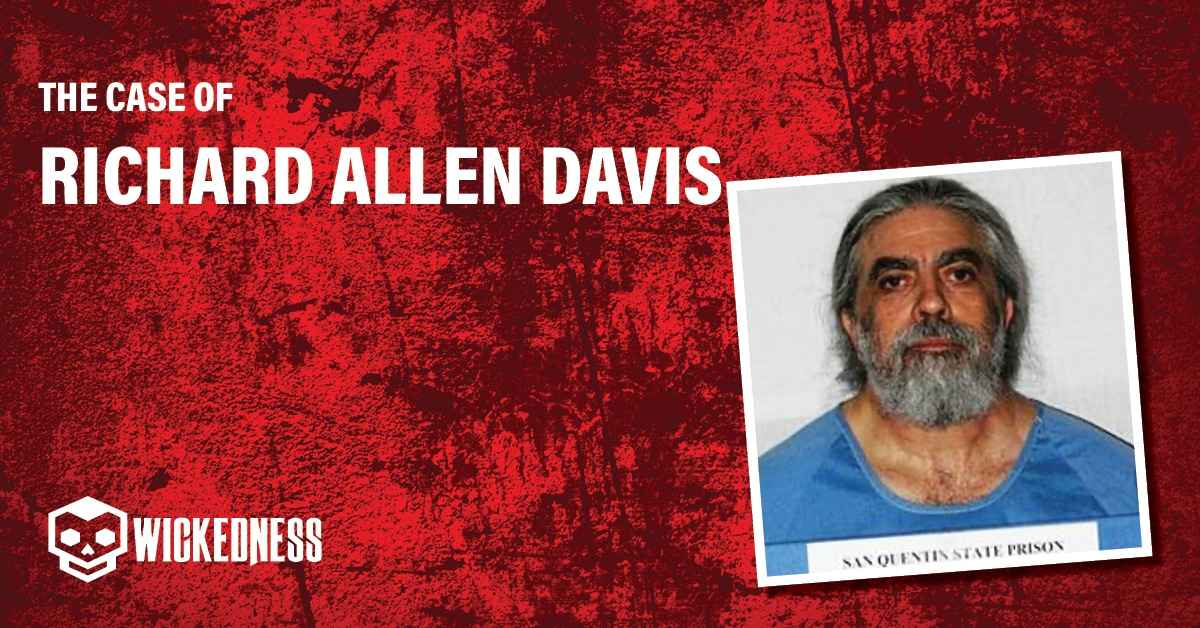
Davis remains on death row at San Quentin State Prison.
California has not executed anyone since 2006.
Legal challenges to the death penalty stopped it.
Not because the sentence changed. Because the process stalled.
The legal case is closed. The story is not.
The case changed the law.
California passed "Polly's Law" after the murder.
It strengthened penalties for repeat offenders.
It expanded the state's DNA database.
Marc Klaas founded the KlaasKids Foundation.
It is a nonprofit dedicated to child safety and missing-children issues.
Eve Nichol has also remained active in advocacy.
The names live on in policy and in public debate.
Davis's name is often invoked in arguments over the death penalty.
Polly's murder remains one of the most notorious crimes of the 1990s.
The trial ended in August 1996 with a conviction.
The sentence came a month later.
The appeal was rejected eight years after that.
What remains is a waiting period without a clear end.
The status of any current appeals or legal motions is not in the record.
The next concrete step is not specified.
That would require evidence the record does not contain.
What is documented is the palm print, the confession, the conviction, the sentence, the appeal.
What continues is the advocacy, the law, the waiting.
She was on the ground below.
The case is over. The story still is not.
Advertisement
You may also like
The Army captain's intruder story that blood spatter contradicted — and the media believed it
On the night of February 17, 1970, at Fort Bragg, North Carolina, Army Captain Jeffrey MacDonald, a Green Beret physician, reported that four intruders—three…
31 days passed before Casey Anthony reported her daughter Caylee missing in July 2008
The 911 call came on July 15, 2008. Cindy Anthony, the grandmother, reported her 2-year-old granddaughter missing that day. Caylee Anthony had last been…
The cellphone video that placed Alex Murdaugh at the kennels — and shattered his alibi
The video ran for about a minute. Paul Murdaugh recorded it at the dog kennels on the family property, on the evening the killings…
The parachute jump that left an FBI agent chasing a name that never existed
The note was passed on the evening of November 24, 1971. A man bought a one-way ticket on Northwest Orient Airlines Flight 305, from…
The cell tower data that sent Adnan Syed to prison — and the call that didn't add up
The call came at 4:12 p.m. The record shows that much. After that, the record shows something argued, not something proven. On January 13,…
The jailhouse confession that cracked the Manson case open — but only after the bodies were found
On the night of August 9, 1969, five people were murdered at 10050 Cielo Drive in Benedict Canyon, Los Angeles. Among them was actress…