Why 48 life sentences followed a plea deal that spared Gary Ridgway the death penalty
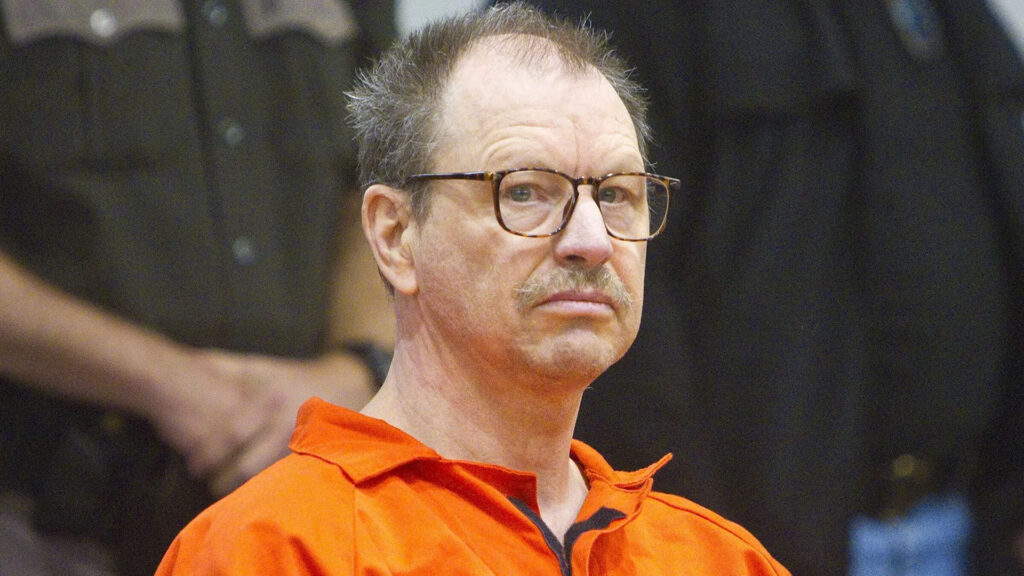
The number stunned even seasoned court observers.
In 2003, Gary Ridgway, a truck painter from Auburn, Washington, pleaded guilty to 48 counts of aggravated first-degree murder.
He stood accused of killing dozens of women and girls in the Seattle–Tacoma area, most of them runaways, sex workers, or vulnerable young women.
The plea agreement was negotiated with the King County Prosecuting Attorney's office.
It traded the death penalty for Ridgway's cooperation in locating victims and providing details of his crimes.
Judge Richard Jones accepted the plea.
He sentenced Ridgway to 48 consecutive life sentences without the possibility of parole.
Some victims' families expressed anger that Ridgway avoided execution.
That anger still circulates online as a claim of leniency.
The record shows the sentence was life without parole, not a reduced term.
It shows Ridgway remains incarcerated at the Washington State Penitentiary in Walla Walla.
How did this deal come to be?
Why 48 counts, when Ridgway was originally charged with seven?
Why did prosecutors agree to spare him?
The exact motivations of each party in the plea negotiations are not fully documented in the source.
The deal was controversial.
It was also binding.
It was a bargain for information, and the price was the death penalty.
He was ordered to pay restitution to victims' families.
He cooperated with investigators, leading to the recovery of additional remains.
He is still in prison.
The plea was not a soft option.
It was a trade, accepted by a judge, and measured in consecutive life terms.
The anger of the families was real.
So was the sentence.
THE INVESTIGATION
The first bodies were pulled from the Green River in 1982.
Two of them, found close together, gave the case its name.
The King County Sheriff's Office formed the Green River Task Force.
At its peak, the task force drew in dozens of investigators from multiple agencies.
The lead detective became the public face of the hunt.
Early suspects were investigated and cleared, including a man named Melvyn Foster.
For years, the case sat cold.
Critics said the investigation focused too heavily on the victims' lifestyles, and some argued that focus slowed progress.
Gary Ridgway was interviewed early in the investigation.
He was not charged.
The specific reasons he was not charged earlier are not detailed in the source.
He was not arrested until November 2001.
By then, DNA evidence had linked him to several victims.
Forensic work also turned up paint particles consistent with his work as a truck painter.
The task force had the link.
The weight of the stalled years sat on the breakthrough.
THE CHARGES AND THE DEAL
In 2001, Ridgway was charged with seven counts of aggravated first-degree murder.
The state sought the death penalty.
King County Prosecuting Attorney Norm Maleng’s office brought the charges.
The defence, led by attorney Mark Prothero, faced the weight of that possibility.
In 2003, the calculation changed.
Ridgway entered a plea agreement.
He pleaded guilty to 48 counts of aggravated first-degree murder.
In exchange, the prosecution agreed not to seek the death penalty.
The deal traded execution for certainty.
Prosecutors argued the bargain guaranteed a lifetime behind bars.
It also promised something the trial could not: closure.
As part of the plea, Ridgway cooperated with investigators.
That cooperation led to the recovery of additional remains.
The specific terms of that cooperation, beyond locating victims, are not fully detailed in the source.
Judge Richard Jones accepted the plea.
He imposed the sentence: 48 consecutive life terms without the possibility of parole.
Each life sentence ran one after another.
Ridgway was also ordered to pay restitution to the victims' families.
The deal was controversial.
Some families expressed anger that he avoided execution.
The judge’s acceptance made it final.
A guaranteed life sentence stood where the chance at death once loomed.
That was the trade.
That was the weight.
THE PROSECUTION AND DEFENCE
The prosecution, led by the King County Prosecuting Attorney, argued the deal was necessary to locate victims and give families closure.
The trade was the death penalty; the gain was certainty.
The defence, led by attorney Mark Prothero, framed the deal as a way to avoid a prolonged trial.
A life sentence, not execution, was the outcome they argued for.
Judge Richard Jones accepted the plea.
By doing so, he endorsed the prosecution's view that cooperation was worth more than a death sentence.
Some victims' families were angry.
They saw the deal as leniency, as mercy for a man who strangled dozens.
Others may have valued the recovery of remains, the chance to bury a daughter or a sister.
The source does not provide direct quotes from the prosecution or defence.
Their competing priorities are visible only in the outcome: 48 consecutive life terms, no parole, accepted by the judge.
The internal deliberations of the prosecution and defence are not documented in the source.
That is not established.
The controversy over the plea remains a point of public debate.
Online theories suggest Ridgway "got off easy."
The documented sentence does not support that claim.
Forty-eight consecutive life sentences without parole is not a soft option.
It is a guarantee of death in custody.
It is also a bargain that spared him execution.
The moral weight sits between those two facts.
Closure for some families, anger for others, and a killer who will never walk free.
That was the trade.
That was the weight.
AND THE STORY STILL ISN'T OVER
Gary Ridgway remains incarcerated at the Washington State Penitentiary in Walla Walla, serving his 48 consecutive life sentences.
He has been there since the 2003 sentencing, and he will die there.
In 2021, investigators announced that DNA evidence had linked Ridgway to additional victims.
One of them was a woman named Sandra Babbitt, whose 1974 murder was previously unsolved.
Ridgway has not been charged in those cases.
Whether he will face new charges is not established in the record.
That would require evidence, and more importantly, a decision.
The lead detective went on to serve as King County Sheriff and later as a U.S. Congressman.
The prosecuting attorney died in 2007.
He did not live to see the 2021 announcement.
The case remains a landmark in forensic DNA investigation and serial killer prosecution.
It is a case that changed how cold cases are reopened.
It is a case that changed how plea deals are weighed.
It is a case that still has open threads.
The next concrete step is unclear from the source.
The 2021 announcement suggests the investigation is ongoing.
Not because anyone said so in court.
But because DNA does not age, and neither does the file.
The story is not over.
The sentence is served.
The record is not closed.
Advertisement
You may also like
The Army captain's intruder story that blood spatter contradicted — and the media believed it
On the night of February 17, 1970, at Fort Bragg, North Carolina, Army Captain Jeffrey MacDonald, a Green Beret physician, reported that four intruders—three…
31 days passed before Casey Anthony reported her daughter Caylee missing in July 2008
The 911 call came on July 15, 2008. Cindy Anthony, the grandmother, reported her 2-year-old granddaughter missing that day. Caylee Anthony had last been…
The cellphone video that placed Alex Murdaugh at the kennels — and shattered his alibi
The video ran for about a minute. Paul Murdaugh recorded it at the dog kennels on the family property, on the evening the killings…
The parachute jump that left an FBI agent chasing a name that never existed
The note was passed on the evening of November 24, 1971. A man bought a one-way ticket on Northwest Orient Airlines Flight 305, from…
The cell tower data that sent Adnan Syed to prison — and the call that didn't add up
The call came at 4:12 p.m. The record shows that much. After that, the record shows something argued, not something proven. On January 13,…
The jailhouse confession that cracked the Manson case open — but only after the bodies were found
On the night of August 9, 1969, five people were murdered at 10050 Cielo Drive in Benedict Canyon, Los Angeles. Among them was actress…