The rifle that six sleeping DeFeos were shot with — and the son who confessed
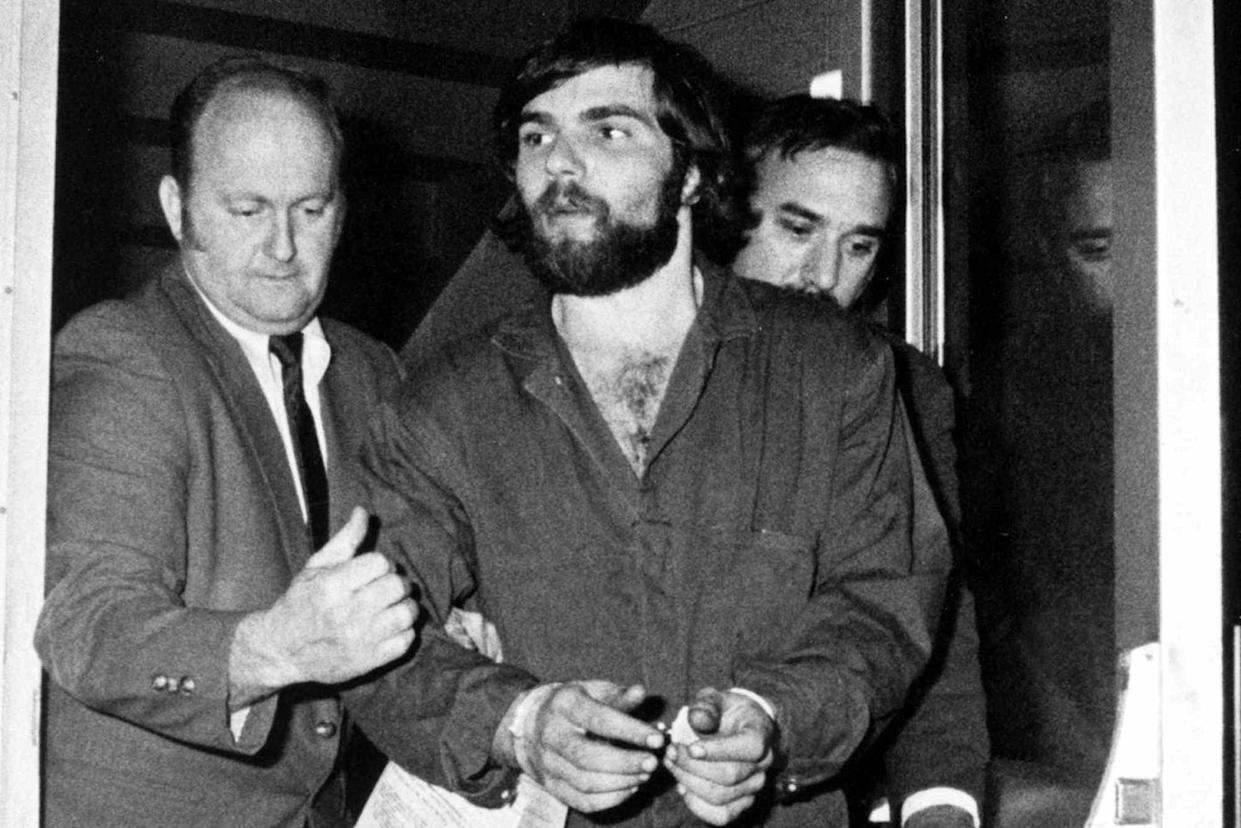
The call came on November 13, 1974.
A neighbor placed it to the Suffolk County Police Department.
Officers arrived at 112 Ocean Avenue in Amityville, New York.
Inside, they found six members of the DeFeo family shot while sleeping in their beds.
The parents and four children.
All six had been killed with a .35-caliber Marlin rifle.
The sole survivor was 23-year-old Ronald DeFeo Jr.
He was present when officers arrived.
He initially said he had been away.
He claimed he had been out driving and returned to find the bodies.
The exact time of the call is not in the record.
The neighbor's identity is not in the record either.
What is in the record is the scene itself.
Six bodies, still in their beds.
A rifle recovered later, confirmed by ballistics as the murder weapon.
DeFeo Jr. stood among the investigators.
Officers noted he showed little emotion.
That detail would not leave the room.
It would not leave the case.
It would not leave the story that followed.
THE BODIES
The bodies were found in their beds.
Six members of the DeFeo family: the father, the mother, and four of their children.
The children were Dawn, Allison, Marc, and John Matthew.
All six had been shot with a .35-caliber Marlin rifle.
It is a rifle that fires a heavy round.
It is a rifle that was kept in the house, according to the confession.
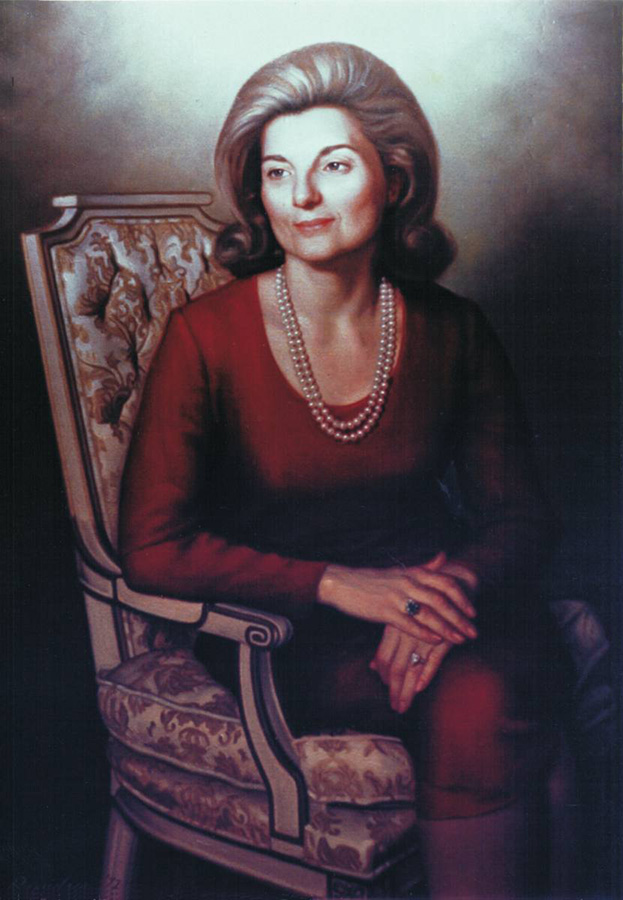
The father and mother were killed in their beds, like the children.
The rifle was later recovered.
Ballistics confirmed it as the murder weapon, according to the investigation.
That confirmation tied the weapon to every victim.
The scale of it is the thing.
Six people, one night, one rifle.
The exact order of the shootings is not in the record.
Not who was shot first.
Not who was shot last.
That would require evidence the case did not produce.
What the record does say is that they were sleeping.
What the record does say is that the rifle was recovered.
What the record does say is that one family member survived the night.
The room held six bodies.
The house held one survivor.
THE CONFESSION
He was not a suspect at first.
Police treated DeFeo Jr. as a witness.
His story was that he had been out driving and returned to find the bodies.
Officers noted he showed little emotion.
Inconsistencies in his account led to suspicion.
Under questioning, DeFeo Jr. confessed.
He stated he had committed the murders with a rifle he kept in the house.
The rifle was recovered, and ballistics confirmed it as the murder weapon.
Then he changed his story.
He claimed he had heard voices.
He claimed his sister Dawn had committed the killings.

That claim was not supported by evidence.
The exact details of the confession are not in the record.
Any recorded statements from that questioning are not in the record.
What remains is the shift itself.
A witness becomes a suspect.
A son becomes the accused.
He was taken into custody.
The house held one survivor.
The survivor was the shooter.
THE TRIAL
The trial opened in 1975.
The defense argued insanity, claiming paranoid schizophrenia and auditory hallucinations.
The prosecution countered that the murders were premeditated, noting DeFeo Jr. had told others of his intent to kill his family prior to the event.
Two explanations stood before the jury.
One said the rifle was held by a man who could not tell right from wrong.
One said the rifle was held by a man who knew exactly what he was doing.
The lead detective's testimony was central, according to the record.
What he said on the stand is not detailed in the record.
The prosecutor's arguments are not detailed in the record either.
The jury heard the defense.
The jury heard the prosecution.
The jury rejected the insanity defense.
They found DeFeo Jr. guilty of six counts of second-degree murder.
The sentence was six concurrent terms of 25 years to life in prison.
An appeal was filed.
The conviction was upheld.
The courtroom had one rifle and two stories about who held it.

The record keeps the arguments, but not their words.
The verdict settled the legal question.
It did not settle the story.
AND THE STORY STILL ISN'T OVER
Ronald DeFeo Jr. remains incarcerated.
He has been denied parole multiple times.
The most recent denial came in 2021.
The house at 112 Ocean Avenue was later sold.
It was sold in December 1975 to George and Kathy Lutz.
Their claims of paranormal activity became the basis for *The Amityville Horror*.
Those claims were later disputed.
The defense attorney suggested the story was fabricated.
Not because the record proved it false.
But because he said so, and the record keeps his word without resolving it.
The DeFeo family's surviving relatives have largely stayed out of the public eye.
They did not write books.
They did not give interviews that entered this record.
The case is closed.
The verdict settled the legal question.
The legend persists anyway.
It is a house with a history.
It is also a house that was sold.
The current legal status of Ronald DeFeo Jr. is not in the record.
No pending motions appear there.
No new hearings appear there.
What remains is the rifle, the confession, and the conviction.
What remains is the story that outlived them all.
Advertisement
You may also like
The Army captain's intruder story that blood spatter contradicted — and the media believed it
On the night of February 17, 1970, at Fort Bragg, North Carolina, Army Captain Jeffrey MacDonald, a Green Beret physician, reported that four intruders—three…
31 days passed before Casey Anthony reported her daughter Caylee missing in July 2008
The 911 call came on July 15, 2008. Cindy Anthony, the grandmother, reported her 2-year-old granddaughter missing that day. Caylee Anthony had last been…
The cellphone video that placed Alex Murdaugh at the kennels — and shattered his alibi
The video ran for about a minute. Paul Murdaugh recorded it at the dog kennels on the family property, on the evening the killings…
The parachute jump that left an FBI agent chasing a name that never existed
The note was passed on the evening of November 24, 1971. A man bought a one-way ticket on Northwest Orient Airlines Flight 305, from…
The cell tower data that sent Adnan Syed to prison — and the call that didn't add up
The call came at 4:12 p.m. The record shows that much. After that, the record shows something argued, not something proven. On January 13,…
The jailhouse confession that cracked the Manson case open — but only after the bodies were found
On the night of August 9, 1969, five people were murdered at 10050 Cielo Drive in Benedict Canyon, Los Angeles. Among them was actress…