The cotton gin fan that pulled a 14-year-old from Chicago into Mississippi's darkest river
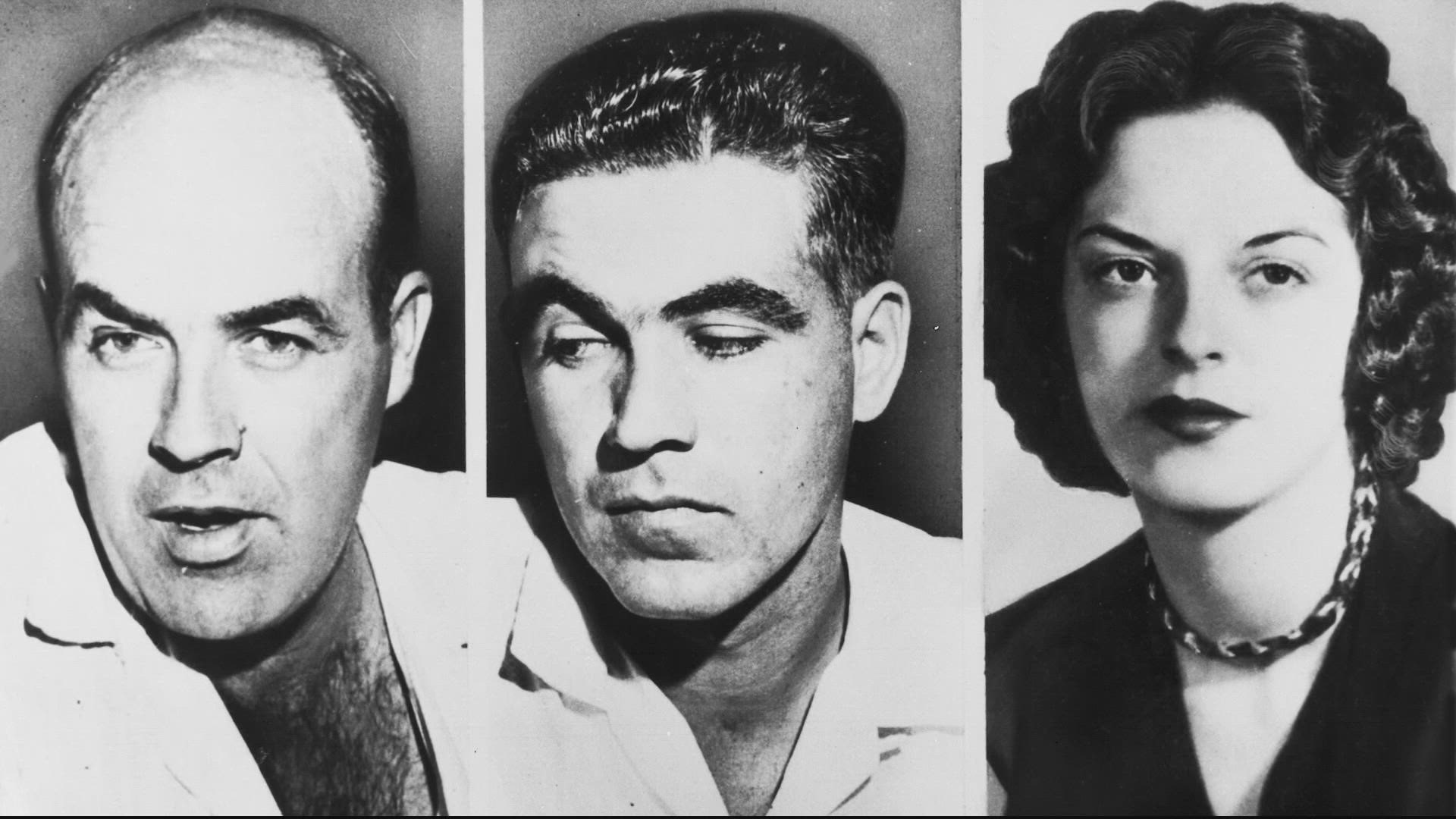
On the evening of August 24, 1955, a 14-year-old Black teenager from Chicago walked into Bryant's Grocery and Meat Market, a small country store in Money, Mississippi.
The store was owned by a white couple.
What happened inside is not established.
The white store owner's wife later claimed the teenager made verbal and physical advances toward her.
That claim is an allegation, not a documented fact.
The teenager was Emmett Till, visiting relatives in Mississippi for the summer.
He had come south from Chicago, where the trains ran on time and the water fountains did not have signs.
He was there for the season, staying with his great-uncle.
A simple errand.
A bottle of candy, perhaps, or a minor purchase that the record does not specify.
The cotton gin fan came later.
It was found tied to Till's neck with barbed wire in the Tallahatchie River, six days after he disappeared.
People online now fixate on that fan.
A theory circulating online — not a fact established by the record — is that the fan was a deliberate signal.
The documented record shows it was used as a weight.
That is what the record establishes.
What else did that errand set in motion?
What did a 14-year-old's words inside a country store trigger?
What did the fan mean to the men who tied it?
That would require evidence.
THE ABDUCTION
Several days after the store encounter, in the early morning hours of August 28, 1955, Roy Bryant and his half-brother J.W. Milam drove to the home of Till's great-uncle, Moses Wright.
They came with guns.
They came for the boy from Chicago.
Wright watched as the two men took his great-nephew at gunpoint from the house.
He was the primary witness to the abduction.
He was the one who reported Till's disappearance to the authorities.
He was the one who identified Bryant and Milam as the men who took the boy.
Wright stood in the doorway and named them.
That was all a witness could do that night.
He could watch.
He could remember.
He could speak later, when speaking might cost him everything.
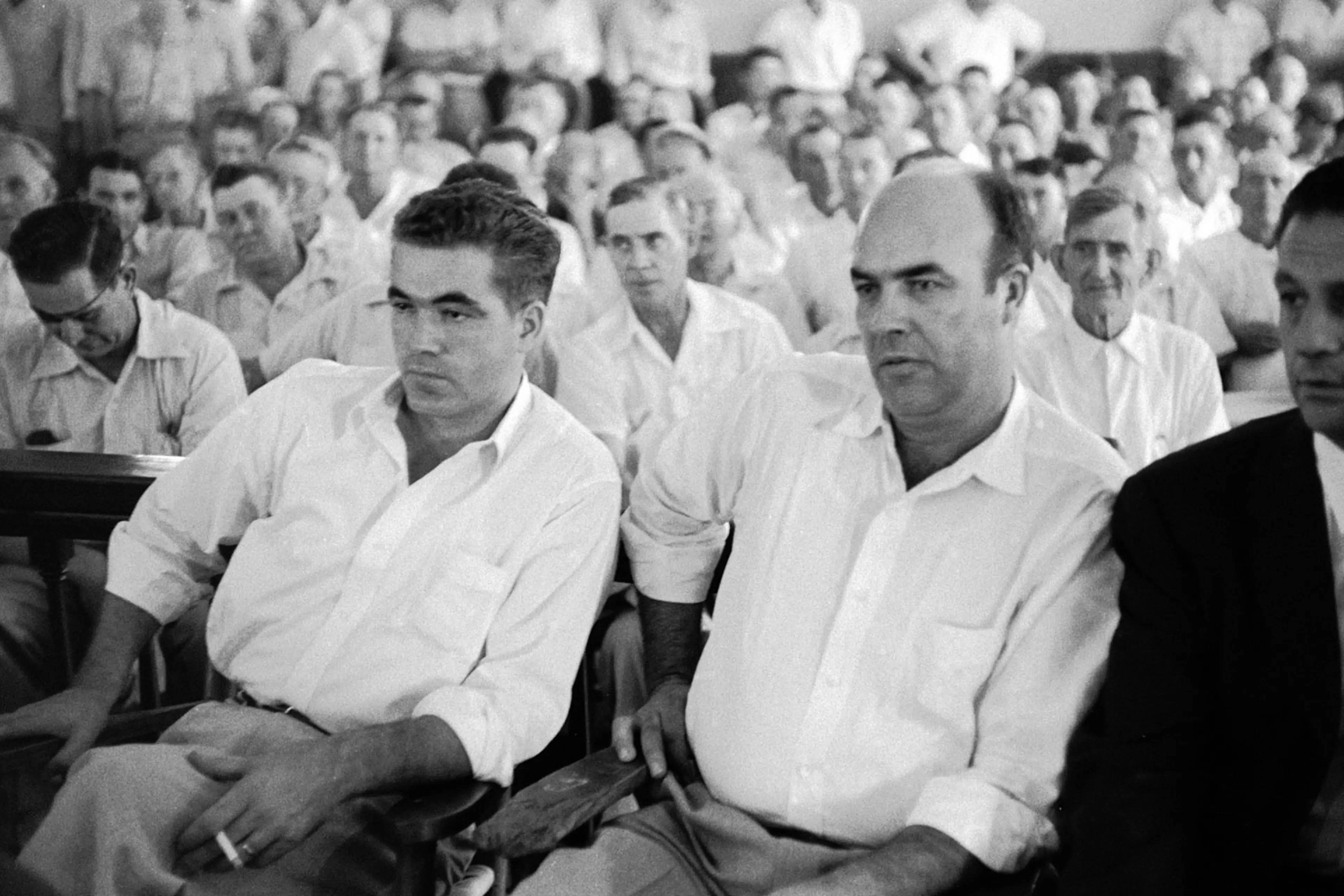
The exact sequence of events between the store and the abduction is not in the record.
No one wrote down what was said in those days between August 24 and August 28.
No one logged the threats, the planning, the drive through the dark.
The record begins again at Wright's door.
Bryant and Milam were arrested.
They were indicted for murder.
Two men, charged with taking a child in the night.
Wright would carry the weight of that identification into a courtroom.
But first, there was a river.
THE RIVER
The body was found on August 31, 1955, in the Tallahatchie River.
A cotton gin fan was tied to his neck with barbed wire.
The fan was meant to hold him down. It did not hold him down forever.
His face was beaten beyond recognition. He had been shot in the head.
The type of firearm used is not widely reported. That detail is not established in the record.
The local sheriff had initially downplayed the case. The river changed that.
A doctor who examined the body testified at trial about what he saw. The doctor described the injuries in detail.
The weight was deliberate. The fan was a tool of concealment, not of killing.
It is a machine made for cotton. It was used on a child.
The body did not stay hidden. It surfaced, and with it, the story.
That would require the river to give back what it was given. It did.
The investigation escalated after the discovery. What had been a missing-person report became a murder case.
Three days after the abduction, the boy was found. Fourteen years old, from Chicago, pulled from Mississippi water.
The fan rusted in the river. The barbed wire held its shape.
She was on the ground below.
THE VERDICT
The trial opened in September 1955 in Sumner, Mississippi.
Bryant and Milam were tried jointly.
The prosecution presented Moses Wright's identification.
Wright stood in the courtroom and pointed at the two men.
The defense argued the body was too decomposed to be positively identified as Till.
The defense argued the murder could have been committed by others.
The all-white male jury deliberated.

They deliberated for 67 minutes.
Just over an hour.
They returned a not-guilty verdict.
The verdict was an acquittal, not a finding of innocence.
The jury's reasoning is not in the record.
That would require evidence.
The acquittal drew national and international outrage.
Shortly after the acquittal, Bryant and Milam sold their story to Look magazine.
The reported price was $4,000.
In the interview, published in 1956, they admitted to killing Till.
The admission came after the verdict.
It came after the acquittal.
It came too late for the law to move.
AND THE STORY STILL ISN'T OVER
Double jeopardy barred any further prosecution of Bryant and Milam after their acquittal.
It did not matter that they later admitted the killing in a magazine interview.
It did not matter that the admission came after the verdict.
The law had already closed its door.
Bryant died in 1994. Milam died in 1980.
Both died without serving time for the crime.
In 2004, the FBI reopened the case. Investigators exhumed Till's body; he was reburied.
A grand jury declined to indict anyone new.
In 2007, a Mississippi grand jury again declined to indict Carolyn Bryant. She had recanted parts of her testimony in a book by historian Timothy Tyson.
In 2018, the U.S. Department of Justice closed its latest review of the case. No charges.
In 2022, the Emmett Till Antilynching Act was signed into federal law, making lynching a federal hate crime.
It came decades late. It did not apply retroactively.
No new charges have been filed. The case remains legally closed.
It is also historically open.
The case continues to be studied and memorialized, including through the Emmett Till Interpretive Center in Sumner, Mississippi.
Visitors walk the same courthouse square where the jury deliberated for 67 minutes.
They read the record. They see what the record does not contain.
A conviction. A sentence. A resolution.
The record shows an acquittal. It shows an admission. It shows a reopened investigation that ended without charges.
That is what the record establishes. That is all the record establishes.
Advertisement
You may also like

The floppy disk trace that unmasked a church leader as BTK after 30 years
A floppy disk arrived at a Wichita newspaper in 2004, sent by someone claiming to be the BTK killer. It was a taunt, a…
The notebook found beside Brian Laundrie's remains that changed the Gabby Petito case
On October 20, 2021, Brian Laundrie's remains were found in the Carlton Reserve in Florida. A notebook lay nearby. Inside that notebook was a…

The anonymous call that shifted the Hae Min Lee case toward Adnan Syed
She was 18. Hae Min Lee left Woodlawn High School on January 13, 1999, and never arrived at the daycare to pick up her…

A parolee's palm print on a bedpost — and the 64-day search that followed
The bedpost stood in a twelve-year-old's room. On the night of October 1, 1993, Polly Klaas was having a slumber party with two friends…

Why 48 life sentences followed a plea deal that spared Gary Ridgway the death penalty
The number stunned even seasoned court observers. In 2003, Gary Ridgway, a truck painter from Auburn, Washington, pleaded guilty to 48 counts of aggravated…
The bloody glove found at O.J. Simpson’s estate that split a nation
A single glove lay on the walk outside Nicole Brown Simpson’s condominium on Bundy Drive. Police found it on the night of June 12,…