The bloody glove found at O.J. Simpson’s estate that split a nation
A single glove lay on the walk outside Nicole Brown Simpson’s condominium on Bundy Drive.
Police found it on the night of June 12, 1994, dark with dried blood.
A matching glove was later found at O.J. Simpson’s estate, a short drive away.
One glove at the scene, its pair on the property of the accused.
It is a documented piece of evidence, logged and photographed and held.
It is also a symbol, carried by the cameras that followed every step of the case.
That night, the cameras were not yet there.
The neighbor walking a dog found the bodies around midnight — Nicole Brown Simpson and Ronald Goldman, stabbed to death outside her home.
The glove stayed where it lay, waiting for daylight.
By the time the trial began in January 1995, the glove had become something else.
The prosecution held it up.
The defense held it up.
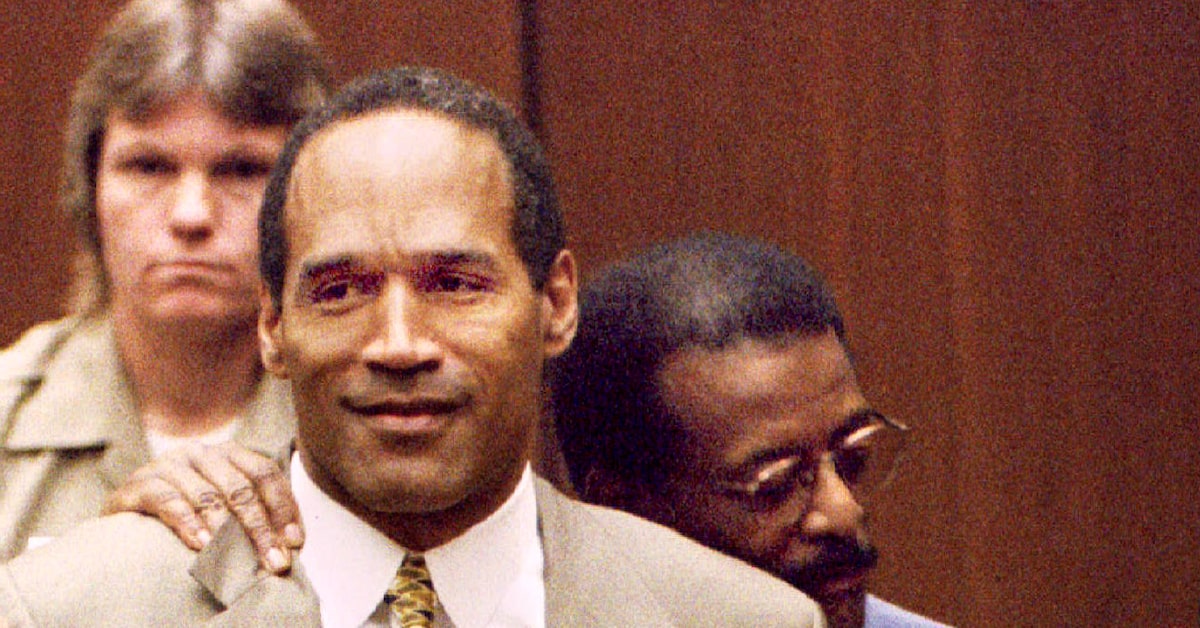
Johnnie Cochran — one of Simpson’s attorneys — argued that the gloves did not fit Simpson.
The defense claimed the police had planted the evidence.
Was the glove planted?
That is a defense theory, not a fact established by the record.
The record shows a detective testified he found the glove at the estate.
The record shows his credibility later collapsed, when tapes surfaced of him using racial slurs.
But the record does not resolve how the glove got there.
It is a thing that split a nation — not because the answer is clear, but because the question refuses to close.
A glove on a walk.
Its match in the dark.
Everything else — the blood, the sock, the DNA, the verdict — came after.
THE NIGHT OF JUNE 12
The neighbor walking the dog saw them around midnight.
Nicole Brown Simpson was on the ground outside her Bundy Drive condominium.
Ronald Goldman was there too, stabbed multiple times.
Her throat was cut.
He had gone to return eyeglasses Nicole's mother had left at the restaurant where he waited tables.
An ordinary errand.
A favor.
It ended on the walkway in the Brentwood dark.
The exact time of death is not established by the record.
The identity of the killer is not established by the record.
What is documented: both were killed with a knife.
What is also documented: the knife was never found.
The medical examiner, Dr. Lakshmanan Sathyavagiswaran, testified about the wounds.
The wounds were fatal.
The wounds were many.
The news broke fast that night, and it broke on television.
A former football star's ex-wife.
A waiter who brought back glasses.
Two people, dead before midnight, on a street that had been quiet.
The public learned the names within hours.
The public learned the details within days.
The shock was not in the crime itself.
The shock was in the ordinariness of the errand that led there.
She was on the ground below.
THE EVIDENCE AND THE ACCUSED
Police found a bloody sock in Simpson’s bedroom.
DNA evidence linked Simpson to blood at the scene, and the victims’ blood was found in his car and his home.
Detective Mark Fuhrman testified that he found the glove at Simpson’s estate.
He was a key witness for the prosecution.
His credibility collapsed when tapes surfaced of him using racial slurs and making violent statements.
The tapes were played in court, and the nation heard them.
Simpson was charged with two counts of first-degree murder.
The trial began in January 1995.
:max_bytes(150000):strip_icc():focal(749x0:751x2)/PEOPLE_MAG_BROWN_SISTERS_nicole-tout-1067c705ba0c4ab7a7e648e3ffd95be0.jpg)
It was televised nationally, and the cameras changed how the country watched.
The defense claimed the police had planted the glove and the sock.
Cochran argued the gloves did not fit Simpson.
Whether the evidence was planted is not established.
That is a defense claim, not a fact the record supports.
Fuhrman later pleaded no contest to perjury for lying about his use of racial epithets.
The prosecution’s case was also hampered by criticism of how evidence was collected and handled.
The forensic weight was heavy.
The witness was fragile.
Which one would the jury believe?
THE VERDICT AND THE SPLIT
The jury deliberated for less than four hours.
On October 3, 1995, they acquitted Simpson of both murder charges.
The verdict landed like a shockwave across the country.
Reactions were split, sharply, along racial lines.
Some saw the acquittal as a triumph over a biased system.
Others saw it as a failure of justice, a verdict bought by celebrity and doubt.
The reasons behind the jury's decision are not detailed in the source.
That remains a fact the record does not establish.
The courtroom emptied, and the cameras followed Simpson home.
But the legal fight was not finished.
In 1997, a civil jury found Simpson liable for the wrongful deaths of Nicole Brown Simpson and Ronald Goldman.
That jury awarded $33.5 million in damages to the families.
It was a finding of responsibility, not a criminal conviction.
Simpson’s life after the trial did not quiet the story.
He was later convicted of armed robbery and kidnapping in 2008.
He served nine years in prison.
He was released on parole in October 2017.
He died on April 10, 2024, of cancer.
The Goldman family kept pursuing civil judgments against his estate.
The case remained a national argument about race, celebrity, and media.
The glove was gone. The divide was not.
AND THE STORY STILL ISN'T OVER
The Goldman family kept pursuing civil judgments against Simpson’s estate.
The murder weapon was never found.
That fact has no answer in the record.
The case remains one of the most discussed and analyzed trials in American history.
It is a study in race.
It is a study in celebrity.
It is a study in how the media watched a trial and helped shape what the public saw.
The verdict split the country along lines that were visible on the day it was read.
Public reaction was immediate and sharply divided.
The debate about that divide has not closed.
It is a debate about the verdict.
It is a debate about the role of race in the justice system.
It is a debate about celebrity and media coverage.
It is also a debate about what the record does and does not prove.
The claim that the glove was planted remains a defense theory.
It was argued in court.
It was not established by the evidence.
Fuhrman’s credibility collapsed, but that collapse does not prove the planting.
The record shows the glove was found.
The record does not show how it got there.
What remains is the case’s legacy, still being written.
Simpson died on April 10, 2024.
Any new developments after his death are not in the source.
The glove is gone.
The divide is not.
Advertisement
You may also like
The trapdoor beneath a contractor's home that hid 29 bodies — and the teenager who led police to it
December 11, 1978. A 15-year-old boy named Robert Piest told his mother he was going to meet a contractor about a job. He never…
The cellphone video that broke Alex Murdaugh's alibi — and the double murder trial that followed
The video is eight seconds of darkness, dogs barking, and a voice. Paul Murdaugh recorded it at the dog kennels on the family's Moselle…
The rifle that six sleeping DeFeos were shot with — and the son who confessed
The call came on November 13, 1974. A neighbor placed it to the Suffolk County Police Department. Officers arrived at 112 Ocean Avenue in…
The floppy disk trace that unmasked a church leader as BTK after 30 years
A floppy disk arrived at a Wichita newspaper in 2004, sent by someone claiming to be the BTK killer. It was a taunt, a…
The notebook found beside Brian Laundrie's remains that changed the Gabby Petito case
On October 20, 2021, Brian Laundrie's remains were found in the Carlton Reserve in Florida. A notebook lay nearby. Inside that notebook was a…
The anonymous call that shifted the Hae Min Lee case toward Adnan Syed
She was 18. Hae Min Lee left Woodlawn High School on January 13, 1999, and never arrived at the daycare to pick up her…