The trapdoor beneath a contractor's home that hid 29 bodies — and the teenager who led police to it
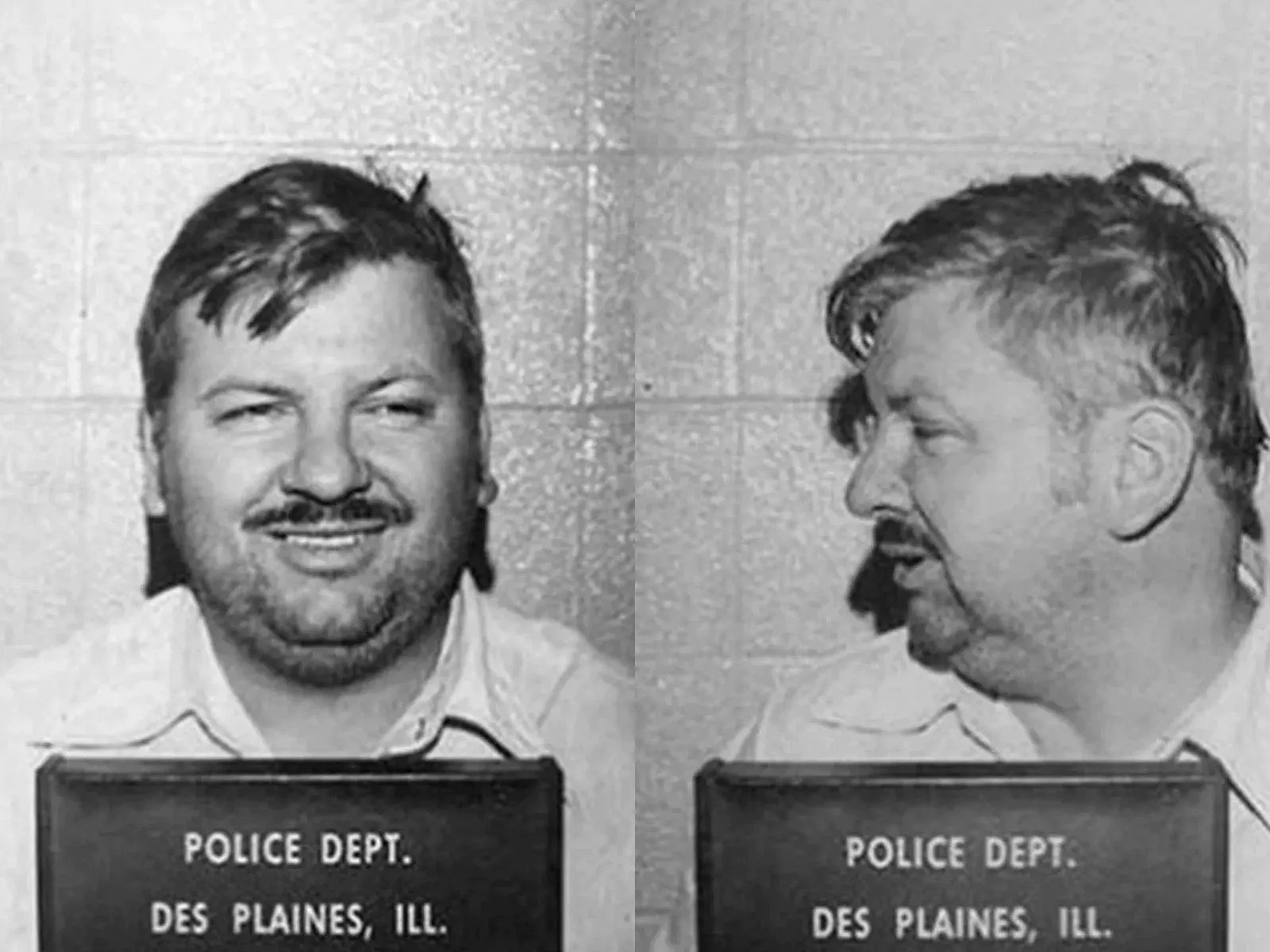
December 11, 1978.
A 15-year-old boy named Robert Piest told his mother he was going to meet a contractor about a job.
He never came home.
Police traced his last known contact to John Wayne Gacy, a building contractor in Norwood Park Township, Illinois.
The exact nature of the job Piest was going to discuss is not specified in the record.
Gacy initially denied involvement.
A search of his home uncovered a trapdoor.
The trapdoor led to a crawl space.
Human remains were found there.
The crawl space eventually yielded 29 bodies.
Additional victims were found in the Des Plaines River and elsewhere.
One errand.
One missing teenager.
One trapdoor.
That would require evidence.
THE SEARCH WARRANT
December 11, 1978.
Robert Piest told his mother he was going to meet a contractor about a job.
He never came home.
His mother told police her son had gone to meet a contractor.
A witness identified Gacy as that contractor.
The lead detective of the Des Plaines Police Department obtained a search warrant for Gacy's home.
The specific evidence that justified the warrant is not detailed in the source.
What the warrant allowed was a look inside.
Gacy initially denied involvement.
Inside the home, the detective noticed a strong odor.
He noticed a suspicious crawl space.
A crawl space beneath a house is not unusual.
Not for a contractor's home, not for a house in the suburbs.
But the odor was there.
The crawl space was there.
The detective had a warrant, a missing boy, and a contractor who said he knew nothing.
Gacy said he knew nothing.
Then he confessed.
The confession led police to excavate the crawl space.
One missing teenager had become a search warrant.
One search warrant had become an excavation.
That would require evidence.
THE EXCAVATION
The confession came first.
Then the shovels.
Police excavated the crawl space beneath Gacy's home at 8213 West Summerdale Avenue.
Over the following weeks, 29 bodies were recovered from that crawl space.
Additional victims were found in the Des Plaines River and elsewhere.
The exact number found in the river versus elsewhere is not specified.
That would require evidence.
Forensic anthropologists helped identify victims through dental records.
Odontologists did the same.
Personal items belonging to victims were also recovered from Gacy's home.
Dozens of workers and experts took part.
The scale of the recovery effort was unprecedented in American criminal history.
It is a number.
It is also a site.
The crawl space gave up its dead slowly.
Each body was catalogued.
Each was numbered.
Each was carried out past the house where Gacy had lived.
The smell did not leave easily.
Neither did the questions.
How many more were down there?
How long had they been there?
How did no one notice?
The record does not say.
The record says 29 bodies from the crawl space.
It says additional victims found elsewhere.
It does not resolve the rest.
THE TRIAL
The trial began in February 1980 in Cook County Circuit Court.
Gacy was indicted on 33 counts of first-degree murder.
Prosecutors presented the confession.
They presented the recovered bodies.
They presented testimony from forensic experts.
The defense argued that Gacy was legally insane at the time of the murders.
That was the argument. The record does not detail any other defense.
On March 12, 1980, the jury rejected the insanity claim.
The jury found Gacy guilty of all 33 murders.
The jury recommended the death penalty.
The judge imposed the death sentence.
Justice was served. It was also a weight.
The trial lasted weeks; the verdict came in one word.
What did the jury hear that convinced them? The record says what was presented.
It does not say what the defense argued beyond the plea.
That would require the trial transcript, not the record here.
The verdict was unanimous, according to the proceedings.
The sentence was death, as the law allowed.
The families of the victims had their day in court.
The accused had his, too.
The record ends there, with the gavel down.
AND THE STORY STILL ISN'T OVER
The house at 8213 West Summerdale Avenue was demolished in 1979.
The crawl space was filled in. The trapdoor was gone.
Gacy was executed by lethal injection on May 10, 1994, at Stateville Correctional Center in Illinois.
That closed the legal case. It did not close the record.
After his death, some unidentified victims were later identified through DNA and genealogical research.
Several names were added to the list of known victims in the 2010s.
The identities of any remaining unidentified victims are not listed.
They are not in the record. They are not in the news coverage. They remain unknown.
The case has been the subject of numerous books, documentaries, and films.
Dramatizations have sometimes altered names and details.
What was documented stays documented. What was changed in a script stays in the script.
Families of victims have continued to seek closure.
Law enforcement has periodically revisited the case to identify remaining unknowns.
They have returned to the records. They have returned to the remains.
The errand that started it all was a teenager's last errand.
The trapdoor that ended it was beneath a contractor's home.
The gavel came down. The sentence was carried out.
The story still is not over.
Not because the evidence is incomplete. But because the names are not all known.
That would require evidence. The record does not have it.
So the quest continues. The families wait.
The house is gone. The crawl space is gone.
The question remains, and it is a plain one: who else was there?
The documented record does not answer. It only shows what was found.
That is where it stands.
Advertisement
You may also like
The Missing Christmas Eve Walk That Split a Family
She was twenty-seven years old and eight months pregnant. Laci Peterson went for a walk with her dog on Christmas Eve, 2002, from her…
The 51 days between the ATF raid and the fire that ended the Waco siege
The warrant was for the Mount Carmel Center ranch near Waco, Texas. February 28, 1993. Agents of the Bureau of Alcohol, Tobacco, and Firearms…
The severed head found 120 miles away — and the confession police never fully believed
The television set was on. On July 27, 1981, six-year-old Adam Walsh sat with other children in front of it, inside the Sears store…
Two backpacks, 12 seconds apart — the Boston Marathon bombs that changed a city
The first bomb detonated at 2:49 p.m. on April 15, 2013, near the finish line of the Boston Marathon on Boylston Street. Seconds later,…

Love letters scattered under a crabapple tree that still divide a 1922 jury
A local resident found them first. On September 16, 1922, the bodies of Reverend Edward Wheeler Hall and Mrs. Eleanor Reinhardt Mills lay beneath…
The Army captain's intruder story that blood spatter contradicted — and the media believed it
On the night of February 17, 1970, at Fort Bragg, North Carolina, Army Captain Jeffrey MacDonald, a Green Beret physician, reported that four intruders—three…