Love letters scattered under a crabapple tree that still divide a 1922 jury
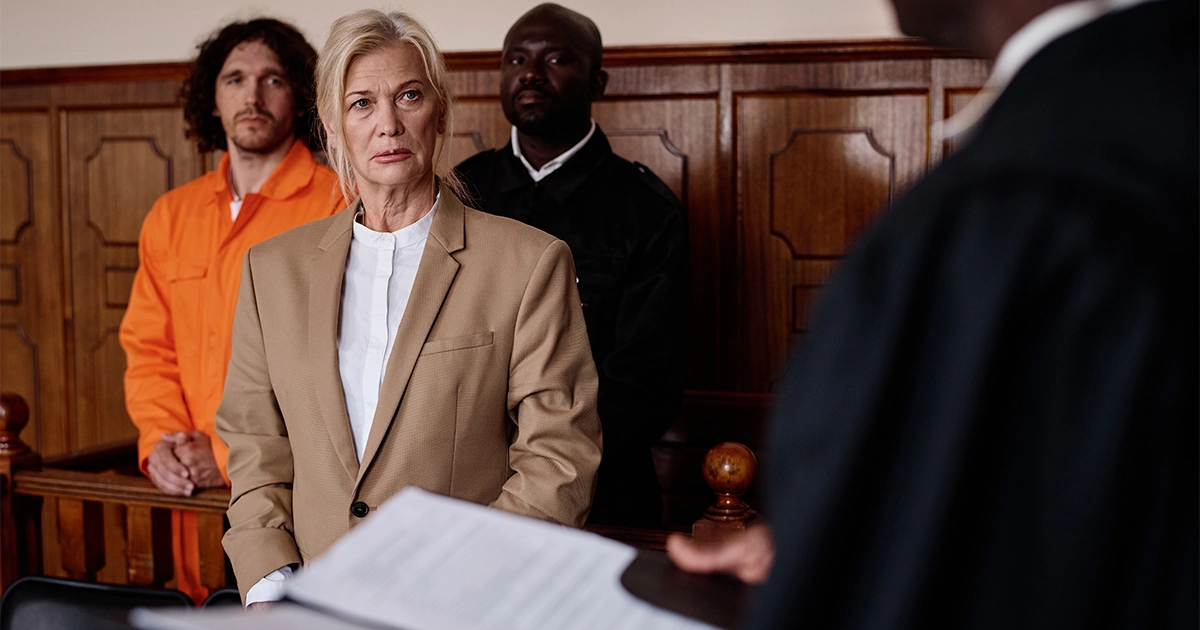
A local resident found them first.
On September 16, 1922, the bodies of Reverend Edward Wheeler Hall and Mrs. Eleanor Reinhardt Mills lay beneath a crabapple tree in a secluded lane known as "Lovers' Lane" near Phillipsburg, New Jersey.
The reverend was the pastor of St. John's Episcopal Church in New Brunswick.
Mrs. Mills sang in the choir there.
They had been having an affair.
They had been shot.
The bodies were arranged in a posed manner.
Love letters were scattered nearby.
Not a stumble, not a fall.
A pose.
Who arranges the dead like that?
Who scatters letters around them?
Who wrote those letters?
That would require evidence.
The identity of the killer is not established.
The letters' authorship is not established.
The discovery was made by a local resident, and the case quickly became one of the most sensational murder investigations of the 1920s.
It is a scene that invites a gaze.
It is also a scene that withholds an answer.
THE AFFAIR AND THE ACCUSED
The victims were Reverend Edward Wheeler Hall, the pastor of St. John's Episcopal Church in New Brunswick, and Eleanor Reinhardt Mills, a choir singer and married woman.
The prime suspect was Hall's wife, Frances Noel Stevens Hall.
She was charged with first-degree murder.
So were her brothers and her cousin, all four defendants named in the indictment.
The specific evidence that led to the charges is not in the record.
What is in the record is the scandal: a pastor, a choir singer, an affair conducted in plain sight of a congregation.
The case drew intense public interest.
It drew accusations of a cover-up.
It drew accusations of a botched initial investigation.
The lead detective became a key figure.
He was later criticized for mishandling evidence.
What evidence did he mishandle?
What did he overlook?
What did he fail to preserve?
That would require a file that no longer tells the whole story.
The suspicion fell on the wife.
The suspicion fell on her family.
The suspicion was charged, tried, and — in time — answered by a jury.
But that answer belongs to a later section.
Here, the weight is simply the weight of accusation.
A wife, accused of arranging the deaths of her husband and his lover.
Her brothers, accused alongside her.
Her cousin, accused alongside her.
Four defendants, one indictment, and a scandal that would not stay in the churchyard.
Not because the letters proved anything.
But because the letters were there, and someone had to answer for them.
THE CHARGES AND THE TRIAL
Frances Noel Stevens Hall was charged with first-degree murder.
Her brothers and her cousin were charged with first-degree murder alongside her.
Four defendants, one indictment.
The lead detective was later criticized for mishandling evidence.
Accusations of a cover-up followed the case.
Accusations of a botched initial investigation followed too.
The trial was a high-stakes affair.
The public watched closely.
The courtroom was the stage for a scandal that had already played out under a crabapple tree.
What the prosecution argued is not in the record.
What the defense argued is not in the record either.
The specific arguments presented at trial remain unestablished.
But the charges were real.
And the stakes were absolute.
A guilty verdict meant the electric chair.
An acquittal meant walking away from the letters, the bodies, and the questions.
The trial ended in acquittals for all four defendants.
Not because the letters proved nothing.
But because the record does not say what the jury heard.
The lead detective's mishandling of evidence was criticized.
A cover-up was alleged.
A botched investigation was alleged.
The jury returned its verdict.
All four walked free.
The shock was complete.
The tension of the trial dissolved into a silence the record never explains.
THE TWO STORIES
The prosecution built its case around Frances Noel Stevens Hall, her brothers, and her cousin.
The defense answered with a story of its own.
Two narratives. One jury. Four acquittals.
The specific evidence for either side is not in the record.
What remains is what was said in courtrooms and printed in newspapers.
The love letters scattered at the scene became the public narrative.
They were read as proof of motive, as a confession left in the open.
But the record does not establish who placed them there.
The lead detective was criticized for mishandling evidence.
He was blamed for a botched initial investigation.
Accusations of a cover-up followed the case from the start.
Was the scene staged to frame the accused?
Was it staged to protect someone else?
Was it staged at all?
That would require evidence.
The prosecution said the letters pointed to the accused.
The defense said the letters pointed nowhere.
The jury heard both.
The jury chose neither.
All four walked free.
The shock was complete.
The tension of the trial dissolved into a silence the record never explains.
What the letters said, the record holds. What the letters meant, it does not.
AND THE STORY STILL ISN'T OVER
The trial ended in acquittals for all four defendants.
Frances Noel Stevens Hall walked out of the courtroom a free woman.
Her brothers and her cousin walked out beside her.
The jury had deliberated, and the jury had returned.
Not because the evidence pointed elsewhere.
Because the evidence, as the defense argued it, pointed nowhere at all.
The case was marked by intense public interest.
Reporters filled the courtroom. The verdict was telegraphed across the country.
Accusations of a cover-up and a botched initial investigation were made.
The lead detective was later criticized for mishandling evidence.
What was mishandled, the record does not fully say.
What was lost, the record does not fully say.
The love letters scattered beneath the crabapple tree still divide a 1922 jury.
They divide readers now.
They divide anyone who asks what the letters proved.
Did they prove a motive? Did they prove a suspect? Did they prove anything?
That would require evidence.
The true identity of the killer is not established.
It was not established then.
It is not established now.
The case is closed legally.
The questions remain open.
The shock was complete, and the silence the record never explains is still there.
What the letters said, the record holds.
What the letters meant, it does not.
The tree is gone, or the lane is changed, or the names have faded.
The letters, if they survive, survive in archives.
No one has been convicted.
No one has confessed.
The jury acquitted, and the story still isn't over.
Advertisement
You may also like
A traffic stop for a missing license plate, and the Oklahoma City bombing timeline takes a turn
9:02 a.m., April 19, 1995. A rented Ryder truck packed with ammonium nitrate and fuel oil exploded in front of the Alfred P. Murrah…
The Zodiac letter that carried a piece of Paul Stine's bloody shirt
The cab driver was 29 years old. He picked up a fare in the heart of San Francisco's Presidio Heights on October 11, 1969.…
The 12:10 a.m. dog-walk discovery that turned a Brentwood street into a media siege
She was just walking her dog. It was approximately 12:10 a.m. on June 12, 1994, and the neighbor was out on Bundy Drive in…
The Green River Killer's truck painter confession that left detectives with 49 names
He painted trucks for a living, a trade that kept his hands steady and his cover plain. Gary Leon Ridgway was a truck painter…
The phone card call that cracked the DC Sniper case — and the white van that led police astray
A tip came from a phone card. A caller used it, and the call led police to a witness who had seen the Chevrolet…
The Missing Christmas Eve Walk That Split a Family
She was twenty-seven years old and eight months pregnant. Laci Peterson went for a walk with her dog on Christmas Eve, 2002, from her…