The phone call that made a friend dial police — and the interview that followed
The missed appointment was a doctor’s appointment, and the phone went unanswered.
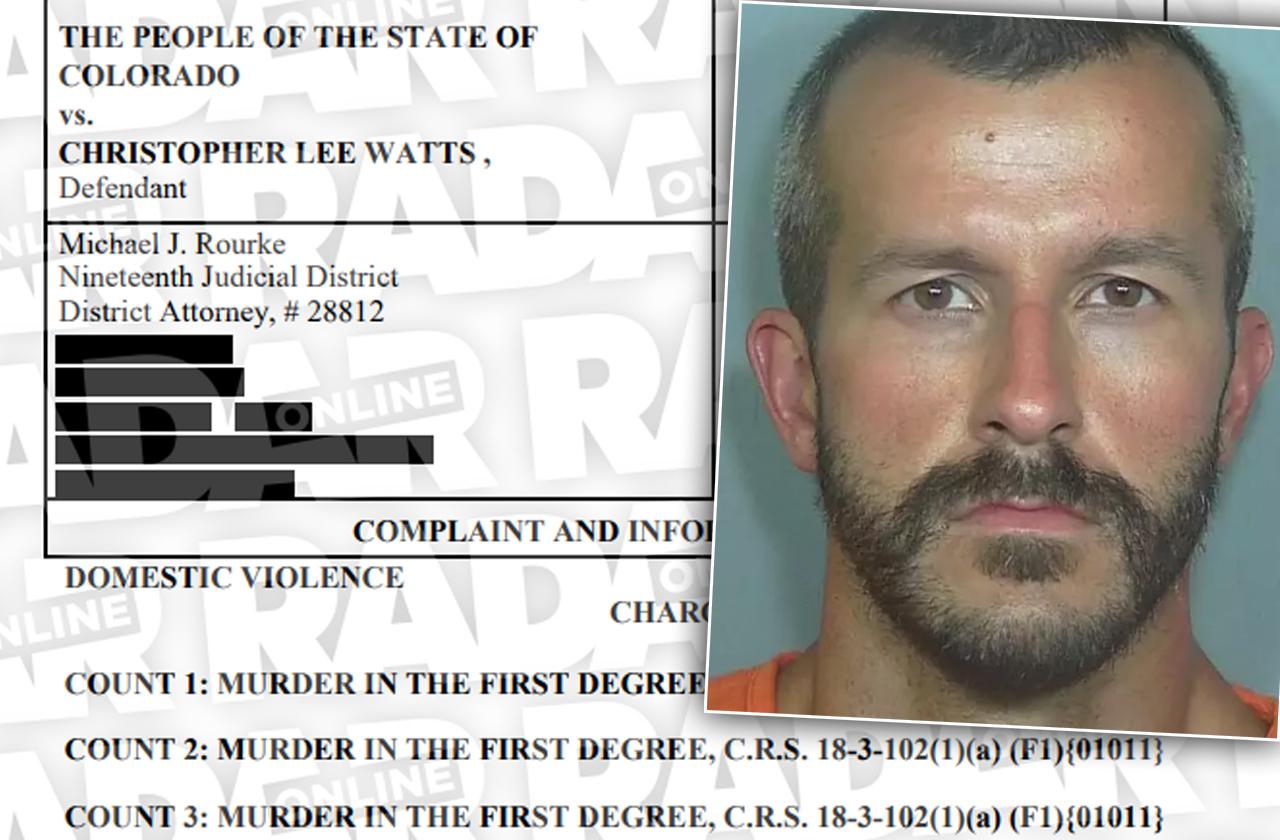
On August 13, 2018, in Frederick, Colorado, a friend called police to report Shanann Watts, 34, missing.
Shanann had been scheduled to fly home from a business trip that morning.
She never arrived.
Her husband, Christopher Watts, 33, soon appeared in televised interviews pleading for her safe return.
The public saw a worried husband on TV.
Not a suspect.
That is what the broadcast showed, and that is what the record shows was broadcast.
The friend’s call was the first concrete step in what would become a missing-persons investigation.
Police would treat it that way at first.
It is not established what Shanann’s exact flight itinerary was.
It is not established why she missed the appointment.
The source only notes she never arrived.
So the morning hangs on a missed appointment, an unanswered phone, and a friend’s growing alarm.
The alarm was enough to dial police.
The pleas were enough to fill the screen.
Was the husband’s worry real?
Was it performed?
That would require evidence.
At that moment, in the public record, there was only the plea itself.
A man asking for his family back.
A friend who had already called for help.
One phone call, then a broadcast, then the gap between them.
THE SEARCH AND THE INTERVIEWS
The search began as a missing-persons investigation.
A friend had reported Shanann Watts and her two daughters missing on August 13, 2018, after she failed to show up for a doctor's appointment and her phone went unanswered.
Officers went to the family home in Frederick, Colorado.
They found Shanann's purse and phone in the house.
They found her wedding ring on the nightstand.
Her husband, Christopher Watts, gave accounts of that morning's events that did not line up.
The exact nature of those inconsistencies is not detailed in the source.
What is documented is that he spoke publicly, appearing in televised interviews pleading for his family's safe return.
Those pleas were broadcast widely.
They drew intense media and public attention, the image of a husband asking for help playing on screens across the country.
A man asking for his family back.
The search continued.
On August 15, police arrested Watts after he failed a polygraph test.

He then led investigators to an oilfield site in Weld County.
Shanann's body was found in a shallow grave there.
The bodies of the two girls were found inside oil tanks on the same property.
The public search had ended.
What followed was not a rescue but an investigation into a confession.
THE CONFESSION AND THE TWO STORIES
The polygraph machine was still attached when the story shifted.
FBI agent Tammy Lee conducted the test and then a lengthy interrogation, during which Watts admitted to killing Shanann and the children.
He offered two versions in that room.
The first was a story of rage: Shanann had killed the girls, he claimed, and he had killed her in a fury over what she had done.
That version made him a grieving father driven past reason.
It made the murders a reaction, not a plan.
Then he changed the story.
He later admitted to killing all three himself.
The medical examiner determined Shanann had been strangled and the girls had been smothered.
The prosecution's interpretation was simple: Watts was the sole perpetrator, as he ultimately confessed.
The defence's initial narrative was a crime of passion triggered by Shanann's actions.
That narrative was abandoned with his guilty plea.
What the record does not establish is what triggered the rage in his first claim.
It also does not detail the interrogation techniques beyond the polygraph and the length of the session.
The confession did what the televised pleas could not.
It moved the case from a missing-persons search to a triple murder.
It made the man on the news the man who admitted to the killings.
Two stories, one confession, and a guilty plea that ended the debate.
THE MEDIA STORM AND THE RECORD
The cameras loved him.
Watts stood in front of them and pleaded for his family's return, and the networks played it on a loop.
He asked for help finding the people he had already killed.
That was the spectacle.
The public watched, and the public speculated.
Online theories circulated about Shanann, about the marriage, about what must have happened inside that house.
The source does not mention any specific viral claim.
No theory is documented here.
None of it needed to be true, because the record was being built elsewhere.
The record is a list.
Watts was charged with three counts of first-degree murder.
He was charged with three counts of tampering with a deceased human body.

He was charged with one count of illegal possession of a firearm.
On November 6, 2018, he pleaded guilty to all of it.
The plea was part of a deal.
The deal spared him the death penalty.
On November 19, 2018, the judge sentenced him.
Three consecutive life sentences without the possibility of parole.
Plus 84 years for the tampering charges and the firearm count.
Plus $140,000 in restitution to Shanann's family.
The pleas were broadcast.
The sentence was pronounced.
The debate was over before the documentaries began.
It was a confession, and then it was a plea.
That is the line.
The television asked questions.
The courtroom answered them.
AND THE STORY STILL ISN'T OVER
Christopher Watts is serving his life sentences at Dodge Correctional Institution in Wisconsin.
He has given interviews from prison, including a 2020 video call with a documentary filmmaker, in which he described the murders in detail.
Shanann's parents and her brother have spoken publicly about their grief.
They have criticized Watts's attempts to portray himself as a victim.
The house in Frederick where the murders occurred was sold at auction in 2019.
The case has been the subject of multiple documentaries and true-crime books.
No journalist or author is known to have uncovered new evidence that changed the legal outcome.
It is not established whether any new legal motion or hearing is pending.
The source only notes interviews and family statements.
The television cameras have moved on.
The courtroom has closed.
But the perpetrator still speaks.
He describes the murders in detail, from a prison in Wisconsin, and the record does not change.
The family speaks of grief.
The public speaks of the case.
The house was sold.
The story continues through public memory and ongoing family statements.
That is where the record ends.
Not with a verdict.
Not with a mystery.
But with a man serving three consecutive life sentences, and a family left to answer what the cameras no longer ask.
Advertisement
You may also like
The cell tower records that placed Adnan Syed near Leakin Park — and the defense that tore them apart
The note was found in Hae Min Lee's car, and it read "I'm going to kill." Prosecutors argued Adnan Syed wrote it. The defense…
The 2002 fishing trip that Scott Peterson said explained everything — and the boat anchor that didn't match
December 24, 2002, and Scott Peterson reports his eight-months-pregnant wife Laci missing from their Modesto home. He says he spent that morning fishing at…
The 3:15 a.m. attack that 38 neighbors reportedly heard — but the timeline has a hole
She was almost home. Catherine "Kitty" Genovese, 28, had walked from her job at Ev's 11th Hour Bar to her apartment building at 82-70…
The white Cadillac witness said he was inside — 27 years later, one man faces trial
A white Cadillac pulled alongside a BMW sedan on the Las Vegas Strip. It was September 7, 1996, and gunfire erupted. The BMW carried…
The smiley-face confession that made a sister call the police
The note was found in March 1995, near a woman's body in Oregon. It was handwritten, a confession. It was signed with a smiley…
The body drained of blood and posed — and the only clue was a name
The morning of January 15, 1947, in a vacant lot at 39th Street and Norton Avenue in Leimert Park, Los Angeles. A woman's body…