The fishing trip alibi that unraveled Scott Peterson's story — what did he say to his neighbor?
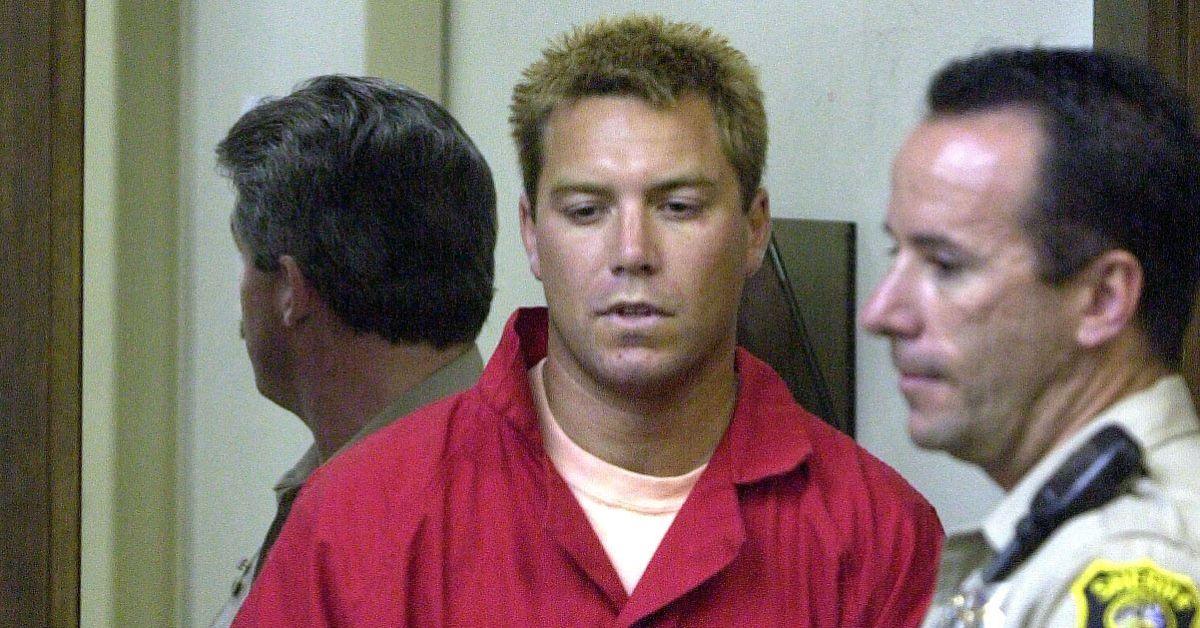
He told police he had gone fishing at the Berkeley Marina that morning.
He told a neighbor something else.
According to investigation records, Scott Peterson said he spent the morning of December 24, 2002, fishing before returning home to find Laci gone.
Detectives found something in their notes: Scott had told a neighbor he had been golfing, not fishing.
Fishing.
Golfing.
One trip, two stories.
The discrepancy became a key point of suspicion early in the case, according to the investigation summary.
Not because the words themselves proved anything.
But because a grieving husband could not keep his own alibi straight.
The exact wording of the neighbor's statement is not in the record.
The precise date of that conversation is not in the record either.
What remains is the gap between what he said to police and what he said to the man next door.
A man who had just lost his pregnant wife should remember where he was that morning.
That would require a consistent answer.
Detectives noted the inconsistency.
They kept asking.
The marina was where he said he had been.
The golf course was where the neighbor remembered hearing.
:max_bytes(150000):strip_icc():focal(999x0:1001x2)/laci-peterson-family-2-d60dbe78a8384fc4b387604161b69e09.jpg)
Two places, one morning, and a story that would not hold still.
She was missing.
He was the one telling the story.
DECEMBER 24, 2002
December 24, 2002, was a Christmas Eve in Modesto, California.
Laci Peterson, 27 and pregnant, was reported missing from her home that day.
Scott Peterson told police he had returned from fishing at the Berkeley Marina to find her gone.
Police initially treated the case as a possible kidnapping.
Suspicion quickly turned to Scott.
Investigators noted inconsistencies in his account of that morning.
The exact time Scott left and returned home is not specified in the record.
Two places, one morning, and a story that would not hold still.
She was missing.
He was the one telling the story.
The search began with neighbors and volunteers, then grew into a national spectacle.
Detectives took Scott's statement and compared it against what others remembered.
A neighbor recalled him saying he had been golfing, not fishing.
That was a small crack.
It was a crack the investigation would keep widening.

The record does not establish a precise timeline for his trip that day.
What the record does show is a husband whose account shifted under scrutiny.
Police had no body, no weapon, no witness to a crime.
They had a missing pregnant woman and a husband with two different stories.
The case was treated as a possible kidnapping at first.
It would not stay that way for long.
THE AFFAIR AND THE BODIES
January 2003, and a woman named Amber Frey came forward.
Frey told police she had been in a romantic relationship with Scott Peterson.
He had concealed that relationship from police while Laci was missing.
The case summary records her as a key witness.
April 2003, and Laci's remains washed ashore near the Berkeley Marina.
The body of her unborn son Conner was found separately along the same shore.
It was the place where Scott said he had been fishing.
The prosecution argued Scott killed Laci at home, weighted her body, and dumped it from his boat.
The defense suggested Laci had been abducted by strangers, and someone else placed the bodies in the water.
Two stories, again.
Fishing or golfing, home or abduction, a boat or strangers.
The record does not establish a specific weapon.

The exact manner of death is not in the record.
What remains is the timeline: a missing pregnant woman, a concealed affair, bodies found near the alibi.
It is circumstantial.
It is also what the jury heard.
THE TRIAL AND THE VERDICT
The trial began in June 2004 in Redwood City, after a change of venue due to pretrial publicity.
The courtroom had moved more than ninety miles from Modesto.
The prosecution presented a circumstantial case.
They argued that Scott Peterson had planned the murders to be free to pursue his relationship with Amber Frey.
The defense argued that Laci had been abducted while walking her dog.
Two stories, one verdict.
The specific evidence presented at trial is not detailed in the record.
The judge's name is not in the record either.
What the record does show is the timeline: a missing pregnant woman, a concealed affair, bodies found near the alibi.
On November 12, 2004, the jury found Scott guilty of first-degree murder for Laci.
They found him guilty of second-degree murder for Conner.
The verdict was built on circumstance and contradiction.
It was built on a fishing trip that a neighbor remembered as golfing.
It was built on a boat he had bought.
:max_bytes(150000):strip_icc():focal(749x0:751x2)/Jackie-Peterson-and-Lee-Peterson-leave-the-San-Mateo-Superior-Courthouse-121625-55846a7459e640d79a1b33bfbc8af4b1.jpg)
It was built on what he did after she vanished.
On March 16, 2005, the judge sentenced him to death by lethal injection.
The sentence came down in a courtroom far from where Laci was last seen.
It came down four years after the verdict was read.
It came down after the defense had argued abduction, after the prosecution had argued planning.
The conviction stood.
The death sentence stood.
What remains is the weight of that verdict — a man convicted on what the jury heard, not on what the record fully explains.
AND THE STORY STILL ISN'T OVER
The conviction stood.
The death sentence stood, and so did the man.
Scott Peterson remains on death row at San Quentin State Prison.
California has not executed anyone since 2006.
The legal machinery moved again in 2020.
The California Supreme Court upheld the conviction, the court ruled.
But the court ordered a new penalty phase, citing errors in jury selection.
So the case is settled, and it is not settled.
The outcome of the resentencing proceedings is not yet determined.
As of 2024, those proceedings have been delayed.

Laci's family has continued to advocate for victims' rights.
They have spoken publicly about the case.
Amber Frey wrote a book about her involvement.
She has largely stayed out of the public eye.
What remains is the limbo.
A man convicted, a sentence in question, a family still standing.
Not because the verdict was wrong.
Because the process is not finished.
The record holds the conviction.
The record holds the order for a new penalty phase.
The record does not hold a final answer on the sentence.
That would require proceedings that have not concluded.
The marina, the boat, the bodies — those are fixed points.
The penalty phase is not.
What is established: the conviction stands.
What is established: a new penalty phase was ordered.
What is not established: how that phase ends.
She was on the ground below, and the water took her.
The case is legally settled.
It is also not fully closed.
Advertisement
You may also like

The cell tower records that placed Adnan Syed near Leakin Park — and the defense that tore them apart
The note was found in Hae Min Lee's car, and it read "I'm going to kill." Prosecutors argued Adnan Syed wrote it. The defense…
The 2002 fishing trip that Scott Peterson said explained everything — and the boat anchor that didn't match
December 24, 2002, and Scott Peterson reports his eight-months-pregnant wife Laci missing from their Modesto home. He says he spent that morning fishing at…
The 3:15 a.m. attack that 38 neighbors reportedly heard — but the timeline has a hole
She was almost home. Catherine "Kitty" Genovese, 28, had walked from her job at Ev's 11th Hour Bar to her apartment building at 82-70…
The white Cadillac witness said he was inside — 27 years later, one man faces trial
A white Cadillac pulled alongside a BMW sedan on the Las Vegas Strip. It was September 7, 1996, and gunfire erupted. The BMW carried…
The phone call that made a friend dial police — and the interview that followed
The missed appointment was a doctor’s appointment, and the phone went unanswered. On August 13, 2018, in Frederick, Colorado, a friend called police to…
The smiley-face confession that made a sister call the police
The note was found in March 1995, near a woman's body in Oregon. It was handwritten, a confession. It was signed with a smiley…