The Green River Killer confession that led detectives to 48 counts — but how many bodies are still missing?
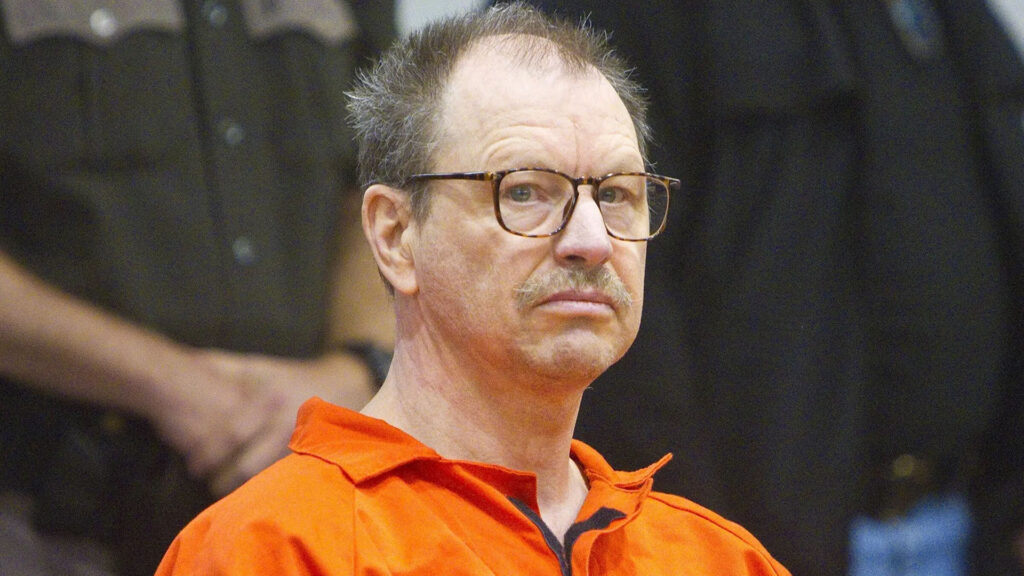
The first bodies were found in 1982, in and around the Green River south of Seattle.
Dozens of women disappeared or were found dead along riverbanks, roadsides, and wooded areas over the following years.
Many of them were sex workers, runaways, or otherwise vulnerable.
The case remained unsolved for nearly two decades.
Detectives interviewed thousands of people and followed hundreds of leads.
The investigation stalled.
An online theory suggests the true victim count is far higher than 48.
That theory is not a fact established by the record.
The exact number of victims is not established.
Gary Ridgway later admitted to killing as many as 71 or more women.
Authorities have not confirmed all of his claims.
What the record establishes is narrower.
What the record establishes is the 48 counts to which he pleaded guilty.
What the record establishes is that some cases remain unresolved.
The river kept its own accounting.
So did the roadsides and the wooded areas.
The known names are documented.
The unknown ones are not.
How many bodies are still missing?
That would require evidence.
That would require confirmation.
That would require the kind of certainty the record does not provide.
THE TASK FORCE YEARS
The Green River Task Force became one of the largest investigations in U.S. history at the time.
Detectives led the effort for years, interviewing thousands of people.
They followed hundreds of leads.
They used behavioral profiling and geographic analysis, trying to map where the killer might strike next.
The case stalled for nearly two decades.
It stalled not for lack of effort, but for lack of the one tool that would finally break it open.
No specific leads or suspects from those years are detailed in the source.
That is not established.
What is established is the scale: thousands of interviews, hundreds of leads, and a river that kept giving up bodies.
The task force grew, shifted, and kept working.
The river kept its secrets.
Detectives compared victim lists, mapped dump sites, and studied the patterns of a killer who seemed to vanish after each murder.
They had suspects.
They had profiles.
They had theories about where the killer lived and how he chose his victims.
None of it was enough.
Not because the work was careless.
But because the evidence needed technology that did not yet exist.

The frustration was not a single moment.
It was a decade of moments, each one a dead end.
Every lead examined.
Every interview conducted.
Every file closed without an arrest.
The case would not be solved by deduction or geography.
It would be solved by DNA.
That was still years away.
THE DNA MATCH
The DNA was not found in a database.
It was found in a lab, on slides and swabs stored for years.
In 2001, advances in DNA technology allowed forensic scientists to match Gary Ridgway’s DNA to semen found on several victims.
That was the breakthrough the task force had spent nearly two decades chasing.
Ridgway was arrested in November 2001.
During interrogation, he initially denied involvement.
Then he began cooperating.
As part of a plea agreement, he led investigators to sites where remains had not yet been found.
He provided detailed accounts of his crimes.
The specific victims matched by DNA are not named in the source material.
The number of sites he led investigators to is not specified.
What the record establishes is the match, the arrest, and the cooperation.
What it does not establish is the full geography of what he showed them.
Was it three sites?
Was it thirty?
That would require evidence the case summary does not provide.
The detectives had interviewed thousands of people.
They had followed hundreds of leads.
They had used behavioral profiling and geographic analysis.
None of it broke the case.
DNA did.
Ridgway was a truck painter from Auburn, a married father, a longtime employee at a Kenworth plant.
He was not on the task force’s radar as a primary suspect for most of those years.
Then the lab results arrived.
The shift was sudden.
A dead end became a confession.
An arrest became a negotiation.
The man who had denied involvement began to talk.
He talked in detail.
He talked about victims whose remains had not yet been found.
The cooperation was chilling.
It was also the reason he would not face the death penalty.

But that came later.
In November 2001, the case was simply solved.
THE PLEA AND THE SENTENCE
The charges were filed in 2003: 48 counts of aggravated first-degree murder.
In November 2003, Ridgway pleaded guilty to all 48 counts.
The plea agreement spared him the death penalty.
In exchange, he cooperated, leading investigators to sites where remains had not yet been found.
Judge Richard Jones sentenced him to 48 consecutive life sentences without the possibility of parole.
The sentence was formal. It was also final.
But the count did not close with the courtroom.
Ridgway later admitted to killing as many as 71 or more women.
Authorities have not been able to confirm all of his claims.
The exact number of additional victims he admitted to is not confirmed.
Neither are the plea agreement's full terms, which were not detailed in the record.
Forty-eight counts were established by his guilty plea.
Seventy-one or more was his statement, not a finding.
The difference matters.
Why would a man already serving 48 life sentences add more?
Why would he claim victims no one can verify?
Why would he stop at 71 if the true number were higher?
That would require evidence, and the record does not provide it.
What the record shows is narrower: 48 counts, 48 sentences, one plea.
The families in the courtroom heard the sentence.
The families of the unconfirmed heard only a number.
Ridgway was led away.
The case was solved, as far as the law was concerned.
The uncertainty was left to the record, where it remains.
AND THE STORY STILL ISN'T OVER
He is serving 48 consecutive life sentences at the Washington State Penitentiary in Walla Walla.
The sentence was the end of the prosecution. It was not the end of the record.
Some victim cases remain unsolved. Authorities have continued to work to identify remains and close outstanding cases, the case summary states.
The Green River Task Force was formally disbanded after Ridgway's sentencing. Cold case work has continued since.
Dave Reichert went on to serve as King County Sheriff. He later served as a U.S. Congressman.
The lead detective died in 2021.
How many cases remain open? How many sets of remains are still unidentified? How many families are still waiting?
The case summary does not specify the exact number of unresolved cases. The status of any ongoing investigations is not detailed.
That is the line the record draws: 48 counts, guilty. Ridgway's own claims of 71 or more victims are not confirmed by the record.
Ridgway remains in prison, where he has been since his arrest. The law considers the matter settled.
The story remains open.
Not because the sentence was insufficient. But because the count was never fully closed.
The task force is gone. The detective is gone. The river is still there.
Advertisement
You may also like
The cell tower records that placed Adnan Syed near Leakin Park — and the defense that tore them apart
The note was found in Hae Min Lee's car, and it read "I'm going to kill." Prosecutors argued Adnan Syed wrote it. The defense…
The 2002 fishing trip that Scott Peterson said explained everything — and the boat anchor that didn't match
December 24, 2002, and Scott Peterson reports his eight-months-pregnant wife Laci missing from their Modesto home. He says he spent that morning fishing at…
The 3:15 a.m. attack that 38 neighbors reportedly heard — but the timeline has a hole
She was almost home. Catherine "Kitty" Genovese, 28, had walked from her job at Ev's 11th Hour Bar to her apartment building at 82-70…
The white Cadillac witness said he was inside — 27 years later, one man faces trial
A white Cadillac pulled alongside a BMW sedan on the Las Vegas Strip. It was September 7, 1996, and gunfire erupted. The BMW carried…
The phone call that made a friend dial police — and the interview that followed
The missed appointment was a doctor’s appointment, and the phone went unanswered. On August 13, 2018, in Frederick, Colorado, a friend called police to…
The smiley-face confession that made a sister call the police
The note was found in March 1995, near a woman's body in Oregon. It was handwritten, a confession. It was signed with a smiley…