The 340 cipher that took 51 years to crack — and still named no killer
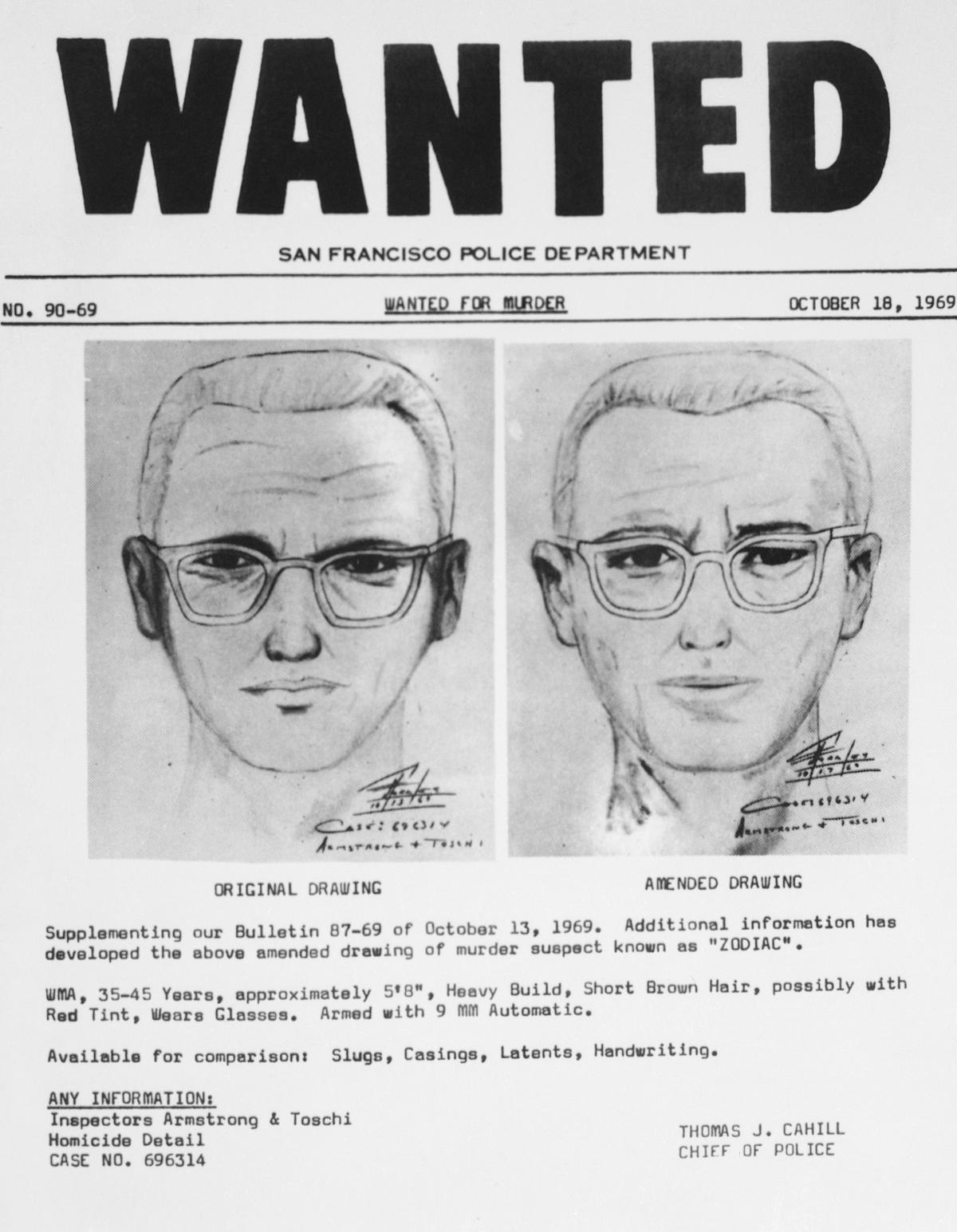
The 340 cipher sat unsolved for fifty-one years.
On December 5, 2020, a team of codebreakers—David Oranchak, Sam Blake, and Jarl Van Eycke—announced they had deciphered it.
The decoded message read as a confession of sorts, a taunt about collecting slaves for the afterlife.
It contained no name.
It named no accomplice, no address, no date.
The solution produced no suspect.
That is the anticlimax at the heart of the most famous unsolved crime in American history.
The case began on December 20, 1968, with the murders of two teenagers on a secluded road in Benicia, California, near Vallejo.
They were shot dead while parked, a young couple on a first date.
There were no witnesses.
There was no confession.
There was only a killer who, months later, began writing letters.
He sent a series of taunting, cryptogram-laden letters to newspapers, coining the name "Zodiac" and claiming responsibility.
He wrote in code.
He wrote in riddles.
He wrote as if he wanted to be caught—and then made sure he never was.
The first cipher, the "408," was solved by a schoolteacher and his wife in 1969.
It contained no identity either.
The second, the "340," took half a century.
Why so long?
Why did three codebreakers succeed where decades of investigators had failed?
The answer is in the method, not the message.
The cipher was not a simple substitution; it was a transposition, a grid that needed to be rearranged before it could be read.
Oranchak and his team found that by reading the columns diagonally, the letters fell into place.
The text that emerged was rambling, boastful, and empty.
It is a document of ego, not evidence.
The identity of the killer is not established by the record.
The cipher's solution produced no suspect.
That is what the record shows.
That is all the record shows.
THE FIRST REPORTS
The first attack came on December 20, 1968.
Two teenagers were shot on a secluded road in Benicia, California, near Vallejo.
Both died.
The weapons were a .22-caliber pistol in the first two attacks, a knife at Lake Berryessa, a 9mm at the taxi.
On July 4, 1969, two people were shot in a parked car at Blue Rock Springs Park in Vallejo.
One died, one survived.
The killer's identity was not established.
On September 27, 1969, two people were stabbed at Lake Berryessa.
One died, one survived.
Four months later, on October 11, 1969, a taxi driver was shot and killed in San Francisco's Presidio Heights.
The attacks escalated in frequency.
They escalated in brutality.
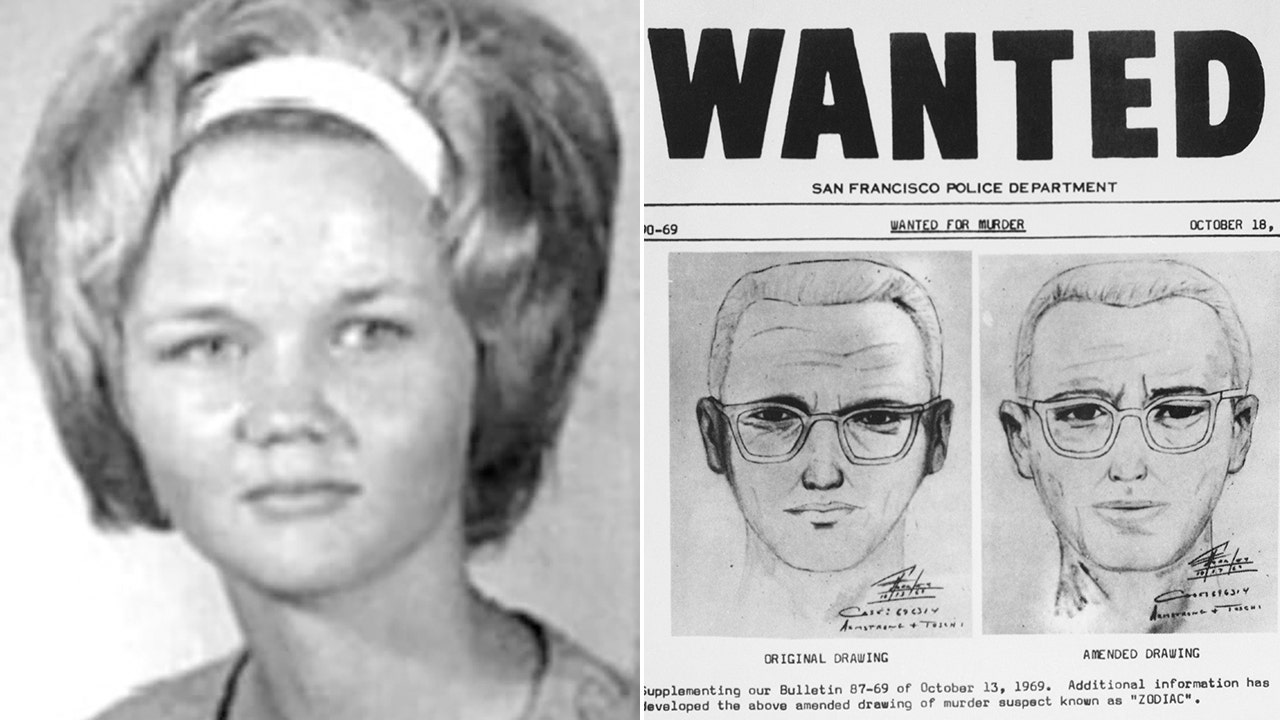
The first was a shooting.
The second was a shooting.
The third was a stabbing.
The fourth was a murder in a city street.
The vehicle was described as a brown or tan sedan.
No specific vehicle was ever confirmed.
The case crossed jurisdictions.
Vallejo police handled the first two attacks.
Napa County handled the Lake Berryessa stabbing.
San Francisco police handled the taxi murder.
Each agency kept its own files.
Each agency chased its own leads.
The killer's identity is not established.
That is what the record shows.
That is all the record shows.
THE LETTERS AND THE CIPHERS
The letters went to the San Francisco Chronicle, the San Francisco Examiner, and the Vallejo Times-Herald.
Each envelope carried a cipher.
The first cipher, the “408,” was solved by a schoolteacher and his wife in 1969.
It contained a confession of sorts, a boast, a promise of more deaths.
It contained no identity.
That near-miss is the pattern of the whole case: a message opened, a name withheld.
The second cipher, the “340,” sat unsolved for 51 years.
It was not cracked until December 2020, by a team including David Oranchak, Sam Blake, and Jarl Van Eycke.
The deciphered text was read aloud, posted online, and analyzed by a global audience.
It contained no name.
The record does not establish that the 340 cipher named anyone.
It does not establish that the 408 cipher did either.
The investigation itself was fragmented across jurisdictions.
Vallejo police handled the first two attacks.
Napa County handled the Lake Berryessa stabbing.
San Francisco police handled the Stine murder.
Each agency kept its own files, its own leads, its own dead ends.
The letters were the one thread that ran through all of them.
A cipher that could have been a confession was instead a taunt.
A cipher that could have been a name was instead a signature.
The codebreakers in 2020 solved the puzzle.
The record still shows no killer.
THE SUSPECT AND THE EVIDENCE
The suspect's name came from a tip, not from a cipher.
Don Cheney, a former acquaintance, told investigators that Arthur Leigh Allen had confessed.
Allen was interviewed multiple times.
He was searched.

He was placed under surveillance.
Physical evidence never linked him.
In 2002, DNA testing on saliva from the envelopes of the Zodiac letters was compared to Allen.
The results were inconclusive.
In 2007, the Vallejo Police Department reopened the case and submitted new evidence for DNA testing.
No match was ever announced.
The Stine murder produced a partial fingerprint and a palm print.
They were never matched.
Was Allen the killer?
Did the confession to Cheney happen as described?
Did the DNA say nothing because the science was old, or because the wrong man was tested?
The record does not answer.
The record shows only what it shows: Allen was never charged, never indicted, and posthumous DNA testing was inconclusive.
The fingerprint and the palm print remain unmatched.
Suspicion is not proof.
A tip is not a conviction.
Allen died of a heart attack in 1992, still a suspect, still not a defendant.
The weight of suspicion against him is real.
The absence of proof is also real.
It is both.
It is neither resolved.
AND THE STORY STILL ISN'T OVER
There was no trial.
No suspect was ever charged.
Arthur Leigh Allen died of a heart attack in 1992.
He was investigated for years. He was never arrested. He was never indicted.
The case remains officially unsolved.
The San Francisco Police Department lists it as an open case.
In 2021, the FBI confirmed it was still investigating.
The 2020 solution of the 340 cipher generated renewed public interest.
It produced no new suspect.
The deciphered text contained no name.
The absence of proof is real. It remains real.
The victims' families have continued to seek answers.
The case has been the subject of numerous books, documentaries, and films.
No one has ever been convicted.
That is the record. That is what the record does not establish: a resolution.
It is an open case. It is also a closed door.
The families ask what happened. The investigators ask who did it. The public asks why.
That would require evidence.
The evidence never matched. The DNA was inconclusive. The fingerprint never found its owner.
Allen died before any answer came.
The story still isn't over.
It is waiting.
Advertisement
You may also like
The cell tower records that placed Adnan Syed near Leakin Park — and the defense that tore them apart
The note was found in Hae Min Lee's car, and it read "I'm going to kill." Prosecutors argued Adnan Syed wrote it. The defense…
The 2002 fishing trip that Scott Peterson said explained everything — and the boat anchor that didn't match
December 24, 2002, and Scott Peterson reports his eight-months-pregnant wife Laci missing from their Modesto home. He says he spent that morning fishing at…
The 3:15 a.m. attack that 38 neighbors reportedly heard — but the timeline has a hole
She was almost home. Catherine "Kitty" Genovese, 28, had walked from her job at Ev's 11th Hour Bar to her apartment building at 82-70…
The white Cadillac witness said he was inside — 27 years later, one man faces trial
A white Cadillac pulled alongside a BMW sedan on the Las Vegas Strip. It was September 7, 1996, and gunfire erupted. The BMW carried…
The phone call that made a friend dial police — and the interview that followed
The missed appointment was a doctor’s appointment, and the phone went unanswered. On August 13, 2018, in Frederick, Colorado, a friend called police to…
The smiley-face confession that made a sister call the police
The note was found in March 1995, near a woman's body in Oregon. It was handwritten, a confession. It was signed with a smiley…