The 1995 bomb that killed 168 — and the trailer axle that cracked the case
The rear axle of the Ryder truck was a twisted piece of metal, recovered from the rubble within hours.
It carried a vehicle identification number.
That number traced the axle to a Ryder rental agency in Junction City, Kansas.
One part. One number. The entire investigation turned on it.
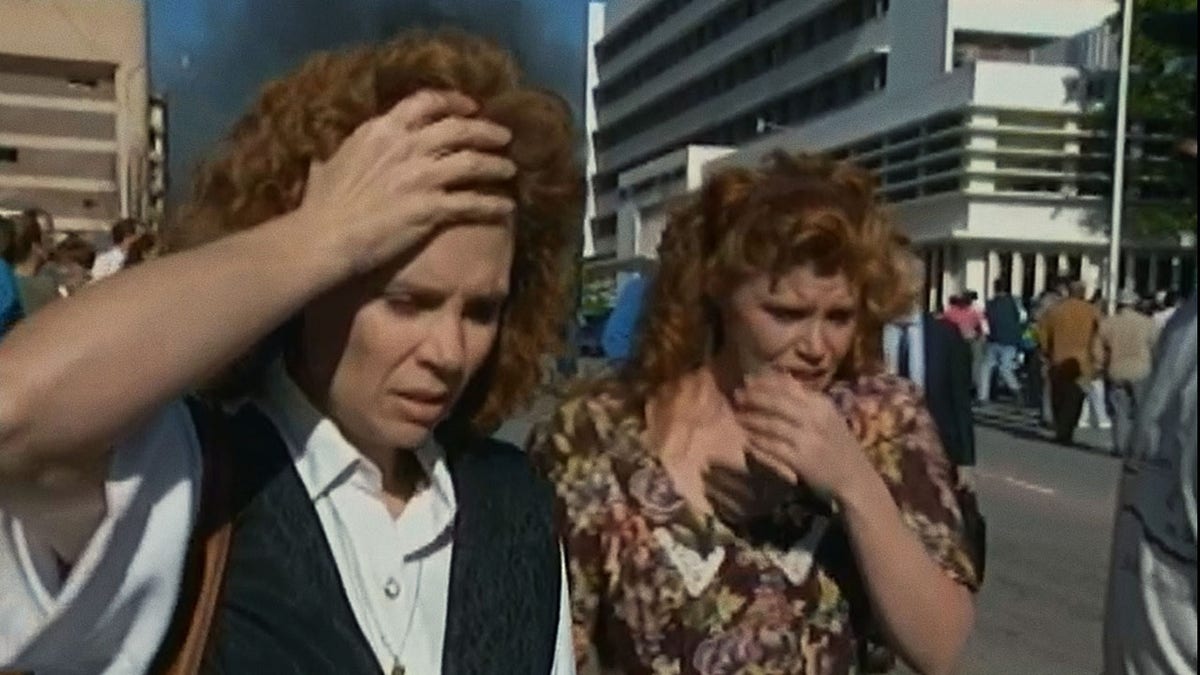
At 9:02 a.m. on April 19, 1995, a rented Ryder truck packed with an ammonium nitrate–fuel oil bomb exploded outside the Alfred P. Murrah Federal Building in downtown Oklahoma City.
The blast destroyed the north face of the nine-story building.
It killed 168 people.
It injured more than 680 others.
In the first hours, suspicion fell on Middle Eastern terrorists.
That was the assumption. That was the story the moment seemed to demand.
Then the axle spoke.
The vehicle identification number pointed to a rental agency in Kansas, not to a foreign cell.
It pointed to a domestic trail.
The exact condition of the axle, and precisely how it was recovered, is not detailed in the record.
What is documented is the number.
What is documented is where it led.
A single mechanical part, buried in the wreckage, redirected an entire federal investigation.
It did not name the bomber.
It did not explain the blast.
It gave investigators a place to start.
9:02 A.M. AND THE FIRST 90 MINUTES
The blast hit at 9:02 a.m.
It destroyed the north face of the nine-story Murrah Federal Building.
It killed 168 people.
It injured more than 680 others.
Rescue and recovery efforts continued for weeks.
Within 90 minutes, an Oklahoma Highway Patrol trooper stopped a speeding 1977 Mercury Marquis.
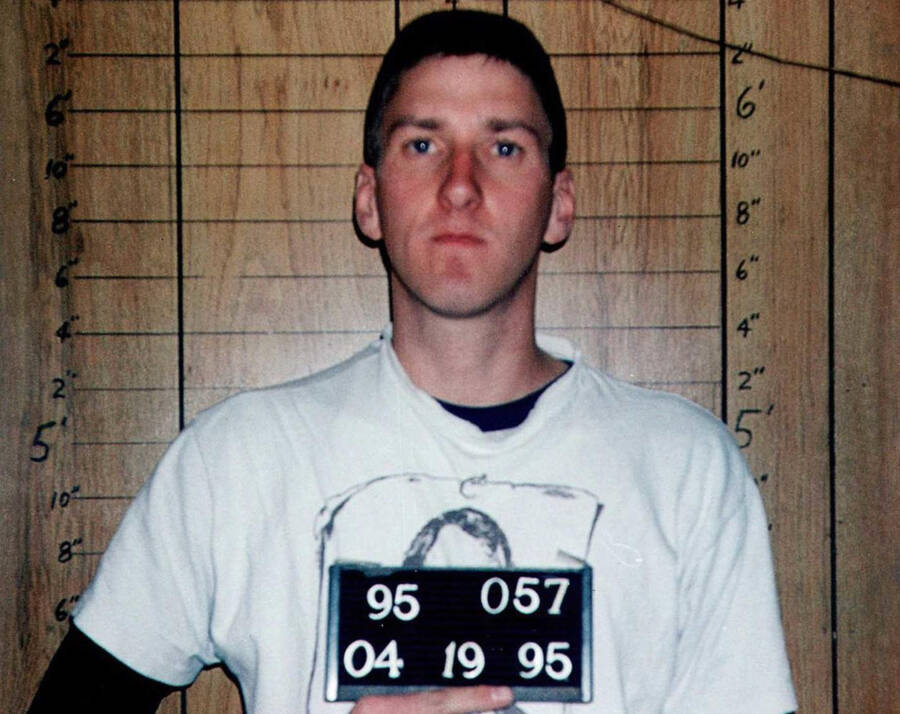
The driver was Timothy McVeigh.
He was arrested for a firearms violation.
At that moment, he was just a traffic stop with a gun charge.
No one at the scene knew what the truck had been.
No one knew who had driven it.
No one knew why the building was gone.
The initial public and media reaction focused on possible Middle Eastern terrorists.
It was a theory that made sense to a country still learning the shape of the threat.
It was a theory that fit nothing found in the rubble.
The record later showed that suspicion was abandoned once the Ryder axle was traced.
But in the first 90 minutes, the axle had not yet spoken.
The trooper who made the stop is not named in the record.
That detail is not established.
What is established is the stop itself, the gun charge, and the man in the car.
He was later linked to the bombing.
Not because of the arrest.
Because of what the axle would reveal.
THE RYDER TRAIL
The recovered rear axle carried a vehicle identification number, and that number traced to a Ryder rental agency in Junction City, Kansas.
It was the physical proof the case needed.
The initial suspicion had been Middle Eastern terrorists; the axle ended that theory.
It turned the investigation toward a domestic rental, a small Kansas town, and a man who had already been arrested.
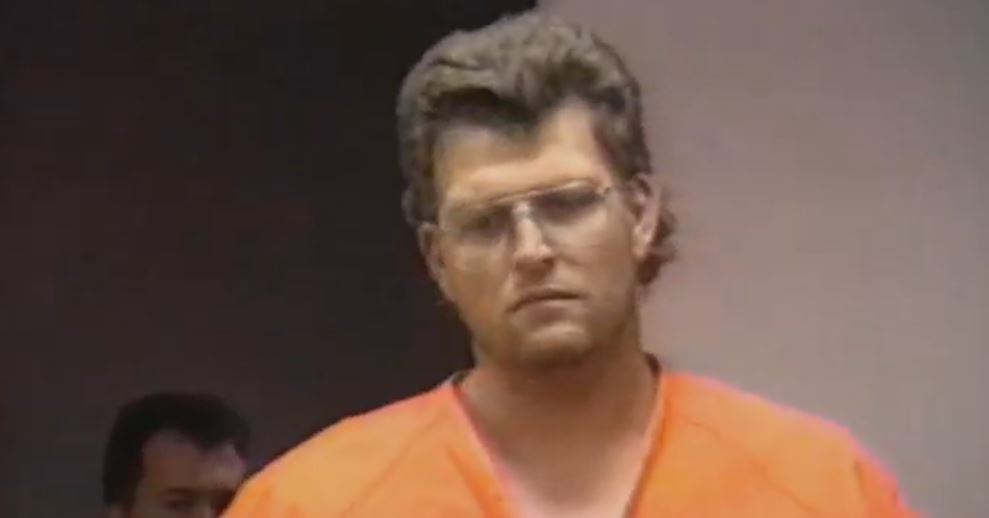
That man was Timothy McVeigh, sitting in a county jail on a firearms charge.
The axle led investigators to a motel, where witnesses identified McVeigh under an alias.
The FBI's massive investigation, led by the lead case agent, used forensic analysis of bomb residue and witness statements.
They examined the residue left on the ground.
They examined the receipts for bomb components.
They examined McVeigh's anti-government writings.
Michael Fortier, an associate, testified against him.
The case built in the media as a meticulous, evidence-driven pursuit.
The public watched the pieces fall into place.
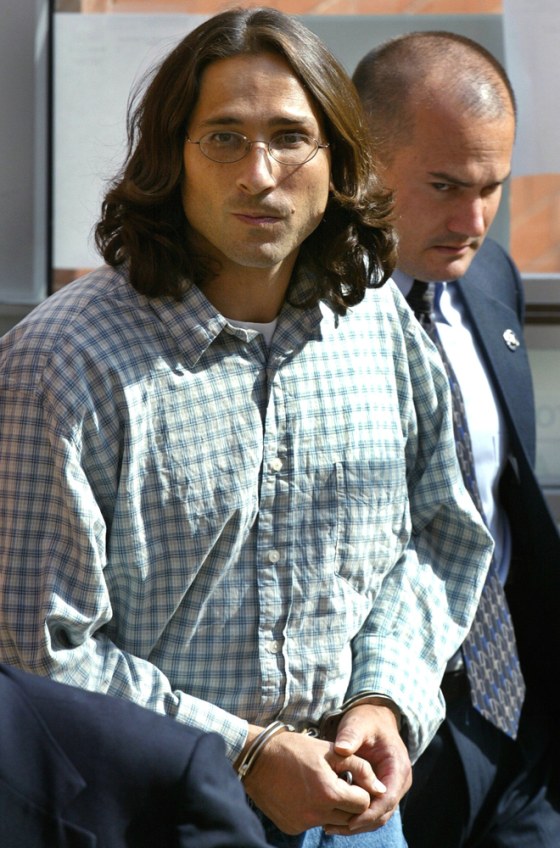
But the defense argued that others were involved, including a man the press called "John Doe No. 2."
That man was never identified.
That man was never charged.
The identity of "John Doe No. 2" is not established.
The record does not resolve it.
It remains a theory, a shadow in the coverage.
The axle was real.
The VIN was real.
The conviction would follow.
But the doubt, for some, never fully disappeared.
THE TRIAL AND THE TWO STORIES
The trial was moved to Denver, Colorado, because the judge ruled that Oklahoma City could not provide an impartial jury.
McVeigh faced 11 counts: conspiracy, use of a weapon of mass destruction, and first-degree murder of federal officers.
The prosecution called 137 witnesses over the course of the proceedings.
They walked the jury through the axle, the rental receipt, the motel alias, the bomb residue.
The defense told a different story entirely.
Stephen Jones, McVeigh’s lead attorney, argued that his client was a scapegoat.
He argued that the government had not proven its case.
He pointed to the early suspicion of Middle Eastern terrorists, to the figure witnesses described as "John Doe No. 2."
No such person was ever identified.
No such person was ever charged.
The jury deliberated, and on June 2, 1997, they convicted McVeigh on all counts.
They sentenced him to death.
The scapegoat theory did not survive the verdict.
It is a claim the record does not support; the jury rejected it.
Terry Nichols faced his own jury in a separate trial.
He was convicted of conspiracy and involuntary manslaughter, and sentenced to life without parole.
Michael Fortier, who had pleaded guilty to failing to alert authorities, took the stand for the prosecution.
He received a 12-year sentence for his testimony.
The two stories ran side by side through the courtroom: the government’s narrative of a planned act of terror, and the defense’s narrative of a man set up to fall.
One of them carried the weight of 168 dead.
One of them carried the burden of proof.
The jury decided which one was true.
AND THE STORY STILL ISN'T OVER
McVeigh was executed by lethal injection on June 11, 2001, at the federal prison in Terre Haute, Indiana.
Terry Nichols remains in federal prison serving life without parole.
Michael Fortier was released from prison in 2006.
The Murrah Federal Building site is now the Oklahoma City National Memorial, with a reflecting pool, a field of empty chairs for each victim, and a museum.
Bud Welch, whose daughter Julie died in the blast, has continued to speak about the bombing's impact.
He speaks against the death penalty.
The case remains a landmark in domestic terrorism and federal law enforcement.
It is a documented case.
It is also a story the public still argues over.
The full extent of any ongoing legal proceedings or new evidence is not in the record.
That would require evidence.
The chairs stand in rows where the building stood.
The reflecting pool is where the street was.
The museum holds the axle, the truck parts, the receipts.
What remains is what the record does not settle.
Why did the initial suspicion fall on Middle Eastern terrorists?
Why did the theory of a second man, "John Doe No. 2," never produce a name?
Why did the case become a landmark, and not a closed file?
The record answers the first with a traced axle.
The record answers the second with an empty charge sheet.
The third is answered by the chairs.
There are 168 of them.
Advertisement
You may also like
The cell tower records that placed Adnan Syed near Leakin Park — and the defense that tore them apart
The note was found in Hae Min Lee's car, and it read "I'm going to kill." Prosecutors argued Adnan Syed wrote it. The defense…
The 2002 fishing trip that Scott Peterson said explained everything — and the boat anchor that didn't match
December 24, 2002, and Scott Peterson reports his eight-months-pregnant wife Laci missing from their Modesto home. He says he spent that morning fishing at…
The 3:15 a.m. attack that 38 neighbors reportedly heard — but the timeline has a hole
She was almost home. Catherine "Kitty" Genovese, 28, had walked from her job at Ev's 11th Hour Bar to her apartment building at 82-70…
The white Cadillac witness said he was inside — 27 years later, one man faces trial
A white Cadillac pulled alongside a BMW sedan on the Las Vegas Strip. It was September 7, 1996, and gunfire erupted. The BMW carried…
The phone call that made a friend dial police — and the interview that followed
The missed appointment was a doctor’s appointment, and the phone went unanswered. On August 13, 2018, in Frederick, Colorado, a friend called police to…
The smiley-face confession that made a sister call the police
The note was found in March 1995, near a woman's body in Oregon. It was handwritten, a confession. It was signed with a smiley…