A non-prosecution deal in 2007 that still haunts the Epstein case — how one promise shielded him for years
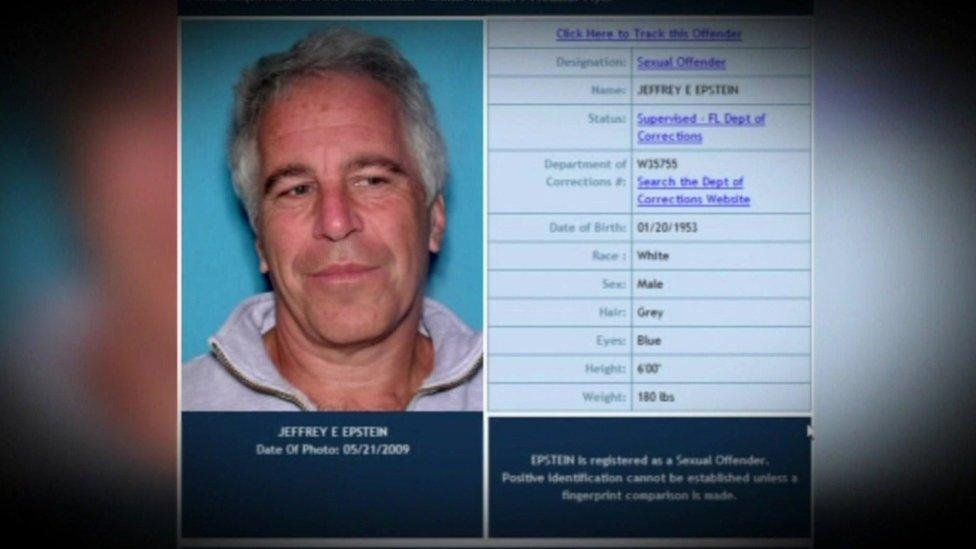
It begins with a signature.
In 2007, federal prosecutors in Miami negotiated a non-prosecution agreement with Jeffrey Epstein, the wealthy financier accused of sexually abusing a 14-year-old girl.
The agreement allowed him to plead guilty in state court to two prostitution charges.
It shielded him from federal charges.
The lead federal prosecutor in that Miami case was Alexander Acosta, then U.S. Attorney for the Southern District of Florida.
He approved it.
The deal meant Epstein would never face a federal trial for the allegations that started with a report to Palm Beach police in 2005.
Not because the evidence was thin.
But because a single legal maneuver could override it.
A federal judge later criticized the agreement as violating the Crime Victims’ Rights Act.
That criticism came years later, after the damage was done.
The full text of the agreement is not in the record.
The exact negotiations are not in the record.
So the question stands unanswered: what was said in that room, and to whom?
That would require evidence.
All that remains documented is the promise itself, and the signature that made it hold.
2005 — THE REPORT
It began with a report.
In 2005, a 14-year-old girl told Palm Beach police that Jeffrey Epstein had sexually abused her at his mansion.
That report started the investigation.
The Palm Beach Police Department began looking into Epstein in 2005 after that single complaint, according to the investigation summary.
The FBI joined the investigation, the summary states.
Federal prosecutors in Miami, led by Alexander Acosta, built a case that included testimony from multiple underage victims, according to the investigation summary.
The identity of the 14-year-old girl is not in the record.
What is documented is the weight of what was being assembled: a federal case built on the accounts of girls, not speculation.
Acosta was then the U.S. Attorney for the Southern District of Florida.
He was the man who would later approve the 2007 non-prosecution agreement.
But in 2005, that deal did not exist yet.
What existed was a complaint, a police inquiry, and then the FBI.
What existed was testimony.
What existed was the beginning of a case that federal prosecutors in Miami would spend years building.
The girls' accounts formed the core of it.
The record does not say how many testified, only that there were multiple underage victims.
The record does not name them all.
The record does not say what they said in detail.
That would require evidence.
The 14-year-old's name is not established.
Neither is the full extent of what she told police that day.
What is established is that her report triggered the investigation.
What is established is that the FBI joined it.
What is established is that federal prosecutors took it seriously enough to build a case.
The case was real.
The gravity of it was real.
And then, in 2007, Acosta approved the agreement that shielded Epstein from federal charges, according to the investigation summary.
The promise came after the report.
The report came first.
2007 — THE DEAL
In 2007, Acosta approved the non-prosecution agreement, according to the investigation summary.
The agreement shielded Epstein from federal charges.
It did not shield him from state court.
Epstein pleaded guilty in state court to two prostitution charges, according to what happened.
The federal case was traded for a lighter state plea.
He was sentenced to 18 months, according to the trial and outcome.
He served 13 months of that sentence with work release.
What did the work release actually involve?
What exactly was negotiated in the state plea?

What legal reasoning allowed a federal case to dissolve into a state sentence?
That would require evidence.
The specific terms of the work release are not detailed in the record.
The specific terms of the state plea negotiations are not detailed in the record.
What the record does show is the shape of the trade.
A federal investigation built on testimony from multiple underage victims.
A federal prosecutor who approved an agreement that shielded the accused from federal charges.
A state plea to two prostitution charges.
Eighteen months, then thirteen served.
The investigation summary documents the agreement.
The trial and outcome documents the sentence.
The gap between them remains a subject of scrutiny.
2019 — THE REOPENING
2019. The Miami Herald published its investigative series, and federal prosecutors in New York reopened the case.
Epstein was charged with sex trafficking of minors.
The evidence included flight logs, witness testimony, and allegations from dozens of women.
Prosecutors built a case on the records of who flew where, and when.
The flights were documented. The witnesses were named. The women were dozens.
Epstein never stood trial on those charges.
He was found dead in his cell at the Metropolitan Correctional Center in New York on August 10, 2019.
The medical examiner ruled the death a suicide by hanging.
The FBI investigated the circumstances of his death.
The investigation concluded without criminal charges.
Was it a suicide? The medical examiner said yes.
Was it neglect? The FBI said nothing criminal.
The full details of what happened in that cell are not in the record.
That is what the record does not establish.
So the charges died with him.
No verdict. No acquittal. No trial.
The case that reopened in 2019 ended with a man found dead in a cell.
Not because the evidence failed.
Because the defendant did.
The flight logs remain. The testimony remains. The allegations from dozens of women remain.
What was delayed in 2007 was never fully served in 2019.
The irony is not subtle.
It is documented.
AND THE STORY STILL ISN'T OVER
Epstein is dead.
He was found in his cell at the Metropolitan Correctional Center in New York on August 10, 2019, before he ever stood trial on the federal sex-trafficking charges.
The medical examiner ruled the death a suicide by hanging.
Ghislaine Maxwell was tried in federal court in New York in 2021.
She was convicted of sex trafficking conspiracy and related charges.
She was sentenced to 20 years in prison.
The non-prosecution agreement and the handling of the 2007 case remain subjects of ongoing legal and public scrutiny.
Victims have pursued civil claims against Epstein’s estate.
The estate paid out settlements.
The FBI’s investigation into Epstein’s death and the circumstances of his detention concluded without criminal charges.
What comes next?
Will the scrutiny of the 2007 agreement produce new legal action?
Will further investigations surface new evidence?
That would require evidence.
The record does not establish any future legal actions or outcomes.
What is documented is what already happened.
What is documented is the agreement in 2007.
What is documented is the death in 2019.
What is documented is the conviction of Maxwell.
The rest remains open.
Advertisement
You may also like
The fishing boat Scott Peterson bought weeks before his pregnant wife vanished
The boat was 14 feet of aluminum, and Scott Peterson bought it in late November 2002. That was weeks before his pregnant wife Laci…
The bloody glove that didn't fit: how a detective's tape destroyed the prosecution's case
He held them up for the jury to see. Two leather gloves, dark against his hands. One found on Bundy Drive, where Nicole Brown…
The 1947 clipping found near Elizabeth Short that led nowhere
The morning of January 15, 1947, began with a woman walking her daughter past a vacant lot at 39th Street and Norton Avenue. She…
The gun that put Keffe D in the Cadillac — and the plea deal he says should free him
The motion landed in February 2025, in a Clark County courtroom, and it hinged on a piece of paper filed nearly two decades earlier.…
The 340-symbol cipher cracked in 2020 — and the message that still names no one
In December 2020, a team of codebreakers announced they had cracked the 340-symbol cipher. David Oranchak, a software developer, and Sam Blake, a mathematician…
The misread clue that derailed the Tate murder probe for months
Five people were found dead at 10050 Cielo Drive in Benedict Canyon on the morning of August 10, 1969. Among them was actress Sharon…