The parole board that kept saying no to Leslie Van Houten for 53 years
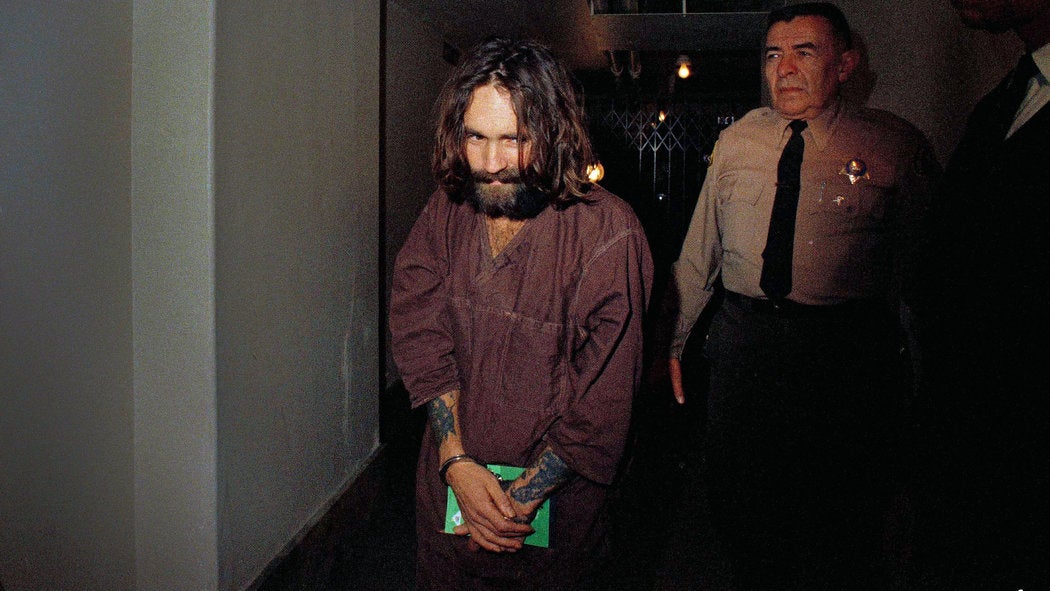
The parole board's door opened and closed for 53 years.
For 53 years, a California parole board said no to Leslie Van Houten.
She was a convicted murderer in the Manson Family case.
The board's repeated denials are a matter of public record.
The specific reasons for each denial over five decades are not fully documented.
The case remains one of the most documented in American criminal history.
Bugliosi's *Helter Skelter* served as the definitive account.
The trial transcripts, the appeals, the witness testimony—all of it is on the record.
The parole board's internal deliberations are not part of that record.
What did the board say in 1980?
What did it say in 1995?
What did it say in 2016?
That would require evidence.
A theory circulating online suggests the board was influenced by public pressure.
That is not established by the record.
The board said no.
It said no again.
It said no for 53 years.
Each denial carried a date, a hearing number, a file.
The reasoning behind each one stays in the room.
The door opens.
The door closes.
THE NIGHT OF AUGUST 9
The door opens onto a night in Benedict Canyon.
On the night of August 9, 1969, five people were murdered at 10050 Cielo Drive.
Sharon Tate, an actress eight and a half months pregnant, was among them.
Jay Sebring, a celebrity hairstylist, was among them.
Wojciech Frykowski, a Polish film director, was among them.
Abigail Folger, an heiress, was among them.
Steven Parent, a young man visiting the property’s caretaker, was among them.
The victims were stabbed and shot.
The following night, August 10, 1969, Leno LaBianca, a supermarket executive, and his wife Rosemary LaBianca were murdered in their Los Feliz home.
The words “Helter Skelter” and other phrases were written in blood at the scenes.
The murders were discovered the following mornings by the victims’ associates and family.
The scale of it was not a single act.
It was two nights.
It was seven dead.
The specific weapons were not widely reported in detail.
That remains unestablished.
:max_bytes(150000):strip_icc():focal(1083x409:1085x411)/sharon-tate-1967-tout-080825-6f698357c86347d6b03be79a2ebaeee0.jpg)
What is documented is the blood, the phrases, the bodies found by those who came looking.
The horror does not need embellishment.
It is in the record.
It is also in the silence that followed.
THE TRIAL AND THE SENTENCE
The trial began in June 1970.
It was marked by disruptions from Manson and the female defendants, who carved X's into their foreheads.
The prosecution, led by Vincent Bugliosi of the Los Angeles County District Attorney's Office, built its case on the testimony of a witness granted immunity.
That witness described the events in detail.
Bugliosi also presented the motive: a race war Manson called "Helter Skelter," drawn from a Beatles song and his apocalyptic beliefs.
All four defendants were found guilty of first-degree murder on January 25, 1971.
The jury imposed the death penalty.
Then, in 1972, the California Supreme Court abolished the death penalty.
All four death sentences were commuted to life in prison with the possibility of parole.
That single ruling changed the legal ground beneath the case.
It is the reason parole became possible at all.
It is the reason the boardroom door would open, again and again, for decades.
What the record does not establish is the specific role Van Houten played in the murders.
The source does not detail it.
The conviction stands; the division of acts does not.
Manson was the leader of the group later known as the Manson Family.
He was convicted of first-degree murder for the seven deaths, along with three of his followers, including Van Houten.
The trial judge was Charles Older.
The lead detective was Lieutenant Earl Deemer of the Los Angeles Police Department.
The horror does not need embellishment.
It is in the record.
It is also in the silence that followed.
Four people were found guilty.
Four people were sentenced to death.
One ruling commuted them all.
That is the legal foundation.
That is the long road ahead.
FIVE DECADES OF NO
After the death sentences were commuted, she became eligible for parole.
That was in 1972.
The parole board said no.
It said no again.
And again.
For 53 years, the board kept saying no.

The denials are a matter of public record.
The specific number of times she was denied is not stated in the source material.
The board's internal reasoning over those five decades is not fully documented.
That is what the record shows.
That is also what it does not show.
Manson himself was denied parole 12 times before his death in 2017.
Another convicted follower was denied 13 times before she died in prison in 2009.
Two others remain incarcerated.
They have been denied parole numerous times.
Most recently, in 2022.
Then, in 2023, after 53 years in prison, the board said yes.
She was granted parole.
She was released on July 11, 2023, aged 73.
Not because the record explains a single turning point.
But because the record shows a rare yes after decades of no.
The weight of it is in the years.
The rarity is in the release.
The story still isn't over.
It is a story of repeated denials.
It is also a story of one eventual grant.
AND THE STORY STILL ISN'T OVER
She walked out of the California prison on July 11, 2023, aged 73.
Her release came after the parole board granted her parole in 2023.
It came after 53 years of no.
Charles Manson never walked out. He died of natural causes on November 19, 2017, at a California hospital, aged 83, after being denied parole 12 times.
One of his followers died in prison on September 24, 2009, aged 61.
Two others remain incarcerated. Both were denied parole most recently in 2022.
The Manson Family as a cult dissolved after the arrests.
Some former members have spoken publicly about their experiences.
The case remains one of the most documented in American criminal history.
Vincent Bugliosi's *Helter Skelter* serves as the definitive account.
What will happen at the next parole hearings for the two who remain?
Will they be denied again?
Will they ever be granted?
That would require evidence.
The record does not specify their future parole hearings.
The story is not over for them.
For one of the convicted, it ended on a July morning.
For the others, it continues inside the walls.
Closure is partial. It is also incomplete.
Advertisement
You may also like
The fishing boat Scott Peterson bought weeks before his pregnant wife vanished
The boat was 14 feet of aluminum, and Scott Peterson bought it in late November 2002. That was weeks before his pregnant wife Laci…
The bloody glove that didn't fit: how a detective's tape destroyed the prosecution's case
He held them up for the jury to see. Two leather gloves, dark against his hands. One found on Bundy Drive, where Nicole Brown…
The 1947 clipping found near Elizabeth Short that led nowhere
The morning of January 15, 1947, began with a woman walking her daughter past a vacant lot at 39th Street and Norton Avenue. She…
The gun that put Keffe D in the Cadillac — and the plea deal he says should free him
The motion landed in February 2025, in a Clark County courtroom, and it hinged on a piece of paper filed nearly two decades earlier.…
The 340-symbol cipher cracked in 2020 — and the message that still names no one
In December 2020, a team of codebreakers announced they had cracked the 340-symbol cipher. David Oranchak, a software developer, and Sam Blake, a mathematician…
The misread clue that derailed the Tate murder probe for months
Five people were found dead at 10050 Cielo Drive in Benedict Canyon on the morning of August 10, 1969. Among them was actress Sharon…