The ransom note found on a windowsill after a 20-month-old vanished from his crib
The nursery window was open.
On the evening of March 1, 1932, Charles Lindbergh Jr., the 20-month-old son of aviator Charles Lindbergh and his wife Anne Morrow Lindbergh, was taken from his crib in the family’s home near Hopewell, New Jersey.
His nurse, Betty Gow, discovered him missing around 10:00 p.m.
She alerted the parents.
On the nursery windowsill, a ransom note demanded $50,000.
The note was found where a child should have been.
Who wrote it?
Who left it there?
How long was the room empty before anyone looked in?
That would require evidence.
The note’s full text is not in the record provided.
Its demand is documented.
The identity of the writer is not established at this point.
The window was the way in.
The window was the way out.
A ladder would later be recovered, used to reach that sill.
But on that night, there was only the note, the empty crib, and the open air.
THE SEARCH AND THE RANSOM

The search began with competing authorities.
Local police, the New Jersey State Police, and federal agencies worked the case without coordination.
Each agency had its own theory, its own leads, its own men on the ground.
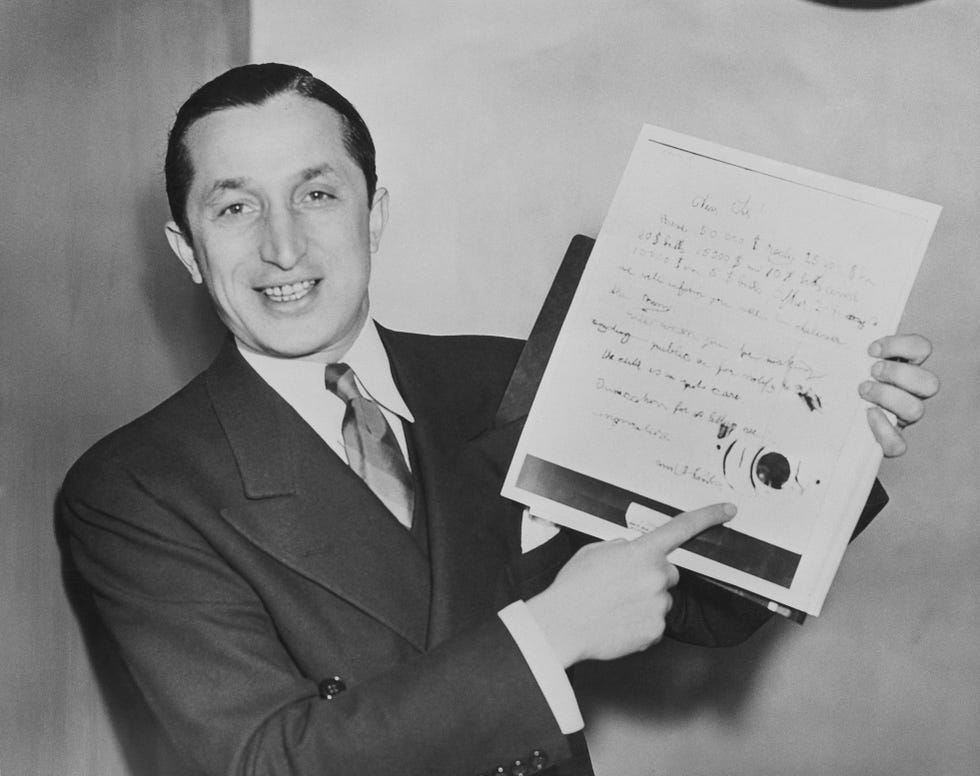
The note on the windowsill pointed to one man: Dr. John F. Condon, a retired Bronx schoolteacher.
Condon placed an advertisement in a Bronx newspaper offering to act as a go-between.
Someone answered.
A man calling himself “John” met Condon in a Bronx cemetery.
They spoke in the dark, among the headstones.
The money was prepared: $50,000 in gold certificates.
The serial numbers were recorded and distributed to banks.
That was the plan — trace the bills, find the man.
Condon handed over the cash.
The man called “John” disappeared into the night with the ransom.
Who he was is not established.
The record shows a meeting, a payment, and nothing more.
Days passed.
The Lindberghs waited.
The public waited.

On May 12, 1932, the child’s body was found in a shallow grave about four and a half miles from the family home.
The cause of death was a blow to the head.
The ransom had been paid.
The child was still gone.
The exact circumstances of that death are not fully documented.
The grave was shallow.
The money was spent.
The man called “John” was never identified with certainty.
Frustration built, and dread settled in.
THE GOLD CERTIFICATE
In September 1934, a gold certificate from the ransom was traced to a gas station in New York City.
The attendant, Walter Lyle, wrote down the license plate of the car that paid with it.
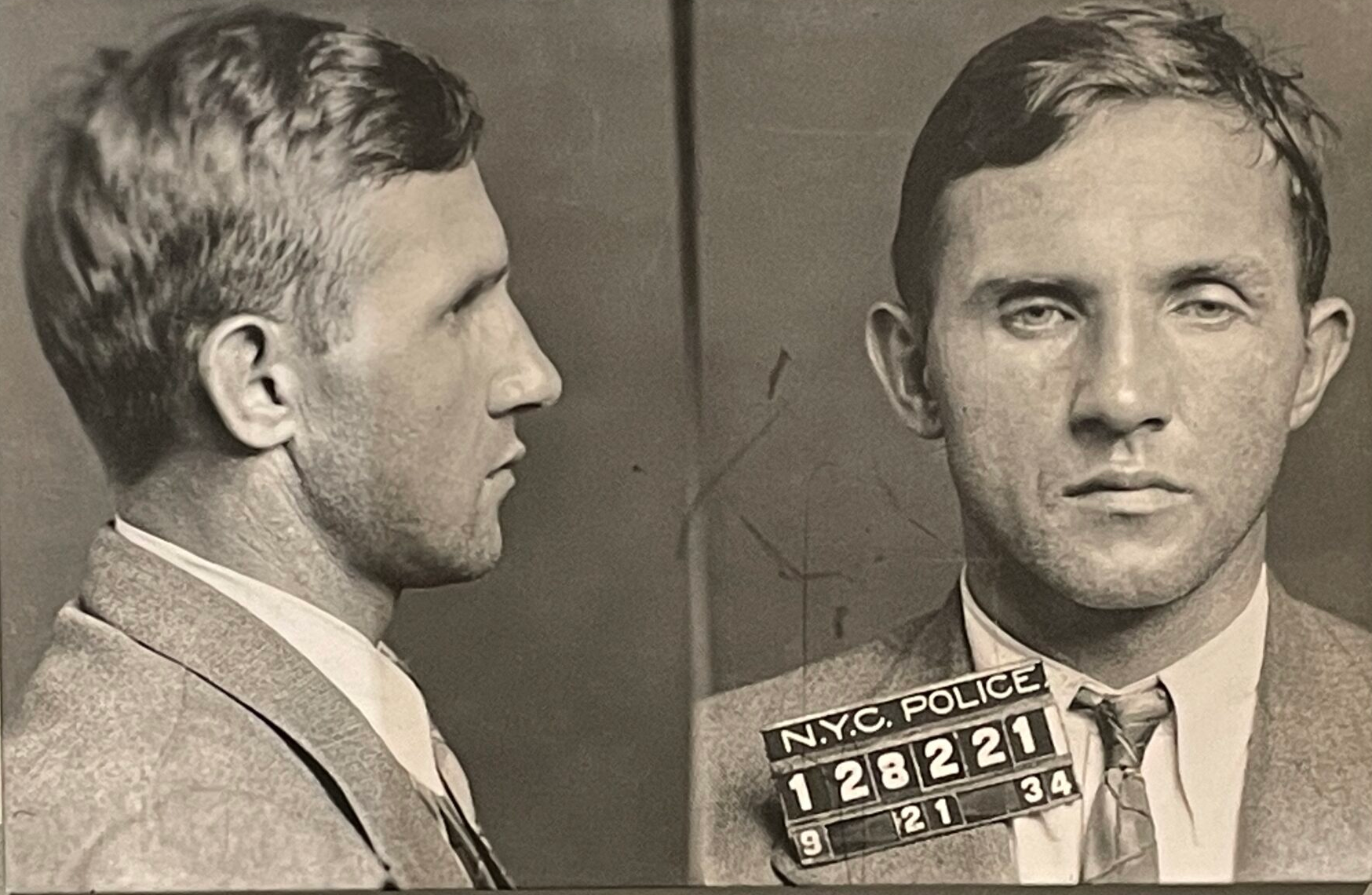
That plate led police to Bruno Richard Hauptmann.
A search of Hauptmann’s home found over $14,000 of the ransom money.
He was charged with first-degree murder and kidnapping.
Hauptmann maintained his innocence.
The money, he claimed, belonged to a friend, Isidor Fisch, who had died.
Fisch was gone.

The provenance of the money is disputed.
Whether Hauptmann’s claim about Isidor Fisch is true is not established.
It is a claim. It is also the only explanation he offered.
The gold certificate was a fact. The license plate was a fact. The $14,000 was a fact.
The story behind them was not.
A single attendant’s note had cracked the case open.
Then the suspect’s words cracked it open again.
Did the money belong to a dead man? Did it belong to the man who held it?
That would require evidence.
The record holds the certificate, the plate, and the cash.
It does not hold the answer.
THE TRIAL
The trial began in January 1935 in Flemington, New Jersey.
Bruno Richard Hauptmann was charged with first-degree murder under a state law that made killing during a kidnapping a capital offense.
The prosecution, led by Attorney General David T. Wilentz, built its case on a web of circumstantial evidence.
There was the wood from Hauptmann’s attic, presented as matching the ladder used in the kidnapping.
There was the handwriting analysis, presented as linking him to the ransom notes.
There was the money, over $14,000 of the ransom found in his home.

The defense, led by Edward J. Reilly, did not deny the money was there.
Reilly attacked the wood. Reilly attacked the handwriting. Reilly argued the whole case was circumstantial.
He said Hauptmann was framed.
He said the money belonged to a dead friend, Isidor Fisch.
The prosecution said the wood, the writing, and the cash formed a single story.
The defense said the story was assembled, not discovered.
Which version was true? That would require evidence the record does not settle.
The reliability of the wood and handwriting evidence is contested. Whether Hauptmann was framed is not established.
The jury deliberated for about 11 hours.
On February 13, 1935, they returned a guilty verdict.
Hauptmann was sentenced to death.
He maintained his innocence.
The courtroom had two stories in it. The record holds only one verdict.
AND THE STORY STILL ISN'T OVER
He was executed in the electric chair at the New Jersey State Prison on April 3, 1936.
The appeals were denied. The requests for clemency were denied.
Anna Hauptmann spent decades seeking to clear her husband’s name.
She filed multiple appeals and petitions. All of them were denied.
She died in 1994.
The case has been the subject of numerous books and documentaries.
Some authors argue that Hauptmann was innocent. Some argue that the real culprits were never caught.
No official re-opening of the case has resulted in a different conclusion.
The verdict is final. The record is not.
Whether Hauptmann was guilty or innocent is not definitively settled by the record. The identity of any other culprits is not established.
The weapon was a blunt object. It was never recovered.
The ladder used to reach the nursery window was recovered. It was used as evidence.
It was measured, photographed, dismantled, and exhibited in a courtroom.
The wood matched. The handwriting matched. The money matched.
And still the story refuses to close.
What was on that windowsill? Who wrote the note?
What did the man in the cemetery call himself?
John, he said. Just John.
That would require evidence.
The evidence was circumstantial. The defense said framed. The prosecution said proof.
The jury deliberated for about eleven hours.
They returned a guilty verdict on February 13, 1935.
He maintained his innocence to the end.
The state called it justice. The record calls it a verdict.
The questions remain on the windowsill, unanswered.
Advertisement
You may also like

NBA fans' data at risk as league tracks everything you do
Your phone knows where you sit. Your wallet knows what you buy. And the NBA—the league you cheer for every single night—has been quietly…

NBA's Colorado Privacy Statement Hides a Shocking Data Sale Clause
The NBA's own privacy page just admitted it — they're selling your data, and Colorado residents are the first to see the fine print.…
The 18-year-old athlete whose family says the legal system forgot
January 13, 1999, was a school day. Hae Min Lee, an 18-year-old senior at Woodlawn High School, did not come home that evening. Her…
The detective's rogue-LAPD theory that never got a courtroom test
The SUV stopped at a red light at Wilshire Boulevard and South Fairfax Avenue. It was shortly after midnight on March 9, 1997. A…

Her wedding rings on the nightstand — and the truck leaving
The wedding rings sat on the nightstand. The purse and phone were still inside the home. Shanann Watts, 34, was gone. It was the…
81 minutes, 13 masterpieces, and the one detail the FBI still can't explain
Two men in Boston police uniforms rang the buzzer at the Isabella Stewart Gardner Museum just after midnight on March 18, 1990. They said…