The 14-foot boat Scott Peterson bought but never told police about
A 14-foot aluminum fishing boat.
Scott Peterson bought it shortly before Laci disappeared.
He never told police about it.
Investigators found the purchase anyway, in their records.
A neighbor reported seeing Scott leave with a large object around the time Laci vanished.
The neighbor's report is on file. What the object was, the record does not say.
The boat became central to the prosecution's theory.
Prosecutors argued Scott used it to put Laci's body in San Francisco Bay.
That was the argument at trial. It was not a fact the record established.
What Scott did with the boat on the day Laci disappeared is not established by the record.
The purchase is documented. Its purpose is not.
Why buy a boat and hide it from police?
Why mention fishing at the Berkeley Marina and never mention the boat sitting in his own garage?
Why tell detectives about a morning alone on the water, and say nothing about the vessel that could have carried something heavy?
That would require evidence.
The investigation records show the boat was bought. They show he didn't disclose it. They do not show what happened next.
He was charged with two counts of murder. The boat was part of the case against him. It was never the whole case.
DECEMBER 24, 2002
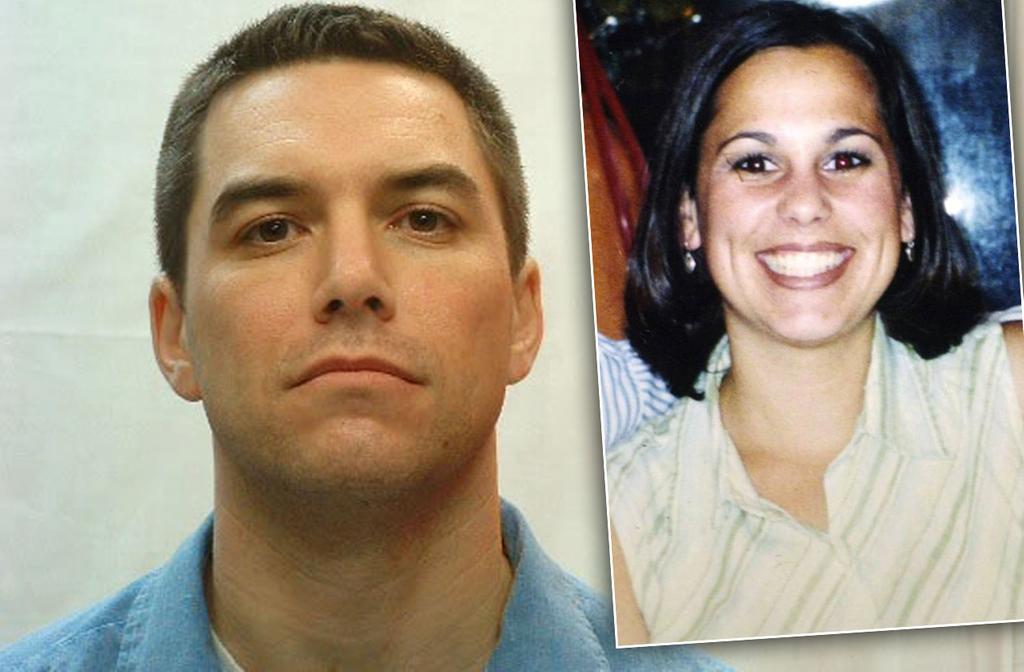
The police report was filed on December 24, 2002.
Laci Peterson, eight months pregnant, was reported missing from her home in Modesto, California.
That morning, Scott Peterson told police he had been fishing alone at the Berkeley Marina.
The investigation initially treated the disappearance as a possible abduction.
A holiday morning, a pregnant woman, a missing-person report.
The lead detective testified that police quickly focused on Scott Peterson after inconsistencies emerged in his account.
A neighbor reported seeing him leave with a large object.
What exactly the neighbor saw is not detailed in the record.
Not because the record hides it. Because the record never says.
The timeline was normal. Then it unraveled.
He said he went fishing. He said he was alone.
The neighbor’s report did not match the story.
The investigation records show the report was made. They do not show what the object was.
Police kept looking at abduction. They kept coming back to him.
The boat was bought. It was not disclosed.
That would come later. First came the inconsistencies.

THE TURNING POINT
January came, and the affair surfaced.
Amber Frey came forward, revealing her relationship with Scott and handing over recorded phone calls.
In those calls, he made statements about his whereabouts and his wife's disappearance that were misleading.
The exact content of those calls is not specified in the record.
What is known is that they shifted the investigation.
Frey testified about the affair, and the recordings became part of the case.
Investigators kept pulling at Scott's story.
They found the boat purchase: a 14-foot aluminum fishing boat, bought shortly before Laci vanished.
He had not told police about it.
Not in the first interviews. Not in the follow-ups.
The boat was bought. It was not disclosed.
That would come later. First came the inconsistencies.
But there was another failure, and it sat with the investigators themselves.
The initial search of the Berkeley Marina area was not thorough.
It was a significant mistake, according to investigation records.
The marina, the place Scott said he had been fishing, was not searched properly at the start.

Evidence that might have been found was delayed.
How close did they come to missing it?
How close did they come to missing the boat, the calls, the pattern?
How close did they come to missing the whole turn?
That would require evidence. The record shows the delay.
Frey's calls pointed one way. The boat pointed another.
Both pointed at him.
THE BODIES AND THE TRIAL
In April 2003, Laci Peterson’s remains were found on the shore of San Francisco Bay.
The body of her unborn son, whom the couple had planned to name Conner, washed ashore nearby.
The prosecution argued the bodies were found near where Scott said he had been fishing.
That was the location he gave before the search began.
The trial opened in June 2004 in Redwood City, after a change of venue from Modesto.
The prosecution presented a circumstantial case.
The affair.
The boat purchase.
The location of the bodies.
Each piece pointed the same way.
The defense argued that Laci had been abducted by strangers.
That theory is not supported by any evidence in the record.
It remains a theory.
The jury heard about the boat Scott never mentioned.
They heard about the neighbor who saw him leave with a large object.
They heard about the recorded calls in which he misled Amber Frey.
In November 2004, the jury found Scott Peterson guilty of first-degree murder for Laci’s death.
They found him guilty of second-degree murder for Conner’s death.
The circumstantial case had closed in.
It was not a confession.
It was not an eyewitness.
It was a pattern of small, documented facts, each one placed beside the next.
The boat was bought.
The boat was hidden.
The bodies were found where he said he fished.
The record holds those things together.
The abduction theory holds nothing.
AND THE STORY STILL ISN'T OVER
The jury sentenced Scott Peterson to death in March 2005.
The conviction and the sentence were upheld on direct appeal in 2012.
Then, in 2020, the California Supreme Court overturned the death sentence.
The court found juror misconduct during the penalty phase.
It ordered a new penalty phase.
The murder conviction was upheld.
Scott Peterson remains on death row at San Quentin State Prison.
His death sentence is no longer valid, but he has not been resentenced.
The outcome of the new penalty phase is not in the record.
The legal battle continues.
The boat's role remains a question.
It is a documented purchase.
It is a prosecution argument.
It is not a fact established by the record.
That would require evidence.
The record holds the conviction.
The record holds the overturned sentence.
The record holds the unanswered question of what happens next.
Advertisement
You may also like
The tipster who spotted a sleeping car and ended a 22-day sniper rampage
The tipster saw the sketch on the news and recognized the car. It was a blue Chevrolet Caprice, parked and ordinary, the kind of…

Chloroform in a car trunk, a missing toddler, and the duct tape that pointed to Casey Anthony
In July 2008, a forensic analyst tested the trunk of Casey Anthony's Pontiac Sunfire and detected chloroform, a chemical associated with decomposition. Air samples…
The parking ticket that led police to the Son of Sam killer's door
The parking ticket was still under the windshield wiper. A witness saw a man standing near his car with it on the night of…
A 2:41 a.m. 911 call, a staircase, and a blow poke: the Durham case that hinges on one tool
The call came at 2:41 a.m. Michael Peterson phoned 911 from his home at 1810 Cedar Street in Durham, North Carolina, and told the…
The discarded DNA sample that made police look twice at an architect
The discarded DNA sample was analyzed in 2022. That analysis pointed investigators toward Rex Heuermann, an architect from Massapequa Park. According to the investigation…
The 31-day gap that police couldn't explain — and the trunk that changed everything
The call came on July 15, 2008. Orlando, Florida, and a grandmother on the phone with 911, reporting a 3-year-old missing. The child was…