Chloroform in a car trunk, a missing toddler, and the duct tape that pointed to Casey Anthony
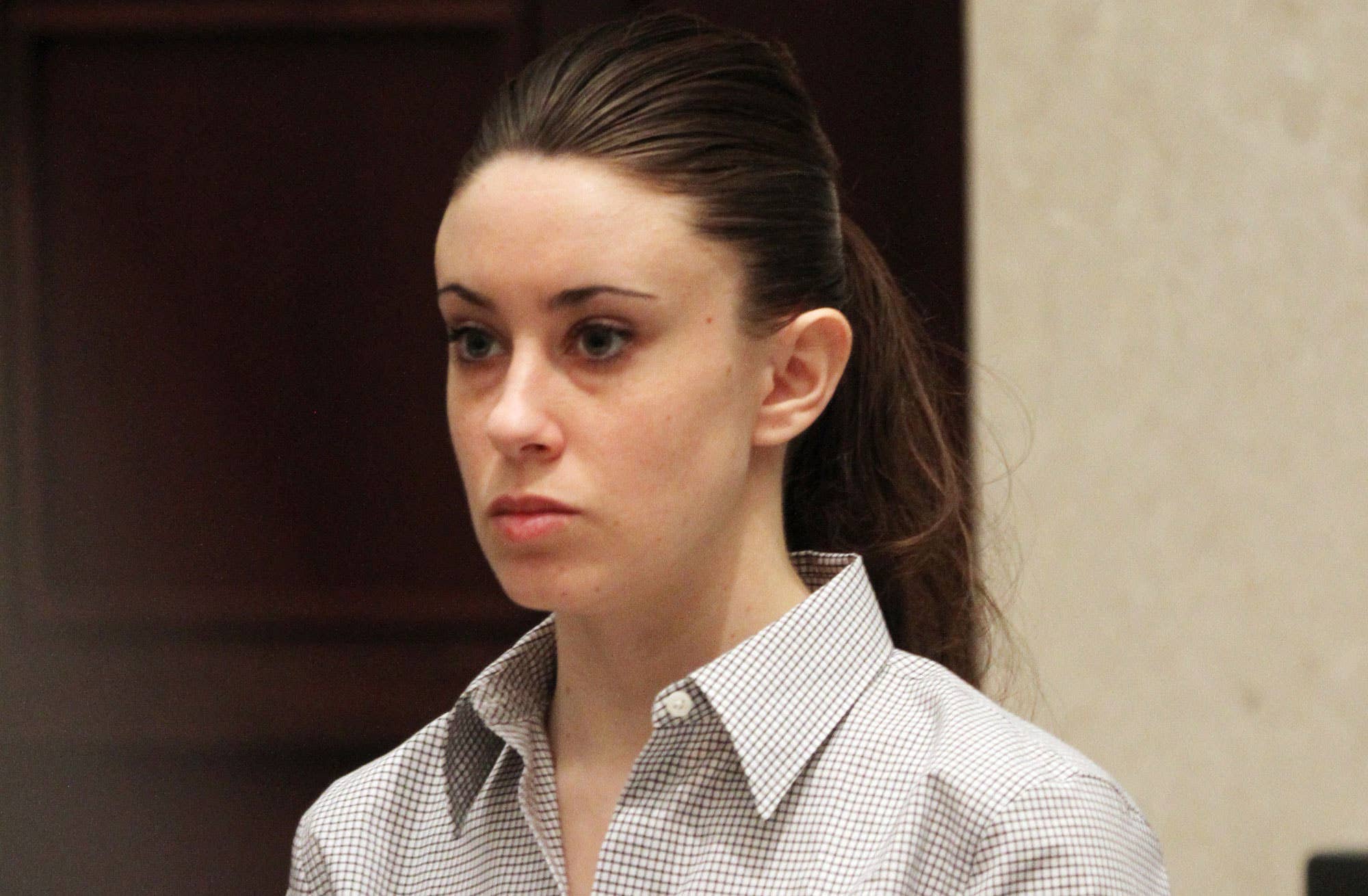
In July 2008, a forensic analyst tested the trunk of Casey Anthony's Pontiac Sunfire and detected chloroform, a chemical associated with decomposition.
Air samples from the same trunk indicated the presence of human decomposition.
The trunk belonged to Casey Anthony, the mother of two-year-old Caylee Anthony.
Caylee was reported missing on July 15, 2008, by her grandmother, Cindy Anthony.
The car was found before the child was.
The analyst's test was done in a lab, on a sample taken from the trunk's carpet.
The result was a number on a screen.
Chloroform is used in embalming fluid.
It is also a solvent, an anesthetic, a cleaning agent.
It is not a substance a two-year-old carries into a trunk by herself.
The air samples were drawn from the same enclosed space, then run through equipment designed to catch the chemical signature of a human body breaking down.
The equipment found that signature.
What exactly was in that trunk?
How did it get there?
When was it deposited?
The record does not establish what caused the chloroform to be present, or when it was placed there.
That would require evidence.
What the record does show is this: a mother's car, tested a month before her daughter's remains were found in a wooded area near the family home.
The trunk held a chemical trace.
The air held the smell of death.
The car sat in an impound lot while investigators opened its lid and sampled what remained inside.
THE 911 CALL AND THE LIES
The 911 call came on July 15, 2008.
Cindy Anthony, Caylee’s grandmother, told the dispatcher that Casey had stolen her car and that a two-year-old was missing.
The missing child was Caylee Anthony.
Family members said they had last seen her on June 16, 2008.
That was nearly a month before anyone called.
Casey Anthony, the mother, told investigators a story.
She said Caylee had been kidnapped by a babysitter named Zenaida Fernandez-Gonzalez.
The investigation record shows that person did not exist.
The name was a false lead.
How many other false leads did investigators wade through?
The record does not say.
It says Casey misled investigators initially, and it names the one babysitter who was never real.
That much is documented.
The rest is a gap in the record.
Cindy’s call was about the car first.
She reported the theft, then the missing child, in the same breath.
Detectives began with a stolen Pontiac and ended with a missing toddler.

The trunk had already been sampled.
The chemical trace was already in the evidence log.
The lies came later, after the car was seized, after the air in the trunk had been tested.
Casey’s story about the babysitter held for a time.
It collapsed when investigators could not find a Zenaida Fernandez-Gonzalez anywhere.
No record, no address, no person.
Just a name.
The source does not establish how many other stories Casey told.
It establishes the one that mattered, and the fact that it was false.
Caylee had been gone for 29 days by the time anyone called 911.
That is the timeline.
That is where the investigation started, with a stolen car and a lie.
THE REMAINS AND THE DUCT TAPE
On December 11, 2008, a utility worker found skeletal remains in a wooded area near the Anthony family home.
The remains were identified as Caylee Anthony.
Duct tape was found near the skull.
Hair consistent with Caylee's was recovered from the same area.
The lead detective testified about the discovery.
He testified about how the search had narrowed to that patch of woods.
He testified about the lies that had delayed the search by months.
Caylee had been missing for nearly five months when the remains were found.
The utility worker was not looking for a child.
He was doing his job.
The duct tape was near the skull, not on it, according to trial testimony.
Who placed the tape there is not established.
What role the tape played in Caylee's death is not established.
The medical examiner could not determine the cause of death.
The remains were skeletonized.
That left the tape as a silent piece of the record, present but unexplained.
The lead detective walked the jury through the timeline: the reported kidnapping that did not happen, the babysitter who did not exist, the car reported stolen by her own mother.
He testified that Casey's statements shifted whenever the evidence caught up with them.
The remains were the end of that trail.
They were found close to home.
That is what the record shows.
It does not show who put the tape there.
It does not show what the tape did.
It shows only that it was there, near a child's skull, in December 2008.
TWO STORIES, ONE SET OF FACTS
The prosecution's story was one of intent.
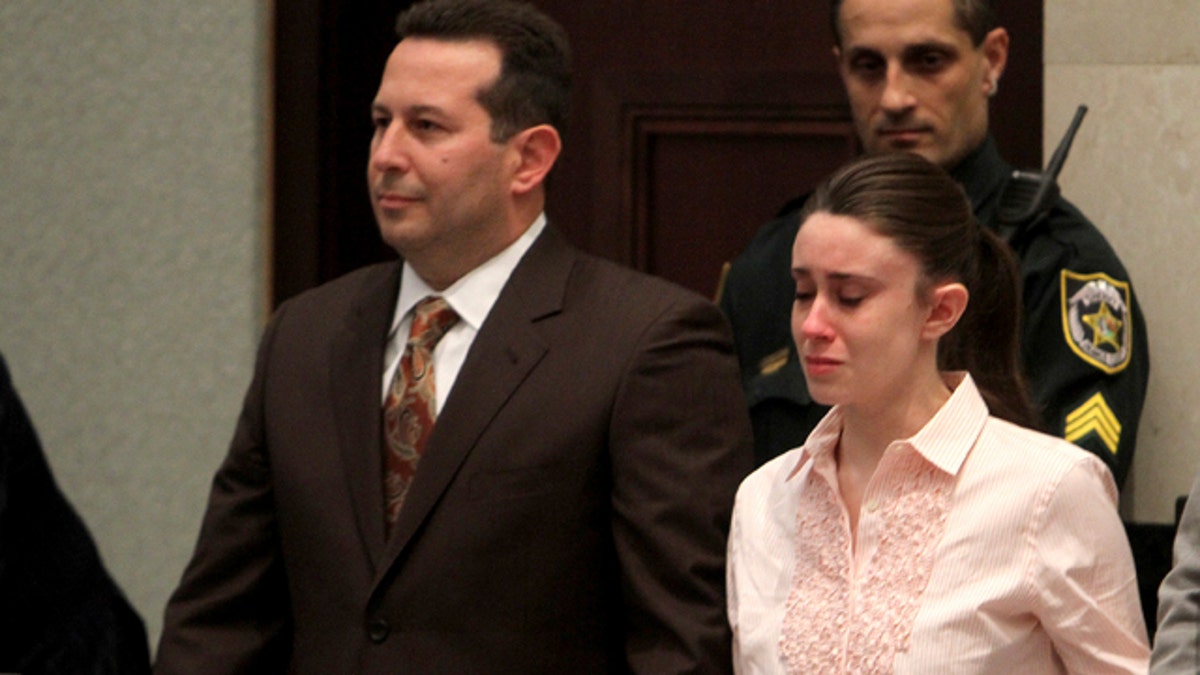
Casey killed Caylee, they argued, to free herself from parental responsibility.
They pointed to the chloroform in the trunk, to the lies she told investigators, to the duct tape near the skull.
The defense told another story.
Jose Baez argued that Caylee had drowned accidentally in the family pool.
He argued that the body had been placed in the trunk by George Anthony, Caylee's grandfather.
The prosecution disputed that claim.
George Anthony was initially suspected, the case record states, and later cleared.
The two stories collided over one question: how did Caylee die?
The medical examiner could not determine the exact cause of death.
The remains were skeletonized, and so the cause was left open.
That became a critical weakness for the prosecution.
The source does not establish the cause of death.
It is not established that she was drowned.
It is not established that she was suffocated.
It is not established that she was killed at all.
What is established is the chloroform.
What is established is the decomposition in the trunk.
What is established is the duct tape near the skull.
The same evidence told the jury two different stories.
The prosecution saw a mother who wanted her freedom.
The defense saw a family covering up an accident.
Both stories rested on the same facts.
Neither story could prove the cause of death.
That would require evidence the record does not contain.
AND THE STORY STILL ISN'T OVER
On July 5, 2011, the jury acquitted Casey of murder, aggravated child abuse, and aggravated manslaughter.
It convicted her on four counts of providing false information to law enforcement.
She was sentenced to four years in prison, with credit for time served.
She was released on July 17, 2011, because of time already served and good behavior.
No other person has been charged in Caylee's death.
The case remains widely discussed.
The public debate about the verdict has never really ended.
What happened to Caylee on June 16, 2008, the last day she was seen, is not established by the record.
The chloroform in the trunk was real.
The duct tape near the remains was real.
The cause of death was not determined.
That is where the evidence stops.
A verdict that satisfied no one.
A case that still haunts.
Advertisement
You may also like
The bloody glove found on O.J. Simpson's estate that didn't fit in court — and the detective who found it
The neighbor walking her dog found the bodies around midnight. Nicole Brown Simpson and Ronald Goldman were on the ground outside her condominium on…

The bloody fingerprint on the door that didn't match — and the evidence the Army lost
The door was still wet with it. February 17, 1970, Fort Bragg, North Carolina. Army Captain Jeffrey MacDonald, a Green Beret physician, called it…
The footprint left at the Clutter farm that investigators could not explain
The footprint was in the farmhouse, pressed into the floor of a house where four people lay bound and shot at close range with…

The bloody glove that didn't fit — and the LAPD evidence mistake that changed the trial
The glove sat on the evidence table, leather and dark, one found at the crime scene, the other on the accused's property. In court,…

The ring that identified Emmett Till after his body was pulled from the Tallahatchie River
The cotton gin fan was still tied to his neck with barbed wire. His body came up from the Tallahatchie River on August 31,…
Why the FBI manhunt missed Andrew Cunanan in Miami for weeks
The bicycle was found first, abandoned against a wall a few blocks from the Casa Casuarina. On July 15, 1997, Gianni Versace was shot…