The footprint left at the Clutter farm that investigators could not explain
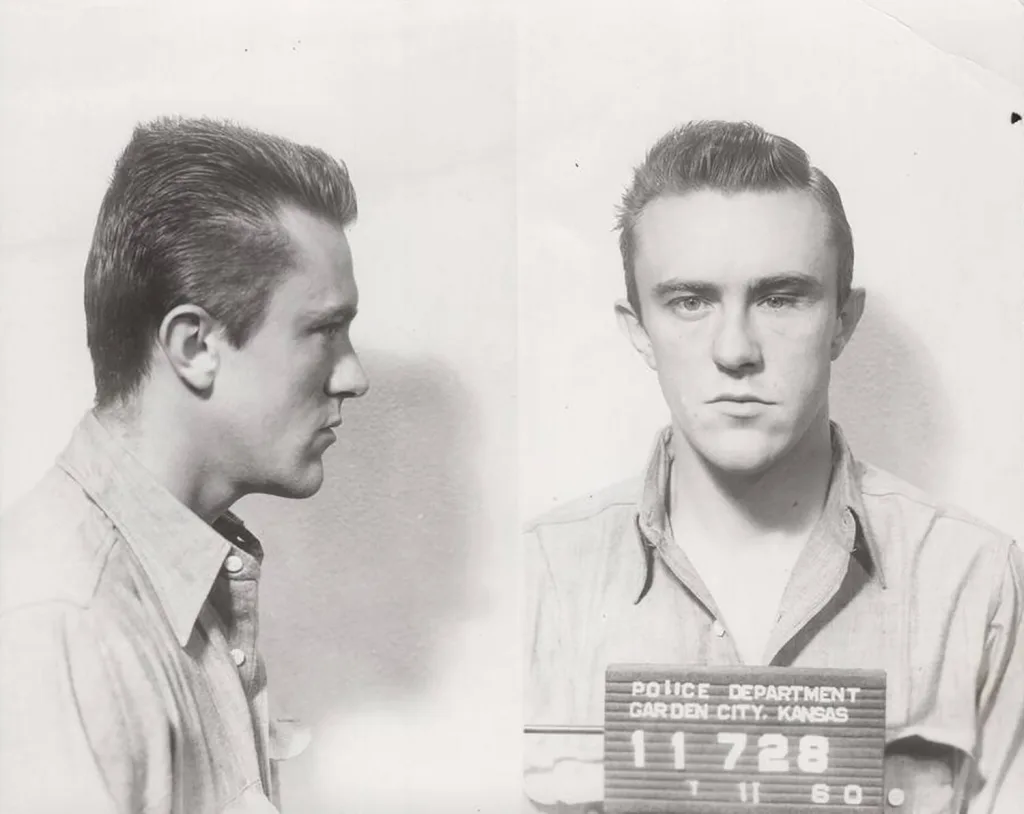
The footprint was in the farmhouse, pressed into the floor of a house where four people lay bound and shot at close range with a shotgun.
It was the night of November 15, 1959, and the Clutter family was dead.
Herbert Clutter, the prominent farmer, was dead. His wife Bonnie was dead. Their teenagers, Nancy and Kenyon, were dead.
The killers had left a mark.
A single footprint, left at the scene, a key mistake that investigators could not immediately identify.
Not because they didn't look. Because the record does not say what it looked like, where exactly it was, or how big it was.
The exact size, type, or location of the footprint is not in the record.
It was a detail in a house of horrors, and the investigators had nothing else to hold onto at first.
The crime shocked the nation, a small agricultural community in Finney County, Kansas, torn open by a shotgun blast.
It would become one of the most famous murder cases in American history, largely due to Truman Capote's 1966 book *In Cold Blood*, which he called a "nonfiction novel."
But before the book, before the confessions, there was just the footprint.
And a question that hung in the air: whose foot had stood there?
That would require evidence.
THE MORNING AFTER
The morning of November 16, 1959, began like any other at the Clutter farm.
Friends and neighbors came to the house for a planned outing, a routine gathering.
They found the bodies instead.
Herbert Clutter, a prominent farmer and former state agricultural official, was dead.
So were his wife Bonnie, and their two teenage children, Nancy and Kenyon.
The Clutters' two older daughters, Eveanna and Beverly, were married and living away from home at the time.
They were not there.
The house was quiet in a way it should not have been.
The outing never happened.
What the friends and neighbors said, how they reacted, how long they stood in the yard — none of that is in the record.
Their specific reactions are not established.
The shock is documented only by the fact of the discovery itself.
The investigation began that day.
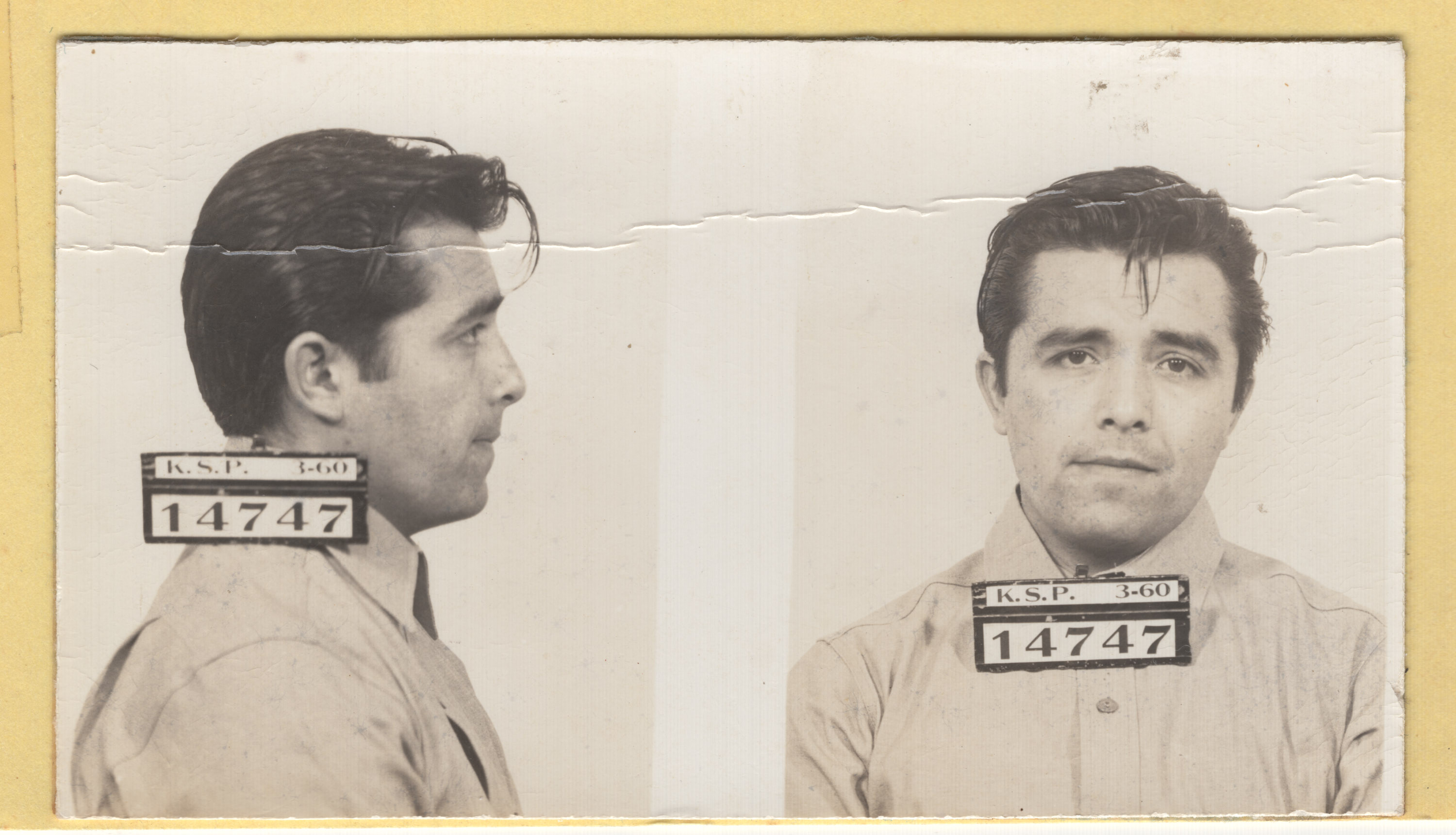
It produced few leads.
The case was nearly cold.
Weeks passed with no suspect, no confession, no clear path.
Reporters arrived in Holcomb, a small agricultural community in Finney County.
They asked questions the investigators could not answer.
Who had done this?
Why this family?
Why this house?
That would require evidence.
For a time, the evidence was thin.
A footprint had been left at the scene, but it was not immediately identified.
The killers were still out there, unnamed.
The morning after, the ordinary had turned to violence.
The Clutter family was suddenly absent.
The planned outing became a memory of a different day.
THE NEAR-COLD CASE
For weeks, the trail went nowhere.
The case was nearly cold.
Investigators had a farmhouse, a shotgun, and a footprint they could not place.
Then a prisoner named Floyd Wells started talking.
Wells was a former cellmate of Richard Hickock.
He told prison authorities that Hickock had spoken of robbing the Clutter farm.
The plan, Wells said, came from his own description of the family's wealth.
That information pointed investigators to Hickock and to Perry Smith.
The two men were arrested in Las Vegas after a tip from a former acquaintance.
The exact nature of that tip is not in the record.
Not the timing, not the words, not who called.
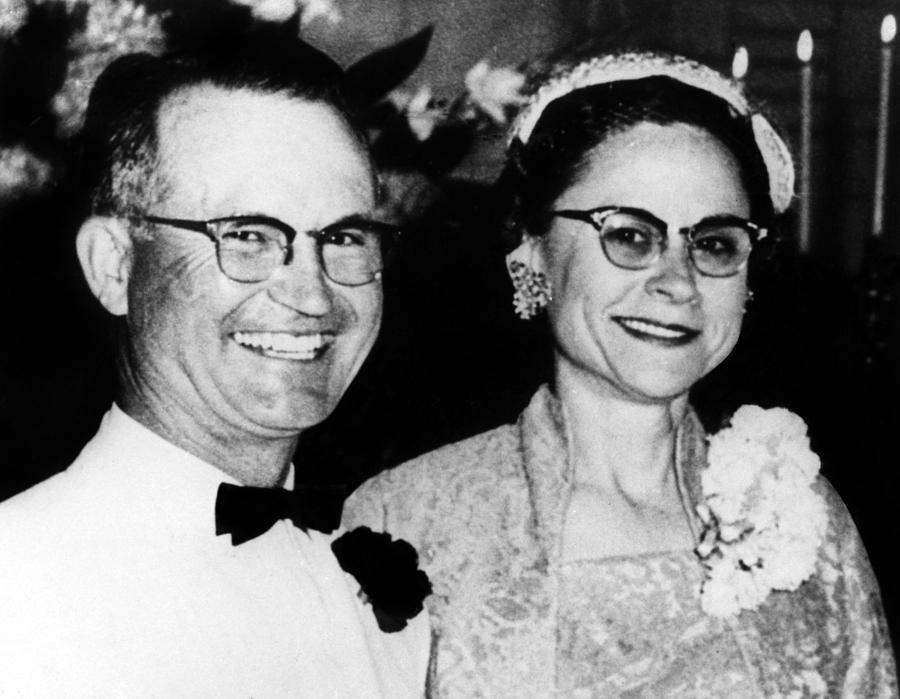
What is documented is the arrest itself, and what came after.
Under interrogation, both men confessed.
But their accounts did not match.
They gave conflicting versions of who fired the shots.
One said one thing; the other said another.
The confession broke the case open, but it left a knot at its center.
The public wanted certainty.
The newspapers wanted a story that resolved itself.
Instead, there was a confession with a contradiction inside it.
That would require sorting out later.
For now, the near-cold case had a name, then two names.
The footprint, still unexplained, waited in the file.
THE TRIAL AND THE STORY
The two men were charged with four counts of first-degree murder.
Their trial began in March 1960 in Garden City, Kansas.
The defense argued that the men were not responsible due to mental illness.
The jury rejected that argument.
They convicted both men on all counts.
They were sentenced to death.
Not because the evidence was simple. But because the public wanted an answer.
The courtroom was a spectacle.
The investigation had been marked by intense public pressure and media attention from the start.
The lead investigator frequently briefed reporters outside the proceedings.
What he told them in those briefings is not in the record.
It is a gap. It is also a clue to the mood.
The case was also shaped by Truman Capote.
He spent years researching the crime.
:max_bytes(150000):strip_icc():focal(999x0:1001x2)/in-cold-blood-2-1-07b374b9528645cc94c1bea2652ff55f.jpg)
He befriended both the investigators and the killers.
He was not part of the legal proceedings.
He was a witness to the weight of it.
The trial was a stage, and the audience was the nation.
The defence's plea of mental illness failed.
The sentence was death.
The gallery heard the verdict.
The reporters wrote it down.
The investigators had their conviction.
The footprint, still unexplained, waited in the file.
It did not need to speak.
The case had closed around it.
AND THE STORY STILL ISN'T OVER
The Kansas Supreme Court upheld the convictions.
Appeals to the U.S. Supreme Court were unsuccessful.
On April 14, 1965, Hickock and Smith were executed by hanging at the Kansas State Penitentiary in Lansing.
The Clutter farmhouse was later demolished.
The case remains a landmark in true-crime literature.
Capote's book and the 1967 film adaptation cemented its place in American culture.
The Clutters' surviving daughters, Eveanna and Beverly, lived private lives.
They rarely spoke publicly about the murders.
The case has been revisited in numerous documentaries and analyses.
No new legal developments have occurred since the executions.
That is what the record shows.
Any new legal developments or ongoing investigations are not in the record.
The footprint, still unexplained, waited in the file.
It did not need to speak.
The case had closed around it.
Advertisement
You may also like
The glove that fit one hand in court but not the other — O.J. Simpson's trial
In June 1995, in a Los Angeles courtroom, O.J. Simpson struggled to pull on a pair of leather gloves. One appeared to fit. The…
The confession Amityville killer recanted, then the haunting story that followed
Six bodies, each in a bed, in a house on Ocean Avenue. The morning was November 13, 1974, in Amityville, New York. The dead…
The crawl space on West Summerdale Avenue that held 26 bodies — what police found when they dug
Robert Piest was 15 years old, and on December 11, 1978, he told his mother he was going to meet a contractor about a…
The 2013 DNA match that finally tied DeSalvo to Mary Sullivan's murder — 49 years later
She was found in her Beacon Hill apartment on January 4, 1964. Mary Sullivan was the last of the thirteen. For 49 years, no…
The cellphone video that captured Alex Murdaugh's voice near the kennels
The video was recorded at 8:44 p.m. on June 7, 2021. Paul Murdaugh's cellphone captured it near the dog kennels where the bodies were…
The notebook confession that ended the Gabby Petito case — and the questions left behind
The search lasted thirty-four days. It ended on October 20, 2021, in the Carlton Reserve in Florida. Brian Laundrie's remains were found there, in…