The 2013 DNA match that finally tied DeSalvo to Mary Sullivan's murder — 49 years later
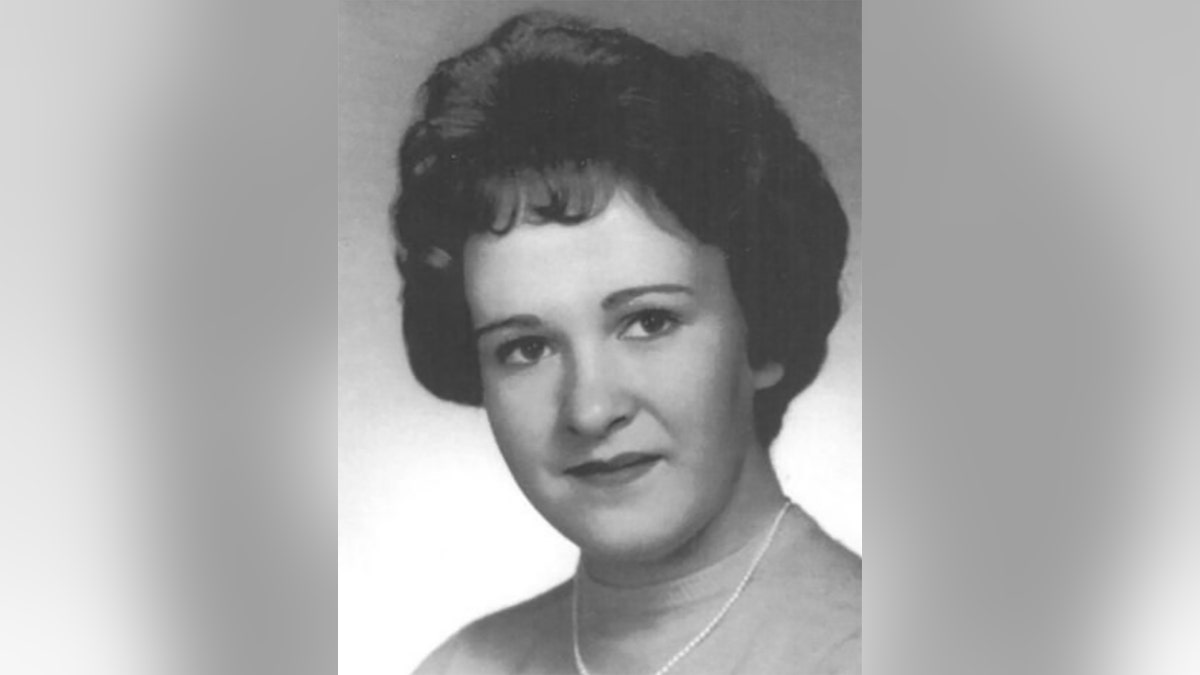
She was found in her Beacon Hill apartment on January 4, 1964.
Mary Sullivan was the last of the thirteen.
For 49 years, no physical evidence tied anyone to her murder.
The case went cold. It stayed cold.
In 2013, DNA from her crime scene was tested.
It matched Albert DeSalvo.
Suffolk County District Attorney Daniel F. Conley announced the match.
The match is a documented fact.
It does not settle every question.
It does not establish DeSalvo's involvement in any other Strangler murder.
That remains unproven. That remains open.
A door closed for decades had opened.
What else was behind it? What else was never tested? What else was never asked?
That would require evidence.
THE CONFESSION
Between June 1962 and January 1964, thirteen single women were strangled in Boston, mostly in their own apartments, often with their own stockings.
The city was afraid.
In 1965, Albert DeSalvo, already in custody for other crimes, confessed in detail to the murders.
His confession was obtained by F. Lee Bailey, the attorney hired by DeSalvo's wife.
There was no physical evidence linking DeSalvo to the crime scenes.
The confession was never tested in court.
Some investigators doubted it, citing inconsistencies and the lack of corroborating evidence.
The confession's accuracy was never established.
Whether it covered all thirteen murders was never established.
What was established was a man, in custody, speaking at length.
What was established was a city that wanted the fear to end.
What was established was a confession that closed nothing, because it was never tested.
Not because the investigators were careless.
Because the confession was convenient.
DeSalvo was already in custody.
He was already facing charges.
The stranglings could be put to rest without a trial.
Only some investigators asked whether the details lined up.
Only some asked whether a confession without evidence was proof.
The record does not say.
The record says he confessed.
The record says he was never tried for the stranglings.
The record says the doubt never went to court.
THE TRIAL THAT WASN'T
The trial that was not for the stranglings took place in 1967.
DeSalvo stood trial for armed robbery and sexual assault charges unrelated to the murders.
F. Lee Bailey represented him at that trial.
The judge was Justice Cornelius J. Moynihan.
DeSalvo was convicted and sentenced to life in prison.
The confession to the stranglings was never adjudicated.
No jury ever heard the details of the thirteen murders.
No judge ever ruled on the confession's truth.
The doubt never went to court.
The record says DeSalvo confessed in 1965.
The record says he was never tried for the stranglings.
The record says the doubt never went to court.
Whether DeSalvo would have been convicted of any strangling had he been tried is not in the record.
That would require evidence.
That would require a trial.
There was neither.
In 1973, DeSalvo was stabbed to death by another inmate at Walpole State Prison.
He was 42 years old.
The confessed killer died in prison, serving time for crimes that were not the stranglings.
The stranglings went to his grave without a verdict.
It is a kind of finality.
It is also a kind of absence.
The families of the victims were left with a confession no court ever tested.
They were left with a name, and a story, and no judgment.
The record holds the confession.
The record holds the trial that wasn't.
The record holds the prison death.
What it does not hold is a conviction for the stranglings.
That remains outside the record.
THE DNA MATCH
The DNA came from the Mary Sullivan crime scene.
It was tested in 2013 and it matched Albert DeSalvo.
Suffolk County District Attorney Daniel F. Conley announced the match.
Mary Sullivan's nephew, Casey Sherman, had pushed for the testing.
He had written about the case and wanted an answer.
The match gave that answer for one murder.
It did not give an answer for the other twelve.
The DNA does not resolve whether DeSalvo committed all thirteen murders.
That is not established by the record.
For many families, the match was read as a final confirmation.
It closed a door that had been open for forty-nine years.
The case is officially closed.
It is also a case without a conviction.
No court ever tested the confession.
No jury ever weighed the evidence.
No one else was ever charged.
The match confirms DeSalvo was involved in Mary Sullivan's murder.
It confirms nothing about the pattern.
Not because the pattern is false.
But because the record does not reach that far.
The families have closure for one name.
The rest remains a question the DNA cannot answer.
AND THE STORY STILL ISN'T OVER
The case is officially closed.
The 2013 DNA match confirmed DeSalvo’s involvement in Mary Sullivan’s murder, and for many families that was the final confirmation they had sought for decades.
No one else was ever charged in the Strangler murders.
But the record does not reach further than that one match.
DeSalvo’s confession was never tested in court.
No physical evidence linked him to the other crime scenes.
Whether all thirteen murders were committed by DeSalvo is not established by the record.
It is a documented fact that he confessed.
It is a documented fact that the DNA tied him to Mary Sullivan.
It is not a documented fact that he killed every victim attributed to the Strangler.
Some investigators doubted the confession at the time.
They noted inconsistencies.
They noted the lack of corroborating evidence.
The confession was obtained by F. Lee Bailey, who had been hired by DeSalvo’s wife.
It was never adjudicated.
DeSalvo was never tried for the stranglings.
He was convicted in 1967 on unrelated charges of armed robbery and sexual assault.
He was sentenced to life.
He was stabbed to death in prison in 1973, at the age of 42.
The DNA match came forty years after his death.
It answered one question.
It did not answer every question.
Was the confession accurate in full?
Was it accurate in part?
Was it a fabrication that happened to fit one crime scene?
That would require evidence the record does not contain.
The families have closure for one name.
The rest remains a question the DNA cannot answer.
The case is closed.
The ache is not.
Advertisement
You may also like
The car trunk odor that haunted Casey Anthony's trial — and the verdict that followed
The odor came from the trunk of an abandoned car. In July 2008, investigators impounded the vehicle that Casey Anthony had left behind in…
The juror dismissed in 2004 — and the penalty order that vanished 16 years later
The juror raised a hand during the penalty phase in 2004. The juror said something about the death penalty, expressed doubt about it. The…
The truck axle that cracked the Oklahoma City bombing case open
The rear axle of a Ryder truck lay in the rubble, still attached to its differential. Within hours of the April 19, 1995 explosion,…
After 46 years in prison, what happens to the Manson Family now?
The housekeeper, Winifred Chapman, arrived at 10050 Cielo Drive the morning after the first night of killings and found the bodies. She found actress…
The fishing boat Scott Peterson bought days before Laci vanished — and the lie that unraveled
He bought the boat in the days before Laci vanished. He did not mention it when he called police on December 24, 2002, to…
The note scrawled in a Watertown boat that still haunts the Tsarnaev case
He was found in a boat in a Watertown backyard. Dzhokhar Tsarnaev had been hiding there, and when the FBI closed in, he scrawled…