The cellphone video that captured Alex Murdaugh's voice near the kennels
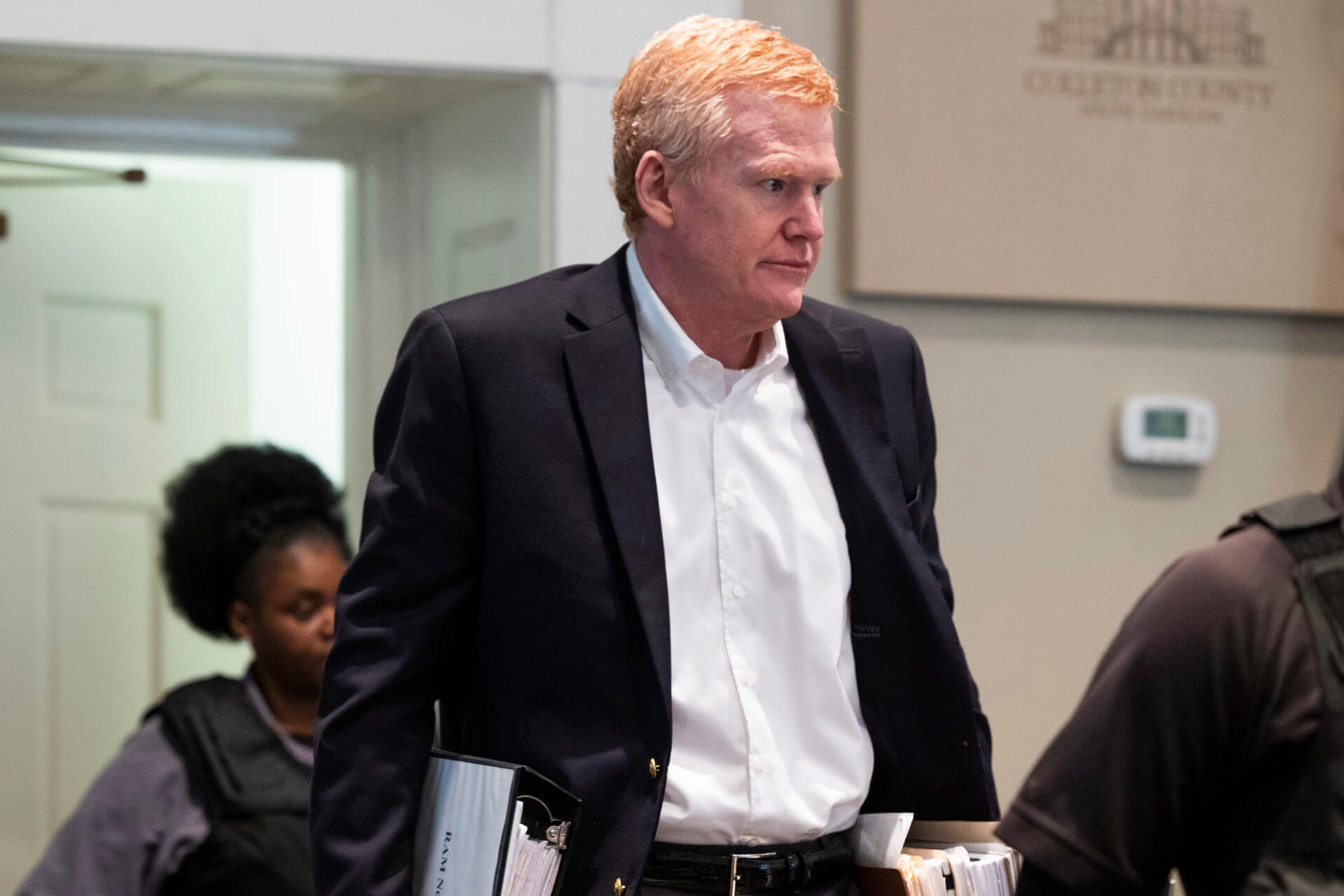
The video was recorded at 8:44 p.m. on June 7, 2021.
Paul Murdaugh's cellphone captured it near the dog kennels where the bodies were later found.
The voice on it was his father's.
Alex Murdaugh had told investigators he had never been to the kennels that night.
The video said otherwise.
It placed him at the scene where his wife and younger son would be discovered dead, and it shattered his alibi.
That contradiction became a critical piece of evidence at trial.
Prosecutors played the audio for the jury.
The defense argued it proved nothing about who pulled the trigger.
What else the video shows is a different question.
A theory circulating online suggests it captured more than the voice — more than what was presented in court.
That theory is not a fact established by the record.
The full contents of the video beyond the voice are not in the record.
The record shows only the voice, the time, and the place.
It shows a man who said he was elsewhere, caught on his own son's phone at the kennels.
Why did he lie about that?
Why did the video matter so much to the prosecution?
Why did the defense work so hard to explain it away?
The answers lie in what the jury heard — and in what the video does not show.
That would require evidence.
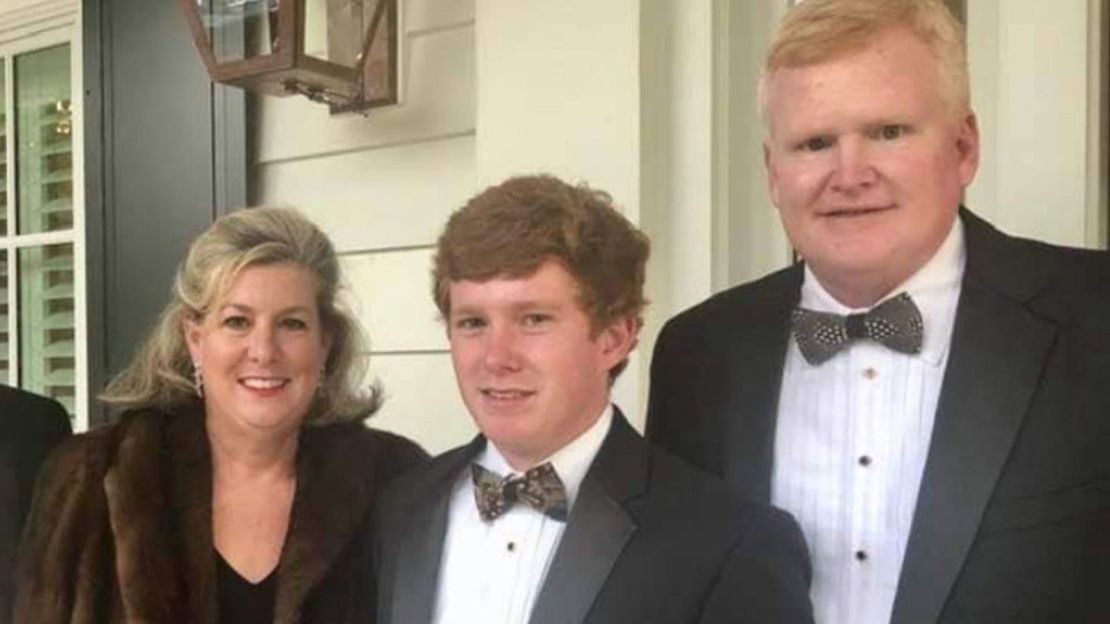
The voice remains.
THE NIGHT OF JUNE 7, 2021
The 911 call came in just after 10 p.m.
Alex Murdaugh told the dispatcher he had found the bodies.
He said he had been visiting his ailing father and returned to the family's hunting estate, Moselle, near Islandton, South Carolina.
Paul Murdaugh, 22, had been shot twice with a shotgun.
His mother, Margaret "Maggie" Murdaugh, 52, had been shot multiple times with a rifle.
The South Carolina Law Enforcement Division took over the investigation within hours.
Investigators found no forced entry.
They found no sign of robbery.
Alex said he had been away from the estate for about an hour.
The exact timeline of his movements that night is not fully established beyond his own statements and the video.
SLED agents began walking the property with flashlights.
They looked at the kennels where the bodies lay.
They looked at the house, the yard, the road.
The murder weapons — a shotgun and a rifle — were never recovered.
A family's patriarch had called for help.
A wife and a son were gone.
The motive was not yet visible, only the wreckage.
The estate was quiet except for the officers and the lights.

It was a cold, motiveless double homicide, at least at first.
THE ALIBI SHATTERED
The video was recorded at 8:44 p.m. on Paul Murdaugh's cellphone.
It captured Alex's voice near the dog kennels, where the bodies were later found.
Alex had told investigators he had never been to the kennels that night.
The video contradicted his alibi.
Prosecutors, led by Creighton Waters, argued that Alex killed his wife and son to distract from an impending financial investigation into his law firm.
That investigation was on the verge of exposing years of theft.
The defense, led by Dick Harpootlian and Jim Griffin, contended that Alex was a grieving husband and father.
The state had no direct evidence linking him to the killings, they argued.
The defense suggested other suspects, including drug dealers connected to Paul, could have been responsible.
Those alternative theories were not proven.
No other arrests have been made.
The trial began in January 2023 in Walterboro, South Carolina, before Judge Clifton Newman.
Prosecutors presented a circumstantial but powerful case.
They emphasized the cellphone video.
They emphasized Alex's history of lying.
They emphasized his financial crimes as motive.
The video placed Alex at the kennels.
The video placed his voice at the scene.
The video placed his lie in the record.
The alibi was shattered.
The motive was not yet visible, only the wreckage.
Now the wreckage had a voice.
THE VERDICT AND SENTENCE
On March 2, 2023, the jury found Alex Murdaugh guilty on all four counts.
Two counts of murder.
Two counts of possession of a weapon during the commission of a violent crime.
Judge Clifton Newman sentenced him to two consecutive life sentences without the possibility of parole.
The gavel came down.
The courtroom had heard the voice on the video, the shattered alibi, the financial motive laid out by prosecutor Creighton Waters.
The defense had argued for doubt, for other suspects, for a grieving husband and father.
The jury did not see it that way.
It was a conviction.
It was also not the end.
In a separate proceeding, Murdaugh later pleaded guilty to 22 federal counts of financial fraud and money laundering.
He received an additional 40-year sentence.
The state sentences run consecutively.
The federal sentence runs alongside them.
His defense filed motions for a new trial, citing allegations of jury tampering against a court clerk.

Those motions were denied.
An appeal is now pending before the South Carolina Supreme Court.
Has the court ruled?
Not yet.
Will it overturn the conviction?
That would require evidence the record does not provide.
The appeal remains open.
Murdaugh remains incarcerated at the South Carolina Department of Corrections.
He is serving his life sentences.
Parole is not an option.
The murder weapons were never recovered.
The alibi was shattered.
The conviction stands.
The story, for now, is waiting on a court ruling.
AND THE STORY STILL ISN'T OVER
The South Carolina Supreme Court has not yet ruled on Alex Murdaugh's appeal.
His legal team argues the trial was tainted by juror misconduct.
They also argue the evidence was insufficient.
The conviction stands while that appeal moves.
Alex remains incarcerated, serving two consecutive life sentences without parole.
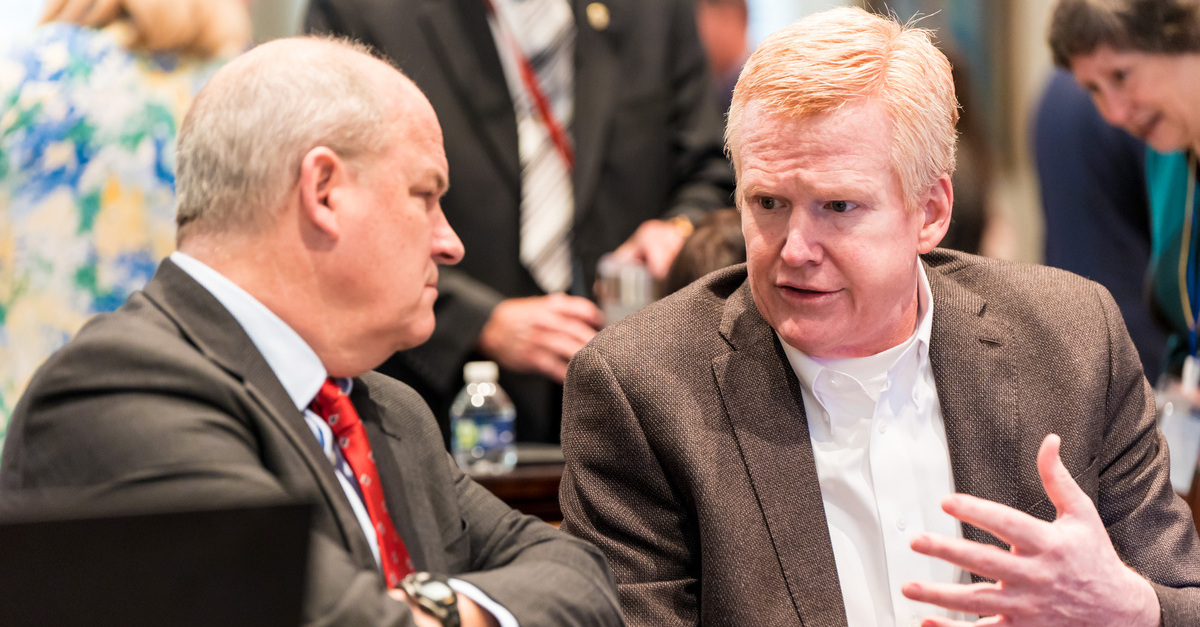
A separate federal case added 40 years for financial fraud and money laundering.
He was disbarred, stripped of the law license that carried the family name for generations.
The Murdaugh legal legacy is shattered.
Buster Murdaugh, the surviving son, has largely stayed out of the public eye.
He has spoken publicly about his father's conviction.
He has spoken about the loss of his mother and brother.
The case has spawned documentaries, books, and podcasts.
No new arrests have been made in connection with the murders.
The murder weapons — a shotgun and a rifle — were never recovered.
The family's former estate, Moselle, has been sold.
The property has fallen into disrepair.
The broader Murdaugh scandal continues to be investigated.
The 2019 boat crash remains part of that story.
Several civil lawsuits are still pending.
Their outcomes are not established.
Future arrests are not established.
The appeal's decision is not established.
What remains is a waiting period.
A family's collapse, documented in hours of footage and testimony.
A conviction that stands, for now.
A story that refuses to close.
Advertisement
You may also like
The car trunk odor that haunted Casey Anthony's trial — and the verdict that followed
The odor came from the trunk of an abandoned car. In July 2008, investigators impounded the vehicle that Casey Anthony had left behind in…
The juror dismissed in 2004 — and the penalty order that vanished 16 years later
The juror raised a hand during the penalty phase in 2004. The juror said something about the death penalty, expressed doubt about it. The…
The truck axle that cracked the Oklahoma City bombing case open
The rear axle of a Ryder truck lay in the rubble, still attached to its differential. Within hours of the April 19, 1995 explosion,…
After 46 years in prison, what happens to the Manson Family now?
The housekeeper, Winifred Chapman, arrived at 10050 Cielo Drive the morning after the first night of killings and found the bodies. She found actress…
The fishing boat Scott Peterson bought days before Laci vanished — and the lie that unraveled
He bought the boat in the days before Laci vanished. He did not mention it when he called police on December 24, 2002, to…
The note scrawled in a Watertown boat that still haunts the Tsarnaev case
He was found in a boat in a Watertown backyard. Dzhokhar Tsarnaev had been hiding there, and when the FBI closed in, he scrawled…