The crawl space on West Summerdale Avenue that held 26 bodies — what police found when they dug
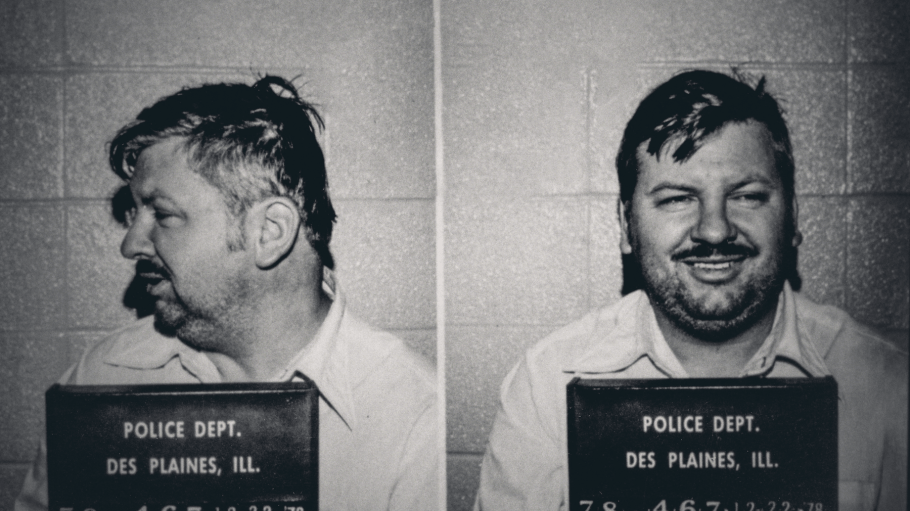
Robert Piest was 15 years old, and on December 11, 1978, he told his mother he was going to meet a contractor about a job.
He did not come home.
Des Plaines police traced his last contact to Gacy's contracting company.
A search of Gacy's home on December 13 found suspicious items, including a ring belonging to a missing youth.
That was a clue, not an answer.
What exactly happened to Robert Piest in the hours after he left is not detailed in the record.
The record does not establish that.
On December 22, police discovered human remains in the crawl space.
The crawl space.
The house on West Summerdale Avenue was a building contractor's home, a place with a furnace and a crawl space under the floor.
The first remains were found beneath that floor.
A missing-person report had become something else entirely.
Somewhere between a mother's report and a search warrant, the case changed shape.
It was a routine disappearance.
It was also the beginning of an excavation.
The ring belonged to a missing youth, according to investigation records.
The crawl space held human remains, according to investigation records.
The boy was gone, and the ground was not.
THE SEARCH WARRANT
The search warrant was signed, and the officers moved toward 8213 West Summerdale Avenue.
They dug into the crawl space beneath the house.
The first human remains were found on December 22, 1978, according to investigation records.
The exact number of bodies recovered on that first day of digging is not specified in the source.
The crawl space held 26 victims, buried beneath the floor of the home.
Four other bodies had been thrown into the Des Plaines River.
The police kept digging.
Each scoop of earth brought up more evidence.
Gacy was arrested in December 1978 and charged with multiple counts of murder, according to investigation records.
He confessed to 33 murders.
He gave detailed accounts of each killing, according to investigation records.
The confession was documented.
The charge sheet grew.
The crawl space was a grave site.
It was not a burial ground chosen with care.
It was a space beneath a house where a contractor stored what he did not want seen.
The officers catalogued what they found.
They logged the remains.
They logged the personal items.
They logged the ring that had belonged to the missing youth.

The weight of the discovery settled on the investigation.
The ground had given up its dead.
The confession gave up the rest.
THE TRIAL
The indictment came down on 33 counts of first-degree murder.
The trial opened in February 1980 before a judge.
Prosecutors laid out the confession, the physical evidence from the house, and the testimony of forensic experts.
Each piece was tied to a name, a date, a body.
The defense did not deny the killings.
It argued that Gacy was legally insane at the time of the murders.
The specific arguments made by the defense attorney are not detailed in the record beyond that claim.
The jury heard the crawl space described as it was: a dirt floor, quicklime, the remains packed in.
They heard how dental records were used to put names to the dead.
They heard the confession, given in detail, count by count.
The question was never whether the bodies were there.
The question was whether the man who put them there could be held responsible.
On March 12, 1980, the jury answered.
Guilty on all 33 counts.
The sentence was death.
The verdict landed with a finality that the investigation never had.
The crawl space had been emptied, item by item, bone by bone.
The trial closed the digging.
The appeals would open again, but that came later.
For the families in the courtroom, the finding was simple: the man who took their sons was a murderer, not a patient.
The law agreed.
THE APPEALS AND THE EXECUTION
The appeals moved slowly, one after another.
They were rejected by state courts.
They were rejected by federal courts.
The claims were familiar: ineffective counsel, prosecutorial misconduct.
The record does not list the specific dates or rulings of each appeal.
That would require court files beyond the source.
So the legal battle stretched on, fourteen years total.
In the meantime, Gacy stayed on death row at Stateville Correctional Center in Joliet, Illinois.
The families waited.
The prosecutors waited.
The lawyers waited.
Then, on May 10, 1994, it ended.
Gacy was executed by lethal injection at Stateville.
He was 52 years old.
The execution ended the 14-year legal battle.
Not because the questions were answered.
But because the process reached its end.
For the families, it was a form of closure.
The man who confessed to 33 murders was gone.
The verdict had been returned on March 12, 1980, guilty on all 33 counts.
The sentence was death.
The appeals did not change that.
What remains is the record: the confession, the trial, the execution.
What remains is also the unfinished work.
Several victims have since been identified through DNA and genealogical research.
A few remain unidentified.
The house was demolished in 1979, the property later sold.
Carole Hoff, the second wife, has spoken publicly, saying she was unaware of the murders.
She was questioned but not charged.
The families continue to advocate for the remaining unidentified victims.
That part of the story did not end with the execution.
It continues.
AND THE STORY STILL ISN'T OVER
The house at 8213 West Summerdale Avenue was demolished in 1979.
The property was later sold.
Carole Hoff, Gacy's second wife, has spoken publicly about her marriage.
She has said she was unaware of the murders.
She was questioned but never charged.
Since Gacy's death, several victims have been identified through DNA and genealogical research.
Some of those names were unknown at the time of the trial.
It took decades to give them back their names.
Families of victims continue to advocate for the identification of the remaining unidentified victims.
They push for awareness of missing persons cases.
They ask for names.
They ask for answers.
They ask for the record to be complete.
As of recent reports, a few victims remain unidentified.
The exact number of remaining unidentified victims is not specified in the source.
Law enforcement and genealogists continue their efforts.
The perpetrator is gone.
The case is not closed.
There are still names to be found.
That part of the story did not end with the execution.
It continues.
Advertisement
You may also like
The car trunk odor that haunted Casey Anthony's trial — and the verdict that followed
The odor came from the trunk of an abandoned car. In July 2008, investigators impounded the vehicle that Casey Anthony had left behind in…
The juror dismissed in 2004 — and the penalty order that vanished 16 years later
The juror raised a hand during the penalty phase in 2004. The juror said something about the death penalty, expressed doubt about it. The…
The truck axle that cracked the Oklahoma City bombing case open
The rear axle of a Ryder truck lay in the rubble, still attached to its differential. Within hours of the April 19, 1995 explosion,…
After 46 years in prison, what happens to the Manson Family now?
The housekeeper, Winifred Chapman, arrived at 10050 Cielo Drive the morning after the first night of killings and found the bodies. She found actress…
The fishing boat Scott Peterson bought days before Laci vanished — and the lie that unraveled
He bought the boat in the days before Laci vanished. He did not mention it when he called police on December 24, 2002, to…
The note scrawled in a Watertown boat that still haunts the Tsarnaev case
He was found in a boat in a Watertown backyard. Dzhokhar Tsarnaev had been hiding there, and when the FBI closed in, he scrawled…