A 2:41 a.m. 911 call, a staircase, and a blow poke: the Durham case that hinges on one tool
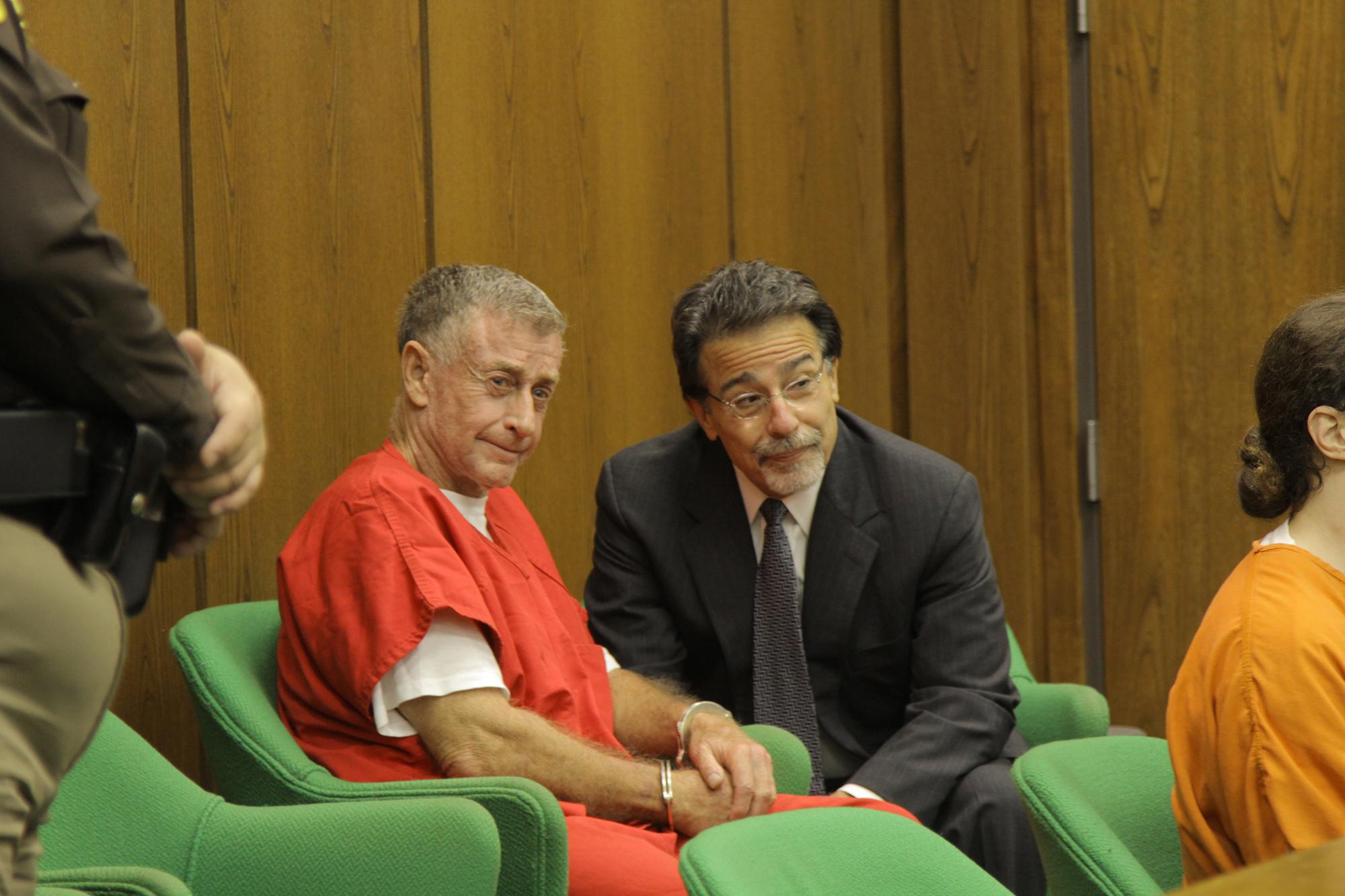
The call came at 2:41 a.m.
Michael Peterson phoned 911 from his home at 1810 Cedar Street in Durham, North Carolina, and told the operator his wife had fallen down the stairs.
Paramedics arrived to find Elizabeth "Kathleen" Peterson, 48, lying in a pool of blood at the base of the staircase.
She was pronounced dead at the scene.
The initial assumption was an accidental fall.
The amount of blood, and the nature of her injuries, led investigators to suspect homicide.
Multiple lacerations marked the back of her head.
Blood spatter clung to the walls and the ceiling.
No signs of a break-in were found. No signs of a robbery.
In the garage, investigators later found a blow poke, a fireplace tool, stained with blood.
It was identified as a possible weapon.
It was never conclusively linked to the injuries.
No forensic test ever tied that tool to Kathleen Peterson's wounds.
The 911 call is the first documented moment.
What happened in the house before it is not in the record.
Not the minutes. Not the argument. Not the fall.
The record begins with a husband's voice on the line, and a wife on the floor.
Was it an accident? Was it a beating?
That would require evidence the call cannot provide.
The staircase held the scene. The garage held the tool.
The question held the case together.
THE SCENE AND THE WEAPON
Police initially treated the death as an accident.
The scene suggested otherwise.
Kathleen Peterson had suffered multiple lacerations to the back of her head, consistent with a beating.
There was blood spatter on the walls and ceiling.
Investigators found no signs of a break-in.
They found no signs of a robbery.
The house was intact.
The staircase held the scene.
The garage held the tool.
A key piece of evidence was a bloodstained blow poke, a fireplace tool, found in the garage.
It was never conclusively linked to the injuries.
The exact weapon, if any, is not established.
The prosecution argued that Peterson had beaten his wife with the blow poke or another object.
Then, prosecutors say, he staged the scene to look like a fall.
The defense maintained that Kathleen had fallen down the stairs, possibly after consuming alcohol and Valium.
The blood spatter, the defense argued, was consistent with a fall.
Was it a beating?
Was it a fall?
Was it the blow poke?
That would require evidence the tool cannot provide.
The blow poke was real.
It was bloodstained.
It was an exhibit.
But no forensic test ever tied it to her injuries.
One object carried the weight of the prosecution's case.
One object remained unproven.
The staircase held the scene.
The garage held the tool.
The question held the case together.
THE SECRET LIFE AND THE OLD DEATH
The investigation widened.
It pulled in Peterson's secret bisexual life, including relationships with male escorts.
Prosecutors used that to suggest a motive: that Kathleen had discovered his infidelity and a confrontation had turned violent.
That Kathleen discovered the infidelity is not established.
No record shows what she knew or when she knew it.
The case turned again when prosecutors introduced Elizabeth Ratliff.
Ratliff had been a friend and neighbor of the Petersons.
She died in 1985 in Germany, and that death had been ruled accidental.
Prosecutors argued it was also a murder by Peterson.
Her death was re-examined after Kathleen's death.
The defense argued the two deaths were unrelated accidents.
Was it coincidence?
Was it pattern?
Was it prejudice dressed as proof?
That would require evidence.
The trial began in June 2003.
The prosecution's case lasted several weeks.
Forensic experts testified.
Medical examiners testified.
Witnesses described Peterson's secret life.
The staircase held one death.
Germany held another.
The courtroom held both.
THE VERDICT AND ITS UNDOING
The defense countered with its own experts, including Dr. Henry Lee, who argued that the blood spatter was consistent with an accidental fall.
The staircase held one death.
Germany held another.
The courtroom held both.
The trial began in June 2003.
The prosecution's case lasted several weeks.
It included testimony from forensic experts, medical examiners, and witnesses who described Peterson's secret life.
The defense argued that Kathleen had fallen, possibly after alcohol and Valium.
Dr. Lee said the blood spatter looked like a fall.
The prosecution said it looked like a beating.
The trial was marked by a dramatic moment when the judge allowed the jury to hear about Elizabeth Ratliff's death.
The defense argued that was prejudicial.
Two deaths, one defendant.
On October 10, 2003, the jury found Michael Peterson guilty of first-degree murder.
He was sentenced to life in prison without the possibility of parole.
Then the verdict was overturned in 2011.
The trial judge ruled that the lead detective had given false testimony about the blood spatter evidence.
That ruling is documented.
The detective's name is not in the record for this article.
Peterson was released on bail in 2011.
In 2017, he entered an Alford plea to a charge of voluntary manslaughter.
He maintained his innocence but acknowledged that prosecutors had enough evidence to convict him.
He was sentenced to time served and released.
A conviction, undone.
A plea, entered.
A fall, still argued.
AND THE STORY STILL ISN'T OVER
He was released from prison in 2017, after entering the Alford plea.
He has maintained his innocence.
He has lived in Durham, North Carolina.
The case became a documentary series, "The Staircase," released in 2018, made with Peterson's cooperation.
Kathleen Peterson's daughter, Caitlin Atwater, has continued to believe Peterson was responsible for her death.
Elizabeth Ratliff's family has also maintained that Peterson was responsible.
Her death was never re-prosecuted.
Peterson has not been charged in connection with Ratliff's death.
The blow poke is still a real exhibit, bloodstained, in the record.
No forensic test ever tied it to Kathleen Peterson's injuries.
That was never established.
No further legal proceedings are documented.
The next concrete step is not in the record.
What happened in the house that night remains unresolved.
The 2:41 a.m. call still hangs in the air.
The staircase still hangs in the air.
The blow poke still hangs in the air.
A conviction, undone.
A plea, entered.
A fall, still argued.
The story is not over.
It may never be over.
Advertisement
You may also like
The bank card used after the McStay family vanished — and the phone calls that changed everything
The surveillance footage is grainy, the timestamp frozen in the days after the McStay family vanished. A man is at an ATM, inserting a…
The bridge splash and the fiber evidence that turned Atlanta's child murders into one trial
The sound came first. On May 22, 1981, police were staked out on a bridge over the Chattahoochee River. They were there because a…

Adnan Syed's conviction reinstated in 2024 — but he is free on bail
She left Woodlawn High School on January 13, 1999, and did not come home. Hae Min Lee was 18, a senior, and her car…
The tipster who spotted a sleeping car and ended a 22-day sniper rampage
The tipster saw the sketch on the news and recognized the car. It was a blue Chevrolet Caprice, parked and ordinary, the kind of…
Chloroform in a car trunk, a missing toddler, and the duct tape that pointed to Casey Anthony
In July 2008, a forensic analyst tested the trunk of Casey Anthony's Pontiac Sunfire and detected chloroform, a chemical associated with decomposition. Air samples…
The parking ticket that led police to the Son of Sam killer's door
The parking ticket was still under the windshield wiper. A witness saw a man standing near his car with it on the night of…