The bank card used after the McStay family vanished — and the phone calls that changed everything
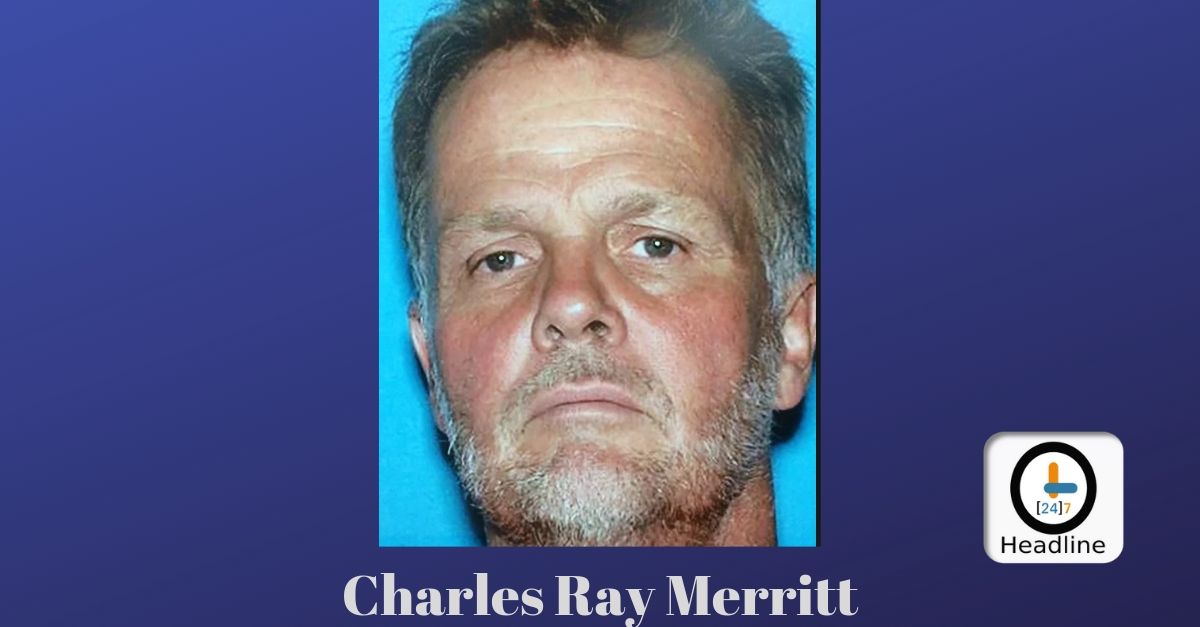
The surveillance footage is grainy, the timestamp frozen in the days after the McStay family vanished.
A man is at an ATM, inserting a card.
The card belongs to Joseph McStay.
The man on the screen is later identified as Charles "Chase" Merritt, a business associate of the missing father.
The family's own bank accounts were untouched.
This card was active.
It kept moving, kept being used, while the family was gone.
Why would someone else be spending the victim's money?
Merritt claims McStay gave him permission to use the card.
Whether McStay actually gave that permission is not established.
It is Merritt's claim, not a documented fact.
The card is the first concrete object that breaks the theory that the family vanished voluntarily.
Not because of what it proves.
Because of what it asks.
Who uses a dead man's card?
Who gets told they can?
The footage does not answer.
It only watches.
THE BREAKFAST AND THE DOGS
The report came in on February 4, 2010: Joseph, Summer, and their two young sons were missing from their Fallbrook home.
Dogs were in the backyard.
Vehicles were in the driveway.
Breakfast was still on the table.
The television was on.
Deputies responded, but they did not immediately secure the home.
Family and friends were allowed inside.
The scene was contaminated.
The initial theory was that Joseph had fled voluntarily, possibly to Mexico.
That theory held despite the evidence at the scene.
Not because the evidence pointed that way.
But because the alternative was too hard to look at.
The family's cell phones were later found in the desert near the California–Nevada border.
Their significance was not immediately recognized.
The phones were noted.
The phones were logged.
The phones were set aside.
Why the family disappeared that night is not established.
What the scene showed was a family interrupted mid-morning.
What the investigators saw was a man who walked away.
The breakfast sat.
The television stayed on.
The dogs waited in the backyard.
For years, that was the story the case told itself.
It was the wrong one.
THE PHONE CALLS THAT NIGHT
The phone records show the calls.
A series of calls between Merritt and Joseph McStay, logged on the night the family disappeared.
The calls are documented in phone records.
That is what the record establishes: that they occurred.
What was said is not in the record.
The content of the calls is not established.
Prosecutors later argued these calls showed coordination or a meeting.
The defense said they were routine business.
Two stories for one set of pings.
The calls are the turning point — they connect Merritt to the critical window of time.
After the calls, the family was never seen alive again.
That is the hinge.
The record does not say what was exchanged, only that the phones connected.
Not because the evidence is hidden. Because the record ends at the metadata.
The calls sit at the center of the case, and the case does not say what they said.
Coordination or routine.
A meeting or a chat.
The record offers the connection and stops.
It is a fact that the calls happened.
It is a fact that the family vanished afterward.
What happened between those two facts is the question the record leaves open.
The phone records place Merritt in the window.
The phone records do not place him anywhere else.
That would require evidence.
The calls are the hinge, and the hinge is silent.
THE GRAVES AND THE TWO STORIES
On November 11, 2013, two dirt bikers found human remains in two shallow graves near Victorville.
The remains were identified as the four McStay family members.
The cause of death for all four was blunt force trauma.
The weapon was not definitively identified.
The prosecution called it a killing over a business dispute.
They pointed to the bank card and the phone calls as the thread.
Witnesses said Merritt had made incriminating statements, according to testimony.
The defense called the evidence circumstantial.
The defense said the investigation was botched from the start.
Deputies had not secured the home; family and friends walked through the scene.
The defense said Merritt was framed.
The same facts — the card, the calls — are read two opposite ways.
The card proves he used it.
The card proves he had permission, the defense argued.
The calls prove coordination, prosecutors said.
The calls prove nothing, the defense said.
The motive is not definitively established.
The murder weapon is unknown.
Both stories are plausible.
That is the weight of circumstantial evidence.
It is a hinge that swings both ways, and the record does not lock it.
The graves held the bodies.
The card and the calls held the case.
Neither held the whole truth.
AND THE STORY STILL ISN'T OVER
The arrest came in November 2014, four years after the family vanished.
Charles “Chase” Merritt was charged with four counts of first-degree murder.
The trial began in January 2019.
The prosecution built its case on the phone records and the bank card.
The defense pointed at the contaminated scene and the deputies who let family and friends walk through the kitchen.
In June 2019, the jury found him guilty on all four counts.
He was sentenced to death in January 2020.
Merritt remains on death row at San Quentin State Prison.
California has a moratorium on executions, so no execution date is set.
Whether the death sentence will ever be carried out is unknown.
It is a conviction. It is also a waiting room.
Joseph McStay’s father has spoken publicly about the long wait for justice.
He has described the years between the disappearance and the graves, and the years since the verdict.
The case is now cited as a cautionary example in missing-person investigations.
The lesson is the kitchen left untouched and the phones found in the desert.
The lesson is what the scene could have said if anyone had sealed the door.
The card and the calls are documented. The motive remains a theory.
That would require evidence the record does not establish.
The graves held the bodies.
The card and the calls held the case.
Neither held the whole truth.
The truth, such as it is, sits on a row at San Quentin, waiting for a date that may never come.
Advertisement
You may also like
The bloody glove found on O.J. Simpson's estate that didn't fit in court — and the detective who found it
The neighbor walking her dog found the bodies around midnight. Nicole Brown Simpson and Ronald Goldman were on the ground outside her condominium on…

The bloody fingerprint on the door that didn't match — and the evidence the Army lost
The door was still wet with it. February 17, 1970, Fort Bragg, North Carolina. Army Captain Jeffrey MacDonald, a Green Beret physician, called it…
The footprint left at the Clutter farm that investigators could not explain
The footprint was in the farmhouse, pressed into the floor of a house where four people lay bound and shot at close range with…

The bloody glove that didn't fit — and the LAPD evidence mistake that changed the trial
The glove sat on the evidence table, leather and dark, one found at the crime scene, the other on the accused's property. In court,…

The ring that identified Emmett Till after his body was pulled from the Tallahatchie River
The cotton gin fan was still tied to his neck with barbed wire. His body came up from the Tallahatchie River on August 31,…
Why the FBI manhunt missed Andrew Cunanan in Miami for weeks
The bicycle was found first, abandoned against a wall a few blocks from the Casa Casuarina. On July 15, 1997, Gianni Versace was shot…