The tipster who spotted a sleeping car and ended a 22-day sniper rampage
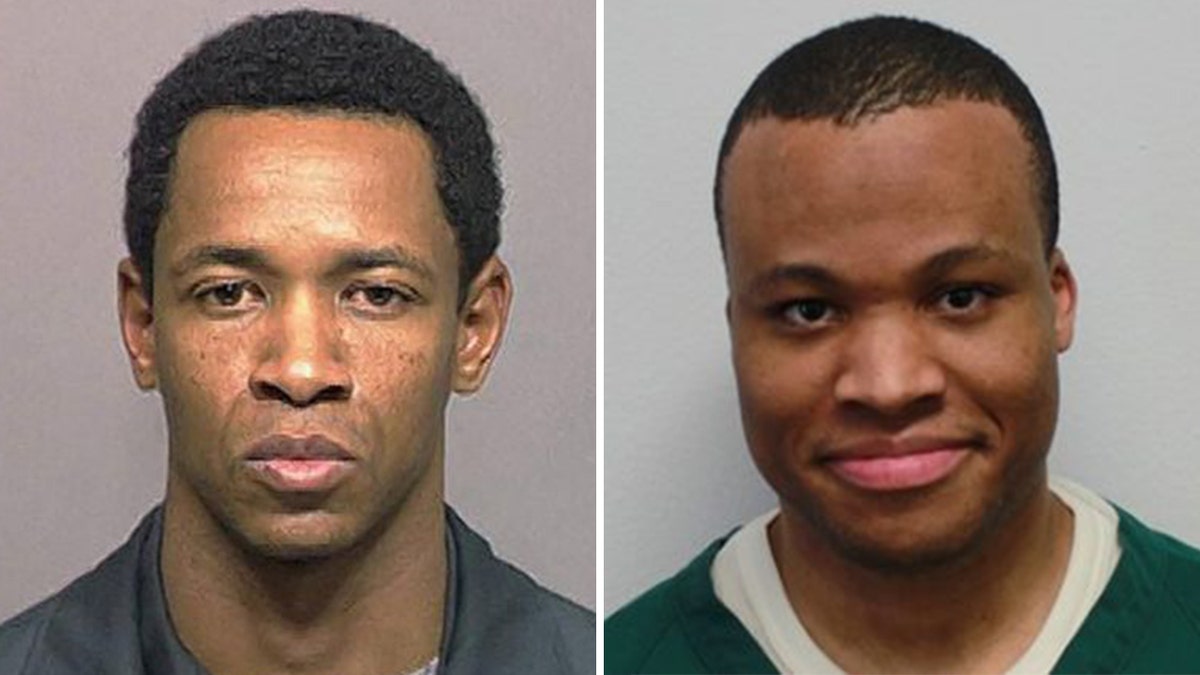
The tipster saw the sketch on the news and recognized the car.
It was a blue Chevrolet Caprice, parked and ordinary, the kind of car that blends into any highway.
On October 24, 2002, the tipster called the police hotline.
Police found two men sleeping in that car at a rest stop off Interstate 70 near Myersville, Maryland.
Not because the car was a suspect.
Because the car was what the tipster remembered.
For weeks, the public had been told to look for a white van.
Witness reports had pointed that way.
The white van was a misdirection, the record shows.
The actual vehicle was a blue 1990 Chevrolet Caprice.
A rifle was later found in the vehicle.
Ballistics linked that rifle to multiple shootings.
The tipster's identity is not in the record.
The exact time of the call is not in the record either.
What remains is the near-miss: a parked car, two sleeping men, and a hotline call that ended a 22-day rampage.
The car was never the first suspect.
It was the last one.
THE VAN THAT WASN'T
Between October 2 and October 24, 2002, a series of shootings killed 10 people and wounded three others across Maryland, Virginia, and Washington, D.C.
The attacks began with a shooting outside a liquor store in Montgomery County, Maryland.
They continued at gas stations, parking lots, and other public places.
Each shooting seemed to come from nowhere.
Each one left a body, a shell casing, and a witness who had seen something.
What the witnesses saw was a white van.
White vans were reported near the scenes.
White vans were reported leaving the scenes.
White vans were reported by people who were sure of it.
Police focused on the white van.
The public focused on the white van.
The news reports focused on the white van.
The exact number of witness reports describing the white van is not specified in the record.
But the record does note one key sighting: at the October 14 shooting in Falls Church, Virginia, a witness reported seeing a white man in a white van.
That later proved to be a misdirection.
The actual vehicle was a blue 1990 Chevrolet Caprice.
Not a van.
Not white.
The Caprice sat in plain sight while the world looked for something else.
Chief Charles Moose read statements to the media throughout the investigation.
He gave updates.
He gave warnings.
He gave the shooters a platform.
One message from the shooters demanded $10 million.
It was read aloud, broadcast, repeated.
The public watched the chief on television.
The public looked for a white van.
The public did not see a blue Caprice.
Why would they?
Every report said van.
Every instinct said van.
The car was never the first suspect.
It was the last one.
THE TIPSTER'S CALL
October 24. A tipster called the police hotline.
The caller recognized the blue Chevrolet Caprice from a composite sketch.
What the sketch showed, and how the caller matched it to the car, is not detailed in the record.
Police found two men sleeping in the car at a rest stop off Interstate 70 near Myersville, Maryland.
John Allen Muhammad, a 41-year-old former U.S. Army soldier, was inside.
Lee Boyd Malvo, a 17-year-old Jamaican national, was inside too.
A rifle was later found in the vehicle.
The final shooting had occurred two days earlier, on October 22, on a bus in Aspen Hill, Maryland.
That victim was Conrad Johnson.
The investigation had been one of the largest in U.S. history.
Local police worked alongside the FBI and the Bureau of Alcohol, Tobacco, Firearms and Explosives.
Chief Charles Moose read statements to the media, including a demand for $10 million.
A note left at the scene of the October 14 shooting had demanded money and threatened more violence.
The public had been told to look for a white van.
Witness reports pointed there.
Every instinct said van.
The Caprice was the last suspect.
It was the one that ended it.
The car was found at a rest stop, not in a chase.
The two men were sleeping.
The tipster's call came after three weeks of shootings and a region on lockdown.
People were checking their own cars.
They were checking parking lots.
They were checking rest stops.
One of them saw the car from the sketch.
That call broke the case.
The record does not say what the sketch showed.
It does not say how the caller recognized the car.
It only says the call came, and the car was found.
THE TWO STORIES
Prosecutors argued that Muhammad planned the attacks and Malvo was the shooter in most incidents, according to trial testimony.
Two men, one narrative, two fates.
Muhammad was tried first in Virginia, for the murder of Dean Harold Meyers, to ensure a death sentence.
He was convicted of capital murder on November 17, 2003, and sentenced to death.
Malvo was tried separately in Virginia, for the murder of Linda Franklin.
He was convicted of capital murder and sentenced to life without parole, as he was a juvenile at the time.
It is a legal outcome. It is also a stark difference based on age and role.
The prosecution's story was clean: the older man planned, the teenager fired.
The defense attorneys for both men, including Michael Arif for Malvo, contested that narrative.
What they argued is not in the source material.
The record does not establish their specific arguments.
It does not say whether they challenged the ballistics.
It does not say whether they questioned the confessions.
It does not say whether they offered an alternative version of the sleeping car.
That would require evidence.
Muhammad was executed by lethal injection on November 10, 2009.
Malvo remains in prison, serving a life sentence that was later upheld on appeal.
The media had followed the case for weeks, the white van leading the coverage.
The blue Caprice ended the hunt.
The trial gave the public a verdict, but the record keeps the defense's case closed.
AND THE STORY STILL ISN'T OVER
The verdicts came down, and the cameras moved on.
John Allen Muhammad was executed by lethal injection in Virginia in 2009.
Lee Boyd Malvo remains in prison, serving life without parole.
Malvo’s life sentence was later upheld on appeal.
The current status of any ongoing legal proceedings is not specified beyond the appeals already noted.
Prosecutors in Maryland and Louisiana declined to pursue additional charges after the convictions.
The record closes on the trials, but the case never quite leaves the public mind.
The case has been the subject of numerous books, documentaries, and films.
Some dramatizations have altered names and details.
Not because the facts were thin.
But because the story was too big for one telling.
The white van led the coverage for weeks.
The blue Caprice ended the hunt.
What remains is the review.
The Montgomery County Police Department and other agencies have examined their response to the shootings.
The investigation has been studied as a model for multi-jurisdictional cooperation.
It is a model.
It is also a warning about how quickly a wrong lead can shape a manhunt.
The tipster’s call is the hinge.
One call about a sleeping car.
One car that was never the first suspect.
That would require evidence, and the record holds it.
The executed man is gone.
The imprisoned man remains.
The families carry the dates.
The media followed the case for weeks, and then it followed the next one.
The story still isn’t over.
It is a case file.
It is a caution.
It is a closed chapter with an open question.
Advertisement
You may also like
The bloody glove found on O.J. Simpson's estate that didn't fit in court — and the detective who found it
The neighbor walking her dog found the bodies around midnight. Nicole Brown Simpson and Ronald Goldman were on the ground outside her condominium on…

The bloody fingerprint on the door that didn't match — and the evidence the Army lost
The door was still wet with it. February 17, 1970, Fort Bragg, North Carolina. Army Captain Jeffrey MacDonald, a Green Beret physician, called it…
The footprint left at the Clutter farm that investigators could not explain
The footprint was in the farmhouse, pressed into the floor of a house where four people lay bound and shot at close range with…

The bloody glove that didn't fit — and the LAPD evidence mistake that changed the trial
The glove sat on the evidence table, leather and dark, one found at the crime scene, the other on the accused's property. In court,…

The ring that identified Emmett Till after his body was pulled from the Tallahatchie River
The cotton gin fan was still tied to his neck with barbed wire. His body came up from the Tallahatchie River on August 31,…
Why the FBI manhunt missed Andrew Cunanan in Miami for weeks
The bicycle was found first, abandoned against a wall a few blocks from the Casa Casuarina. On July 15, 1997, Gianni Versace was shot…