The 19-year-old nurse's aide whose brother spent decades doubting the confession
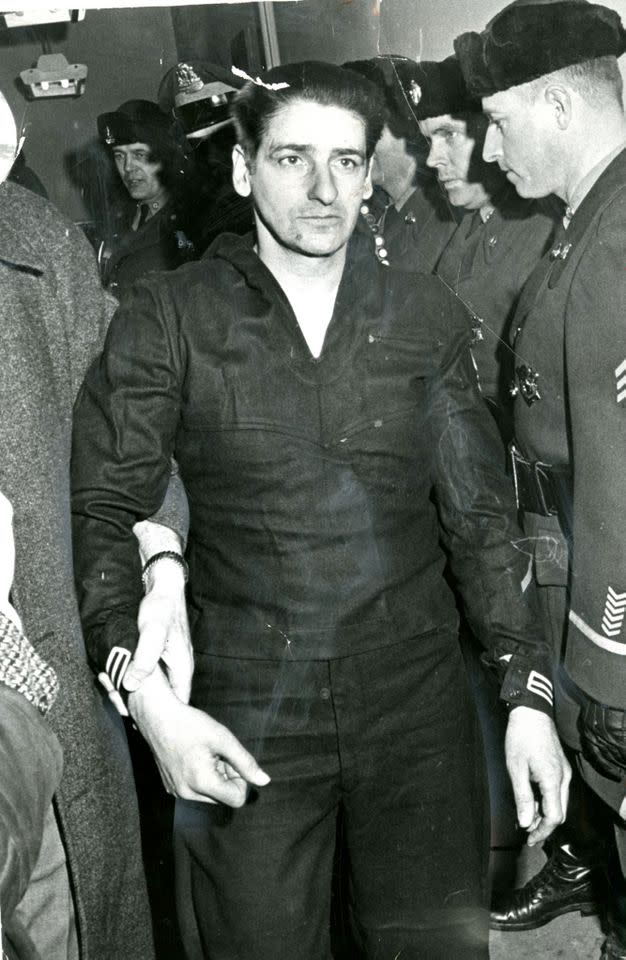
She was nineteen. A nurse's aide.
On January 4, 1964, Mary Sullivan was found dead in her rented apartment. She was the final victim in the Boston Strangler series.
Between June 1962 and January 1964, thirteen women were killed. The victims ranged in age from 19 to 85. The crimes were characterized by sexual assault and strangulation, often with items of the victims' own clothing.
The murders terrorized the Boston area. The case became one of the most notorious unsolved investigations in American history.
Her brother later wrote a book about his sister and the investigation. He has publicly expressed doubts about whether the confessed killer acted alone.
That doubt is a claim, not a fact established by the record. It is a theory circulating. The record does not establish that anyone else was involved.
What the record does establish is the weight of a single life at the end of a long terror. Thirteen women. One of them was Mary.
She was on the ground below the terror. She was the last one.
What did her brother see that the official record did not? What did he find in the files, in the testimony, in the silences? That would require evidence.
The case remains officially unsolved. The doubt remains a brother's claim. The terror remains part of Boston's history.
THE CONFESSION
The confession came in 1965, and it came from a man already in custody for other crimes.
Albert DeSalvo was a factory worker and a handyman.
He was not in custody for the stranglings.
He was in custody for other offenses, and from that cell he confessed to the murders.
He confessed to his own attorney, F. Lee Bailey.
DeSalvo gave details that seemed to come from the killer's own memory.
He described the scenes, the victims, the method.
Only the killer would know such things, some said.
But no physical evidence tied him to the scenes.
Not a strand. Not a print. Not a fiber.
Some investigators doubted the confession.
They noted inconsistencies in his account.
The confession was never tested in court.
It was never tested in court because he was never charged with the murders.
The medical examiner testified about the nature of the deaths.
He described strangulation, the use of victims' own clothing.
The investigation itself was hampered by the limits of the time.
Forensic technology did not exist then as it does now.
Police and prosecutors formed a special task force.
They called it the Strangler Bureau.
It was led by a prosecutor from the Massachusetts Attorney General's office.
The bureau chased leads. It chased false leads.
The public panic grew.
The confession was detailed. The proof was not.
That tension — a man who knew too much, and a record that proved nothing — is where the case sat.
The confession was a story. The evidence was a silence.
No physical evidence tied DeSalvo to the scenes. That is the record.
The confession was never tested in court. That is also the record.
THE TRIAL THAT NEVER CAME
The confession was a story. The evidence was a silence.
No physical evidence tied DeSalvo to the scenes. That is the record.
The confession was never tested in court. That is also the record.
Albert DeSalvo was never tried for the Boston Strangler murders.
He was not charged with any of them.
Prosecutors believed they lacked sufficient evidence to convict him of the murders, so they did not try.
Instead, he was tried in 1967 for a series of armed robberies and sexual assaults committed in the Cambridge, Massachusetts area.
He was convicted. He was sentenced to life in prison.
The strangler confession never faced a jury.
It never faced cross-examination.
It never faced the weight of a courtroom's rules.
That would require evidence.
DeSalvo was killed in prison in 1973, stabbed by a fellow inmate.
He died without the murders ever going to trial.
The record holds his confession as a statement, not a verdict.
The record holds his conviction for other crimes.
The record holds his death.
What it does not hold is a trial for the stranglings.
That is the frustration written into the case file.
A man confessed. A man was never tried.
The brother of the last victim would spend decades asking what the courtroom never answered.
THE DNA MATCH
In 2013, the body of Albert DeSalvo was exhumed.
A DNA sample was taken from his remains.
That sample matched evidence from the murder of Mary Sullivan, the last victim.
Authorities officially confirmed DeSalvo as her killer.
One victim, confirmed.
The other twelve were not part of that match.
The Boston Strangler case remains officially unsolved.
The brother of the last victim had spent decades asking questions the courtroom never answered.
He had been a persistent advocate for solving his sister's case.
The DNA match gave him one answer.
It did not give him all of them.
He has publicly expressed doubts about whether DeSalvo acted alone.
That is a claim.
It is not established by the record.
The multiple-killer theory gained traction in later years.
It remains a theory.

The DNA evidence confirms DeSalvo for Mary Sullivan's murder.
It does not confirm him for the others.
Not because the evidence cleared him.
Because the evidence never addressed them.
The brother asked what the files could not say.
Did one man do all of this?
Did one man do any of it beyond his sister?
The record answers one question.
It leaves the rest open.
That is where the case sits now.
A confirmed killer for one family.
An open file for the others.
AND THE STORY STILL ISN'T OVER
The Boston Strangler case remains officially unsolved.
The DNA match in 2013 confirmed Albert DeSalvo as the killer of Mary Sullivan, the last victim.
One family got an answer.
Her brother never accepted that as the whole story.
He has publicly expressed doubts about whether DeSalvo acted alone.
He has been a persistent advocate for solving his sister's case.
The doubt is a claim, not a fact established by the record.
The murders may have been committed by more than one person, a theory that gained traction in later years.
That theory is not established.
The case has been the subject of numerous books, documentaries, and films.
Many dramatizations have taken liberties with the facts.
Not because the record is thin.
Because the story is too dark to leave alone.
Thirteen women died between June 1962 and January 1964.
The DNA match cleared one name for one victim.
Questions remain about the other murders.
What was one man's work?
What was something else?
That would require evidence.
The brother wrote a book about his sister and the investigation.
He kept asking.
The file stayed open.
The public mind stayed open.
A confirmed killer for one family.
An open file for the others.
That is where the case sits now.
It has not moved.
Advertisement
You may also like
The $50,000 ransom note left on a nursery windowsill — and the 11-hour jury deliberation that followed
On the evening of March 1, 1932, a ransom note demanding $50,000 was found on a nursery windowsill in the Lindbergh home near Hopewell,…

A mother's shopping trip, a Sears toy aisle, and the six-year-old who never came home
The Sears store at the Hollywood Mall had an air-conditioned hum and a toy aisle that ran long and bright. On July 27, 1981,…
The traffic stop that caught a bombing suspect before the FBI did
The trooper saw the plate first, or rather, he didn't see it. The 1977 Mercury Marquis had no license plate, and that was enough.…
The 14-year-old boy Milwaukee police returned to Dahmer hours before his death
A boy was wandering the street in Milwaukee, drugged and naked. Neighbors reported him in May 1991. Police officers responded to the call. They…

The 1934 torso washing ashore that set off a four-year hunt
The water gave her back on September 5, 1934. A woman's torso, washed up on the shore of Lake Erie near Euclid Beach. She…
Two gas-station murders, one .22 pistol: the timeline the jury followed
The evening of July 19, 1976, in Orem, Utah, was warm and ordinary. A young man walked up to two college students at a…