The 1981 river splash that made police stop Wayne Williams — and what it led to
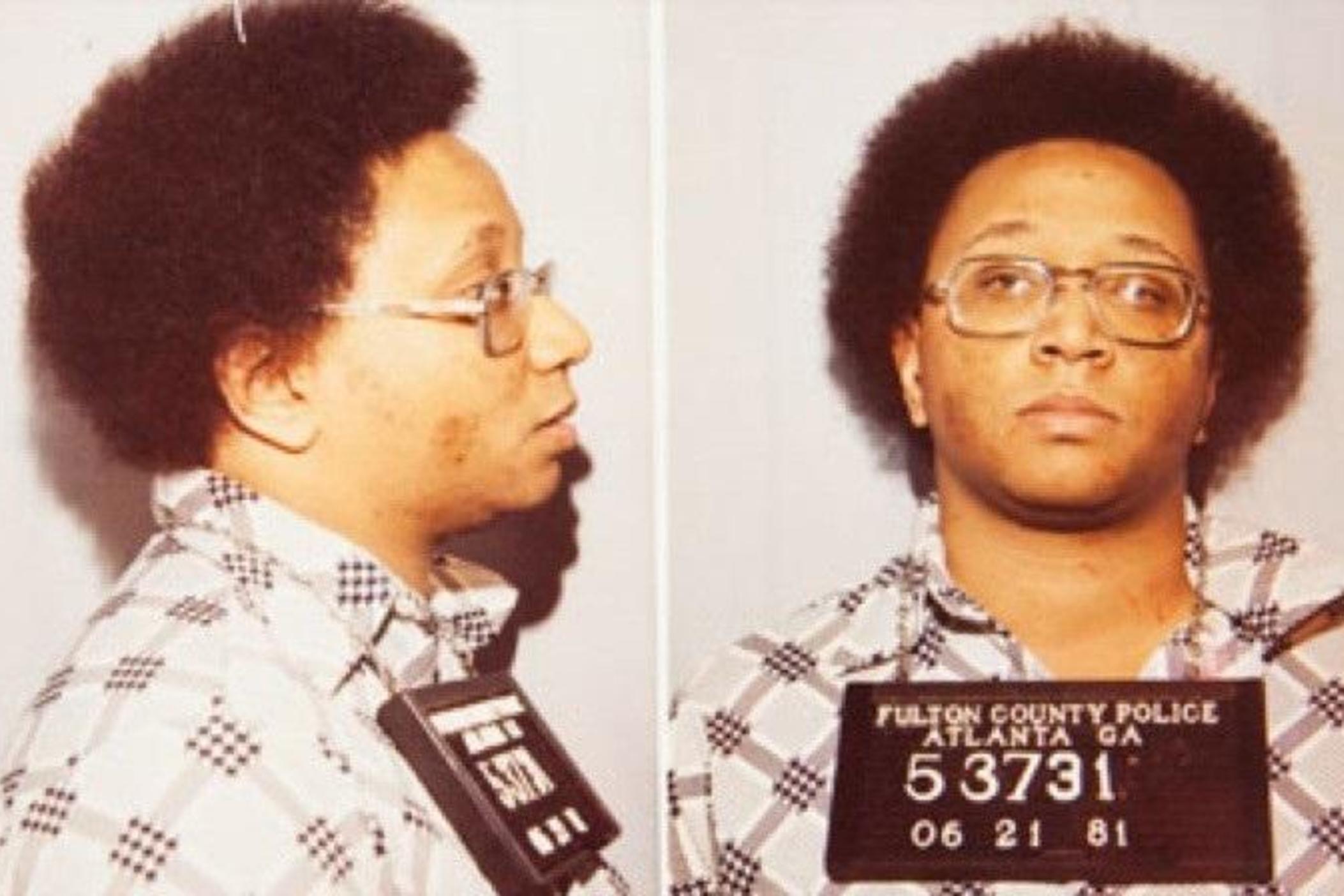
The night of May 22, 1981, on a stakeout near the Chattahoochee River, police officers heard a splash from the water.
It was a sound, nothing more.
The splash itself was never visually confirmed as a body being dumped — the record documents the sound and the subsequent stop.
Shortly after the splash, officers stopped Wayne Williams, a 23-year-old freelance photographer and music promoter, who was driving nearby.
He was stopped because of the splash.
What caused the splash is not established by the record — it was heard, not seen.
That is the fact the record leaves open.
Days later, the body of 27-year-old Nathaniel Cater was found downstream in the river.
A splash, a stop, a body.
The sound changed everything that followed.
The officers heard it.
They acted on it.
They stopped a man.
They found a body.
The link between the splash and the body was never proven — the record does not establish that the sound was a body being dumped.
It establishes only the sound, the stop, and what came after.
That was the turning point.
Before the splash, the investigation had been searching.
After the splash, it had a suspect.
The rest of the case — the fibers, the trial, the verdict — all of it traces back to what those officers heard that night.
But the question remains: what exactly did they hear?
Was it a body hitting the water?
Was it something else — an animal, debris, a trick of the river?
That would require evidence.
The record does not have it.
THE FIRST REPORTS
The first widely reported victim was a 14-year-old boy, reported missing in July 1979.
His body was found later that month.
Between July 1979 and May 1981, at least 28 Black children, teenagers, and young adults disappeared and were found murdered in the Atlanta, Georgia, area.
The victims were mostly male.
Many were found in rivers, wooded areas, or vacant lots.
The killings continued through 1980 and into 1981.
Bodies were recovered from the Chattahoochee River and elsewhere.
The case became known as the Atlanta Child Murders.
It drew national attention.
A special task force was formed to investigate.
The task force included the Atlanta Police Department, the Georgia Bureau of Investigation, and the FBI.
The names of the earliest victims are not all confirmed in the record.
The first widely reported victim was a 14-year-old boy; that is what the record establishes.
The scale grew across nearly two years.
One disappearance, then another.
One body, then another.
The river kept giving them back.
THE FIBERS
The trial record shows the case against Wayne Williams was built largely on forensic fiber evidence.
Fibers found on the bodies of Nathaniel Cater and another adult victim were matched to fibers from a carpet, a bedspread, and a dog hair found in Williams's home and car, according to trial testimony.
The prosecution argued that the victims had been killed elsewhere and dumped in the river, with the fiber evidence placing Williams with the victims.
Williams was arrested in June 1981 and charged with two murders: those of 27-year-old Nathaniel Cater and a 28-year-old adult victim, according to the case record.
The defense argued that the fiber evidence was circumstantial and that Williams was a scapegoat.
No weapon was recovered. No vehicle was recovered.
The case was built on fiber evidence, not a recovered weapon — that is what the record establishes, and what it does not establish is any physical instrument of death.
Fibers from a bedroom. Fibers from a car. A dog hair among them.
The prosecution said the fibers placed Williams with the victims before they entered the river.
The defense said fibers could have come from anywhere, that they were threads, not proof.
It is a case of matching threads.
It is also a case where two men were found dead in a river, and a man was convicted on what was found on their bodies.
The weight of that evidence was enough for a jury.
Whether fibers alone could convict — that was the question the defense put to the court.
The record shows the jury answered yes.
The record does not show a weapon, a vehicle, or a witness to the killings themselves.
That would require evidence.
THE TRIAL
The trial opened in Fulton County Superior Court in January 1982.
Wayne Williams was charged with two counts of murder in the deaths of Nathaniel Cater and the 28-year-old adult victim.
The prosecution presented extensive fiber evidence and testimony from forensic experts.
The defense argued the evidence was circumstantial and that Williams was innocent.
The fibers were the case.
Fibers found on the bodies matched fibers from a carpet, a bedspread, and a dog hair in Williams's home and car.
The prosecution argued the victims had been killed elsewhere and dumped in the river.
The defense argued that placed Williams near the victims, not with them at the moment of death.
That distinction did not hold.
On February 27, 1982, the jury found Williams guilty of both murders.
The judge sentenced him to two consecutive life terms in prison.
Williams has maintained his innocence and has filed multiple appeals, all of which have been denied.
He has never been charged in connection with the other child murders.
Many investigators and family members have linked him to them, but the record does not establish that link.
The verdict was final for two deaths.
The questions around the other cases were not answered by the trial.
The jury answered yes to the evidence before them.
The record does not answer whether the right man was convicted.
That would require evidence the trial did not produce.
AND THE STORY STILL ISN'T OVER
Wayne Williams remains in prison, serving two consecutive life sentences.
He has been denied parole multiple times, according to the case record.
The Atlanta Child Murders case remains officially unsolved for the majority of the victims.
No one else has been charged in connection with the killings, the case record shows.
In 2019, Atlanta Mayor Keisha Lance Bottoms announced that the city would re-test DNA evidence from the case.
No new charges have resulted as of the record.
What the DNA re-testing will find is not established.
That would require evidence the re-testing has not yet produced.
Many of the victims' families continue to seek answers.
They have expressed frustration that the full scope of the killings was never resolved, according to the case record.
The splash, the fibers, the verdict — they are part of a story still being contested.
It is a case that remains one of the most controversial and scrutinized investigations in American criminal history.
It is also a case that, for most of the victims, has no official answer.
The record does not close the question of what happened to them.
That would require evidence the investigation did not establish.
Advertisement
You may also like

The 1996 ransom note detail that still haunts the Ramsey investigation
The 911 call came at 5:52 a.m. on December 26, 1996. Patsy Ramsey told the dispatcher her 6-year-old daughter was missing. A ransom note…
The parking ticket on a 1970 Ford Galaxie that led police to a suspected shooter
The parking ticket sat on the windshield of a 1970 Ford Galaxie. It sat there near the final shooting scene in Brooklyn, on a…
The car that drove away from Cielo Drive — and the witness who could not forget it
The car was yellow, or cream, or something in between. Linda Kasabian could not forget it. She drove it away from 10050 Cielo Drive…
The babysitter who didn't exist: the name Casey Anthony gave before Caylee vanished
The name she gave was Zenaida Fernandez-Gonzalez. A full name. A specific name. A name that sounded like a real person with a real…

The QuickBooks edits a business partner made after the McStay family vanished
The dogs were in the backyard. The vehicles were still in the driveway at the Fallbrook home, and the front door was unlocked, but…

The .44-caliber letter that turned a shooting spree into a hunt for 'Son of Sam'
The letter was found near the scene of the April 1977 attack. It was addressed to columnist Jimmy Breslin. It was signed "Son of…